
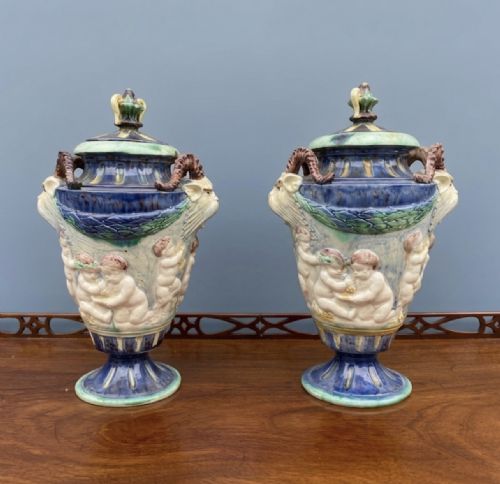


Vintage Majolica Vases
These vintage majolica vases bring rich colour and patterned earthenware to a room through tin and lead glazes.
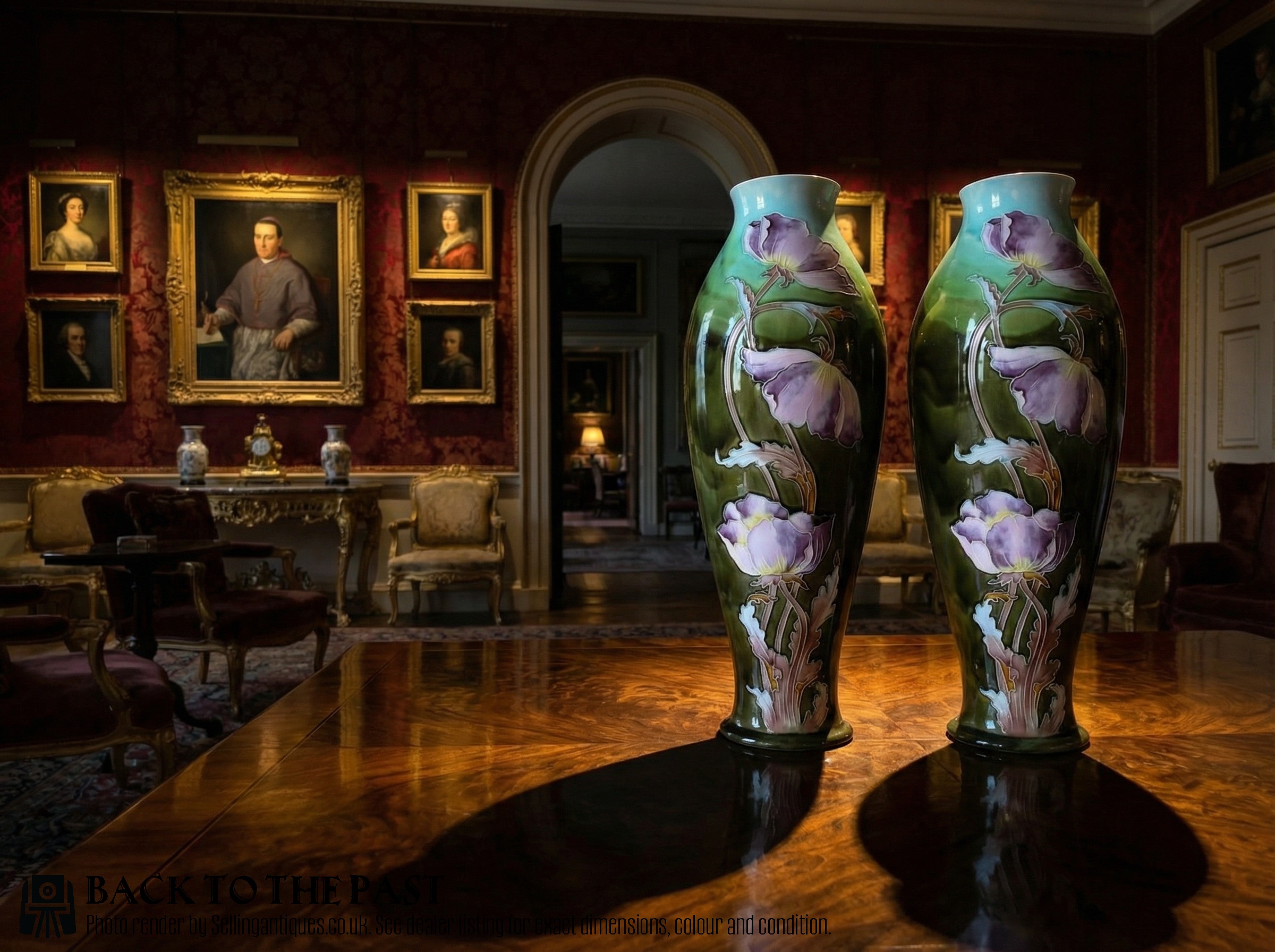
Vintage Majolica Vases
Vintage majolica vases span glazed earthenware and ceramic pieces shaped as urns, vessels, and table lamps. These objects draw on Italian maiolica, Renaissance Revival, and Victorian styles.
The pieces on this page include items from the eighteenth, nineteenth, and early twentieth centuries. French faience and Italian workshops contribute significantly to the selection alongside English makers like Bretby.
Buyers encounter pairs of covered urns, stick stands, and hand painted vessels. Each example displays the distinctive tin glaze or lead glaze finish characteristic of the tradition.
How they were made
Potters shaped earthenware bodies on the wheel or in moulds to form vases, urns, and jardinieres. These ceramic shapes received coats of tin glaze or lead glaze before firing.
Artists then hand painted details directly onto the absorbent glaze surface, capturing Renaissance Revival and Art Nouveau motifs. Firing fixed the pigments into the glossy finish.
Listings feature items from the eighteenth, nineteenth, and early twentieth centuries in earthenware, ceramic, and terracotta.
What varies in quality
Quality rests in the crispness of the modelled earthenware form and the precision of the hand painted decoration. Finer pieces display confident brushwork and balanced glaze coverage across the ceramic surface.
The distinction between standard production and superior work lies in the depth of the glaze colours and the elegance of the Renaissance Revival or Art Nouveau detailing.
Bretby·Cantagalli
The Vintage Majolica Vases Glossary
- Majolica
- A type of pottery decorated with opaque tin glaze over an earthenware body. It is known for bright colours and glossy surfaces.
- Faience
- European tin glazed earthenware produced in France and other regions. This term often describes pieces made outside Italy.
- Jardiniere
- A large decorative ceramic pot or stand designed to hold plants or floral arrangements. These often match the style of associated vases.
- Lead glaze
- A transparent or coloured coating applied to earthenware and fired to a glassy finish. It provides a shiny protective layer over the clay.
- Grand Tour
- A cultural journey undertaken by nineteenth century travellers who collected souvenirs such as terracotta urns and planters.
Vintage Majolica Vases: Frequently Asked Questions
What is majolica pottery?
Majolica is earthenware covered with an opaque tin glaze and decorated with coloured pigments.
The technique creates a glossy surface that holds bright hues and intricate patterns.
How do I date a ceramic vase?
Dating relies on stylistic clues, materials, and manufacturing marks where present.
Nineteenth century pieces often show Victorian or Renaissance Revival influences, while later items adopt Art Nouveau forms.
Where were these ceramic urns made?
Production centres include Italy, France, and England.
Italian workshops produced traditional maiolica and Garofano designs, while French makers specialised in faience urns.
How should I clean glazed earthenware?
Clean these surfaces gently with a soft, dry cloth to remove dust.
Avoid harsh chemicals or submerging older ceramic pieces in water to protect the glaze.