
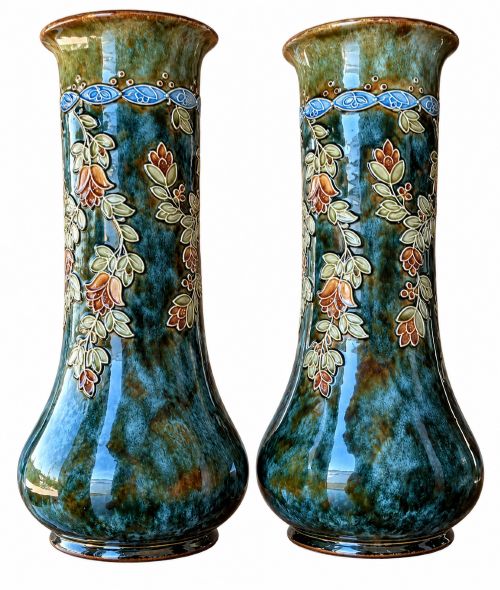
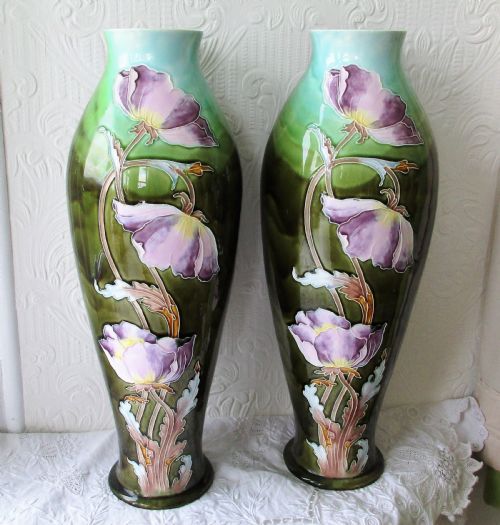
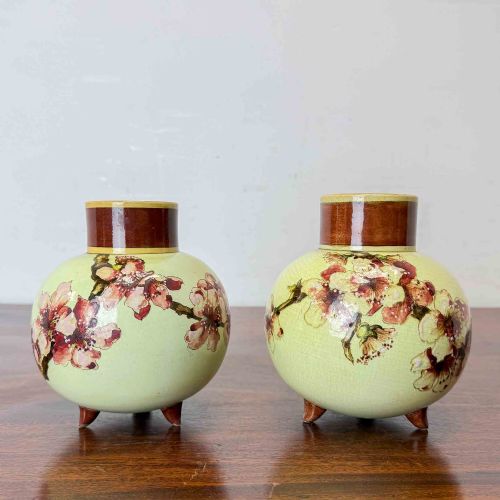
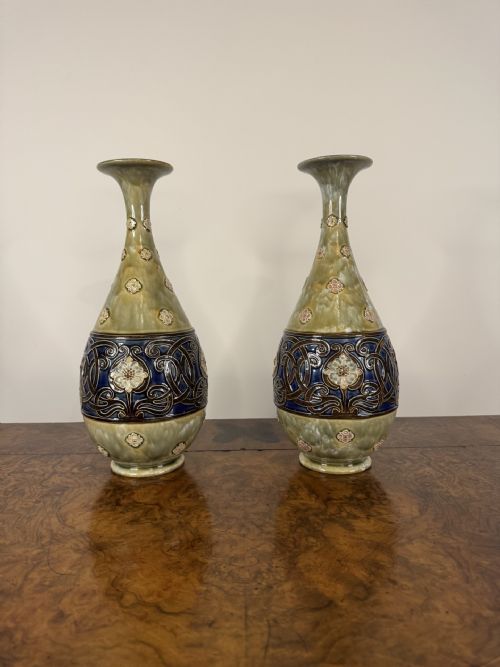


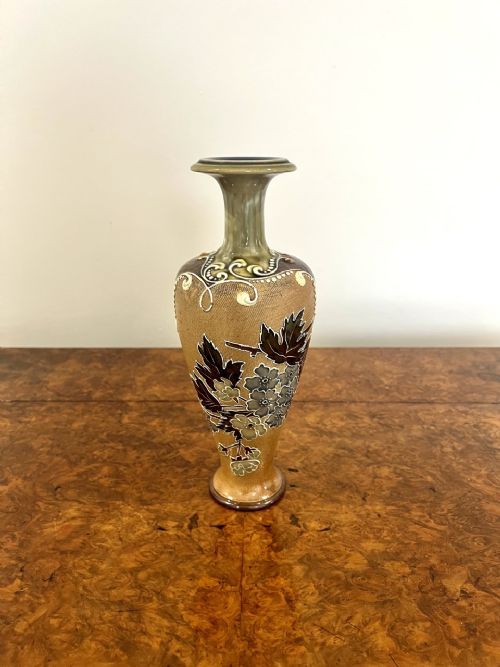


Green Glazed Floral Urn
These green glazed floral urn pieces bring tactile botanical colour to a room, ranging through 18th Century Dutch Delft to Art Nouveau stoneware.
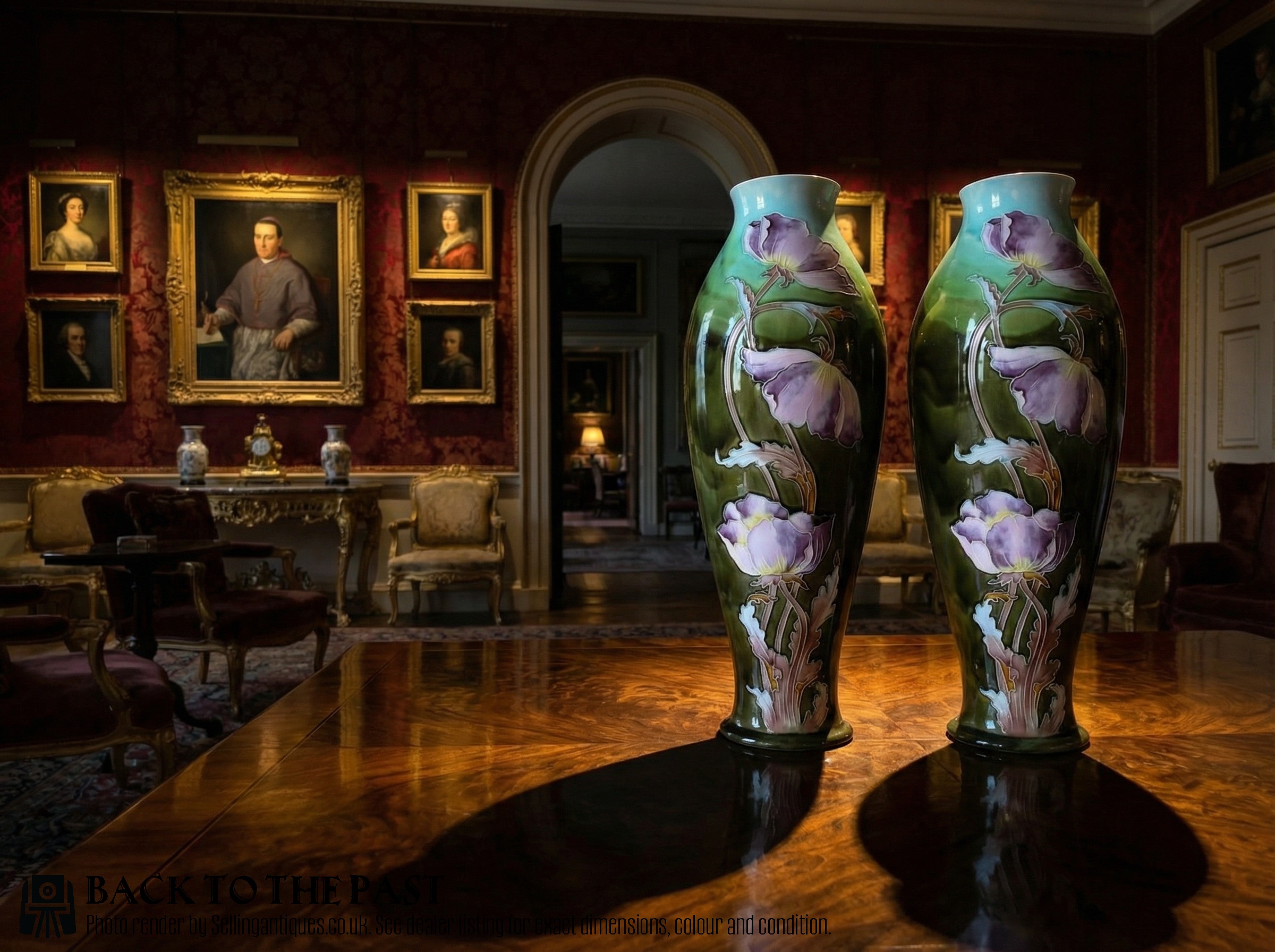
Green Glazed Floral Urn
When you search for a green glazed floral urn, you encounter substantial ceramic vessels and vases created for display and decoration. The selection spans the eighteenth century through to the early twentieth century, taking in Arts and Crafts, Aesthetic Movement, and Secessionist designs.
The pieces you are most likely to meet on this page include stoneware and faience vases from British potteries like Doulton Lambeth, alongside French faience and early Dutch delft wares. These items frequently appear in pairs and feature botanical motifs such as cherry blossom.
Makers utilised distinct regional forms, balancing utilitarian ceramic bodies with decorative floral glazes. The resulting vessels range from tall baluster shapes to rounded forms designed to hold botanical arrangements or stand alone as sculptural objects.
How they were made
Potters shaped these vessels from earthenware, stoneware, and ceramic bodies, applying coloured glazes and enamel to create the distinctive green surface finishes. Artisans threw or moulded the clay before applying intricate botanical decorations, often incorporating raised floral patterns.
Faience and stoneware techniques allowed workshops to achieve deep, lustrous surface textures that reacted with the kiln heat. Individual decorators hand-painted or glazed the pieces, resulting in subtle variations across pairs and matching sets.
Some Victorian decorator signatures remain faintly legible beneath the glaze, left by artists who spent their days painting cherry blossom by hand.
What varies in quality
The standard of a piece rests upon the crispness of the modelled floral motifs and the depth of the glaze application. Hand-painted examples attributed to specific artists demonstrate superior brushwork and glaze control compared to standard production pieces.
Form and proportion distinguish the finer examples, particularly where wheel-thrown bodies maintain balance and symmetry. The clarity of the maker marks and the preservation of the glazed surface also dictate the standing of each vessel.
Royal Doulton·Doulton Lambeth·Louisa Wakely·TG Green·Eliza Simmance·Christopher Dresser
The Green Glazed Floral Urn Glossary
- Faience
- Tin-glazed earthenware, typically featuring opaque coloured glazes over a buff ceramic body. This technique allows for painted botanical and floral decoration beneath or within the glaze.
- Stoneware
- A heavy, dense ceramic fired at high temperatures until vitrified, rendering the body impermeable to water. It provides a durable base for rich green glazes and relief decoration.
- Baluster
- An architectural form featuring a rounded lower body that tapers towards a narrow neck. Many vases in this category utilise this curved silhouette to showcase floral patterns.
- Delft
- Tin-glazed pottery originating from the Netherlands, characterised by a white or coloured enamel ground. Eighteenth-century examples provide early precedents for later floral vessel designs.
- Secessionist
- A decorative art style emerging around nineteen hundred that favoured stylised natural forms and geometric floral patterns. It heavily influenced the ceramic output of British and European potteries.
Green Glazed Floral Urn: Frequently Asked Questions
How do I clean a green glazed ceramic vase?
Dust the glazed surface gently with a soft, dry cloth to remove everyday accumulation. Avoid using abrasive cleaning agents or submerging antique porous ceramics in water.
For interior cleaning, use a damp sponge without touching any exposed historic clay or delicate enamel exterior. Let the vessel dry completely in a well-ventilated space.
Were these vessels meant for flowers?
Many of these ceramic and stoneware pieces functioned primarily as decorative mantel or table centrepieces rather than utilitarian water holders. Their artistic glazes and sculptural forms were designed to catch the light in domestic interiors.
Some robust stoneware versions can hold water for fresh stems, but collectors often use dry botanicals or display them empty to protect the historical interior glaze.
How do I tell an 18th century piece from a 20th century one?
Eighteenth-century examples often exhibit the thinner, lighter construction and distinct tin glazes characteristic of early delft production. Twentieth-century pieces frequently display heavier stoneware bodies with dense green salt-glaze or art pottery finishes.
Examining the base for potter marks, factory stamps, and the type of wear on the foot rim helps establish the chronological period. Stylistic cues like Secessionist or Art Nouveau motifs point firmly to the later period.
Why do some vases come in pairs?
Victorian and Edwardian interior design favoured symmetry, frequently placing matching vessels on either side of a fireplace, sideboard, or window ledge. Potters produced these items simultaneously to ensure the green glazes and floral patterns matched.
Keeping pairs together maintains their historical display context and increases their appeal for traditional interior styling.