


French Faience Vases
French faience vases bring tin-glazed earthenware into interiors with rich cobalt palettes, lively polychromes and distinctive historicist revivals.
French Faience Vases
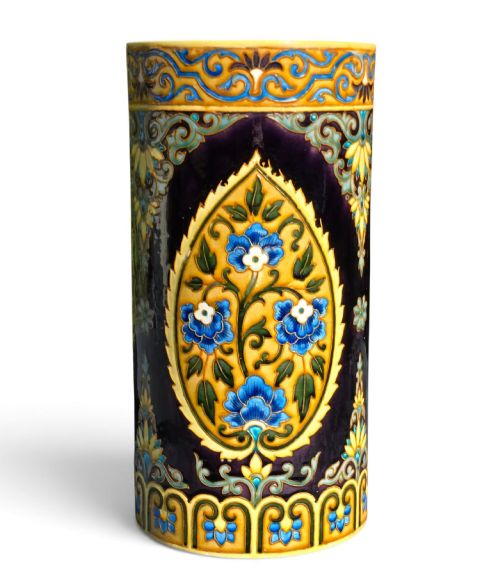
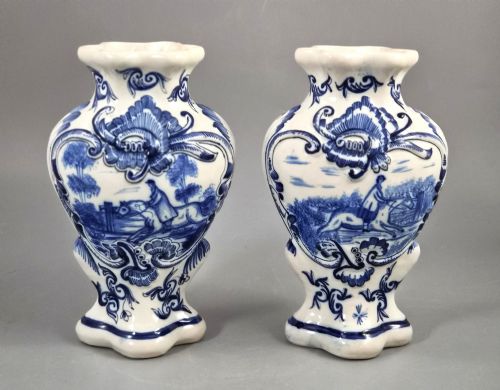
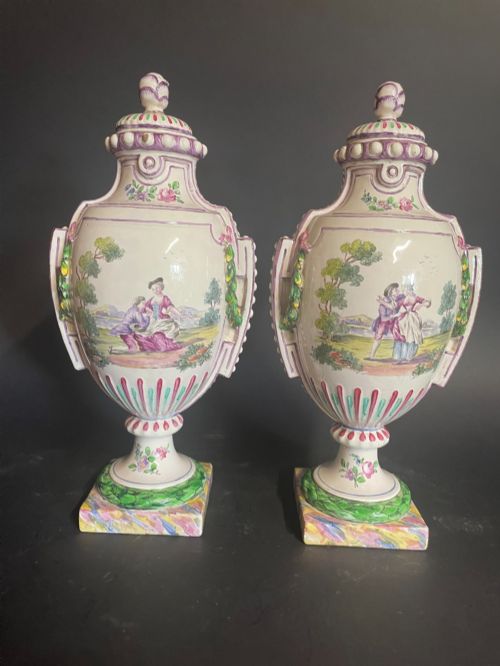
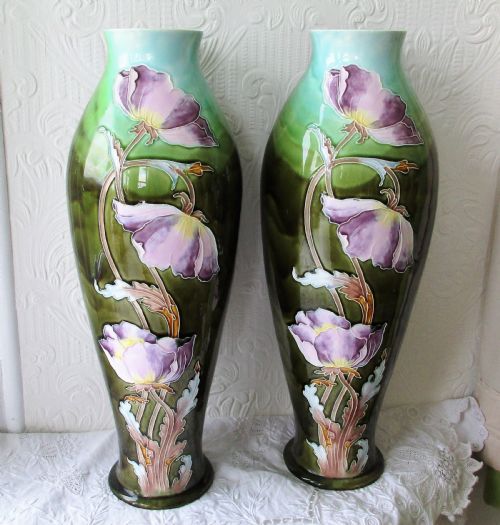
French faience vases span decorative urns, umbrella stands, wall pockets and pairs of handled vessels created across the nineteenth and early twentieth centuries. When you search for french faience vases, you encounter tin-glazed earthenware objects shaped by regional potteries from Desvres, Sceaux, Rouen and Gien. These vessels range from domestic posy holders to large floor-standing umbrella stands, often decorated in blue and white or polychrome pigments.
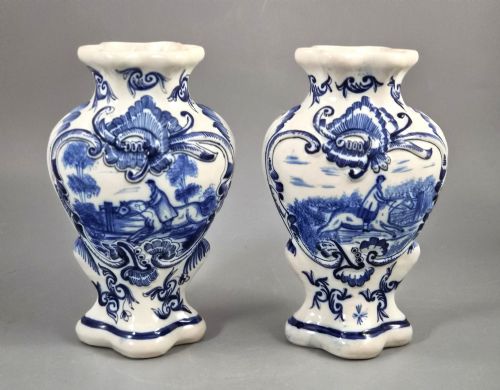
The aesthetic vocabulary draws heavily from historical revivals, taking inspiration from Dutch Delft, Iznik ceramics, Renaissance motifs and French Rococo ornamentation. Alongside traditional forms, later nineteenth and early twentieth-century examples embrace organic Art Nouveau styling with fluid contours and stylised floral motifs. Most pieces survive in pairs, reflecting their original purpose as symmetrical mantelpiece ornaments.
Materials and production methods
Makers formed these vessels from earthenware clay, coating the fired body with an opaque white tin-glaze to provide a smooth ground for painting. Pigments such as cobalt blue and manganese purple were applied directly to the porous unfired glaze before a final kiln firing fixed the colours.
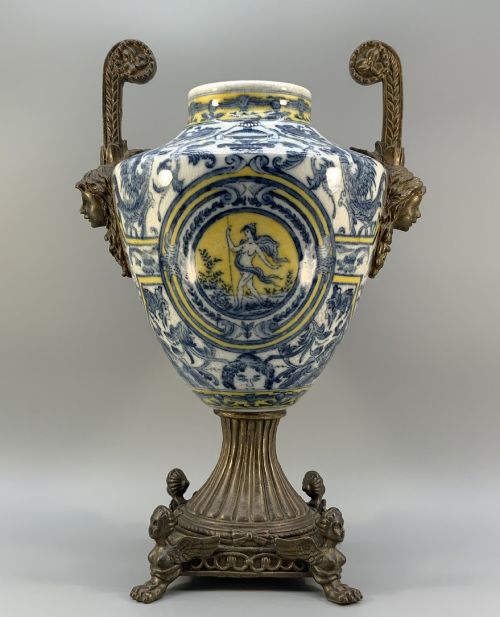
Certain ambitious examples incorporate cast bronze mounts secured to the ceramic body, combining metalwork with tin-glazed earthenware. The glazing technique yields a glossy surface that holds deep blues and polychrome enamel details securely.
The listings show French faience vases spanning the nineteenth and early twentieth centuries, featuring earthenware bodies with tin-glazes and bronze mounts.
Distinctions in quality
Quality rests upon the crispness of the hand-painted decoration, the evenness of the tin-glaze surface and the ambition of the ceramic form. Pieces produced by documented potteries or named artists display sharper brushwork and more complex polychrome or manganese detailing.
The structural complexity of the object also sets examples apart, distinguishing simple posy vases from large urns with lids or vessels featuring integrated bronze mounts.
Théodore Deck·Fourmaintraux-Courquin·Sceaux·Jules Vieillard·GIEN
The French Faience Vases Glossary
- Faience
- Tin-glazed earthenware produced in France and other European regions, noted for its opaque white surface and painted decoration. The technique allows for intricate designs applied directly to the wet glaze.
- Tin-Glaze
- A lead glaze rendered opaque by the addition of tin oxide, creating a white background for painting. This finish absorbs pigments to produce soft outlines.
- Polychrome
- Decoration employing multiple colours rather than a single hue like blue and white. This method appears on pieces inspired by palette traditions from Rouen and Delft.
- Manganese
- A dark purple-brown metallic oxide used for painting ceramic decoration. It provides a distinct dark tone seen in manganese blue and white vessels.
- Wall Pocket
- A flat-backed vessel designed to hang directly on a wall for holding flowers or foliage. These items offer a decorative vertical accent.
French Faience Vases: Frequently Asked Questions
What is faience?
Faience is tin-glazed earthenware made by coating a clay body with an opaque white glaze before painting.
Potters then fire the piece to fuse the pigments into the glossy surface.
How do I spot a reproduction?
Examine the glaze texture, brushwork precision and any factory marks on the underside of the base.
Nineteenth-century examples display hand-painted details and historic revival styles rather than modern transfer printing.
Where were these made?
Production took place across various French ceramic centres including Desvres, Sceaux, Rouen and Gien.
Each workshop utilised distinct regional styles ranging from Delft adaptations to Art Nouveau designs.
Can I use them for flowers?
Many smaller vessels and posy vases function well for holding water and fresh stems.
Larger urns and umbrella stands suit dry arrangements or display use due to their porous earthenware bodies.