
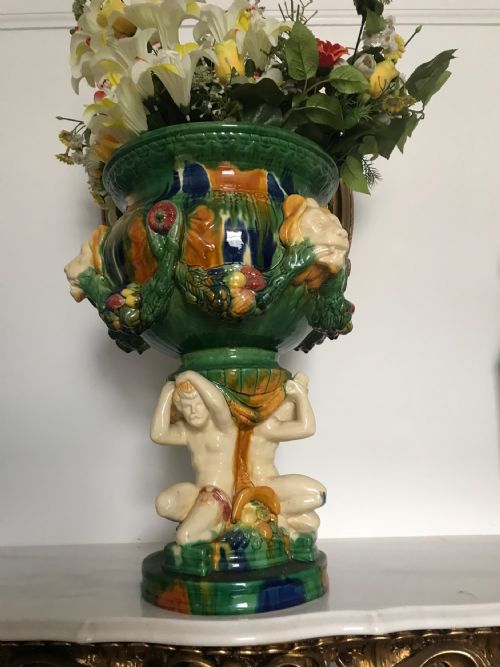


Tin Glazed Earthenware Urns
Tin glazed earthenware urns are decorative vessels shaped by centuries of European ceramic tradition, offering collectors bold painted designs and historic earthenware forms.
Tin Glazed Earthenware Urns
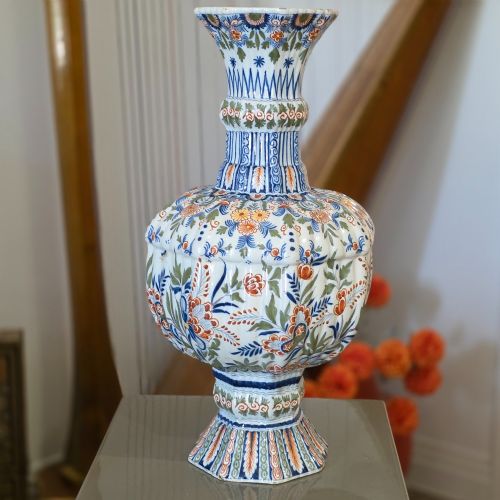
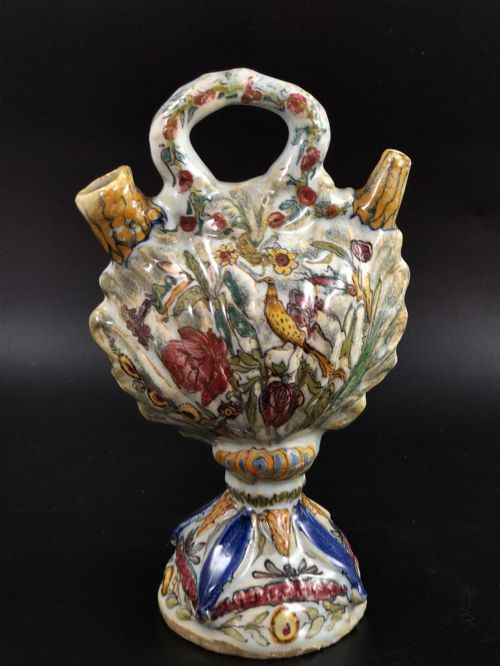
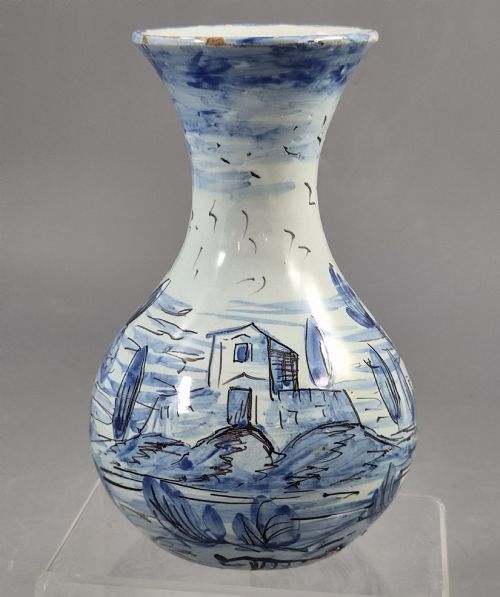
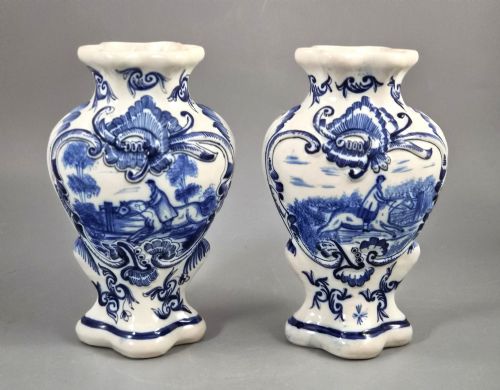
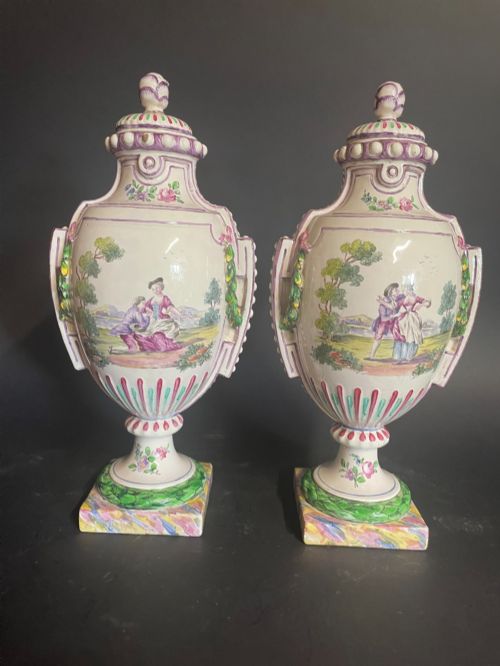
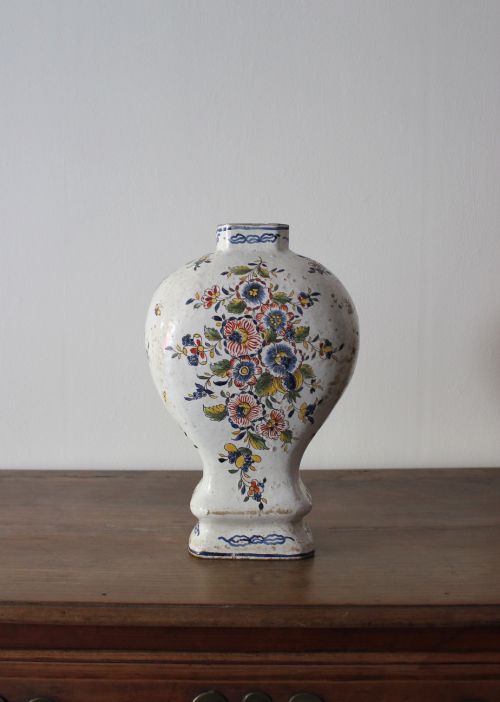
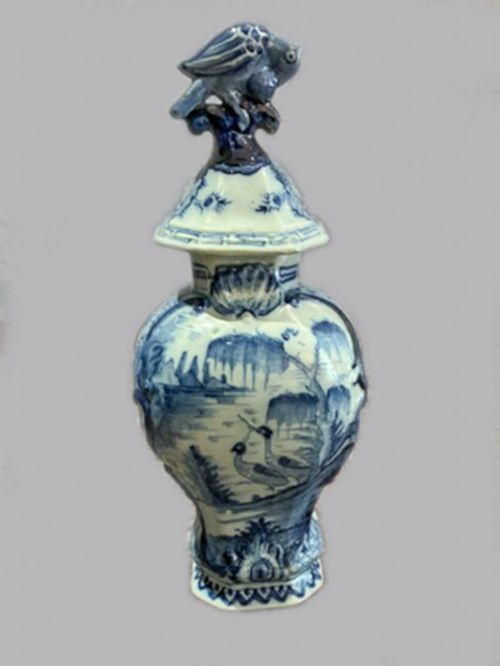
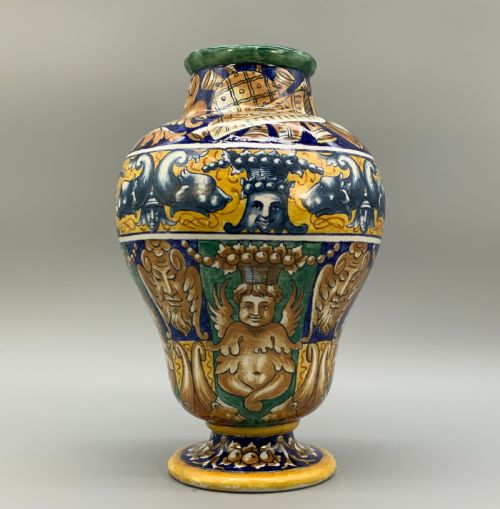
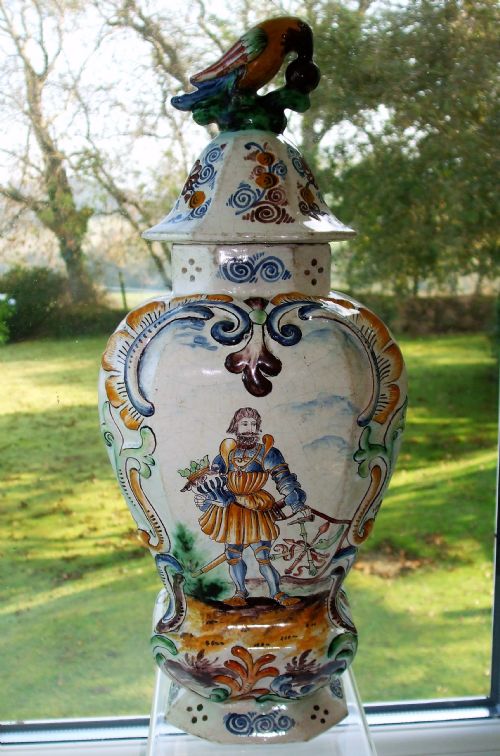
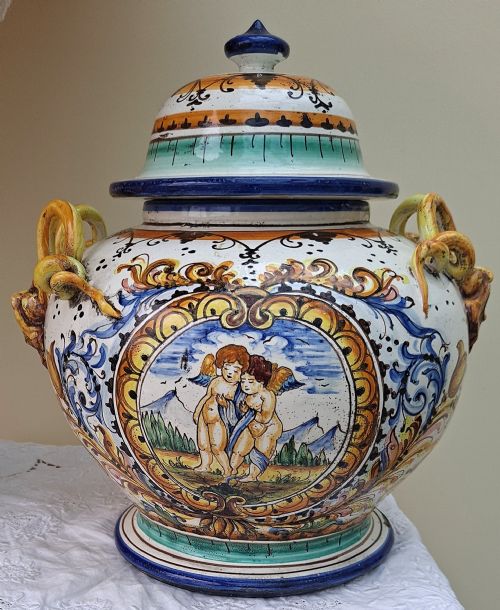
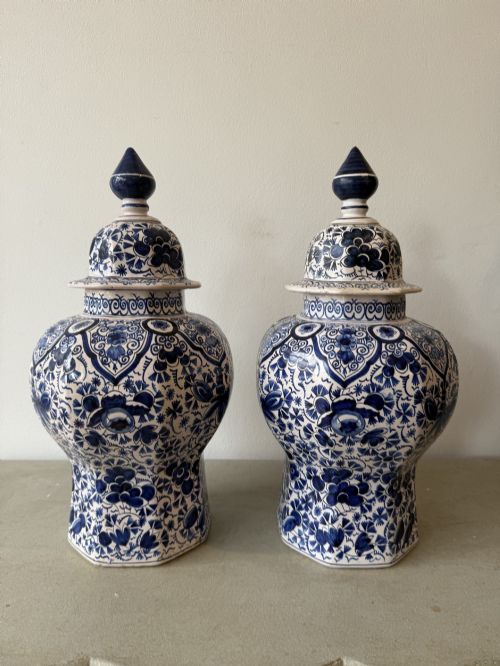
Tin glazed earthenware urns encompass a diverse selection of decorative vessels, lidded vases, and jars originating from Dutch, French, and Italian traditions. Buyers searching this phrase most frequently encounter 18th-century Delftware alongside 19th-century French faience and Italian majolica. These pieces display forms ranging from baluster vases and garden urns to pilgrim flasks and tobacco jars.
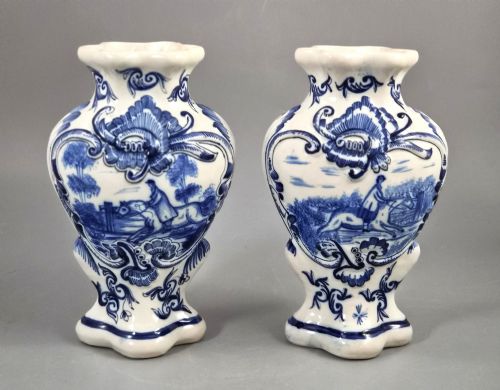
The objects span multiple centuries, including examples from the seventeenth, eighteenth, and nineteenth centuries. Stylistic influences vary from Dutch Baroque and Chinoiserie to French Rococo and Renaissance Revival. Many items appear as pairs, while others stand alone as substantial cabinet or garden ornaments.
How they were made
These pieces are constructed from earthenware clay, coated with an opaque white tin glaze that provides a smooth surface for painting. Artisans applied cobalt blue, manganese, or polychrome pigments directly onto the unfired glaze, absorbing the colours permanently during the kiln firing process.
Brass fittings or handles occasionally supplement the ceramic bodies on specific lidded vases and urns. The manufacturing techniques unite traditional pottery forming methods with specialised tin-glazing formulas developed across European ceramic centres.
The selection includes regional expressions from Dutch Delftware to French faience and Italian majolica, encompassing forms from simple beakers to figural pedestals.
What varies in quality
The standard of a tin glazed earthenware urn rests upon the crispness of the hand-painted decoration and the uniformity of the tin glaze. Pieces featuring intricate Chinoiserie motifs, botanical scenes, or detailed polychrome figures demonstrate superior artistic execution compared to simpler repetitive patterns.
Proportion and scale also distinguish the range, as exceptionally large lidded jars and symmetrical pairs command greater visual presence. The sophistication of the revival styles, from Renaissance Revival to Rococo, reflects the skill of the 19th-century potteries emulating earlier historic forms.
Cantagalli·Fourmaintraux-Courquin
The Tin Glazed Earthenware Urns Glossary
- Delftware
- Tin-glazed earthenware produced in the Netherlands, traditionally recognised for blue and white or polychrome decoration. This term is central to identifying Dutch pieces from the seventeenth and eighteenth centuries.
- Faience
- Tin-glazed earthenware originating from France and other European nations. It encompasses the decorative vases and urns produced by factories such as Desvres and Sceaux.
- Majolica
- Italian tin-glazed earthenware decorated with opaque colours, often associated with Renaissance styles and later nineteenth-century revivals. The term frequently applies to Italian vases and pilgrim flasks.
- Baluster
- A vase form characterised by a rounded body that tapers toward the neck and base. This shape appears regularly among eighteenth-century lidded jars and urns.
- Chinoiserie
- European artistic interpretations of Chinese decorative motifs. It frequently appears on seventeenth and eighteenth-century blue and white ceramic vessels depicting figures, birds, and flowers.
Tin Glazed Earthenware Urns: Frequently Asked Questions
What are tin glazed earthenware urns?
Tin glazed earthenware urns are ceramic vessels coated with an opaque tin-opacified glaze and decorated with painted designs. They include historic forms produced across Dutch, French, and Italian kilns.
These objects functioned primarily as decorative cabinet pieces, garden ornaments, or lidded jars for storage during past centuries.
What is the difference between faience and majolica?
Faience generally refers to tin-glazed earthenware made in France, whereas majolica denotes the Italian tradition of tin-glazed ceramics. Both share the fundamental technique of painting over an opaque white glaze.
French faience often displays Rococo revival styles, while Italian majolica frequently employs Renaissance revival themes and rich polychrome palettes.
How were these urns used historically?
These vessels served chiefly as ornamental displays within grand interiors, country houses, and gardens. Large urns and lidded jars acted as focal points on furniture or pedestals.
Specific forms like pilgrim flasks and tobacco jars combined functional storage with elaborate painted decoration for display.
How do I care for antique tin glazed ceramics?
Display these earthenware pieces away from direct sunlight and fluctuating temperatures to protect the ceramic body and glaze. Dust them gently with a dry, soft cloth.
Avoid using water or cleaning solutions on the glaze, particularly where old repairs or delicate painted surfaces exist.