


Blue White Faience Urns
Blue white faience urns bring striking cobalt pigment and tin glaze to domestic spaces, offering collectors bold decorative presence rooted in centuries of European ceramic tradition.
Blue White Faience Urns
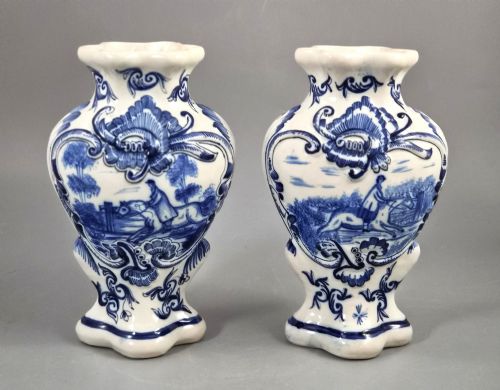
When you search for blue white faience urns, you encounter a selection of decorative vessels spanning several centuries of European production. These pieces range from substantial garden urns and lidded jars to smaller decorative vases and posy vessels.
The objects on this page draw from distinct regional traditions, most notably French centres like Desvres and Dutch Delftware output. You see forms influenced by Dutch Baroque, French Rococo Revival, and Renaissance Revival styles, often featuring traditional botanical or Chinoiserie motifs.
How they were made
Makers shaped these vessels from earthenware or ceramic bodies before applying tin glaze to create an opaque white surface. Cobalt pigment was then painted directly onto the unfired or raw glaze to produce the characteristic blue decoration.
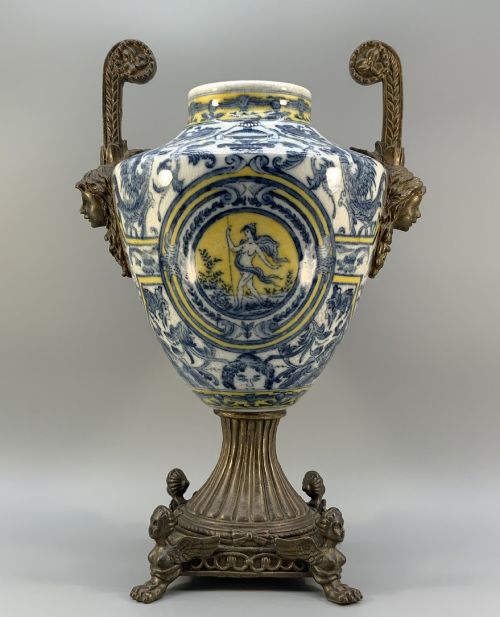
Certain examples incorporate cast bronze mounts secured to the ceramic body, adding structural weight and decorative contrast. Kiln firing fixed the cobalt pigment into the tin glaze, resulting in the durable finish seen on surviving pieces.
Several pieces depict cheerful hand-painted birds perched amongst botanical foliage.
What varies in quality
The refinement of the painted cobalt decoration distinguishes finer examples from simpler production pieces, with fluid brushwork and detailed bird or floral motifs demanding higher skill. The crispness of the tin glaze application and the overall balance of the ceramic form also influence the visual impact.
The presence of secondary elements, such as fitted lids or cast bronze mounts, alters the character and complexity of an urn. Pieces bearing identifiable factory marks or those maintaining their original pairs reflect greater historical completeness.
Fourmaintraux-Courquin
The Blue White Faience Urns Glossary
- Tin glaze
- An enamel glaze rendered opaque by the addition of tin oxide. This surface provided a smooth white background for painting in cobalt and other metal oxides.
- Cobalt pigment
- A metallic colorant used under the glaze to produce deep blue decoration on ceramics. It withstands high kiln temperatures without losing intensity.
- Chinoiserie
- European artistic style reflecting Chinese aesthetic influences. This style appears frequently on seventeenth and eighteenth-century tin-glazed vessels depicting imagined oriental landscapes and flora.
- Bronze mounts
- Cast bronze hardware fitted to ceramic vessels. These metal additions served decorative functions or reinforced structural joins.
Blue White Faience Urns: Frequently Asked Questions
What is faience?
Faience is tin-glazed earthenware developed across Europe as potters sought to imitate prized Chinese porcelain. The technique involves coating an earthenware body in an opaque white glaze which accepts painted decoration.
Painted designs using cobalt pigment were applied directly to the surface before a final kiln firing fixed the colours permanently into the glaze.
How old are these urns?
The pieces span from the seventeenth century through to the nineteenth century, reflecting evolving European ceramic tastes. Earlier examples often originate from Dutch kilns, while later items frequently hail from French workshops.
Stylistic indicators such as Renaissance Revival or French Rococo motifs help contextualise the manufacturing period of individual vessels.
Are these urns waterproof?
While ceramic urns were traditionally utilised for dry display or as lidded storage jars, many can hold water for floral arrangements. However, antique tin glaze can possess microscopic crazing developed over centuries.
It is wise to place a discreet liner inside older vessels if you intend to use them regularly for fresh flowers.
How do I clean my urn?
Gentle dusting with a soft, dry cloth is usually sufficient to maintain the glazed surface. Avoid harsh chemical cleaners or abrasive scouring pads which can scratch the delicate tin glaze.
If washing is necessary, use lukewarm water with mild soap and dry thoroughly with a lint-free cloth straight away.