


Rococo Style Ceramic Urns
Rococo style ceramic urns bring exuberant nineteenth-century French and continental decorative forms into domestic interiors through curved porcelain bodies and gilt bronze mounts.
Rococo Style Ceramic Urns
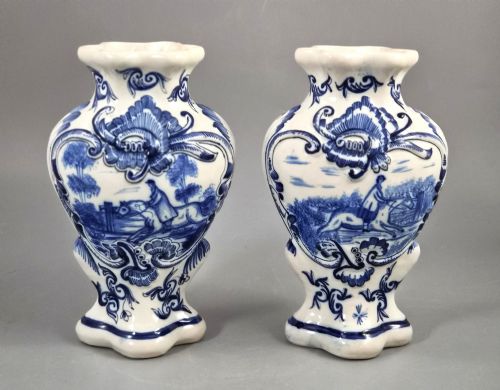
Rococo style ceramic urns span nineteenth-century production across France, England, Germany, and the Netherlands, taking the form of lidded vases, garniture sets, table lamps, and centrepieces. Buyers seeking these pieces encounter substantial nineteenth-century porcelain and faience bodies shaped with asymmetrical scrolls and naturalistic motifs typical of revival aesthetics.
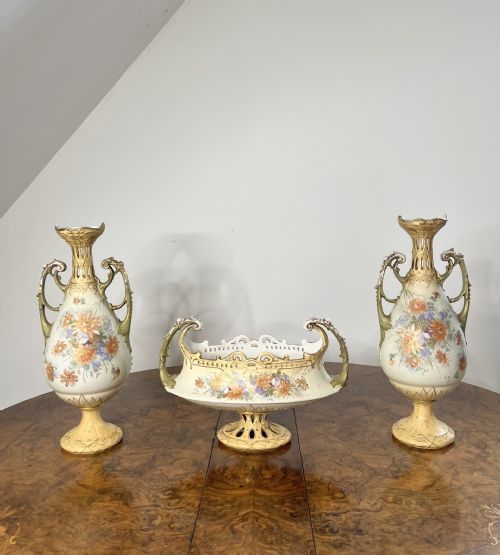
The objects frequently adopt French Sèvres styles alongside Dresden, Old Paris, and English Georgian derivations, appearing singly or in matching pairs. Makers utilised earthenware, ceramic, and hard-paste porcelain, frequently mounting the finished vessels in gilt bronze, ormolu, or brass.
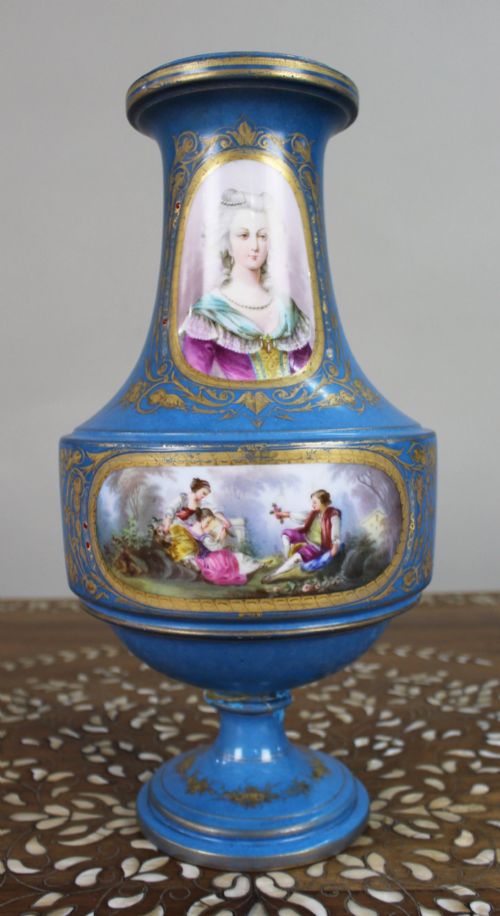
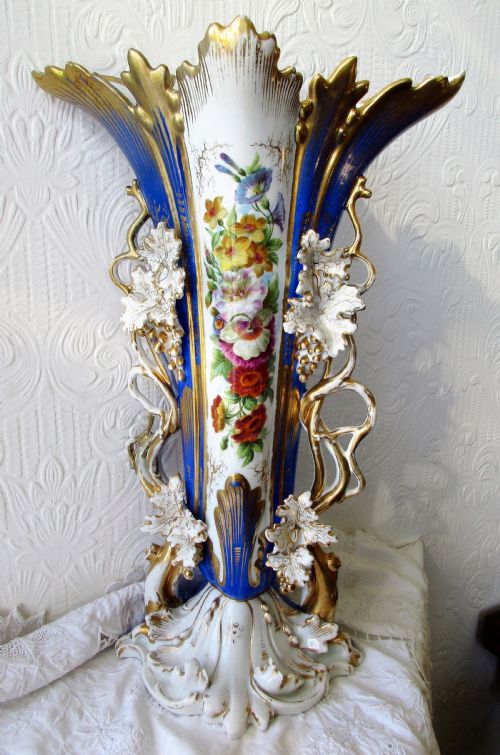
Vessels range from petite table lamp bases to tall lidded vases exceeding one metre in height, incorporating hand-painted floral panels, Watteau scenes, and cobalt blue grounds. Pieces emerge from notable continental hubs including Sevres, Meissen, and Vienna traditions, reflecting nineteenth-century historical revivalism.
Materials and construction methods
Makers shaped these vessels from ceramic, earthenware, and hard-paste porcelain before applying hand-painted glazes, enamels, and cobalt blue grounds. Artisans frequently incorporated transfer prints alongside delicate hand-applied brushwork depicting floral bouquets and figurative pastoral scenes.
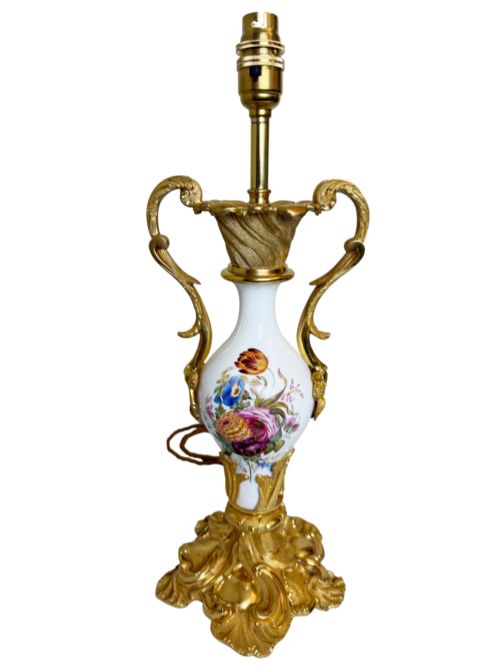
Metal components involved cast ormolu, gilt bronze, and brass, secured as mounts, bases, handles, and lids around the ceramic bodies. Skilled metalworkers chased and gilded these bronze fixtures to complement the curved porcelain contours of the revival designs.
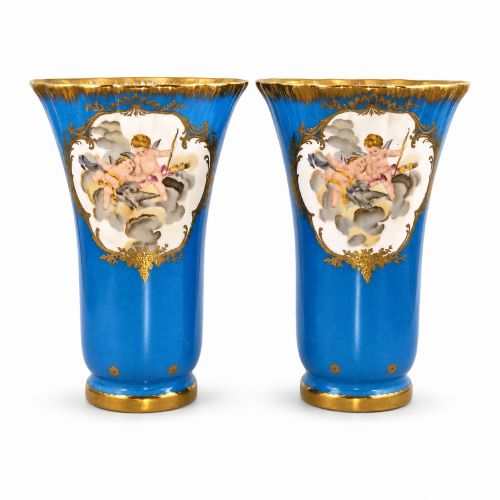
Victorian mantelpieces frequently squeezed in porcelain cherubs climbing out of vases alongside heavy gilt bronze mounts just to ensure maximum splendour.
Factors determining quality
Quality rests upon the crispness of the porcelain modelling and the fineness of the hand-painted detailing across floral or figural panels. Superior examples exhibit precise brushwork without blurring, alongside well-fired enamel colours and deep cobalt grounds.
The integration of the metal mounts defines the upper tier of production, where cast ormolu or gilt bronze fits the ceramic body snugly and displays sharp chasing. Weaker pieces show looser metal assembly and simpler, repetitive factory painting rather than detailed individual artistry.
Fourmaintraux-Courquin·Samson Paris·Royal Vienna·Helena Wolfsohn·Vion et Baury·Sitzendorf
The Rococo Style Ceramic Urns Glossary
- Ormolu
- Gilded bronze mounts applied to furniture, clocks, and ceramic vessels to accent Rococo revival designs. The technique involves applying a mercury and gold amalgam to cast bronze.
- Bleu Céleste
- A bright turquoise blue ground colour famously developed at the Sèvres porcelain factory in France. This shade appears frequently on nineteenth-century revival vases.
- Garniture set
- A matched grouping of three or more vases and urns designed to sit symmetrically upon a mantelpiece or sideboard. These sets gained popularity during the nineteenth century.
- Potpourri
- A lidded vessel perforated to allow scented dried plant materials to fragrance a room. Many nineteenth-century ceramic examples feature elaborate pierced ceramic covers.
- Bisque porcelain
- Unglazed white porcelain fired to a matte, marble-like finish. It allows sculptural details like cherubs and floral reliefs to display sharp, unglazed definition.
Rococo Style Ceramic Urns: Frequently Asked Questions
How do I identify a Sèvres style urn?
Sèvres style urns typically feature rich cobalt or bleu céleste blue grounds, hand-painted pastoral or floral panels, and elaborate gilt bronze ormolu mounts. The styling mimics eighteenth-century French royal production.
Many pieces from the nineteenth century carry painted or impressed factory marks that reference the French tradition without being genuine eighteenth-century pieces.
What is the difference between an urn and a vase?
Urns traditionally feature a covered vessel form supported on a footed base, often designed for decorative display or holding potpourri rather than loose flowers. Vases encompass a broader category of open-topped vessels used for floral arrangements.
In nineteenth-century revival manufacturing, the terms often overlap as makers produced ornamental lidded vessels primarily for mantel decoration.
Were these urns wired for electricity originally?
Nineteenth-century table lamps listed in this category were originally produced as oil lamps or decorative vases before conversion into electric lamps at later dates. The metal ormolu and ceramic bodies started life as mantel ornaments or lighting vessels.
Buyers should examine the wiring pathway and base fittings to understand how the conversion was executed without damaging the ceramic body.
How should I clean a gilt bronze mounted vase?
Gilt bronze and ormolu mounts require gentle dusting with a soft, dry brush to prevent abrasive wear to the thin gold leaf or gilding layers. Moisture and chemical polishes can strip the historic gilt surface from the bronze.
The ceramic or porcelain body can be wiped carefully with a damp cloth, avoiding any areas where hand-painted enamels are flaking.