


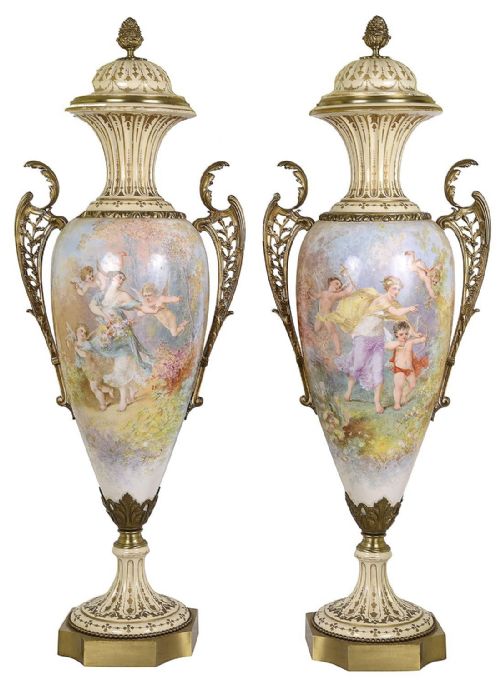


Vintage French Porcelain Urns
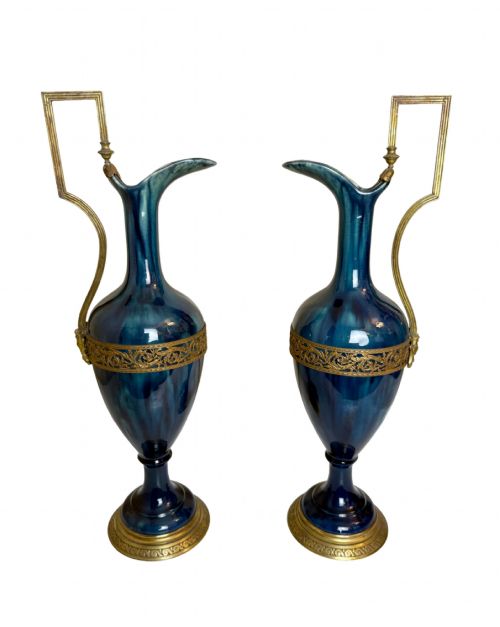
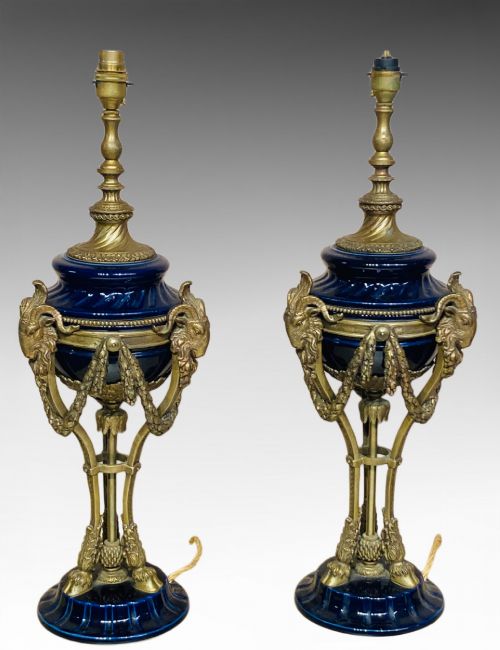
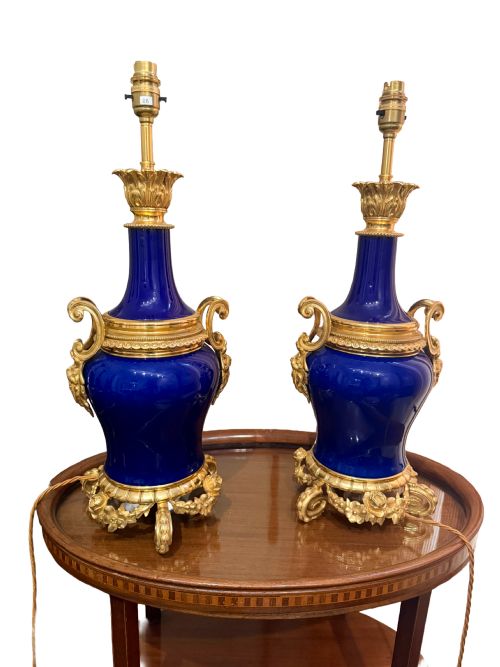
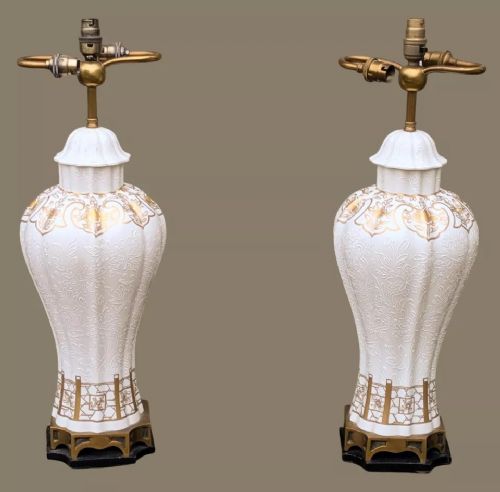
These vintage french porcelain urns bring nineteenth-century elegance to a room through hand-painted florals, crackle ware finishes and gilt bronze mounts.
Vintage French Porcelain Urns
Vintage french porcelain urns encompass a diverse selection of decorative vessels and converted table lamps spanning the nineteenth century through the early twentieth century. Buyers seeking this phrase typically encounter pairs of blue glazed or hand-painted porcelain bodies accented with metal mounts.
The objects take various forms including lidded vases, ewers and ceramic urns executed in historical idioms such as French Neoclassical, Rococo Revival and Chinoiserie. Many pieces originate from Parisian workshops or regional potteries, blending traditional ceramic techniques with ornate decorative hardware.
Table lamps adapted from period vases and urns appear frequently alongside traditional lidded vessels. These pieces draw upon decorative vocabularies associated with Sevres, Samson and Old Paris productions.
Materials and Craftsmanship
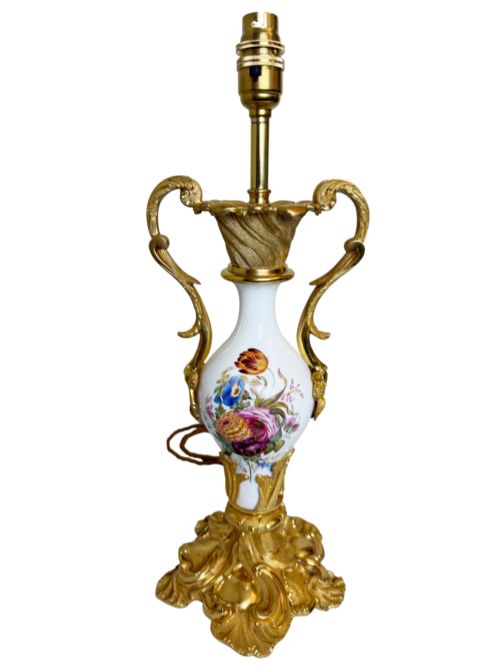
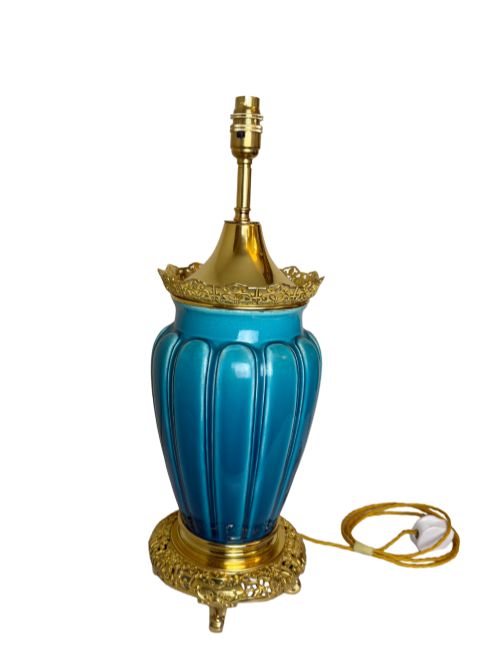
Makers shaped ceramic bodies from fine porcelain and faience, frequently applying coloured glazes in shades of blue, turquoise or white. Artisans then decorated these surfaces with hand-painted floral motifs, raised white enamel and delicate gilt highlights.
Metal components such as ormolu, gilt bronze, brass and gold leaf provide structural trim and decorative mounts around the bases, handles and rims. Fabric elements occasionally supplement these configurations, particularly in lamp adaptations dating to later decades.
Object forms include table lamps, lidded urns, decorative ewers and painted vases reflecting French Neoclassical and Rococo Revival styles.
Distinctions in Quality
The standard of execution in hand-painted details and enamel work sets finer examples apart from simpler productions. Precision in the application of gilt bronze or ormolu mounts also indicates the level of craftsmanship involved.
The integrity of the porcelain body, alongside the refinement of stylistic references like French Neoclassical or Rococo Revival ornament, determines the overall caliber of each piece.
Samson, Paris·Jacob Petit·Sevres
The Vintage French Porcelain Urns Glossary
- Ormolu
- Gilded bronze mounts applied to the edges, handles and bases of ceramic urns. This technique adds metallic contrast and ornate sculptural detail to the porcelain.
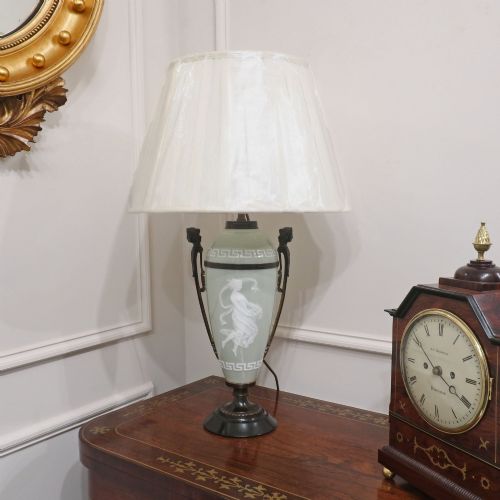
- Pate-sur-pate
- A ceramic decorating method where successive layers of white slip are built up on a coloured porcelain ground to create a low relief design.
- Faience
- Tin-glazed earthenware produced in France and other European regions. It provides a porous ceramic body for painted surface decoration.
- Ewer
- A large jug with a wide spout and elaborate handle, often used as a decorative urn or vase in nineteenth-century interiors.
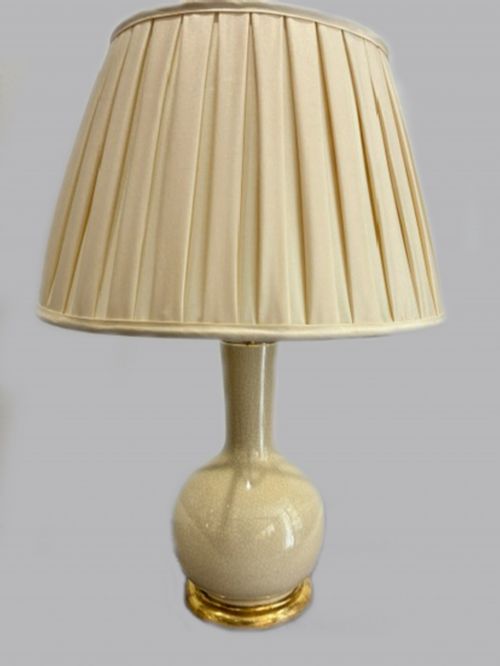
- Crackle ware
- A ceramic finish featuring a network of fine decorative cracks within the glaze. This intentional effect mimics ancient pottery styles.
Vintage French Porcelain Urns: Frequently Asked Questions
How are these urns usually displayed?
These decorative urns and vases sit well upon mantelpieces, sideboards and occasional tables as standalone focal points. Pairs provide symmetry when arranged on either side of a fireplace or mirror.
Many examples function as table lamps, combining ambient lighting with period ceramic artistry. Their proportions suit living rooms and studies seeking nineteenth-century character.
Were these urns originally made as lamps?
Most porcelain urns and vases began as decorative lidded vessels or ewers during the nineteenth century. Artisans subsequently converted many of these pieces into table lamps by adding electrical fittings and fabric shades.
Some configurations retain their original form as lidded jars or display vases without wiring. Both converted and unconverted pieces share similar stylistic roots in French porcelain production.
How do I identify the period of a piece?
Dating relies upon stylistic markers such as Rococo Revival curves, Neoclassical symmetry or Chinoiserie motifs common in nineteenth-century French design. Hand-painted details, glaze colours like turquoise blue, and the presence of ormolu mounts offer further clues to the era of manufacture.
Changes in ceramic bodies and mounting techniques across the eighteen-fifties through the early nineteen-hundreds help distinguish mid-century works from later productions.
What styles influence these porcelain designs?
Designs draw heavily on French Neoclassical, Rococo Revival and French Chateau aesthetics popular throughout the nineteenth century. Artisans also referenced earlier ceramic traditions, including Qianlong styles and historic Sevres aesthetics.
These varied influences appear in the shape of the handles, the floral painting patterns and the architectural form of the mounting hardware.