
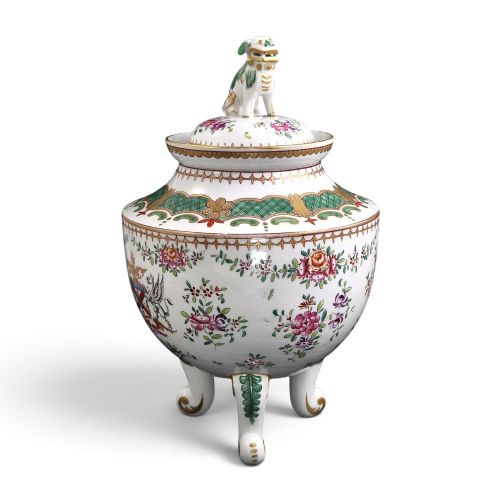
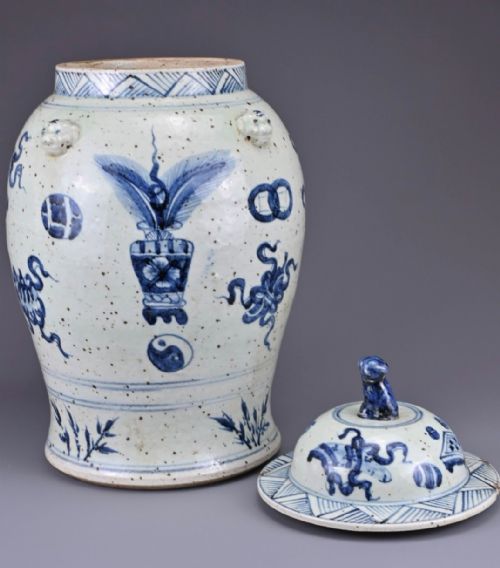
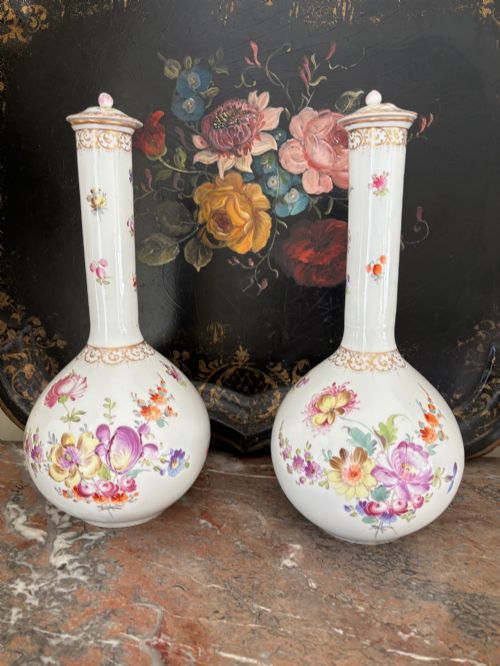
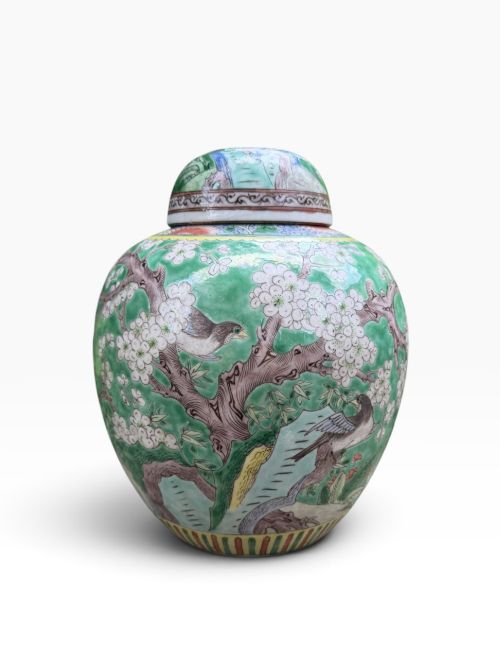
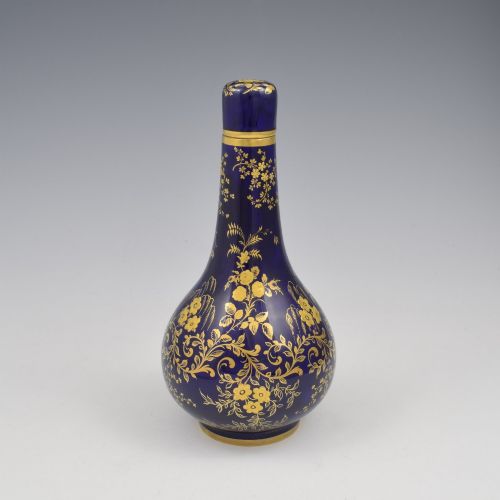
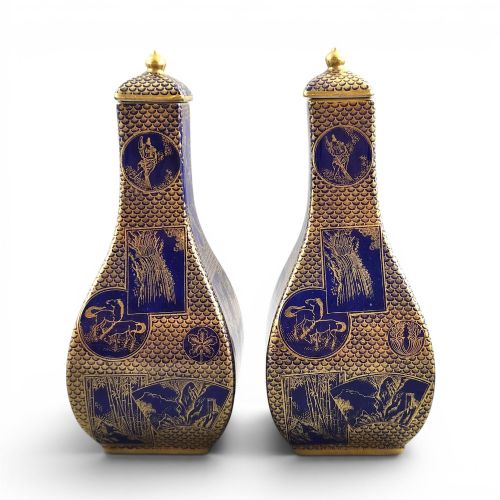
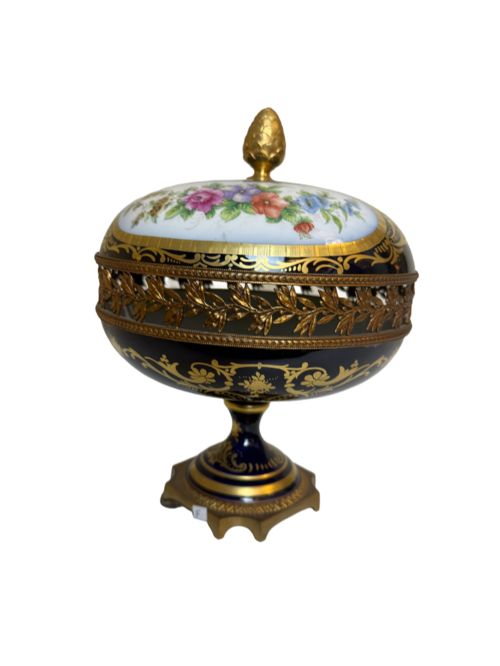
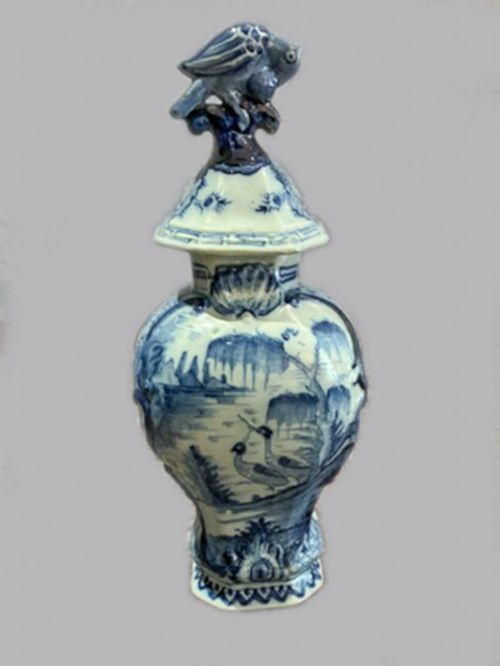

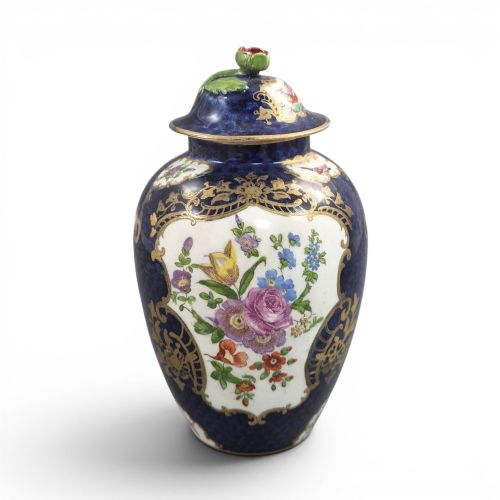
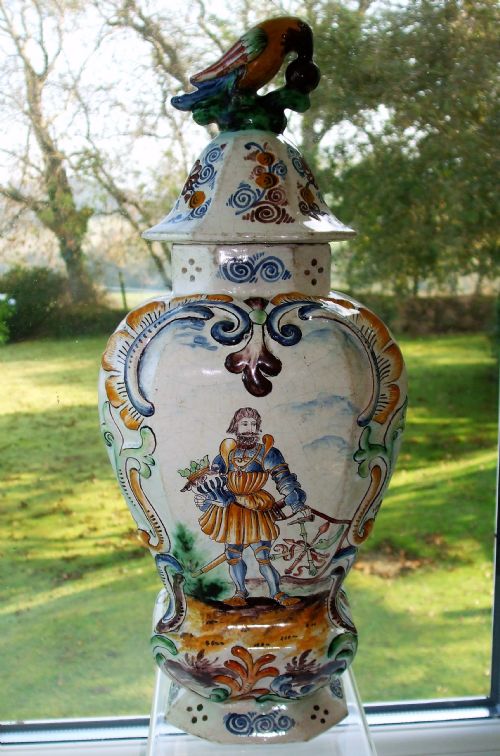
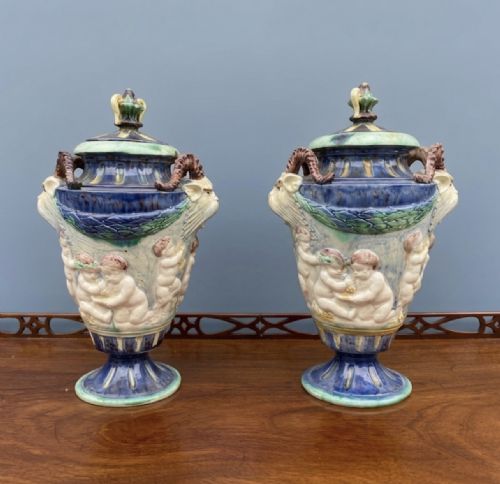
Covered Ceramic Urn
These covered ceramic urn vessels combine utility and ornament, spanning Georgian, Victorian, and Edwardian periods in porcelain and earthenware.
Covered Ceramic Urn
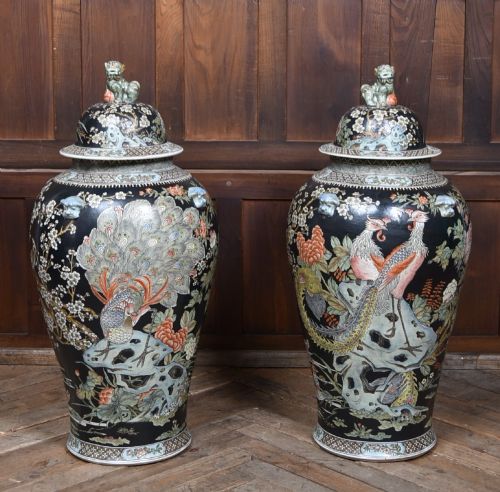
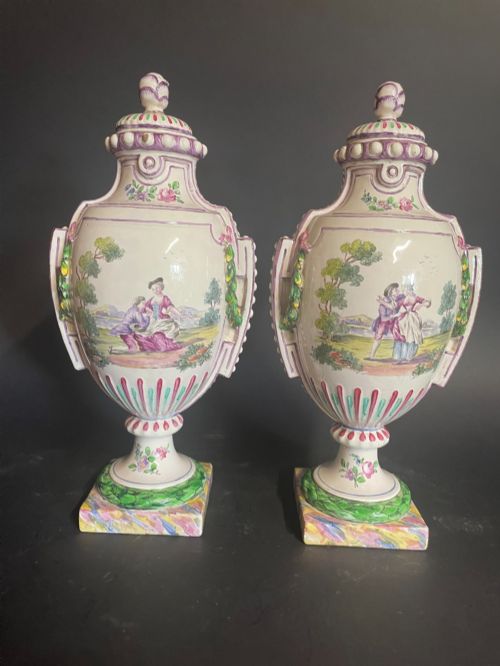
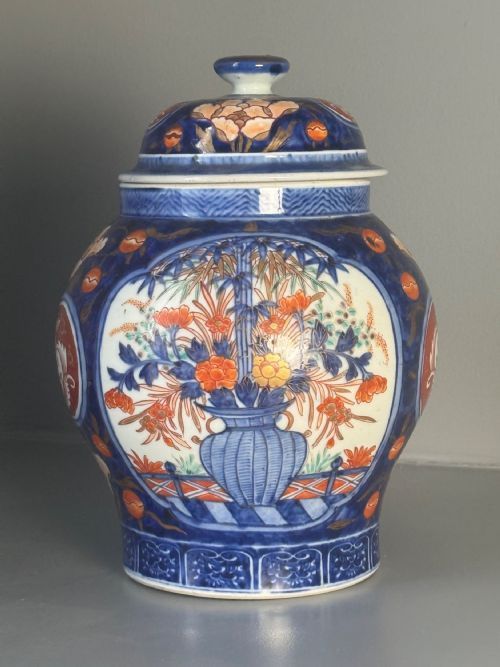
A covered ceramic urn is a lidded vessel designed for display, storage, or pot-pourri, often taking the form of a ginger jar, vase, or palatial floor jar. You will encounter nineteenth-century examples alongside eighteenth-century Dutch and English pieces.
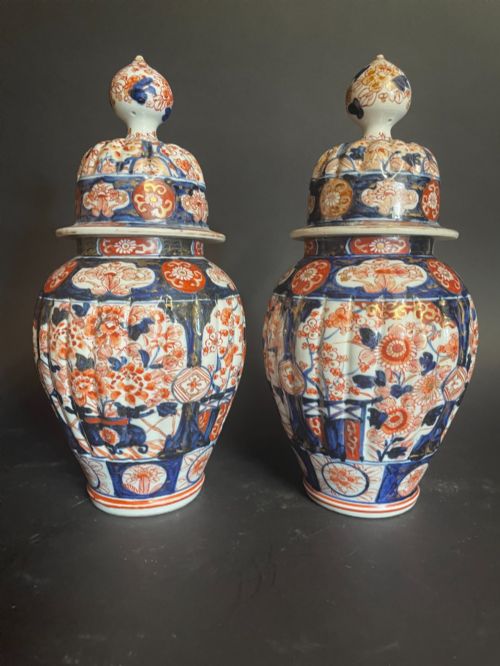
The selection here encompasses European factories such as Derby, Worcester, and Sitzendorf alongside Chinese export porcelain and Japanese Imari and Satsuma wares. These objects served both practical storage roles and purely decorative functions in period interiors.
Forms range from bulbous ginger jars to monumental pairs of vases with fitted lids, reflecting diverse global ceramic traditions from the Qing Dynasty to the Meiji period.
How they were made
Potters shaped these bodies from porcelain, ironstone, earthenware, and tin-glazed clay, applying rich cobalt blue pigments, enamels, and gold leaf before high-temperature firing.
Many European and Asian pieces received meticulous hand-painted floral or figural decoration, sometimes complemented by specialised glazes like tin-glaze or powder blue grounds.
Several lidded jars spent their second lives converted into elegant table lamps before finding their way back to matching lids.
What varies in quality
Quality rests in the crispness of the hand-painted brushwork, the evenness of the glaze, and the precision with which the lid fits the body of the vessel.
The skill of the ceramic modeller dictates the elegance of the form, while the richness of the gilding and enamel saturation separate standard production pieces from exceptional factory outputs.
Samson Paris·Sitzendorf·Derby Porcelain·Mason's·Limoges·Chamberlain Worcester·Booths·Royal Worcester·Coalport·Crown Staffordshire·Spode
The Covered Ceramic Urn Glossary
- Tin-glazed earthenware
- Earthenware coated with a glaze containing tin oxide, producing an opaque white surface suitable for painted decoration.
- Ironstone
- A heavy, durable type of earthenware patented in the nineteenth century to imitate Chinese porcelain.
- Imari
- A style of Japanese export porcelain characterised by underglaze blue and iron red, frequently accented with gold.
- Pot-pourri jar
- A lidded vessel pierced or designed to hold dried flowers mixed with spices to scent a room.
- Chinoiserie
- European artistic styles reflecting Chinese motifs and artistic traditions, popular across the eighteenth and nineteenth centuries.
Covered Ceramic Urn: Frequently Asked Questions
What were covered ceramic urns used for?
These vessels originally served to store dry goods, spices, or tea, or functioned as decorative garniture sets on mantelpieces.
Over time, many larger jars and urns transitioned into purely ornamental items or housing for dried botanical mixtures.
How do I identify eighteenth-century pieces?
Eighteenth-century examples often display tin-glazed earthenware bodies, delicate hand-painted delft designs, or early English soft-paste porcelain formulations.
Examining the glaze pooling and base characteristics helps distinguish these older ceramics from later nineteenth-century revivals.
Where were Japanese Imari jars made?
Japanese Imari jars on this page originate primarily from the Arita kiln region during the Edo and Meiji periods.
These wares were widely exported to European markets, inspiring domestic copies across the continent.
How should I clean my lidded jar?
Dust these ceramics gently with a soft, dry brush to preserve fragile overglaze enamels and delicate gold leaf applications.
Avoid immersing antique pieces in water, particularly those with porous earthenware bodies or historic repairs.