
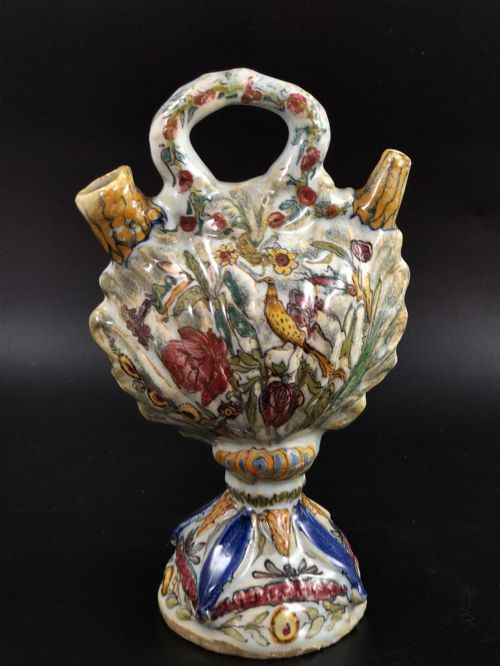
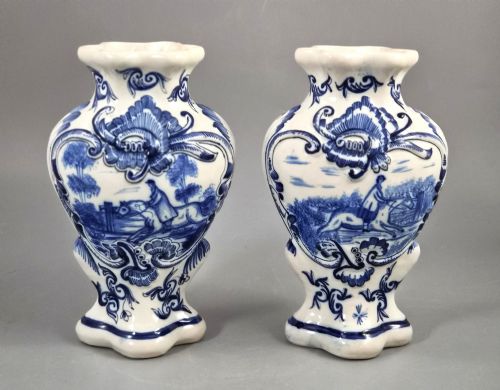
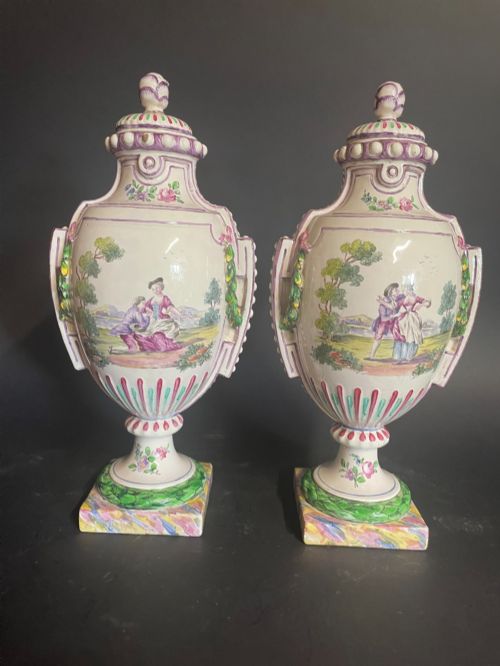
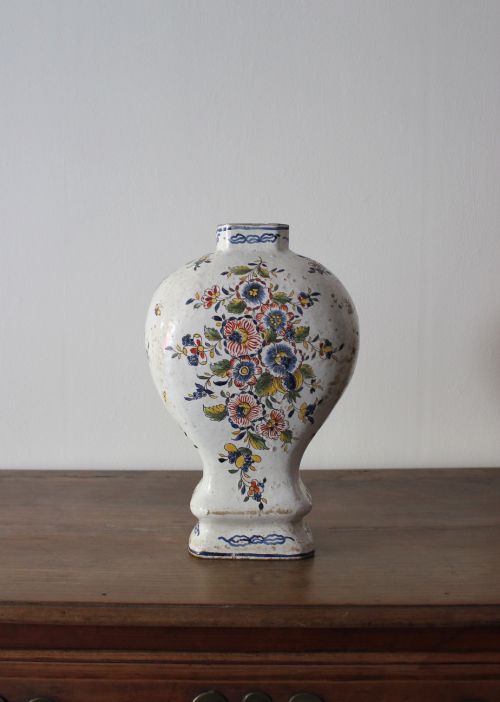
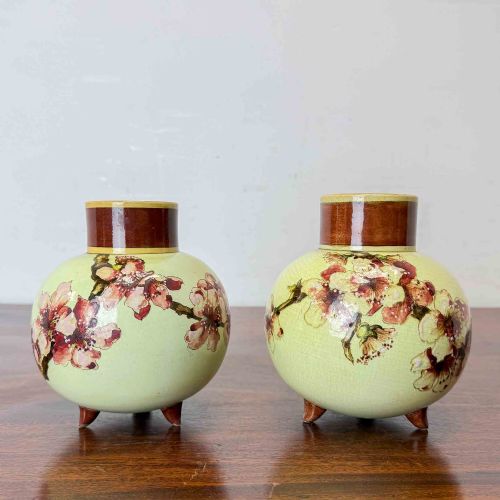


Hand Painted Faience Vase
A hand painted faience vase brings tin-glazed earthenware into a room, offering rich cobalt motifs and revival forms that catch the eye.
Hand Painted Faience Vase
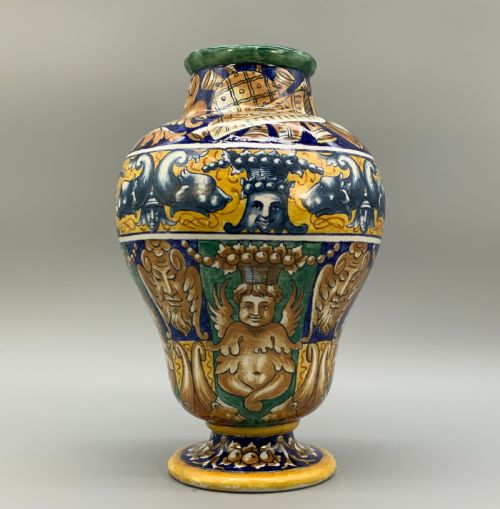
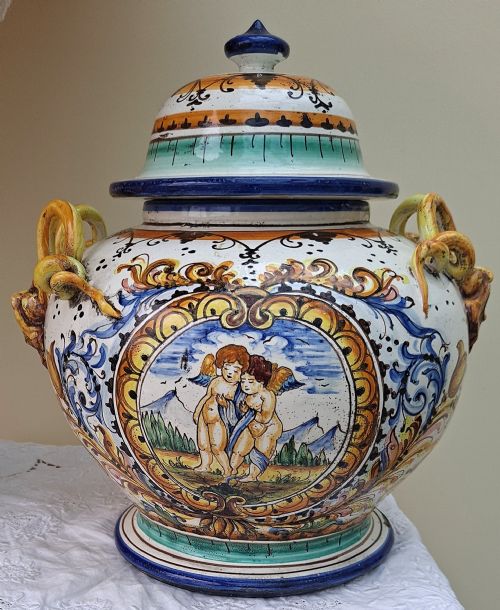
A hand painted faience vase sits at the intersection of European earthenware traditions and vibrant tin-glazed decoration. Buyers exploring this phrase encounter a rich mix of forms, ranging from traditional Dutch Delft vessels to Italian majolica and French revival pieces.
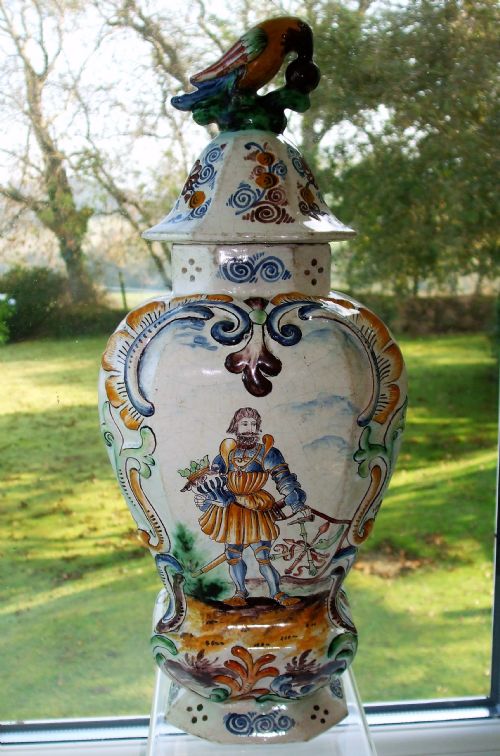
The most common version met on this page is the blue and white Delft vase from the eighteenth century, often displaying Chinoiserie scenes of birds and flowers. Alongside these sit later nineteenth-century French and English interpretations, including pairs of covered urns and decorative mantle pieces.
Vessels take many shapes, from slender pilgrim flasks and tulip holders to large garden urns and converted table lamps. Each item reflects the distinct regional aesthetics of Dutch, Italian, and French potteries across several centuries.
Materials and construction
Potters shape these vessels from earthenware clay before coating the surface in a tin glaze that fires to an opaque white ground. This glaze acts as the canvas for metal oxide pigments applied directly by hand.
Cobalt pigment provides the deep blue tones characteristic of traditional Delft and French works, while polychrome examples introduce broader mineral palettes. Artisans apply these colours before a final glaze seals the body during kiln firing.
Some ceramic cats occasionally sneak into the line-up, reminding us that potters enjoyed modelling domestic pets alongside grand garden urns.
Assessing quality
Quality rests primarily on the crispness of the hand-painted brushwork and the control of the pigment during firing. Superior pieces display confident, detailed brushstrokes in Chinoiserie scenes or floral panels rather than rushed or blurred lines.
The smoothness and consistency of the tin glaze also define a finer vessel, showing minimal pooling or crazing that might obscure the underlying form. Furthermore, the crisp survival of lids on covered urns and jars preserves the original integrity of the piece.
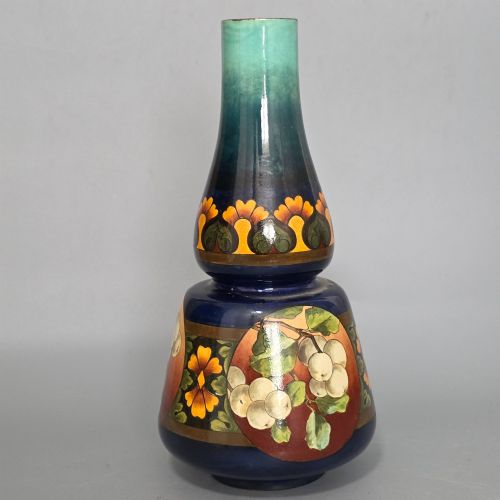
Fourmaintraux-Courquin·Doulton Lambeth·Cantagalli
The Hand Painted Faience Vase Glossary
- Faience
- Tin-glazed earthenware produced in Europe, particularly in France, Germany, and Spain. The technique involves applying an opaque white glaze over a buff or reddish clay body.
- Delftware
- Tin-glazed pottery made in the Netherlands, most famously in the city of Delft during the seventeenth and eighteenth centuries. It is celebrated for its imitation of Chinese blue and white porcelain.
- Chinoiserie
- European decorative motifs inspired by Chinese art and design, popular on seventeenth and eighteenth-century ceramics. These scenes typically depict fantastical landscapes, birds, and pavilion architecture.
- Tin Glaze
- An earthenware glaze rendered opaque by the addition of tin oxide. This creates the white background necessary for painting intricate blue or polychrome designs.
Hand Painted Faience Vase: Frequently Asked Questions
How do I date an old faience vase?
Dating relies on stylistic shifts, painting techniques, and the characteristics of the clay body beneath the glaze. Seventeenth and eighteenth-century examples often show thinner potting and specific regional blue pigments.
Later nineteenth-century revival pieces display heavier bodies and different factory marks or signatures. Comparing the decorative motifs to known period styles helps narrow down the decade of production.
Were these vessels used for cut flowers?
Many forms served decorative purposes rather than holding water, particularly delicate tulipieres with multiple spouts or large covered jars. Porous earthenware bodies meant water could seep through older glazes over time.
Posy vases and standard urns did accommodate seasonal blooms in period interiors. Today, collectors generally avoid filling antique tin-glazed vessels with water to protect the fragile ceramic body.
How do I clean a tin-glazed vase?
Dusting with a dry, soft cloth remains the safest method for routine maintenance of antique ceramic surfaces. Moisture can penetrate historical hairline cracks and cause further deterioration of the earthenware.
Harsh chemical cleaners and immersion in water must be avoided entirely. Professional conservation advice should be sought for any stubborn surface grime.
What is the difference between Delft and majolica?
Delft primarily refers to Dutch tin-glazed earthenware with a strong focus on blue and white painting influenced by Chinese imports. Majolica describes the Italian tradition, which leans towards vibrant polychrome palettes and sculptural forms.
Both techniques use a tin-oxide glaze over an earthenware base. Regional aesthetics and historical periods separate the two designations in ceramic history.