
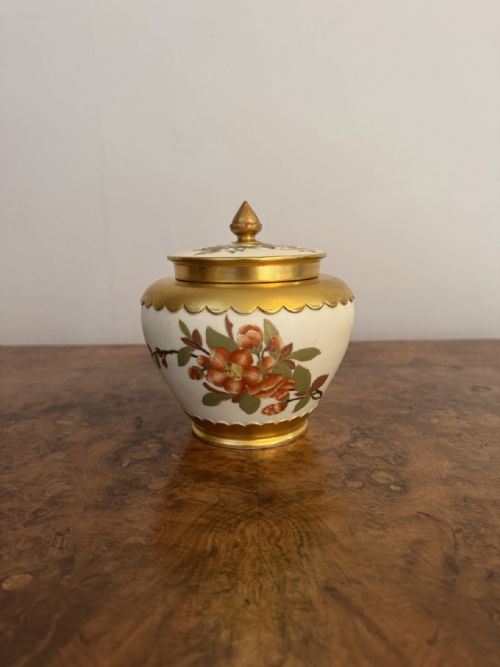


Antique Ceramic Potpourri
These antique ceramic potpourri vessels are fragrant centrepieces designed to scent rooms, ranging from porcelain lidded urns to ironstone jars.
Antique Ceramic Potpourri
When you search for antique ceramic potpourri, you encounter lidded vases, bowls, and urns created to hold dried flowers and spices. The selection spans the eighteenth, nineteenth, and early twentieth centuries, drawing on Georgian, Victorian, and Edwardian periods.
English porcelain and ironstone dominate the forms, alongside French and German porcelain works. You find potpourri pots, pommanders, pastille burners, and ginger jars equipped with pierced covers to release fragrance into the room.
How they were made
Potters shaped these pieces from ceramic, porcelain, and ironstone, applying detailed glazes and blue transfer decoration. Many incorporate enamel work, gold leaf, gilding, and gilt bronze mounts.
Makers formed intricate pierced covers and lids to allow scent to escape from the vessel. Hand-painted floral motifs and transfer-printed designs decorate the body of the jars and urns.
The selection includes works attributed to Worcester, Dresden, Sitzendorf, and Spode.
What varies in quality
The refinement of the hand-painting and the crispness of the porcelain body separate standard production from finer output. Elaborate gilding, bronze mounts, and carefully pierced cover designs indicate higher execution.
The weight and finish of the ceramic material, alongside the preservation of surface enamel and gold leaf, define the standing of each piece.
Royal Worcester·Chamberlain Worcester·Mason Ironstone·Wolfsohn Dresden·Sitzendorf Porcelain
The Antique Ceramic Potpourri Glossary
- Potpourri pot
- A lidded vessel designed specifically to hold dried aromatic plant material and release scent through a pierced cover. These containers range from small bowls to large decorative urns.
- Pastille burner
- A small ceramic container used for burning scented paste or pastilles. They often feature perforated lids similar to potpourri jars.
- Pomander
- A spherical or container vessel used to hold aromatic substances such as herbs and spices. Early examples in porcelain serve a similar function to potpourri pots.
- Ironstone
- A type of heavy, durable earthenware patented in the nineteenth century. It provides a sturdy body for transfer-printed and hand-painted decorative vessels.
- Gilt bronze
- An alloy of copper and zinc treated with gold leaf or gilding. It frequently mounts French and European porcelain potpourri bodies.
- Transfer printing
- A mechanical method of applying complex designs to ceramics from a copperplate engraving. It allowed factories to produce detailed patterns consistently on ironstone and porcelain.
Antique Ceramic Potpourri: Frequently Asked Questions
How did people use antique potpourri jars?
These vessels held dried flower petals, herbs, and spices mixed with fixatives to scent rooms. The pierced covers allowed the fragrance to diffuse naturally into the surrounding space.
Owners placed them on mantelpieces, tables, and in antechambers. They served both as decorative ornaments and practical air fresheners.
What is the difference between an urn and a ginger jar?
Urns typically feature footed bases and tapering bodies designed for formal display and potpourri use. Ginger jars possess rounded bodies with flat bases and tight-fitting lids.
Both forms were adapted during the nineteenth century to serve as lidded containers for aromatic mixtures.
How do I care for an antique ceramic potpourri vessel?
Keep these pieces away from direct sunlight and dusting them gently with a dry, soft cloth protects the enamel and gilding. Avoid using liquid cleaners on painted or gilded surfaces.
If you place potpourri inside, line the interior with tissue to prevent natural oils from staining porous ceramic bodies.
How can I tell nineteenth-century pieces apart from later ones?
Nineteenth-century examples often display hand-painted enamel details, ironstone bodies, or early factory marks. Transfer printing styles and paste composition shift across the decades from the Georgian era into the Edwardian period.
Examining the base, glaze texture, and piercing technique on the covers helps indicate the manufacturing period.