


Italian Faience Jar
These italian faience jar pieces are tin-glazed earthenware vessels made for apothecary and display use, bringing centuries of colourful pottery tradition straight into your home.
Italian Faience Jar
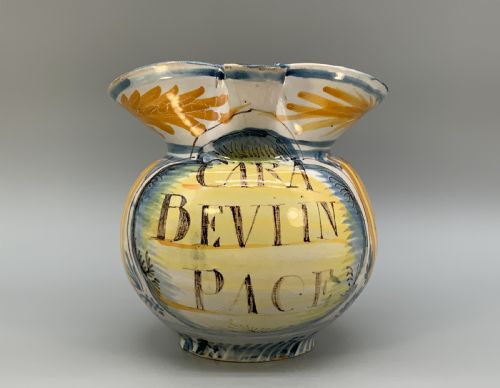
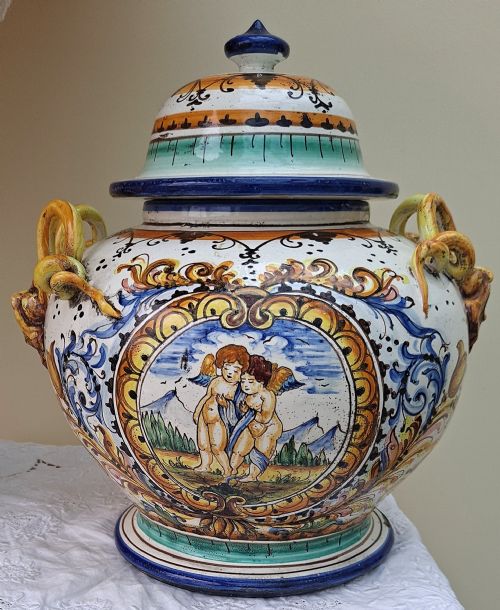
When you search for an italian faience jar, you encounter vessels that primarily take the form of apothecary jars, albarelli, pharmacy jugs, and vases with covers. The listings span the seventeenth, eighteenth, and nineteenth centuries, originating from Italian centres such as Savona and Naples.
The most common form you meet on this page is the albarello, a cylindrical apothecary jar designed for dry or wet drugs, often bearing painted pharmaceutical inscriptions. Alongside these medicinal vessels, you find vases, urns, and pharmacy jugs decorated in styles ranging from Italian Baroque and Renaissance Revival to traditional blue and white patterns.
How they were made
Makers shaped these pieces from earthenware and terracotta before applying an opaque tin glaze that provided a smooth white surface for painting. Artisans then used coloured pigments to paint intricate polychrome designs, mangonese details, and yellow or blue motifs directly onto the absorbent glaze before firing.
The decorative styles applied to the tin-glazed earthenware reflect regional traditions, including the distinctive garofano floral motifs and bold Baroque compositions. Potters formed these jars and vases by hand or on the wheel, often adding fitted covers to complete the apothecary vessels.
Some jars still carry the ghosts of ancient remedies in their painted titles, preserving names of forgotten drugs.
What varies in quality
Quality in these tin-glazed pieces rests upon the crispness of the painted decoration and the control shown during the pigment application. Finer examples display confident brushwork in polychrome or blue and white, while simpler pieces show more repetitive or restrained ornamentation.
The survival of original matching covers and the clarity of painted apothecary inscriptions also influence the standing of a piece. Earlier seventeenth-century examples and those attributed to specific workshops demonstrate greater historical weight compared to later nineteenth-century interpretations.
Cantagalli
The Italian Faience Jar Glossary
- Albarello
- A cylindrical apothecary jar designed to hold dry drugs, herbs, or ointments. This form originated in the Middle East and became a staple of Italian pottery workshops.
- Tin-Glaze
- A pottery glaze made opaque by the addition of tin oxide, providing a white background for painted decoration. It is characteristic of faience and maiolica wares.
- Polychrome
- Decoration employing several colours rather than a single hue. On these jars, it typically involves combinations of blue, yellow, green, and mangonese pigments.
- Apothecary
- Pertaining to the preparation and sale of medicines. Vessels made for this purpose often feature Latin inscriptions denoting specific medical contents.
- Maiolica
- Italian tin-glazed earthenware decorated with colours on an opaque white glaze. The term often overlaps with faience in descriptions of historic Italian pottery.
Italian Faience Jar: Frequently Asked Questions
What were apothecary jars used for?
These jars stored dried herbs, syrups, ointments, and medicinal compounds in apothecaries and pharmacies. Their tin-glazed earthenware bodies protected the contents from moisture and light.
Many jars bore painted inscriptions in Latin or Italian to identify the specific drugs stored within. Over time, these functional vessels also served as decorative shelfware in dispensary interiors.
How do I tell seventeenth-century pieces apart?
Seventeenth-century examples often exhibit distinct regional painting styles, such as the tin-glazed production associated with Savona. The palette, form, and brushwork reflect the specific decorative preferences of that earlier period.
Later nineteenth-century pieces often revive these earlier Baroque and Renaissance styles. Comparing the baseline glaze texture and pigment application helps distinguish the earlier production from revival pieces.
What is the difference between maiolica and faience?
Maiolica specifically refers to tin-glazed earthenware produced in Italy, celebrated for its colourful painted surfaces. Faience is a broader term that encompasses similar tin-glazed pottery traditions across Europe.
In the context of these listings, both terms describe earthenware coated in a white tin glaze and decorated with coloured pigments.
How do I display an albarello at home?
Albarelli look striking displayed on open shelving, sideboards, or mantels where their cylindrical forms and painted inscriptions remain visible. Their historic character complements both traditional and modern interior settings.
Because they are earthenware with tin glazes, you should place them away from damp areas and direct heat sources to protect the historic surface.