


Antique Albarello Jar
An antique albarello jar is a cylindrical ceramic drug vessel designed to hold apothecary remedies, offering striking historical presence for any interior.
Antique Albarello Jar
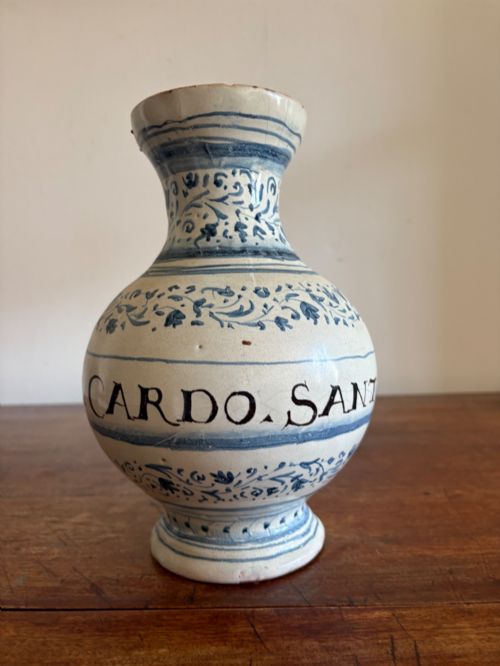
The versions most frequently met on this page date from the seventeenth century through the nineteenth century, often reflecting Italian Baroque, Renaissance revival, and traditional regional styles. These cylindrical jars characteristically feature waisted bodies designed to allow pharmacists to grip them securely on crowded apothecary shelves.
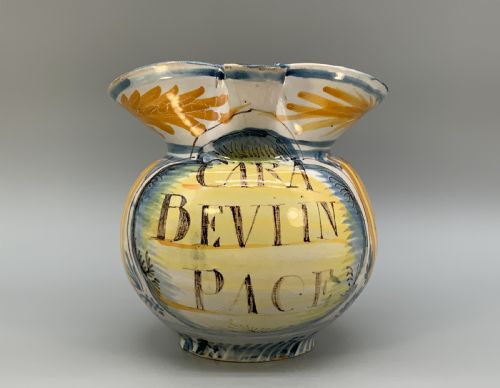
Many examples double as wet drug jars or pharmacy jugs, showing spouts or broader openings tailored for liquids alongside standard dry powder vessels. Their origins trace principally to Italian centres such as Savona and Naples, alongside Dutch Delft workshops producing tin-glazed wares.
Materials and construction
Potters formed these vessels from basic clay and earthenware bodies, throwing them on the wheel before applying a specialised tin glaze to create an opaque white or cream surface. This tin-glazed earthenware layer provided a smooth ground suited for subsequent hand-painted decoration.
Painters utilised mineral pigments including blue and white, polychrome palettes, mangonese, and yellow to render botanical motifs, heraldic designs, and pharmaceutical labels directly onto the unfired glaze. The pieces then underwent kiln firing to fuse the metallic oxides into the glossy tin surface.
Early pharmacists relied on these waisted jars so their sticky fingers wouldn't drop the cure.
Factors determining quality
The sophistication of the hand-painted decoration largely distinguishes finer examples from simpler utilitarian containers, with master painters executing crisp cobalt blue or vibrant polychrome details. The richness of the glaze, depth of the manganese or yellow accents, and clarity of the overall form separate standard workshop output from exceptional pieces.
Age and provenance further elevate certain vessels, particularly seventeenth-century or documented regional Italian pieces bearing specific town attributions like Savona or Naples. The survival of an intact glaze surface without excessive flaking demonstrates superior original firing and subsequent care.
The Antique Albarello Jar Glossary
- Albarello
- A cylindrical earthenware jar used by apothecaries to store dry drugs and ointments. The distinct waisted profile prevents the vessel from slipping when handled with busy hands.
- Majolica
- Tin-glazed Italian earthenware decorated with opaque colours over a white enamel ground. Artisans frequently employed this technique for decorative pharmaceutical vessels.
- Faience
- European tin-glazed pottery produced in various countries including France, Holland, and Italy. The white surface mimics Chinese porcelain while offering a receptive ground for painted ornamentation.
- Tin Glaze
- A ceramic glaze made opaque by the addition of tin oxide. This coating provides the classic white background characteristic of European drug jars from the seventeenth century onwards.
- Polychrome
- Decoration utilising multiple distinct colours on a single ceramic surface. In pharmacy jars, this typically combines blues, yellows, and mangonese hues.
Antique Albarello Jar: Frequently Asked Questions
What were antique albarello jars used for?
These cylindrical vessels served as storage containers in historic apothecaries and pharmacies, holding dried herbs, roots, powders, and electuaries dispensed by physicians. Their shape allowed pharmacists to line them closely on shelves while keeping dry ingredients protected from moisture.
Over time, many of these containers transitioned from utilitarian medical equipment into decorative cabinet pieces valued for their historic painted designs.
How do I date an antique albarello jar?
Dating relies primarily on stylistic shifts in the tin-glazed decoration, the palette used by the painter, and the specific potting characteristics of the earthenware body. Seventeenth-century examples often display denser, more robust forms with characteristic blue and white or early polychrome pigments.
Later nineteenth-century and early twentieth-century pieces tend to show different potting techniques and brighter, varied manganese or yellow tones associated with revival styles.
Where were albarello jars made?
Production centres concentrated heavily across Italy, particularly in towns renowned for majolica manufacture such as Savona, Naples, and Nove. Dutch workshops also produced significant quantities of tin-glazed earthenware styled as Delft faience for medicinal use.
Potters in these distinct regions adapted local clays and traditional painting methods, leaving subtle clues in the glaze and form that reveal their geographic origin.
How should I display an albarello jar?
These vessels suit placement on open wooden shelves, in glazed display cabinets, or atop sideboards where their cylindrical forms and painted patterns remain clearly visible. Keeping them away from direct heat sources and damp environments protects the historic tin glaze from undue stress.
Pairing single jars or matching pairs with complementary antique ceramics creates a balanced display that highlights their historical pharmacy origins.