
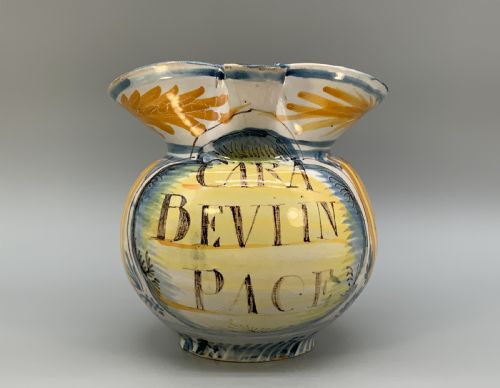
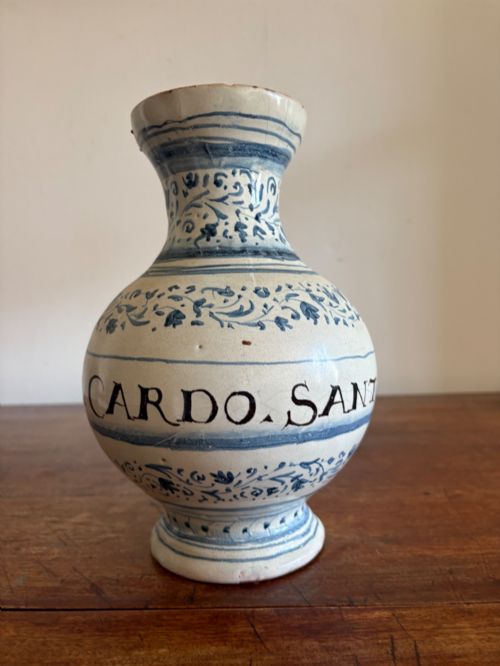


Italian Ceramic Drug Jar
An italian ceramic drug jar brings centuries of apothecary history into your interior, offering vibrant tin-glazed pigments and classic pharmacy forms.
Italian Ceramic Drug Jar
The pieces on this page appear in various configurations, including wet drug jugs with covers and waisted albarello cylinders. Collectors frequently meet blue and white examples alongside polychrome pieces featuring manganese and yellow pigments.
Such vessels reflect the historical storage of medicines and syrups, often bearing painted inscriptions that denote their original contents. Their enduring appeal lies in this combination of utilitarian pharmacy roots and decorative ceramic artistry.
Qualities of distinction
The hierarchy of these vessels rests upon the crispness of the painted decoration and the complexity of the palette. Polychrome examples employing distinct manganese and yellow tones alongside tin glaze demonstrate higher ambition than simpler monochromatic versions.
Proportion and form also dictate the standing of a piece, particularly in waisted albarello silhouettes or retained covers on pharmacy jugs. Origin plays a role too, with pieces attributed to specific centres like Savona or Naples holding particular interest for specialists.
Materials recorded across these items include earthenware, tin-glazed earthenware, majolica, and faience, reflecting diverse regional Italian and continental ceramic traditions.
The Italian Ceramic Drug Jar Glossary
- Albarello
- A cylindrical apothecary jar designed for holding dry drugs, ointments, or electuaries. This distinct waisted shape originated in the Middle East before becoming a staple of Italian majolica production.
- Majolica
- Italian tin-glazed earthenware decorated with colourful pigments on an opaque white glaze. Potters utilised this technique extensively for decorative and pharmaceutical vessels during the Renaissance and later centuries.
- Tin Glaze
- A ceramic glaze made opaque by the addition of tin oxide, providing a smooth white background for painted decoration. This coating defines the surface of faience and majolica wares.
- Faience
- European tin-glazed earthenware, often used interchangeably with majolica in continental and British traditions. The term describes ceramics sharing similar glazing and firing methods.
- Polychrome
- Decoration employing multiple distinct colours rather than a single hue. In these ceramics, this typically involves combinations of blue, manganese, yellow, and green pigments.
Italian Ceramic Drug Jar: Frequently Asked Questions
What is an albarello used for?
An albarello served as a drug jar in historic pharmacies to store dry medicines, ointments, and herbal remedies. Their characteristic waisted form allowed pharmacists to stack them efficiently on shelves while offering a secure grip.
Over time, these vessels transitioned from working apothecary containers into decorative display pieces valued for their painted pharmaceutical inscriptions and tin-glazed finishes.
How do I date an italian ceramic drug jar?
Dating relies on stylistic shifts in tin-glazed earthenware, changing pigment palettes, and the evolution of pharmacy shapes across the seventeenth, eighteenth, and nineteenth centuries. Earlier pieces often display robust blue and white painting, while later nineteenth-century examples introduce broader polychrome mixes.
Inscriptions and regional attribution markers, such as those from Savona or Naples, also provide crucial clues for establishing the era of manufacture.
What does wet drug mean?
A wet drug jar or jug was designed specifically to hold liquid medicines, syrups, and oils rather than dry powders or ointments. These vessels typically feature a pouring spout and a handle to facilitate dispensing.
Many surviving examples also retain their original matching covers, which helped preserve the potency of the liquid contents inside.
How do I display these jars at home?
These ceramic vessels suit open shelving, mantelpieces, or dedicated display cabinets where their height and painted surfaces remain visible. Grouping pairs or mixing different forms creates a balanced arrangement that highlights historical pharmacy aesthetics.
Placing them away from direct sunlight protects the tin glaze and preserves the integrity of the historical pigments over time.