


Tin Glazed Ceramic Albarello
These tin glazed ceramic albarello vessels are historic pharmacy jars that bring authentic apothecary character and traditional glaze depth into modern interiors.
Tin Glazed Ceramic Albarello
A tin glazed ceramic albarello is a cylindrical or waisted jar historically utilised in apothecaries to hold dry drugs, wet medicines, and ointments. When buyers search for this phrase, they encounter pieces spanning the seventeenth, eighteenth, and nineteenth centuries, originating predominantly from Italian and Dutch workshops.
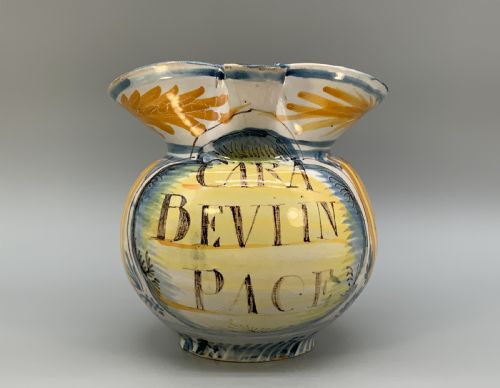
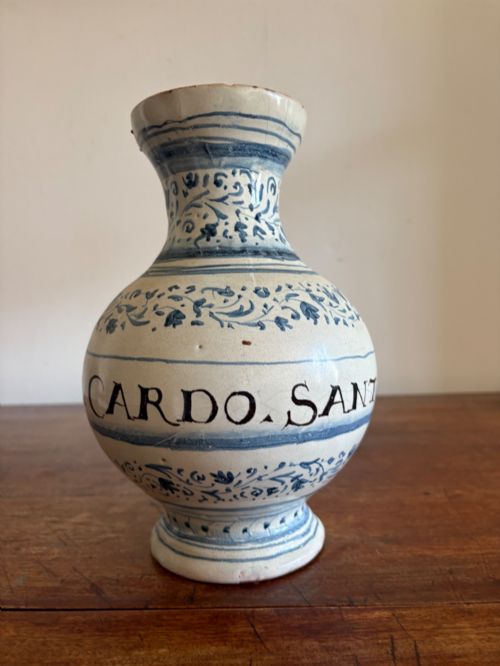
The form is classically waisted to allow pharmacists to grip the jar securely on crowded shelves, often accompanied by related pharmacy jugs and wider vessels. Examples on this page include polychrome pieces decorated in mangonese and yellow, alongside traditional blue and white designs reflecting Italian Baroque and Renaissance revival styles.
Most items you will meet date from the eighteenth and nineteenth centuries, constructed in earthenware and finished with a distinctive tin glaze. These jars bridge the gap between utilitarian medical containers and decorative ceramic art, holding a distinct appeal for collectors of early European pottery.
Materials and construction methods
Makers formed these vessels from local clay, shaping them on the wheel into sturdy earthenware bodies designed to hold medicinal preparations safely. The raw clay was fired once before receiving its characteristic surface treatment.
Potters applied an opaque white tin glaze over the earthenware body, creating a smooth canvas for subsequent hand-painted decoration in cobalt blue, manganese, and yellow pigments. A final high-temperature firing fused the pigments into the glaze, locking in the rich polychrome or monochrome palette.
Listings on this page span the seventeenth to the early twentieth century, focusing on earthenware bodies finished with tin glaze.
Distinctions in quality and execution
Quality in these jars rests primarily in the confidence of the hand-painted brushwork and the clarity of the tin glaze. Superior examples display crisp cobalt blue or vibrant polychrome details that retain their depth without blurring into the surrounding white background.
The balance of the thrown clay body and the sophistication of the waisted profile also separate standard utilitarian containers from exceptional studio pieces. Early seventeenth-century specimens demonstrate a tighter adherence to classical proportions compared to later revival interpretations.
The Tin Glazed Ceramic Albarello Glossary
- Albarello
- A cylindrical or waisted earthenware jar used by medieval and later apothecaries for storing drugs and ointments. Its distinctive shape evolved to facilitate stacking and handling in crowded dispensary shelves.
- Majolica
- Italian tin-glazed earthenware decorated with opaque colours over a white background. This technique reached great heights during the Renaissance and continued through later revival periods.
- Faience
- European tin-glazed pottery, particularly associated with French, Dutch, and English workshops. The term describes earthenware covered with an enamel glaze containing tin oxide.
- Waisted
- A profile characterised by an inward curve towards the centre of the vessel body. This ergonomic shaping prevents slipping when hands are damp.
- Polychrome
- Decoration utilising multiple distinct colours painted onto the ceramic surface before firing. In these jars, it typically involves combinations of blue, manganese, yellow, and green.
Tin Glazed Ceramic Albarello: Frequently Asked Questions
What were albarello jars used for?
These cylindrical vessels served as storage containers in historic apothecaries and pharmacies for holding dry drugs, herbal remedies, and medical ointments. Their narrow waists allowed dispensers to grip them securely among crowded shelves.
Over time, chemists retired them from active dispensary use as packaging methods modernised, turning them into decorative items prized for their historic form and hand-painted surfaces.
How do I date an old albarello?
Dating relies on analysing the tin glaze composition, the style of hand-painted decoration, and the throwing characteristics of the earthenware body. Seventeenth-century examples often exhibit heavier potting and distinct palette choices compared to later eighteenth-century or nineteenth-century revival pieces.
Comparing the painted motifs against known regional styles, such as Italian majolica or Dutch delft, helps narrow down the period of manufacture.
Are these jars waterproof?
While the tin glaze seals the interior surface against moisture, historic earthenware can remain porous over centuries of exposure. It is generally advisable to use them for dry display rather than holding liquids.
If utilised as vases, placing a discreet glass container inside protects the historic body from lingering moisture and mineral deposits.