




Polychrome Majolica Vessel
A polychrome majolica vessel brings vibrant tin-glazed earthenware into a room through rich pigments and historic forms like apothecary jars and pilgrim flasks.
Polychrome Majolica Vessel
A polychrome majolica vessel is an expression of tin-glazed earthenware shaped into apothecary jars, pharmacy jugs, vases, and pilgrim flasks. When you search for a polychrome majolica vessel, you encounter pieces that span the eighteenth century and the nineteenth century, including revival pieces from eighteen eighty.
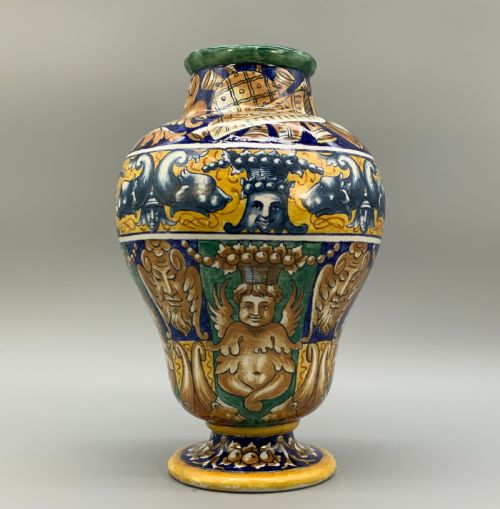
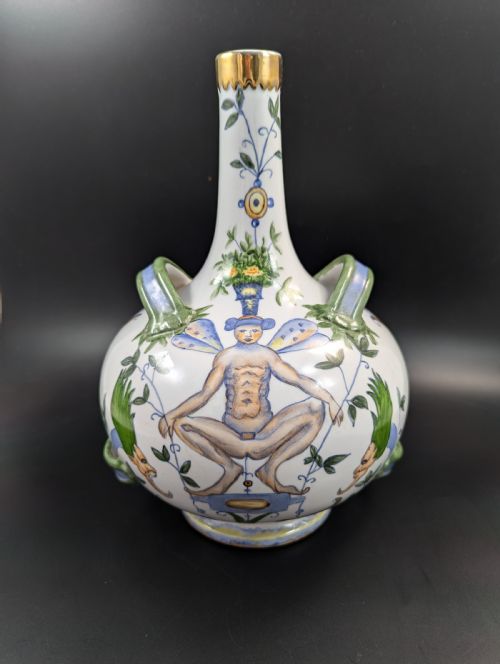
The forms originate largely from Italian traditions, such as Italian Baroque, Italian Renaissance, and Italian Maiolica styles. French influences also appear through nineteenth-century faience flasks.
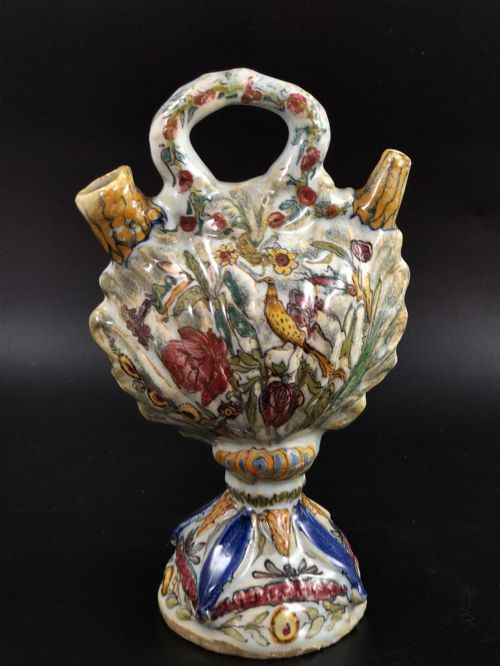
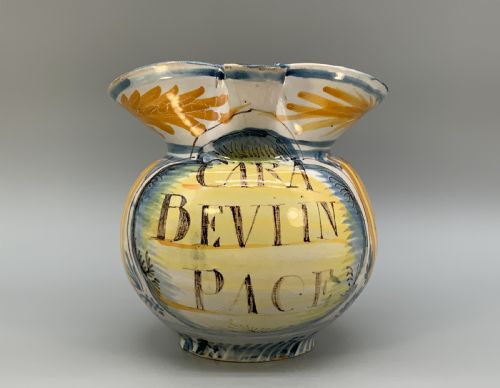
Buyers most frequently meet nineteenth-century revival interpretations alongside eighteenth-century originals. These range from scallop-shell pilgrim flasks to wet drug jars bearing traditional pigments.
Materials and construction
Potters formed these pieces using ceramic and earthenware as the primary body. Artisans then applied a tin glaze to create a smooth, opaque white surface suited for painting.
Makers painted directly onto the unfired glaze using coloured pigments, sometimes incorporating mangonese and yellow alongside gold leaf details. The pieces underwent a high-temperature kiln firing to fuse the metallic oxides into the glaze.
Listings feature earthenware and tin-glazed ceramic pieces spanning the eighteenth century, the nineteenth century, and eighteen eighty.
Assessing quality and execution
Quality rests in the control of the brushwork and the complexity of the polychrome palette. Finer examples show crisp execution in botanical motifs like garofano designs or heraldic elements.
The weight and presence of the earthenware body dictate the substantial feel of the piece. Superior vessels maintain proportion across complex forms like double-handled flasks and covered jars.
The Polychrome Majolica Vessel Glossary
- Majolica
- Tin-glazed earthenware decorated with opaque metal oxide colours on a white background. It developed across Italy and later influenced European faience production.
- Albarello
- A cylindrical pharmacy jar designed to hold dry drugs and ointments. Its waist allowed apothecaries to grip the jar easily on crowded shelves.
- Pilgrim Flask
- A flattened pear-shaped vessel with lugs for suspension cords, historically carried by travellers or pilgrims. Ceramic versions later evolved into decorative cabinet pieces.
- Polychrome
- Decoration employing multiple colours rather than a single hue. In majolica, this typically involves combinations of cobalt blue, yellow, manganese purple, and green.
- Faience
- European tin-glazed pottery produced outside Italy, particularly in France and the Netherlands. It shares the same technical foundation as majolica.
Polychrome Majolica Vessel: Frequently Asked Questions
What is a polychrome majolica vessel?
It is a tin-glazed earthenware container, such as a vase, pharmacy jar, or pilgrim flask, painted in multiple colours. These objects combine utility and ornate decoration.
Potters created them across various periods, using opaque glazes to form a canvas for historic Italian and French designs.
How were these vessels used historically?
Many served practical roles in apothecary shops and pharmacies to store medicines, wet drugs, and dry ingredients. Others functioned as decorative display pieces in domestic interiors.
Pilgrim flasks were originally designed for travel before becoming purely ornamental objects in wealthy households.
How do I date a majolica vessel?
Dating relies on stylistic clues, glaze characteristics, and the specific form of the earthenware body. Eighteenth-century examples often display looser, traditional hand-painted motifs.
Nineteenth-century revival pieces tend to exhibit the distinct aesthetic preferences of Victorian and Renaissance revival movements.
What does garofano mean on a vase?
Garofano refers to carnation motifs frequently painted on Italian majolica ceramics. This traditional pattern appears on eighteenth-century vases and drug jars.
The floral design is rendered in characteristic regional pigments, adding botanical detail to the tin-glazed surface.