
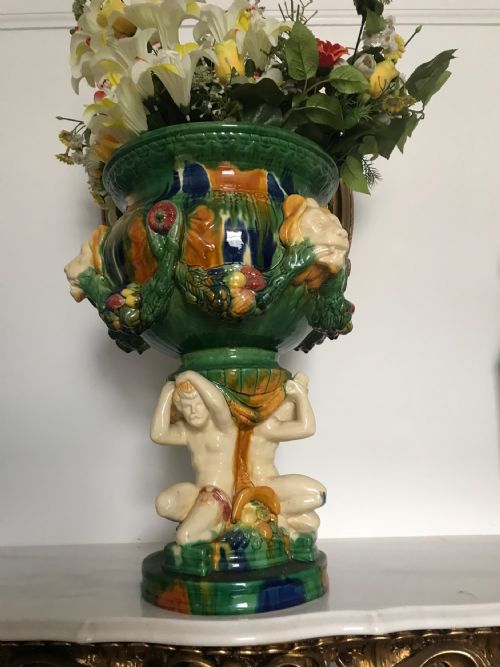


Italian Majolica Urn
An italian majolica urn brings bold colour and classical form to a room, drawing the eye with rich tin-glazed earthenwares.
Italian Majolica Urn
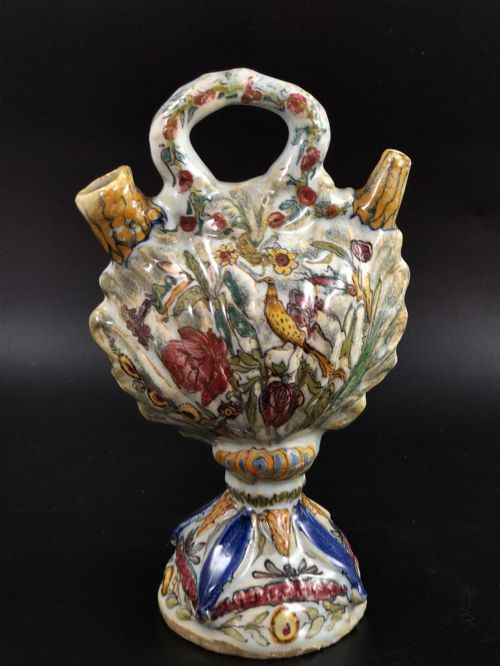
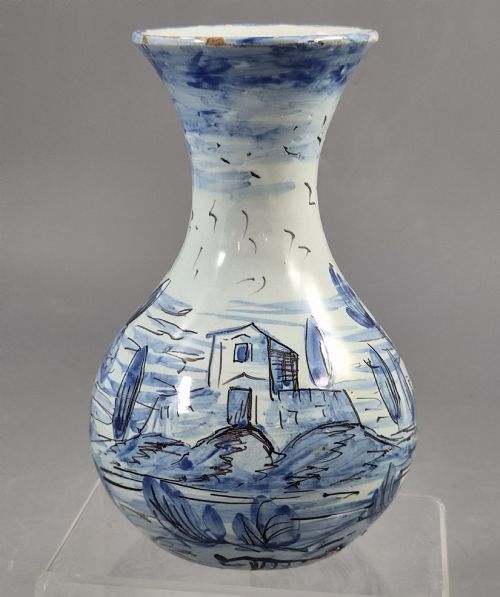
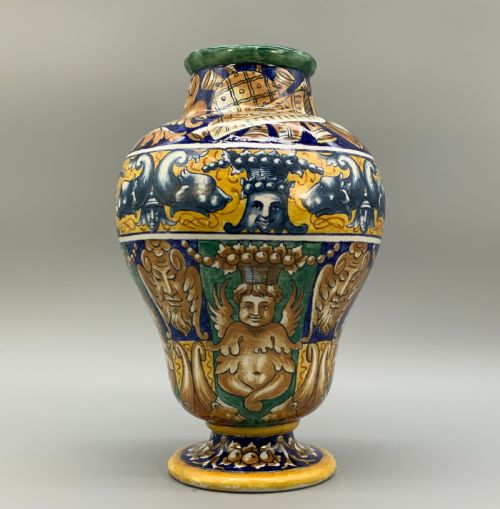
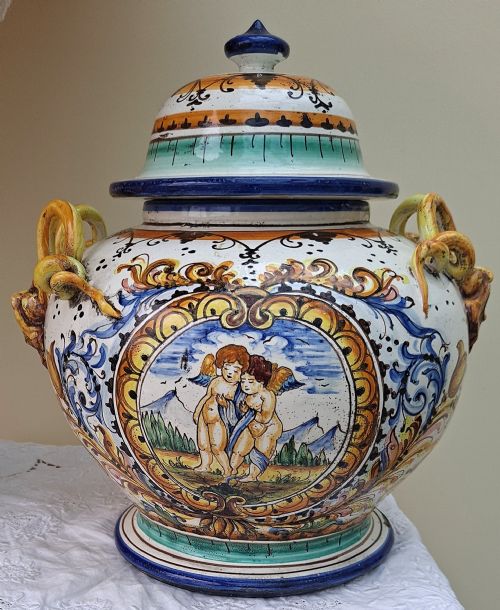
An italian majolica urn is a decorative vessel rooted in historical ceramic traditions, appearing across this page in forms such as lidded vases, pilgrim flasks, and jardinieres. Most examples date from the nineteenth century, including revival pieces and Grand Tour items, alongside eighteenth-century originals.
The selection ranges from cabinet vases to huge planters on figural bases with lions head decoration. Buyers encounter various styles, including Renaissance Revival, Italian Baroque, and Savona patterns, reflecting centuries of ceramic artistry.
How they were made
Makers shaped earthenware and terracotta on the wheel or in moulds before applying an opaque tin glaze. This white or tinted surface served as a ground for painting in blue, white, and polychrome pigments.
Many works incorporate metallic lustre finishes, adding a shimmering sheen during a secondary low-temperature firing. Potters then fixed the pigments under a clear glossy coat.
Lions stare out from nineteenth-century terracotta stands, guarding giant planters that once brought Italian sunshine into rainy Victorian drawing rooms.
What varies in quality
Quality rests in the crispness of the hand-painted decoration and the depth of the tin glaze. Finer pieces display precise brushwork, balanced polychrome palettes, and confident modelling on figural stands.
Later revival pieces show varying degrees of ambition, from straightforward cabinet vases to monumental jardinieres with complex heraldic or floral motifs.
Cantagalli
The Italian Majolica Urn Glossary
- Majolica
- A type of earthenware coated with an opaque tin-lead glaze and painted with metallic oxides. It flourished during the Renaissance and later inspired nineteenth-century revivals.
- Tin Glaze
- An enamel glaze containing tin oxide that fires to a white, opaque finish. It provides the absorbent background necessary for detailed underglaze painting.
- Pilgrim Flask
- A flattened, round-bodied vessel with side lugs for suspension cords. Originally used by travellers, these bottles became popular decorative display pieces.
- Jardiniere
- A large ornamental pot or stand designed to hold living plants or floral arrangements. Often manufactured from terracotta or glazed ceramic.
- Polychrome
- Decoration employing multiple distinct colours across the design. In these ceramics, it typically describes combinations of cobalt blue, yellow, green, and orange.
Italian Majolica Urn: Frequently Asked Questions
What is an italian majolica urn?
An italian majolica urn is a ceramic vessel finished with an opaque tin glaze and decorated with painted motifs. These pieces range from eighteenth-century table wares to nineteenth-century revival display objects.
They appear in forms such as lidded vases, handled flasks, and large garden planters. The category spans several stylistic revivals inspired by earlier Italian workshops.
How do I date an italian majolica urn?
Dating relies on stylistic clues, potting techniques, and the composition of the ceramic body. Nineteenth-century revival pieces often exhibit brighter glazes and heavier potting compared to earlier examples.
Examining the foot ring and the underside reveals clues about manufacturing methods. Factory marks, where present, help pinpoint the origin and decade.
Where should I display an urn?
These vessels suit prominent positions on heavy furniture, sideboards, or dedicated pedestals. Large jardinieres function effectively as floor-standing decorative elements in hallways or living spaces.
Keep them away from areas of heavy foot traffic to prevent accidental knocks. Placing them where natural light strikes the tin glaze highlights the painted palette.