


Tin Glaze Ginger Jar
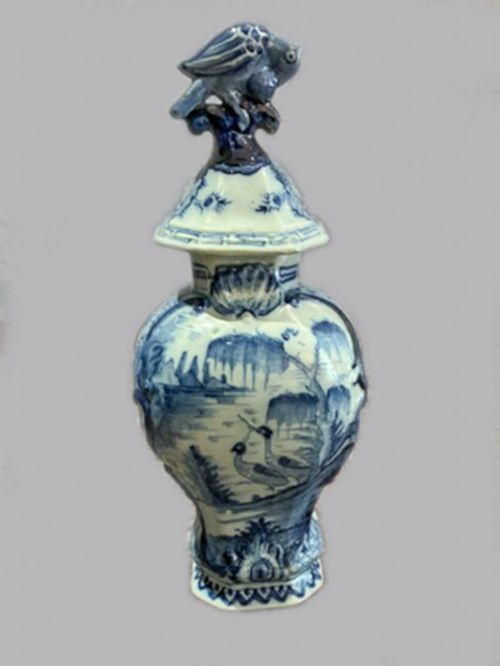
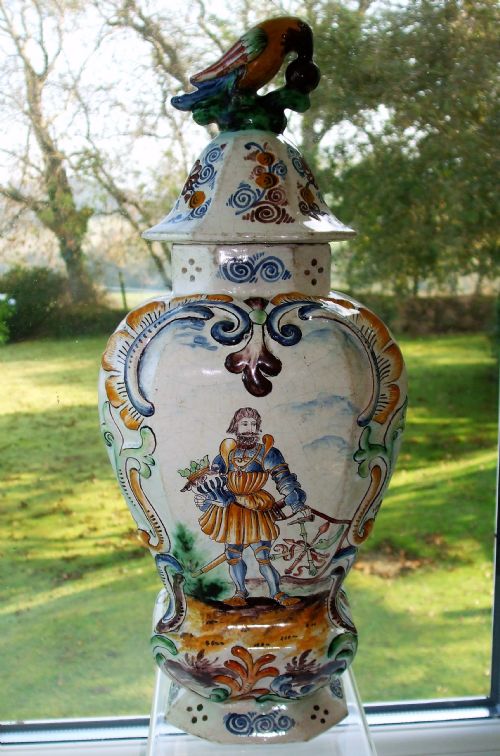
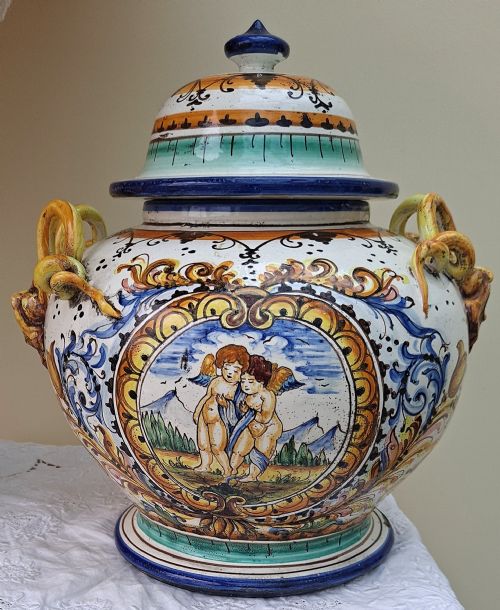
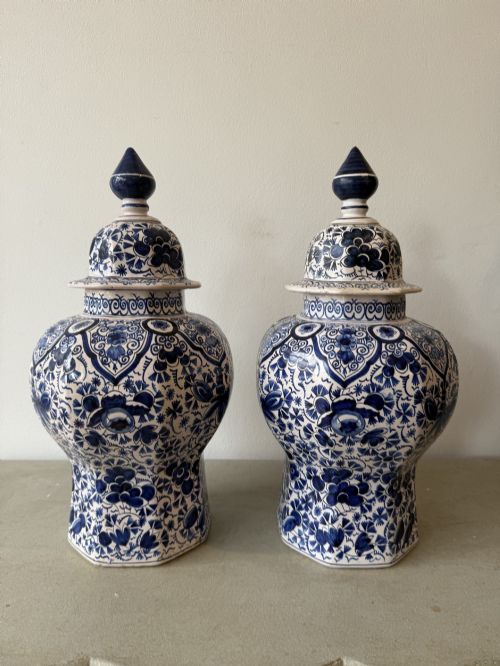
These tin glaze ginger jar examples offer the blue and white patterns and earthenware bodies that collectors hunt for in eighteenth and nineteenth-century ceramics.
Tin Glaze Ginger Jar
When you search for a tin glaze ginger jar, you are looking at earthenware vessels designed for storage and display across the eighteenth and nineteenth centuries. The pieces on this page span Dutch Delftware, Italian Maiolica, and Georgian Chinoiserie styles, reflecting traditional forms such as baluster vases and lidded jars.
You are most likely to meet Dutch Delft pieces, both blue and white and polychrome, alongside Victorian Renaissance Revival items converted into table lamps. These vessels often retain their original covers, though many survive as jars and canisters without lids.
How they were made
Potters shaped these vessels from earthenware or terracotta before applying a tin-glaze that provided an opaque white surface for painting. Artisans then hand-painted cobalt blue or polychrome pigments directly onto the unfired glaze.
Some later pieces incorporate fitted brass components or hardwood mounts, particularly when adapted into lamps during the Victorian period. The firing process bonded the tin oxide to the clay body, creating the distinctive glossy finish characteristic of Delftware and Maiolica.
Several jars survived centuries of domestic life only to be drilled and wired into Victorian table lamps.
What varies in quality
Quality in a tin glaze ginger jar rests on the crispness of the hand-painted brushwork and the stability of the earthenware body beneath the glaze. Finer examples display precise cobalt blue or polychrome detailing without excessive bleeding into the white tin ground.
The survival of the matching lid significantly elevates a piece, as covers were frequently lost or broken over the centuries. Furthermore, the smoothness of the glaze application and the absence of heavy restoration distinguish superior specimens from heavily repaired ones.
The Tin Glaze Ginger Jar Glossary
- Tin-Glazed Earthenware
- Pottery fired with a lead glaze made opaque by the addition of tin oxide. This technique provides the smooth white background typical of Delft and Maiolica.
- Baluster Vase
- A vessel with a curved, swelling body that tapers toward a narrow neck and rests on a spreading base. This shape forms the structural basis of many ginger jars.
- Polychrome
- Decoration employing multiple colours rather than a single hue. In these ceramics, this usually involves iron red, green, and manganese purple alongside blue.
- Maiolica
- Italian tin-glazed earthenware dating from the Renaissance onwards. These pieces often feature rich pictorial or botanical designs.
Tin Glaze Ginger Jar: Frequently Asked Questions
Are these jars waterproof?
Tin-glazed earthenware is slightly porous by nature and can seep moisture if filled with water for long periods. Collectors generally use these vessels for display rather than as functional flower vases.
Using a hidden internal glass liner allows you to use them for fresh flowers safely without risking the historic earthenware body.
Why do some jars have wooden bases?
Hardwood mounts were frequently added during the Victorian period to stabilise jars or to convert them into functional table lamps. These additions reflect how owners repurposed decorative ceramics for domestic lighting.
Such adaptations form a distinct chapter in the history of these objects and do not diminish their period character.
Can I match a missing lid?
Finding a precise replacement lid from the same period and kiln is exceedingly difficult due to variations in size and shrinkage during firing. Most collectors accept jars without covers or display them as they survived.
When a lid is present, it is usually noted in the description as a significant feature of the piece.