


Cherub Painted Vases
Cherub painted vases bring nineteenth-century figurative porcelain and continental flair into a room, offering hand-painted detail and classical charm.
Cherub Painted Vases
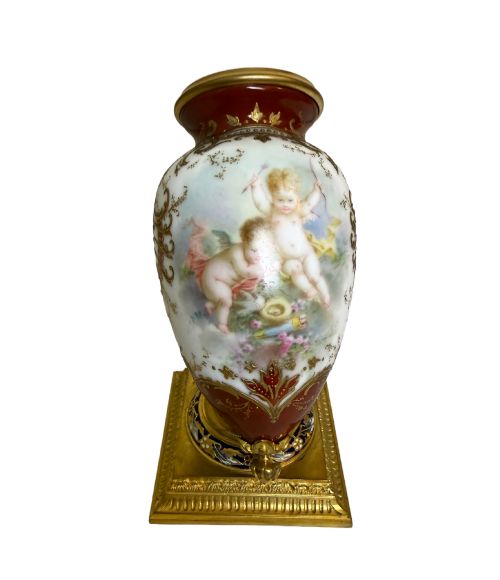
Cherub painted vases encompass nineteenth-century decorative urns, lidded vessels, and centrepiece vases adorned with painted putti or cherubic figures. These works draw heavily upon French Rococo Revival and Renaissance Revival tastes, channelling continental manufacturing traditions from major European centres.
Buyers browsing this selection most frequently encounter nineteenth-century porcelain and ceramic bodies augmented with gilt bronze, ormolu, or enamel highlights. Forms range from large lidded display pairs to decorative ewers and monumental mantel clock combinations produced across the 1870s to 1910.
The aesthetic leans into theatrical nineteenth-century interpretations of earlier historical periods, notably Sèvres, Meissen, and Dresden styles. Such vessels serve as focal points for traditional interiors, combining sculptural handles or mounts with finely executed pastoral painted scenes.
What varies in quality
The refinement of the painted cherub scenes dictates the upper tier of the range, separating delicate, expressive brushwork from generic factory output. Superior pieces exhibit subtle shading in the flesh tones and drapery, whereas lesser examples rely on flat, repetitive stencilling.
The integration of the metal mounts against the porcelain body reveals the maker's competence. Finely chased ormolu or gilt bronze mounts that conform precisely to the contours of the ceramic demonstrate superior craftsmanship compared to ill-fitting or crudely cast hardware.
Every cherub painted here appears perpetually busy floating, wrestling flowers, or watching over your mantelpiece without a care in the world.
Sevres·Samson Paris·Meissen·Dresden
The Cherub Painted Vases Glossary
- Ormolu
- Gilded bronze mounts applied to furniture, clocks, and vases during the eighteenth and nineteenth centuries. This technique involves applying a mercury-gilt mixture to bronze to achieve a durable golden finish.
- Bleu Céleste
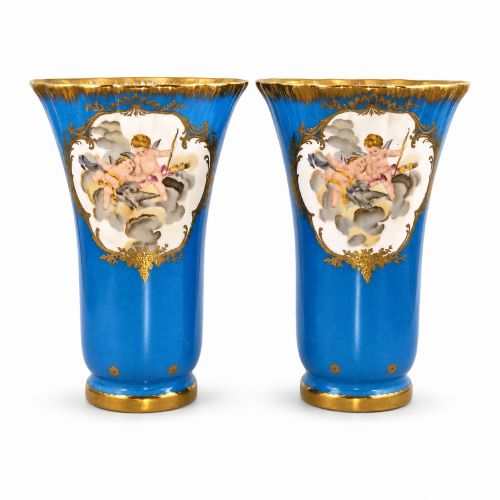
- A bright sky-blue enamel ground colour famously utilised at the Sèvres porcelain manufactory. It provides a vivid backdrop for painted reserves containing putti or pastoral figures.
- Maiolica
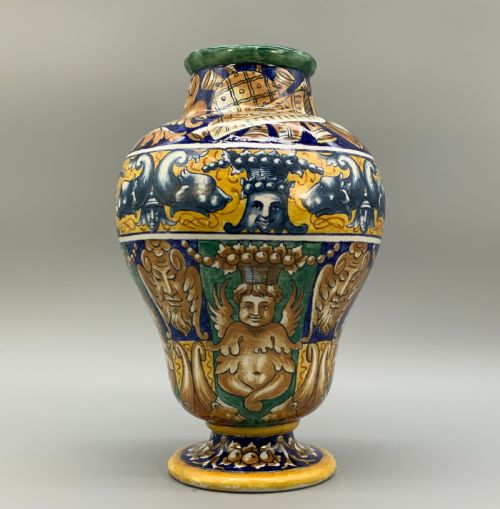
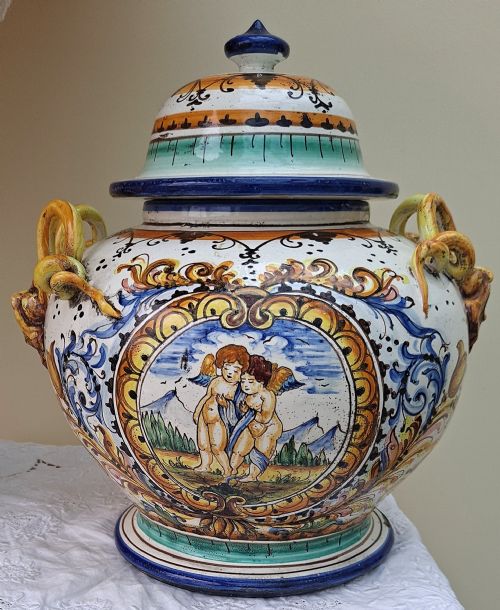
- Italian tin-glazed earthenware decorated with opaque metallic oxide glazes. These wares often feature colourful polychrome narratives or classical ornamentation.
- Putto
- A plump, naked male child figure frequently depicted in classical art and Renaissance Revival decorative works. They appear repeatedly painted on these nineteenth-century porcelain vessels.
- Potpourri
- A vase or jar featuring a pierced lid designed to hold scented dried plant material. Many nineteenth-century examples incorporate figurative painted panels and elaborate gilt bronze mounts.
Cherub Painted Vases: Frequently Asked Questions
Where should I display these vessels?
Position your vase on a sturdy mantelpiece, console table, or dedicated pedestal where the hand-painted cherub details can be observed at close range. Ensure the placement protects the piece from accidental bumps, particularly for tall lidded pairs or pieces featuring protruding ormolu handles.
Allow sufficient space around the vessel so that the surrounding interior design does not crowd the ornate nineteenth-century silhouette.
Are these vases functional or decorative?
Nineteenth-century examples are primarily designed as decorative showpieces, centrepieces, or sculptural urns rather than functional vessels for holding water and fresh flowers. The delicate enamel decoration and metal mounts are susceptible to moisture damage if used conventionally.
Treat them as standalone works of ceramic art that enrich a room through their historical style and figurative painting.
How can I tell nineteenth century pieces apart?
Examine the base of the porcelain body for factory marks, stencilled ciphers, or impressed numbers that point towards French, German, or English production methods. Stylistic clues such as the boldness of the Rococo Revival scrollwork or the vibrancy of the bleu céleste ground also help narrow down the decade of manufacture.
Compare the weight and finishing of the gilt bronze mounts, as nineteenth-century casting techniques possess distinct tooling marks compared to later reproductions.