


Hand Painted Cherub Vase
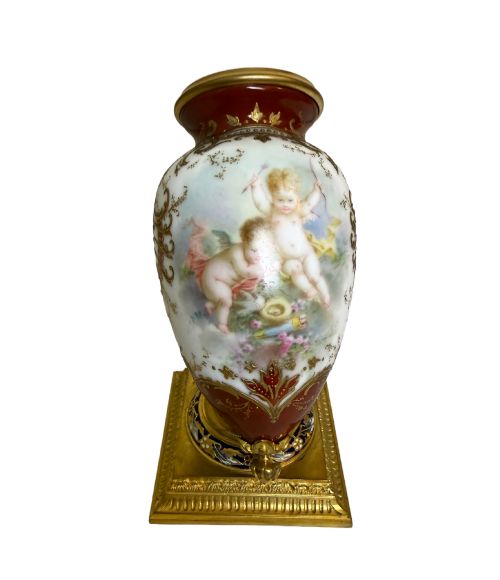
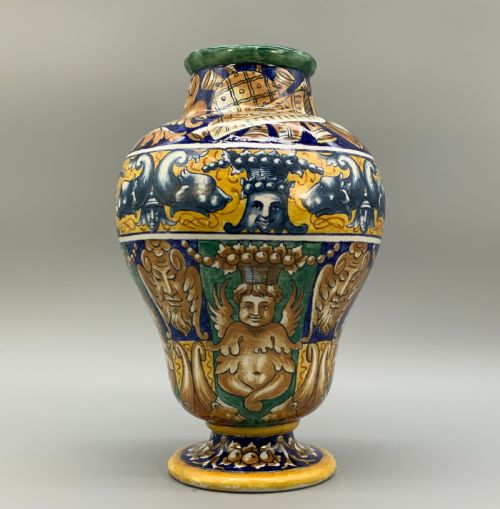
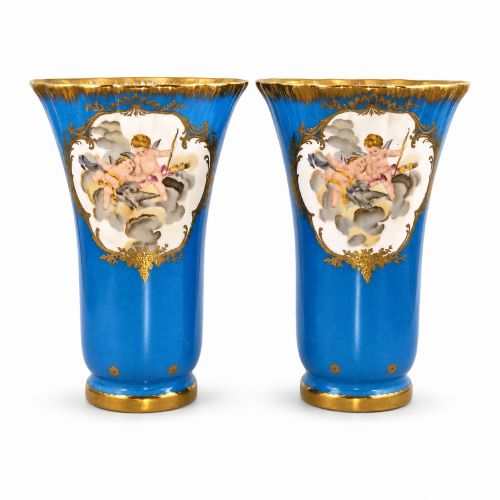
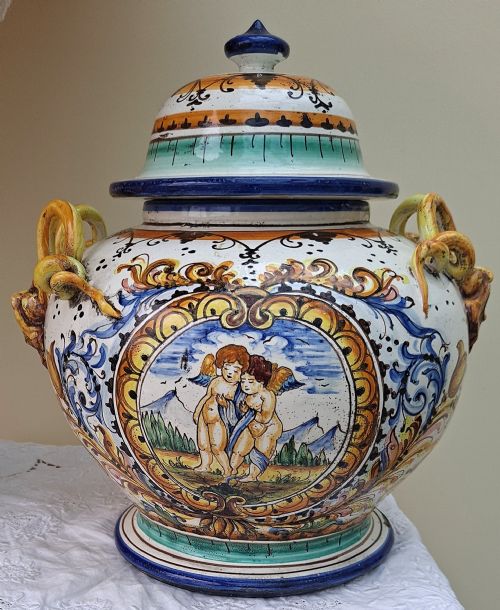
These hand painted cherub vase items bring nineteenth-century figurative porcelain and majolica into the room with painted cherubs and gilt bronze mounts.
Hand Painted Cherub Vase
A hand painted cherub vase combines nineteenth-century ceramic bodies with painted figural decoration depicting cherubs, putti, and winged infants. The search phrase covers porcelain, earthenware, and majolica forms produced across European centres during the Victorian era and the decades leading up to it.
The versions most commonly met on this page include nineteenth-century porcelain urns, lidded jars, and ewers mounted in gilt bronze or finished with gilt leaf. Makers working in the French, German, and Italian tastes shaped these vessels in revival styles drawing upon Rococo and Renaissance models.
Buyers encounter decorative centrepiece vases and pairs finished with polychrome enamel and tin glaze alongside figural porcelain compositions. These pieces function as decorative mantel garnitures and table centrepieces utilising sculptural cherub figures to support or adorn the ceramic body.
How they were made
Porcelain and earthenware bodies form the structural core of these vessels, shaped through moulding and throwing before receiving hand-applied enamel colours and painted details. Artisans incorporated tin glaze and polychrome pigments to build the figurative scenes depicting cherubs across the ceramic surface.
Gilt bronze mounts and gold leaf embellish the porcelain vessels, providing structural mounts, handles, and cast bases in the French Rococo Revival and Renaissance Revival styles. Kiln firing fixed the enamel pigments into the glaze, followed by the cold application of gilding and metalwork assembly.
Listings on this page combine nineteenth-century porcelain and majolica with gilt bronze mounts and hand-painted cherub motifs.
What varies in quality
The quality of the material mounts and the weight of the ceramic body dictate the physical presence of the piece. Heavy, crisply cast gilt bronze mounts integrated securely with porcelain or majolica indicate superior workshop production.
Sevres·Samson Paris·Meissen·Dresden·Schierholtz
The Hand Painted Cherub Vase Glossary
- Maiolica
- Tin-glazed Italian earthenware painted with polychrome pigments. This ceramic technique underpins many nineteenth-century Italian revival vases.
- Gilt Bronze
- Copper alloy cast with an applied gold finish. Also known asormolu, this material provides structural mounts and decorative feet for porcelain bodies.
- Potpourri
- A lidded vessel perforated to release scented dried plant material. These containers often feature figurative cherub decoration.
- Ewer
- A large jug with a wide spout and handled body. Ewers appear among nineteenth-century decorative vessels designed for display.
- Polychrome
- Decoration employing multiple distinct colours. The term describes multi-hued painted cherub scenes on porcelain.
Hand Painted Cherub Vase: Frequently Asked Questions
What are hand painted cherub vase pieces made from?
The listings show nineteenth-century ceramic bodies including porcelain, earthenware, and tin-glazed majolica. These materials are frequently combined with gilt bronze mounts and gold leaf accents.
Decoration relies on hand-applied enamel colours to render the figures of cherubs and putti across the surface of the vessel.
How do I identify the period of a cherub vase?
The pieces on this page date predominantly from the nineteenth century, spanning from the 1870s through to 1910. Stylistic indicators include Victorian Rococo Revival and Renaissance Revival forms.
Materials such as gilt bronze mounts and specific factory traditions help narrow the date of manufacture within the broader Victorian period.
Were these vases used for flowers?
Many nineteenth-century forms functioned as decorative urns, centrepiece vases, and potpourri jars rather than utilitarian vessels for cut flowers. Lidded versions and pierced containers were designed to hold scented mixtures or to serve as ornamental mantel garnitures.
Their substantial gilt bronze mounts and delicate painted cherub surfaces suited interior display in nineteenth-century drawing rooms.
How should I care for a painted porcelain vase?
Gentle dusting with a soft, dry brush preserves the hand-painted enamel and gold leaf without risking abrasion to the ceramic surface. Moisture and chemical cleaners should be kept away from gilt bronze mounts and painted details to prevent corrosion.
Placement should avoid direct sunlight to protect the polychrome pigments on the cherub figures from fading over time.