


White Majolica Jar
A white majolica jar is a tin-glazed earthenware vessel designed for apothecary use, offering historic appeal and decorative form.
White Majolica Jar
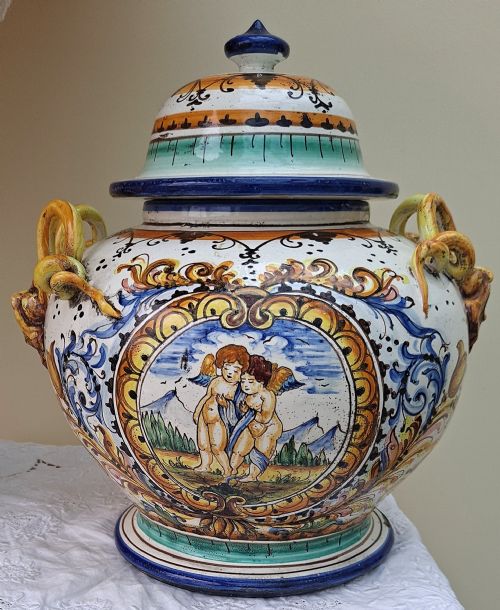
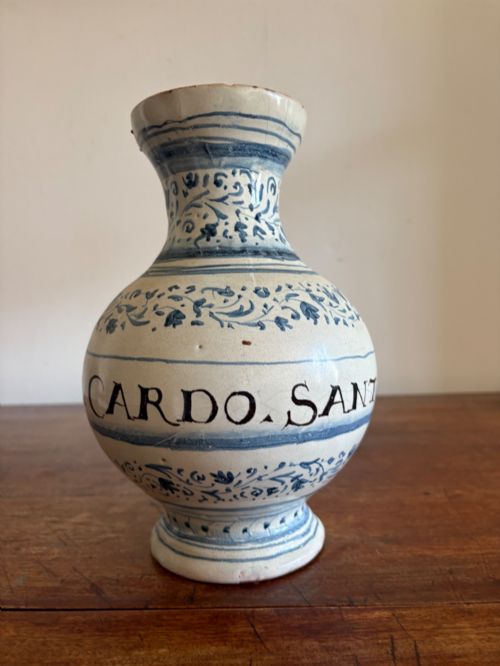
A white majolica jar typically takes the form of an albarello, pharmacy wet drug jug, or handled vase produced across the seventeenth, eighteenth, and nineteenth centuries. These vessels originate primarily from Italian and French workshops, encompassing styles from Italian Renaissance and Baroque to Renaissance Revival.
The most common examples on this page are eighteenth-century and nineteenth-century Italian albarelli and pharmacy jars, finished in tin glaze. Collectors encounter both cylindrical drug jars and lidded urns displaying traditional forms intended for storing medicinal substances.
Makers fashioned these utilitarian containers with specific shapes, such as waisted bodies designed for easy gripping on apothecary shelves. The combination of earthenware structure and opaque white glaze defines the foundational aesthetic of the category.
Materials and construction
Potters shaped local terracotta and earthenware into functional vessels before applying a tin glaze to achieve an opaque white surface. Pigments were then painted directly onto the unfired or fired glaze depending on the workshop tradition.
Kiln firing transformed the raw clay bodies and mineral glazes into durable containers suited for holding apothecary preparations. The interaction between the earthenware base and the tin-glazed surface produces the characteristic finish observed in these pieces.
Some pharmacy jars still hint at their medicinal past through faded Latin labels for sticky syrups.
Assessing quality and character
Quality rests in the crispness of the form and the purity of the tin glaze applied over the earthenware body. Stronger examples display balanced proportions in traditional shapes like the albarello or handled drug jar.
The sophistication of the painting beneath or over the white glaze distinguishes finer pieces from simpler utilitarian containers. Surviving lids and covers also elevate the completeness of the vessel within the category.
The White Majolica Jar Glossary
- Albarello
- A cylindrical earthenware jar used by apothecaries to store drugs and ointments. This form is common among Italian and French tin-glazed pieces.
- Tin Glaze
- A lead glaze rendered opaque by the addition of tin oxide. It provides the smooth white background characteristic of majolica and faience.
- Faience
- European tin-glazed earthenware originating primarily from French and Italian traditions. The term overlaps with majolica in historic ceramic classification.
- Majolica
- Tin-glazed earthenware associated with Italian pottery traditions. These wares often feature painted decoration over an opaque white ground.
- Wet Drug Jug
- A specialised apothecary vessel featuring a spout and handle for liquid medicines. They date predominantly to the eighteenth and nineteenth centuries.
White Majolica Jar: Frequently Asked Questions
What is a white majolica jar used for?
These vessels originally served in apothecaries and pharmacies to hold dry drugs, herbs, syrups, and liquid medicines.
Today, collectors display them as decorative objects that showcase historic ceramic techniques and traditional interior aesthetics.
How do you date an antique majolica jar?
Dating relies on stylistic shifts in form, potting thickness, and the characteristics of the tin glaze across the seventeenth, eighteenth, and nineteenth centuries.
Comparative study of Italian and French regional pottery shapes helps narrow the production period of individual jars.
What is an albarello?
An albarello is a cylindrical ceramic jar with a waisted body designed for storing apothecary supplies on pharmacy shelves.
The inward curve allowed handlers to grip the vessel securely without slipping.
Are these jars made of porcelain?
No, these pieces are constructed from earthenware or terracotta rather than hard-paste porcelain.
Potters coated the porous clay body in an opaque tin glaze to create a smooth white surface for decoration.
How should I clean a historic jar?
Historic tin-glazed earthenware requires gentle dusting with a dry cloth to protect the aged glaze and earthenware body.
Harsh cleaning agents and water immersion should be avoided to preserve the historic surface integrity.