


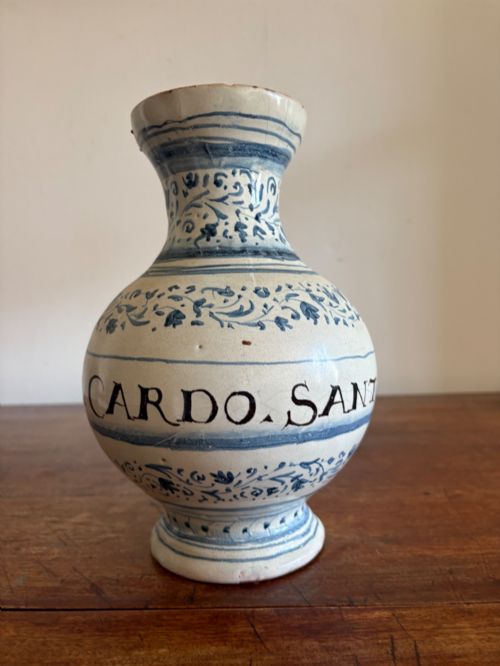


Italian Majolica Pottery
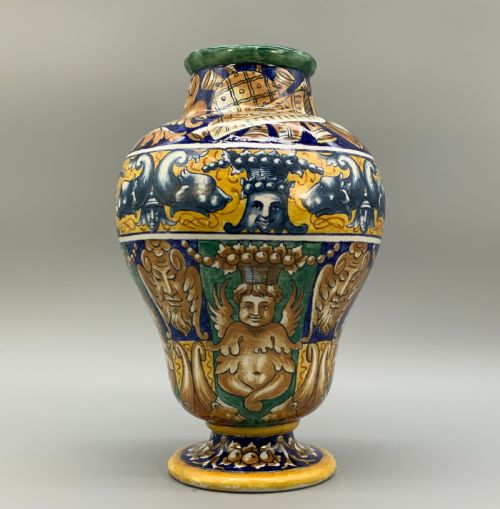
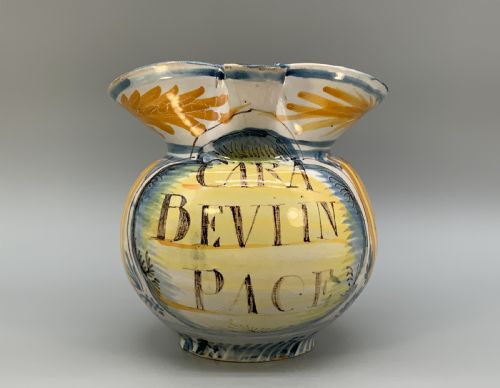
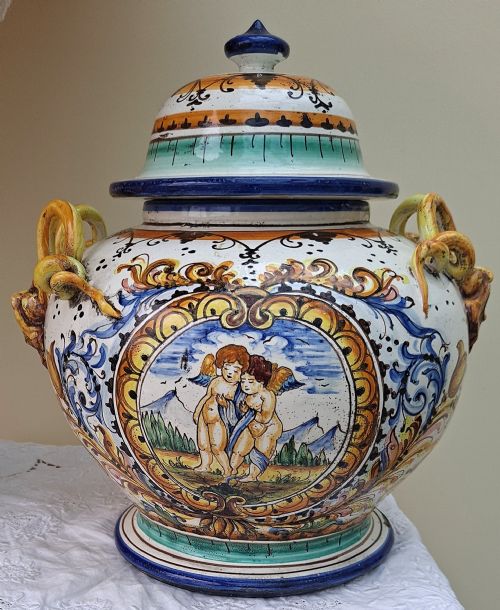
Italian majolica pottery comprises tin-glazed earthenware vessels and wall pieces offering rich painted detail for traditional interiors.
Italian Majolica Pottery
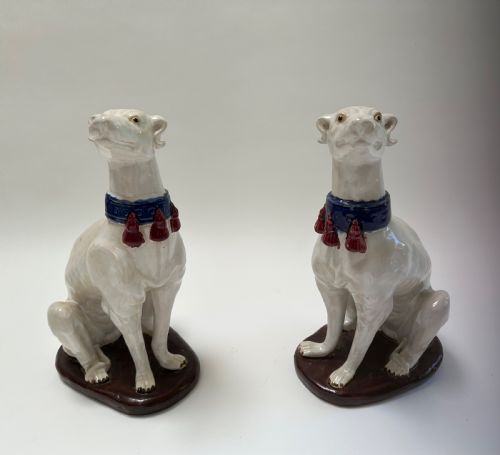
When buyers search for Italian majolica pottery, they encounter diverse historical forms ranging from drug jars and wall chargers to sculptural figures and table lamps.
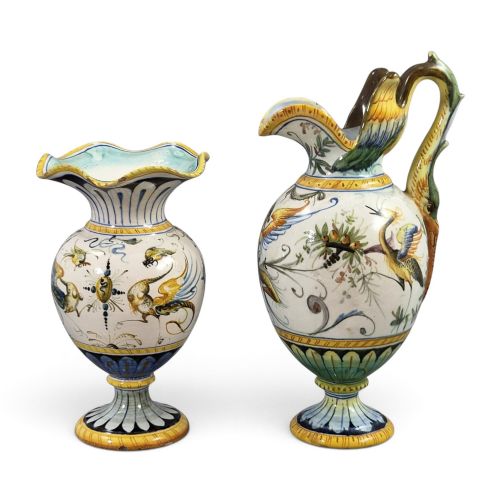
The selections span centuries, featuring traditional apothecary jars alongside later revival pieces produced in Florence and Bassano.
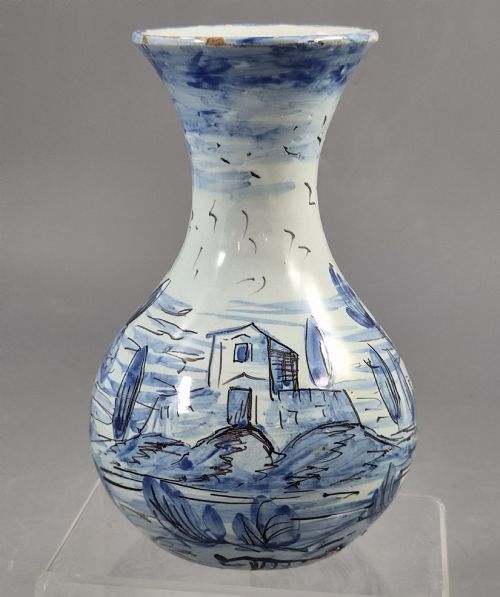
Vessels and wall plaques dominate the offerings, often displaying classic blue-and-white palettes or polychrome decoration.
How they were made
Potters shaped these objects from earthenware and terracotta before applying an opaque tin glaze to create a smooth surface for painting.
Craftsmen utilised mineral pigments to paint intricate designs directly onto the unfired or fired glaze before a final kiln fixation.
Listings span earthenware materials finished with tin glaze, pigment, and terracotta.
What varies in quality
Quality rests in the precision of the hand painting and the depth of the polychrome or blue-and-white pigment application.
Early pieces and notable workshop productions demonstrate superior control over the glaze finish and sculptural modelling.
Cantagalli·Bassano
The Italian Majolica Pottery Glossary
- Albarello
- A cylindrical pharmacy jar designed for holding dry drugs or ointments. These containers often feature waisted bodies to allow easy stacking on apothecary shelves.
- Majolica
- A type of earthenware decorated with an opaque tin glaze and painted in colours. The technique originated in Italy during the Renaissance and continued through later revival periods.
- Pilgrim flask
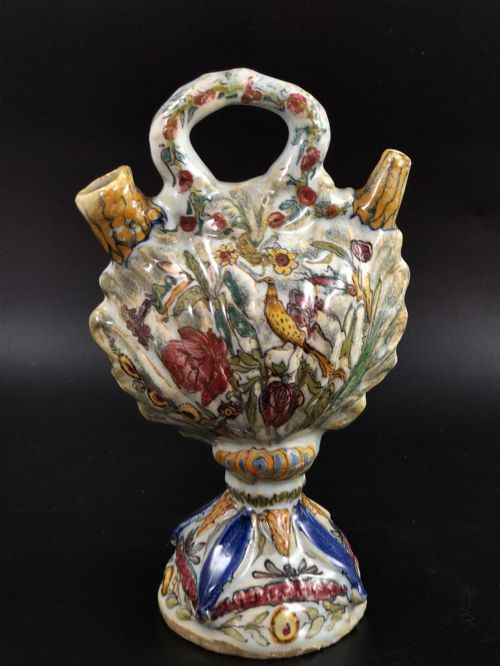
- A flat-sided vessel with handles, historically used for carrying liquids during travel. Ceramic examples often incorporate scallop-shell moulding.
- Charger
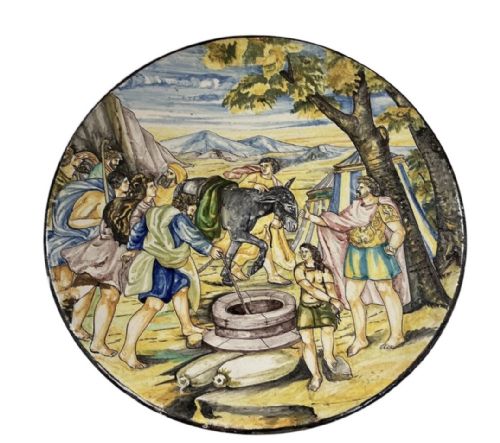
- A large decorative plate intended for display on walls or sideboards rather than dining use. These pieces typically showcase elaborate painted scenes or portraits.
Italian Majolica Pottery: Frequently Asked Questions
What are apothecary jars used for?
Apothecary jars stored dry drugs, syrups, and medicinal ointments in historical pharmacies and dispensaries.
Today, collectors appreciate these cylindrical vessels for their striking painted pharmacy labels and decorative presence.
How do I identify a revival piece?
Revival pieces often date from the nineteenth century and consciously replicate earlier Renaissance or Baroque styles.
Examining the glaze composition, base wear, and specific workshop marks helps distinguish these later interpretations from early originals.
Where should I display wall chargers?
Wall chargers suit prominent spaces in reception rooms or hallways where their large painted surfaces catch the light.
Secure mounting brackets designed for heavy ceramics ensure safe exhibition without straining the piece.
What is polychrome decoration?
Polychrome decoration involves the application of multiple mineral pigments across the tin glaze.
This technique allows for complex pictorial scenes, floral motifs, and detailed heraldic designs.