
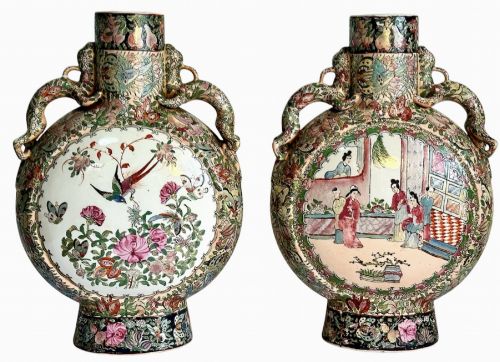
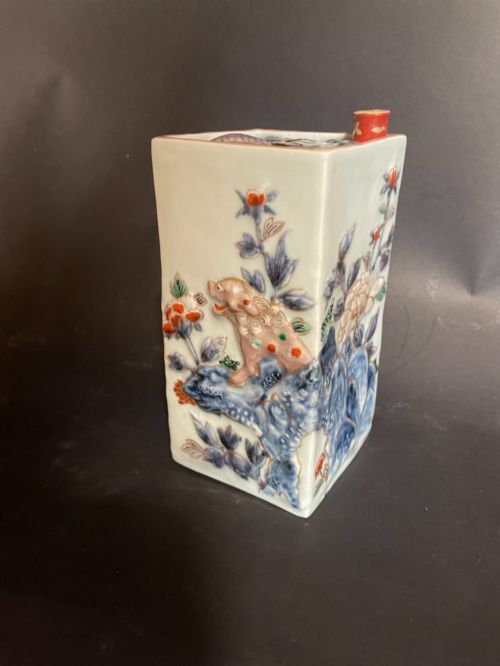


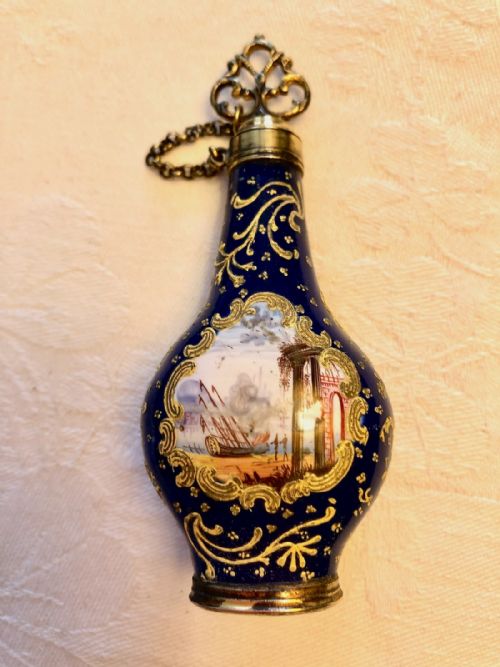


Hand Painted Ceramic Flask
A hand painted ceramic flask brings together centuries of skilled brushwork and form, offering portable beauty for the collector.
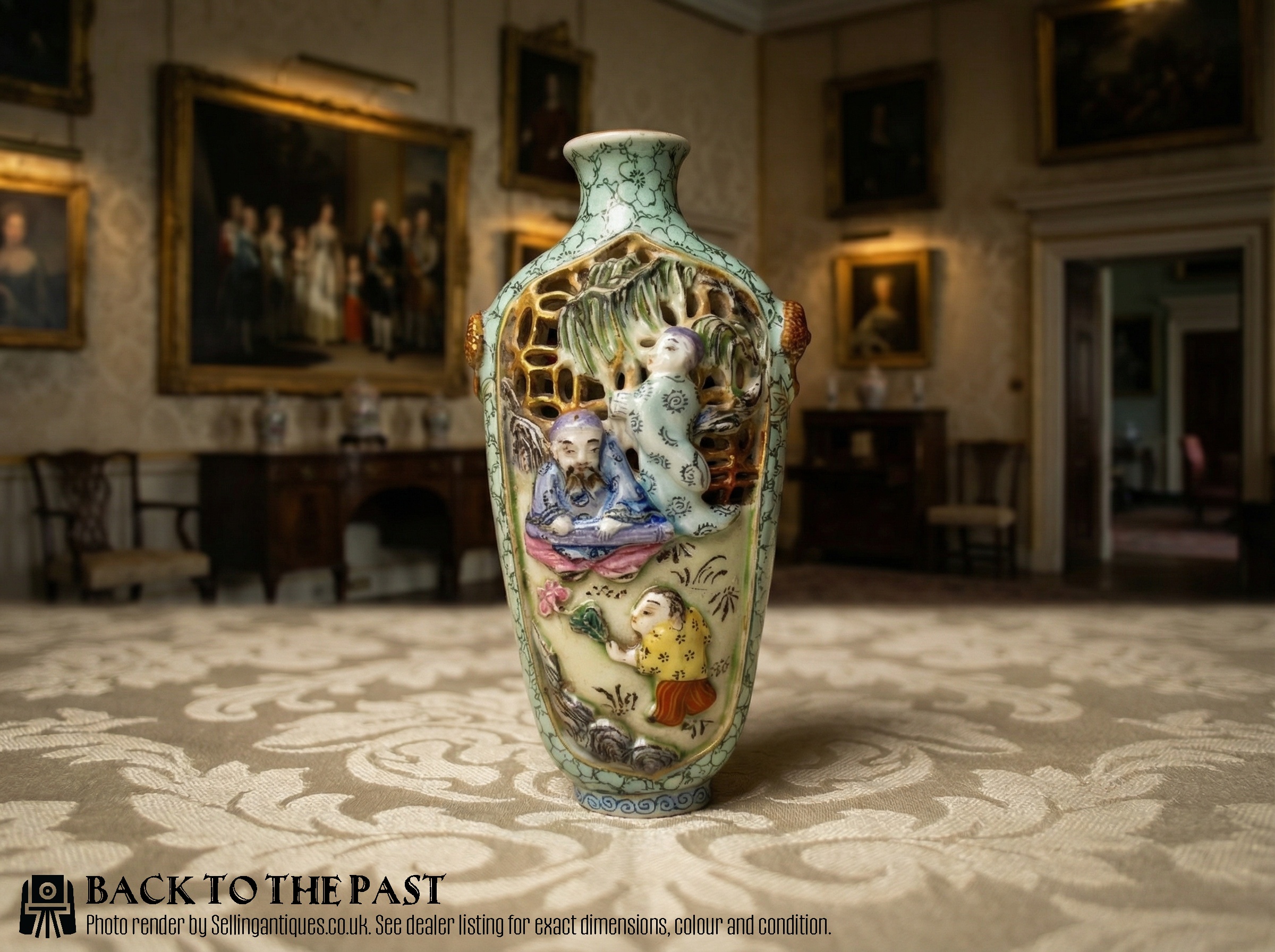
Hand Painted Ceramic Flask
A hand painted ceramic flask encompasses a varied group of vessels, from small snuff bottles and perfume containers to larger pilgrim flasks and wine bottles. The pieces on this page span several centuries, traversing European factories and Asian workshops alike.
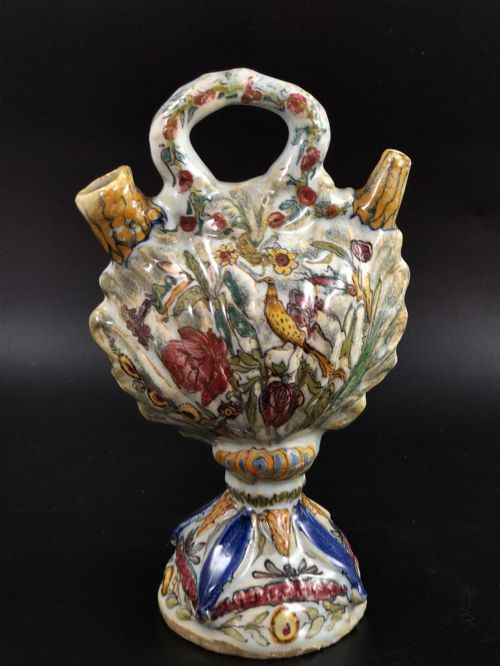
Buyers will most frequently encounter nineteenth-century examples, alongside eighteenth-century tin-glazed earthenware and earlier Japanese or Chinese forms. These vessels served both practical storage functions and purely decorative display roles.
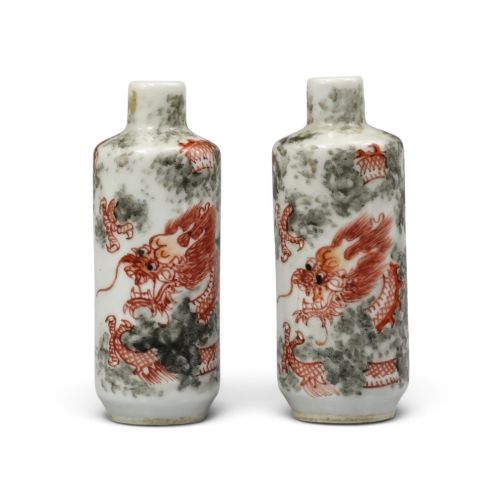
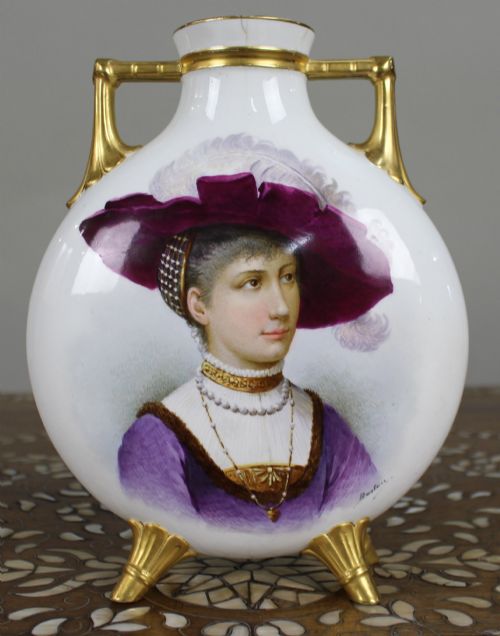
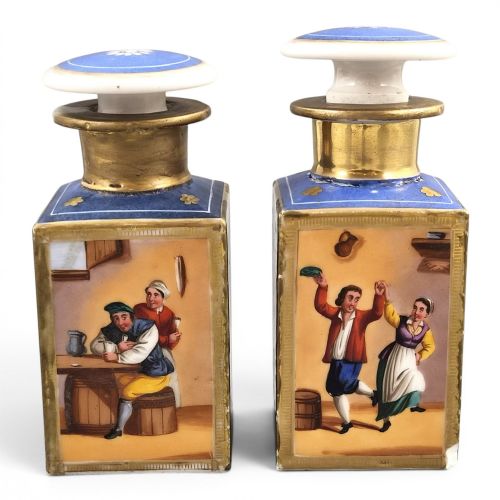
The decorative schemes range from figurative scenes and floral motifs to mythical dragons and heraldic designs. Each object displays the distinctive palette and brush technique of its period of origin.
How they were made
Potters shaped these vessels using porcelain, earthenware, or tin-glazed bodies, sometimes employing moulds for distinct flattened or globular profiles. The raw clay or porcelain body required careful firing in a kiln before any decoration could take place.
Artisans applied pigments by hand, often incorporating enamel, gold leaf, or gilt details to highlight specific motifs. A final glaze layer sealed the surface, requiring a subsequent high-temperature firing to vitrify the colours.
Listings incorporate porcelain, earthenware, and tin-glazed earthenware pieces spanning the seventeenth century through to the 1930s.
What varies in quality
Quality rests primarily in the precision and fluidity of the hand-painted brushwork, where confident, detailed execution separates superior examples from routine commercial production. The clarity of the glaze and the preservation of any applied gilding or enamel also dictate the standing of a piece.
The sophistication of the ceramic body and the historical importance of the maker or period influence desirability. Well-balanced proportions and crisp definition in moulded details indicate a higher standard of craftsmanship.
Flight Barr And Barr·Royal Worcester·Jacob Petit·Lambeth Pottery·Coalport
The Hand Painted Ceramic Flask Glossary
- Pilgrim flask
- A flattened circular or oval vessel derived from medieval leather or metal containers used by travellers. They usually feature side loops for suspension cords.
- Tin-glazed earthenware
- Pottery covered with a white glaze containing tin oxide, providing an opaque surface for painted decoration. This technique defines majolica and delftware.
- Famille rose
- A Chinese porcelain palette introduced in the eighteenth century, distinguished by opaque pink enamel derived from colloidal gold. It allowed for delicate shading of figures and flowers.
- Moon flask
- A flat-backed ceramic vase with a circular body, narrow neck, and small loop handles. The form draws inspiration from ancient metalware traditions.
- Enamel
- Vitrified glass paste fused to a ceramic or metal surface through firing. It provides bright, permanent colours across small decorative objects.
Hand Painted Ceramic Flask: Frequently Asked Questions
What is a pilgrim flask?
A pilgrim flask is a flattened container traditionally designed for carrying liquids on journeys, adapted over centuries into decorative ceramic showpieces.
These vessels typically feature loops on the sides for hanging straps, though many ceramic iterations function purely as table vases.
How do I display a ceramic flask?
Display these flasks on stable surfaces where their painted details and varied profiles catch adequate light. Smaller scent and snuff bottles benefit from dedicated miniature stands or secure cabinet shelves.
Ensure larger pieces sit away from high-traffic areas to protect handles and delicate raised gilding from accidental knocks.
Are all these flasks painted by hand?
The pieces gathered here feature hand-painted decoration, executed across porcelain, earthenware, and tin-glazed surfaces by skilled decorators. Individual brushstrokes remain visible upon close inspection under magnification.
Different periods utilised distinct palettes, from iron-red dragons to polychrome floral sprays and court scenes.
How do I date an antique flask?
Dating relies on examining the ceramic body, glaze characteristics, and painting style alongside any factory marks present on the base. Stylistic cues such as Regency shapes or Qing dynasty motifs provide clear chronological markers.
Comparing the potting technique and colour palette to documented examples helps narrow down the decade of production.