




Antique Chinese Snuff Bottle
An antique chinese snuff bottle is a miniature vessel made for powdered tobacco, prized for intricate carving and varied materials.
Antique Chinese Snuff Bottle
An antique chinese snuff bottle is a small receptacle designed to hold powdered tobacco, though collectors prize them for their artistry rather than their original function. These pieces span several centuries, with the nineteenth century heavily represented alongside examples from the eighteenth and early twentieth centuries.
Forms on this page include standard single vessels, double bottles, and lidded canisters. While the search centres on snuff bottles, related miniature forms such as small vases and tea caddies occasionally appear.
Originating primarily within the Qing Dynasty and its later stylistic iterations, these objects reflect both court taste and export production. Collectors encounter works associated with specific periods like the Guangxu and Daoguang reigns.
Materials and Technique
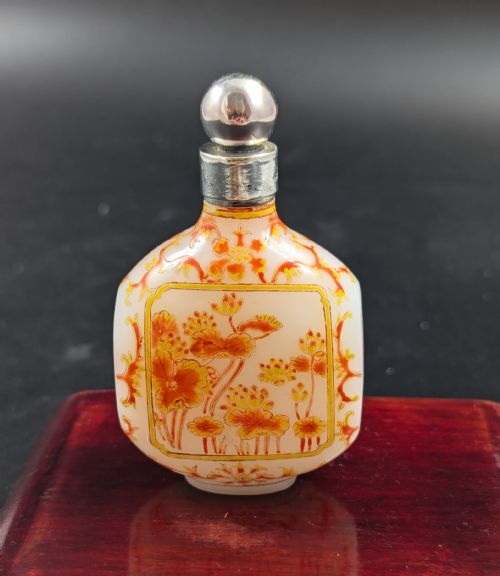
Makers utilised a diverse palette of materials, recording porcelain, enamel, brass, agate, jade, turquoise, metal, and hardstone. Glass also appears, including Peking glass with overlay and white glass bearing marks.
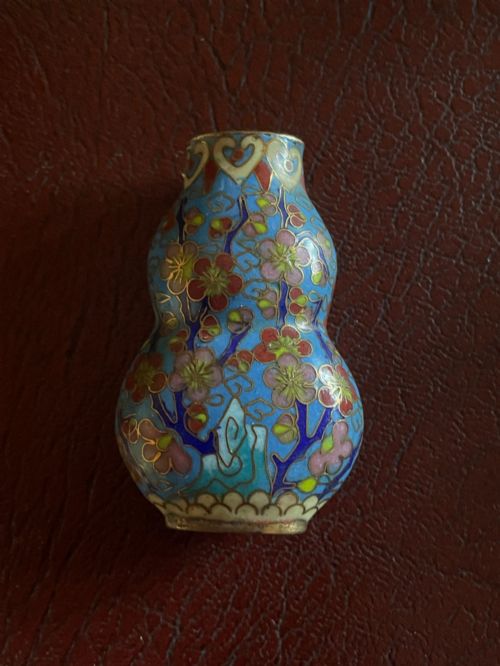
Techniques range from meticulous inside painting and openwork carving to cloisonne enamelling and crackle glazing. Skilled artisans handled demanding media such as rock crystal, coral, and spinach-green jade to form intricate miniature shapes.
Antique Chinese Snuff Bottle Retail Price Guide 2026
Typical asking prices for chinese snuff bottle among the pieces listed under this phrase on Sellingantiques today, from the lower quarter to the upper quarter. They describe what is for sale here now, not the wider market.
Listings feature 19th-century works predominantly, alongside 18th-century and early 20th-century examples in porcelain, jade, agate, and glass.
Assessing Quality
Quality rests upon the precision of the carving or painting relative to the resistance of the material. Hardstones like agate and jade demand exceptional skill to hollow out thin walls without fracturing the stone.
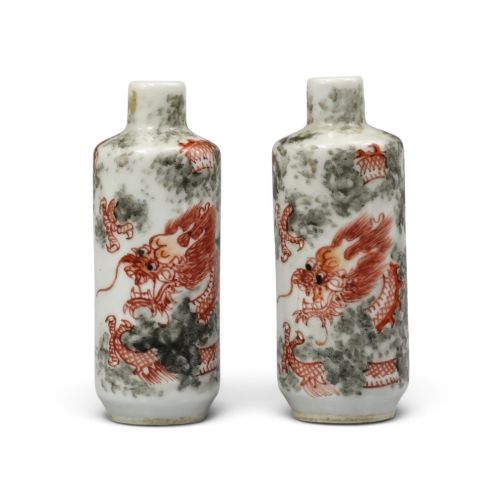
Detailing differentiates standard output from superior work, seen in the sharpness of iron-red dragons on porcelain or the control required for delicate inside-painted scenes. Original stoppers and matched pairs also elevate the standing of a piece.
Guyue Xuan mark·Cartier Paris
The Antique Chinese Snuff Bottle Glossary
- Famille rose
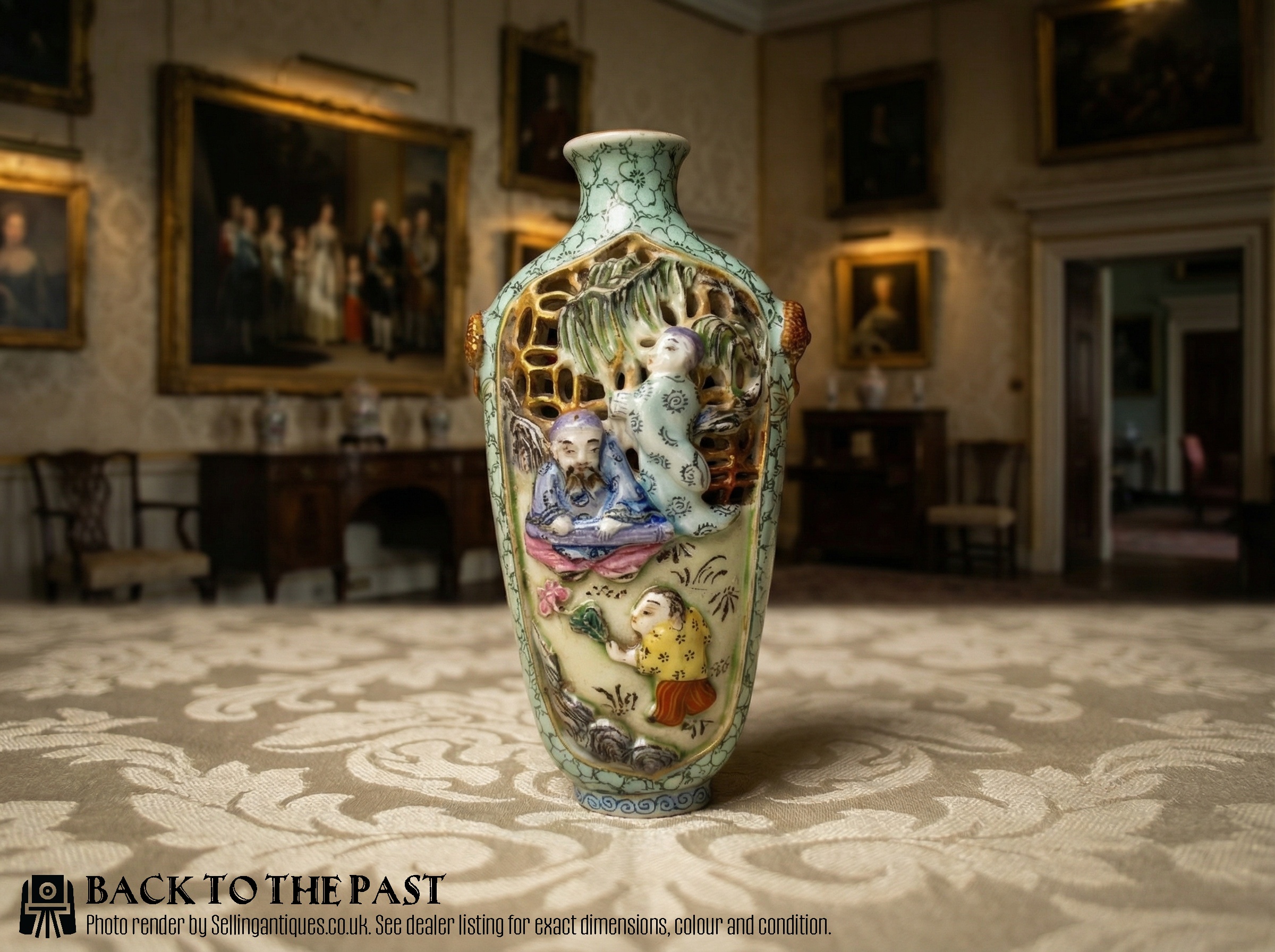
- A palette of opaque enamels dominated by pink or rose colours, introduced in the Qing dynasty. It allowed artisans to render complex figural scenes with subtle tonal gradations.
- Inside painting
- A technique where artists used bent brushes inserted through the tiny neck to paint detailed scenes on the interior walls of glass or crystal bottles. This required immense dexterity and reversed perspective.
- Qing dynasty
- The final imperial dynasty of China, lasting from sixteen forty-four to nineteen twelve. Most pieces on this page originate from this era or follow its stylistic traditions.
- Peking glass
- Chinese glass produced in Beijing during the Qing dynasty, often layered in contrasting colours and carved in relief. Overlay techniques allowed artisans to cut through top layers to reveal a different background colour.
- Openwork
- A decorative method where material is pierced and carved right through to create a lace-like or three-dimensional design. Master-carved examples in rock crystal utilise this to show detailed botanical motifs.
Antique Chinese Snuff Bottle: Frequently Asked Questions
What was inside an antique chinese snuff bottle?
These vessels originally held finely ground tobacco mixed with herbs and spices, a habit adopted by the Qing court from Western visitors.
Users consumed the powder by inhaling small amounts, making the tiny size and tight stopper essential for keeping the contents dry and potent.
How do I date an antique chinese snuff bottle?
Dating relies on stylistic markers, reign marks, material choices, and manufacturing techniques recorded across periods like the Qing dynasty.
Comparison with documented examples helps place a piece within centuries or specific imperial reigns such as Guangxu or Daoguang.
Are stoppers original on these bottles?
Many pieces retain their original stoppers and matching spoons, often fashioned from gilt metal, hardstone, or contrasting materials.
Replacements are common due to the small, fragile nature of these components, so collectors examine the fit and material consistency.
How should I display my collection?
Because of their miniature scale and detailed carving, these vessels suit enclosed cabinet display where light can pass through translucent materials like jade and rock crystal.
Handling requires care to protect delicate painted interiors and protruding openwork elements from accidental impact.