
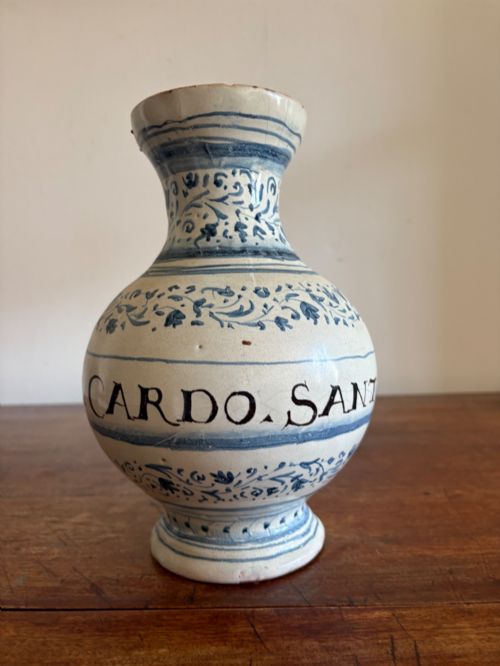


Antique Majolica Vessel
An antique majolica vessel brings rich colour and historic tin-glazed earthenware to a room through centuries of traditional forms.
Antique Majolica Vessel
An antique majolica vessel encompasses diverse glazed ceramics spanning the eighteenth and nineteenth centuries, with Italian workshops heavily represented alongside French and British pieces. Buyers seek out these items for their striking display presence and connection to historical utilitarian wares.
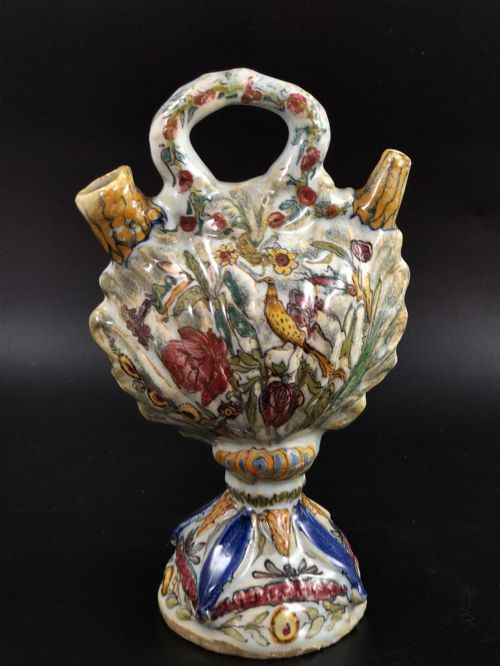
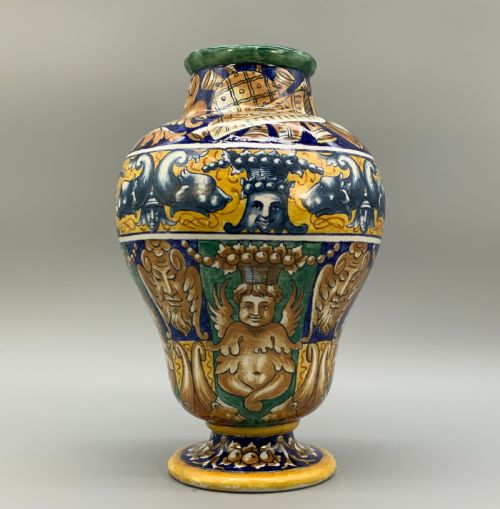
Forms range from simple waisted drug jars to elaborate handled flasks and large decorative vases modelled in varied revival styles. These objects serve as focal points in interiors, combining functional origins with ornamental surface design.
What Varies in Quality
The calibre of an antique majolica vessel rests primarily on the dexterity of the hand-painted decoration and the crispness of the earthenware form. Pieces with finely detailed polychrome work or complex figurative modeling stand apart from simpler, mass-produced output.
Preservation of the tin glaze and original coloration significantly influences the standing of a piece. Firing consistency and the depth of the pigment application distinguish ordinary utilitarian vessels from exceptional examples produced by prominent factories.
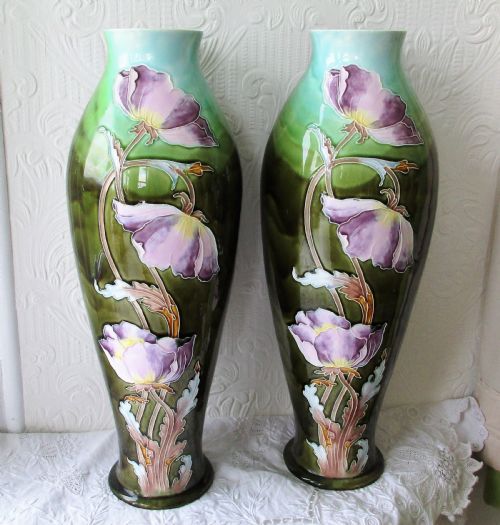
Listings feature earthenware and ceramic bodies finished with tin glaze, showcasing styles from Italian Baroque and Renaissance Revival to Art Nouveau.
Cantagalli Faience·Sarreguemines·Joseph Holdcroft·Minton·Albert Carrier
The Antique Majolica Vessel Glossary
- Albarello
- A cylindrical earthenware jar used in pharmacies for holding ointments and dry drugs. This distinct waisted form originated in the Middle East and became popular in Italian majolica production.
- Tin Glaze
- An opaque white glaze made by adding tin oxide to a lead glaze base. It provides a smooth surface for painting complex designs in imitation of porcelain.
- Pilgrim Flask
- A flattened globular vessel with lug handles, originally designed for travellers to carry liquids. Ceramic versions evolved into highly decorative display pieces.
- Faience
- European tin-glazed earthenware produced in France, Germany, and other regions outside Italy. The term encompasses a broad range of decorative table and apothecary wares.
- Polychrome
- Decoration employing multiple distinct colours on a single ceramic surface. This technique allowed painters to create nuanced floral, heraldic, and figurative compositions.
Antique Majolica Vessel: Frequently Asked Questions
What were apothecary jars used for?
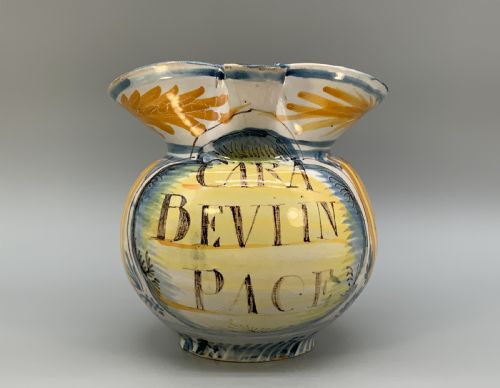
Apothecary jars stored dry drugs, herbs, syrups, and medicinal ointments in historical pharmacies and apothecaries. Their distinctive shapes and labelled surfaces helped practitioners organise contents efficiently.
Over time, these vessels transitioned from working dispensary items into decorative objects valued for their historical inscriptions and painted motifs.
How do I identify an 18th-century piece?
Eighteenth-century pieces typically display hand-painted blue and white or early polychrome pigments applied directly onto an absorbent tin glaze. Forms such as the albarello and pilgrim flask reflect the traditional shapes of that era.
Closer inspection reveals subtle irregularities in the earthenware body and glaze application characteristic of earlier hand production methods.
Where were majolica vessels made?
Majolica production centres primarily in Italy, where traditional tin-glazed earthenware developed through the Renaissance and later revival periods. Workshops across France and Britain also produced related faience and art pottery.
Regional styles often reveal the geographic origin through specific colour palettes, decorative motifs, and clay compositions unique to local potteries.
How do I display a large vessel?
Large umbrella stands, pilgrim flasks, and covered vases suit prominent placement on sturdy furniture, mantelpieces, or designated floor areas. Their substantial ceramic forms anchor a room and draw the eye.
Positioning pieces away from high-traffic edges protects the tin-glazed earthenware surface from accidental impacts while highlighting the painted details.