


Polychrome Majolica Vase
A polychrome majolica vase brings vibrant tin-glazed earthenware into a room, shaped by centuries of Italian ceramic tradition.
Polychrome Majolica Vase
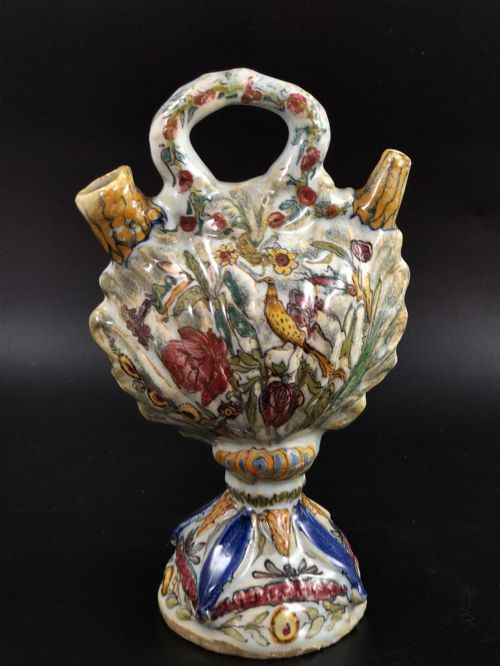
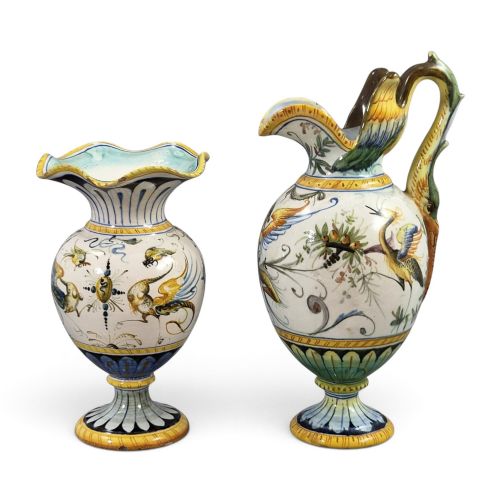
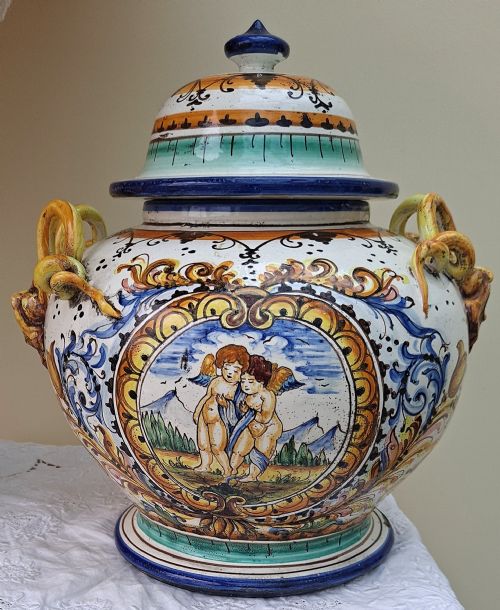
A polychrome majolica vase is a tin-glazed ceramic vessel originating from or inspired by Italian traditions, shaped as lidded urns, ewers, and scallop shell pilgrim flasks. These pieces showcase diverse forms ranging from snake bottle designs to traditional garofano patterns.
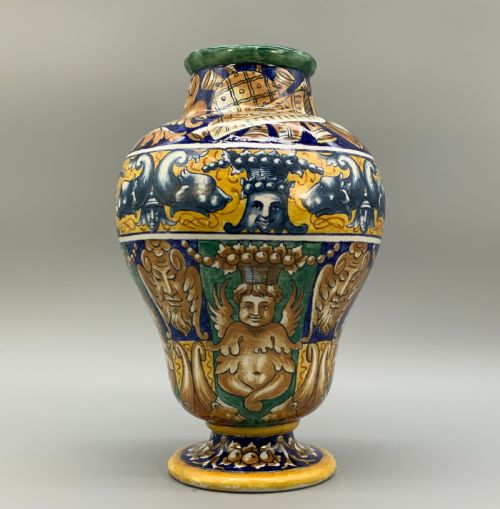
The versions most frequently met on this page span the eighteenth and nineteenth centuries. Buyers encounter both eighteenth-century Italian originals and nineteenth-century Renaissance Revival interpretations produced in styles such as Italian Baroque and Italian Maiolica.
How they were made
Potters shaped earthenware and terracotta into vessels before applying tin glaze and enamel to create a smooth surface for painting. This method allowed artisans to achieve the bright multi-coloured palettes characteristic of these ceramics.
Hand-painted decoration defined the production process, utilising mineral pigments over the glaze. Firing then fixed the colours, resulting in the glazed finishes seen on Victorian and earlier examples.
Some nineteenth-century makers could not resist adding writhing snakes as handles to otherwise polite Renaissance revival vases.
What varies in quality
The standard of painting separates standard production from finer examples. Skilful brushwork in the enamel detailing creates sharper definition in floral and figural motifs.
The weight and precision of the earthenware body influence the overall character of the piece. Uniformity in the tin glaze application and the richness of the polychrome palette distinguish superior workmanship.
Cantagalli Florence
The Polychrome Majolica Vase Glossary
- Majolica
- A type of tin-glazed earthenware decorated with colourful enamels. It has a long history in Italian pottery production.
- Tin Glaze
- An opaque white glaze containing tin oxide that forms the base for painted decoration. It provides a smooth surface for vibrant pigments.
- Pilgrim Flask
- A flattened flask with loops for suspension, often taking a scallop shell form. These vessels derive their shape from containers carried by travellers.
- Ewer
- A large jug with a wide spout and handled body. These ceramic vessels served decorative and functional purposes.
- Garofano
- A traditional carnation motif used in Italian ceramic decoration. It appears frequently on eighteenth-century pieces.
Polychrome Majolica Vase: Frequently Asked Questions
What is a polychrome majolica vase?
A polychrome majolica vase is an earthenware vessel finished with an opaque tin glaze and decorated with colourful painted enamels. These pieces often draw on Italian Renaissance or Baroque design traditions.
They appear in various forms, including lidded vases, ewers, and pilgrim flasks. Each piece reflects historical ceramic styles from the eighteenth and nineteenth centuries.
How do I date a majolica vase?
Dating a majolica vase involves examining the ceramic body, the style of the tin glaze, and the characteristics of the painted decoration. Eighteenth-century pieces often show different wear and glaze formulations compared to nineteenth-century revival works.
Stylistic cues such as Renaissance Revival motifs or specific regional patterns help narrow down the period of manufacture. Comparing the potting technique and pigment use provides further context.
Where were these vases made?
The majority of these vases originate from Italy or were created in the Italian style during later revival periods. Centres such as Florence produced notable tin-glazed ceramics.
Potters across Europe also imitated these Italian forms during the nineteenth century. The resulting pieces capture the aesthetic of earlier Italian maiolica.
How do I display a majolica vase?
Displaying a majolica vase safely requires a stable surface away from areas of heavy traffic. Placing the vessel where natural light highlights the polychrome enamel colours enhances its visual impact.
Because these are tin-glazed earthenware objects, protecting them from knocks and sudden temperature shifts is important. Many collectors place larger urns and lidded vases on sturdy tables or pedestals.