
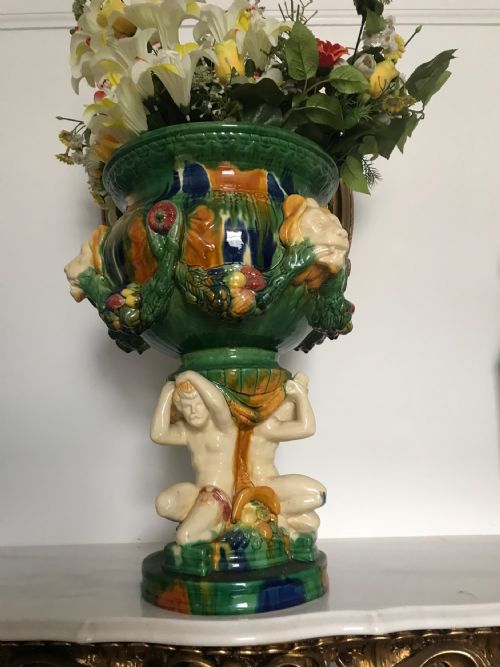


Renaissance Revival Ceramic
These renaissance revival ceramic pieces bring sixteenth-century Italian grandeur into nineteenth-century interiors through tin-glazed earthenware and vibrant polychrome decoration.
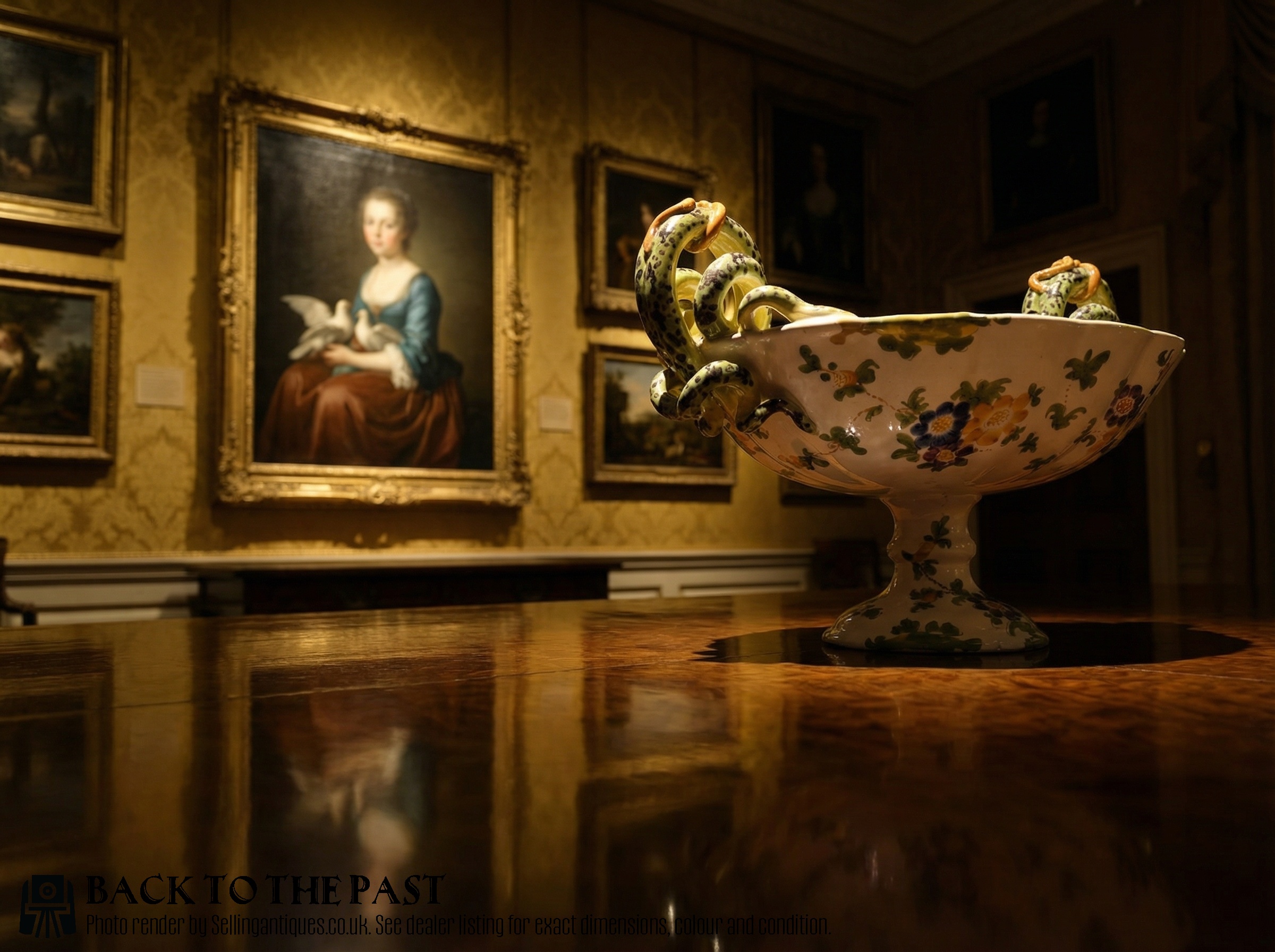
Renaissance Revival Ceramic
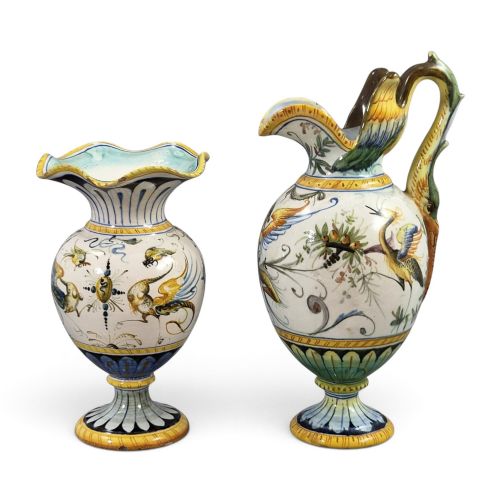
Renaissance revival ceramic works draw heavily on the tin-glazed earthenware and maiolica traditions of historic Italy and France. Makers across the nineteenth century produced ewers, chargers, vases and wall plaques that borrow directly from earlier motifs.
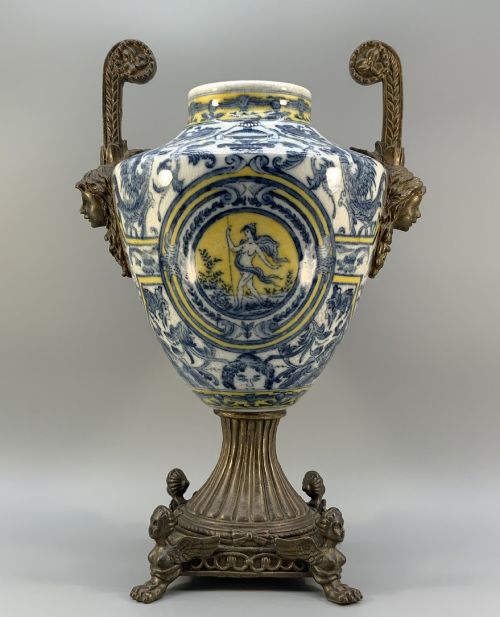
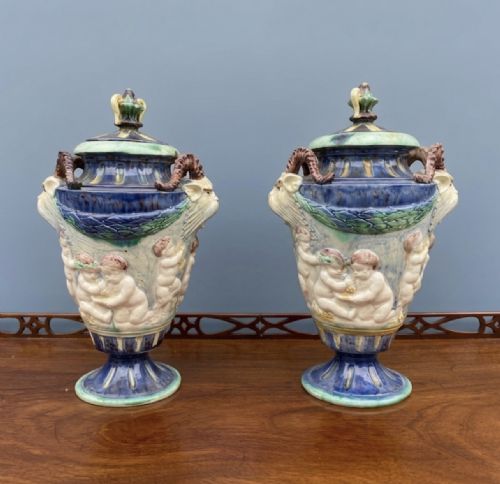
Vases and decorative urns dominate the selection, often accompanied by figural wall brackets, jardinieres and table lamps mounted in bronze or brass. Italian and French workshops led this revival, producing substantial pieces with mythological figures and armorial decoration.
The aesthetic bridges Victorian taste with continental historicism, resulting in objects that function as dramatic focal points in a room. Collectors encounter both grand pedestalled vessels and smaller cabinet pieces bearing polychrome glazes.
How they were made
Potters shaped these objects from earthenware and ceramic bodies before applying tin glazes that provided an opaque, smooth surface for painting. Artisans worked pigments directly onto the unfired glaze to achieve the characteristic polychrome palette seen in Italian and French examples.
Metal mounts in bronze, brass and ormolu frequently complement the ceramic bodies, particularly on lamps, urns and plaques. These metal elements were cast and chased to frame the pottery and elevate the status of the decorative object.
What varies in quality
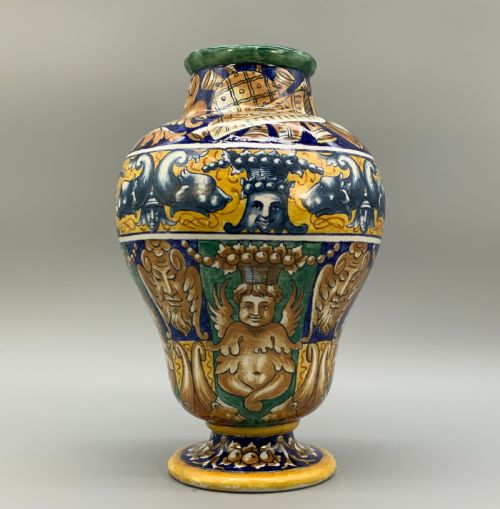
The precision and detail of the hand-painted decoration distinguish finer examples from standard production wares. Workshops known for high artistic ambition employed skilled painters who rendered mythological figures, cherubs and grotesques with notable depth and tonal control.
The integration of secondary materials such as bronze mounts and figural bases also alters the character of a piece. Heavier cast mounts and well-modelled figural stands indicate a higher tier of manufacture, whereas simpler earthenware bodies rely solely on surface glaze.
Cantagalli Florence·Gien·Minton·Berlin
The Renaissance Revival Ceramic Glossary
- Majolica
- Tin-glazed earthenware decorated with opaque colours over a white glaze. This technique reached its technical peak in Renaissance Italy and inspired nineteenth-century revivals.
- Faience
- European tin-glazed pottery, particularly associated with French and Italian traditions. The term covers decorative chargers, ewers and water pitchers.
- Ewer
- A large jug with a wide spout and curved handle, often produced as a decorative display piece rather than for practical service.
- Charger
- A large ornamental plate designed to be displayed on a wall or dresser rather than used at the table.
- Ormolu
- Gilded bronze used for mounts, frames and decorative fittings on nineteenth-century ceramics and furniture.
Renaissance Revival Ceramic: Frequently Asked Questions
What is renaissance revival ceramic?
These objects are nineteenth-century European pottery pieces that emulate the styles, forms and glazing techniques of the Italian and French Renaissance. Workshops in Italy, France and England produced them to satisfy a Victorian appetite for historicist interior decoration.
Potters utilised tin-glazes and polychrome painting to replicate sixteenth-century maiolica chargers, ewers and plaques. Many examples incorporate bronze or brass mounts that reflect the grand aesthetic of earlier periods.
How were majolica and faience used?
Historic majolica and faience served both decorative and functional roles in wealthy households, though nineteenth-century revival pieces were primarily ornamental. Chargers, plaques and large vases were displayed on walls, pedestals and mantelpieces to signal cultural literacy.
Some forms, such as water pitchers, ewers and jardinieres, retained their practical utility while functioning as centrepieces. Table lamps and wall brackets integrated historic ceramic bodies into contemporary domestic lighting and architecture.
How do I care for glazed ceramics?
These glazed earthenware and faience pieces require gentle handling to protect the tin-glaze surface and any attached metal mounts. Dusting with a soft, dry cloth prevents the accumulation of grime in recessed painted areas.
Keep pieces away from direct sunlight and areas of high moisture to preserve the stability of the ceramic body and bronze fittings. Avoid using chemical cleaners on the painted glazes or metalwork.