
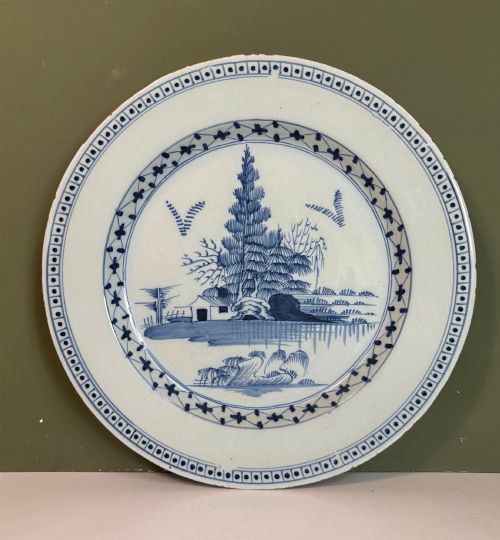

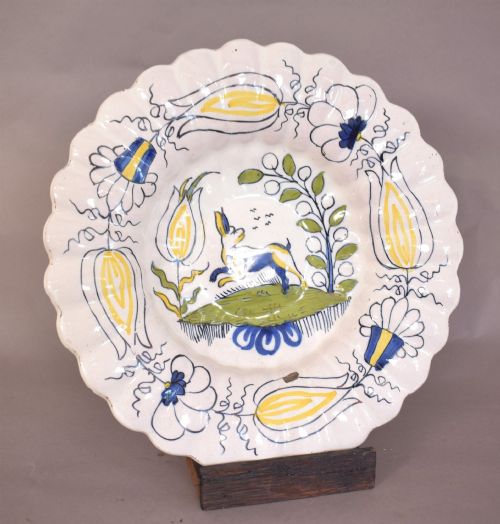
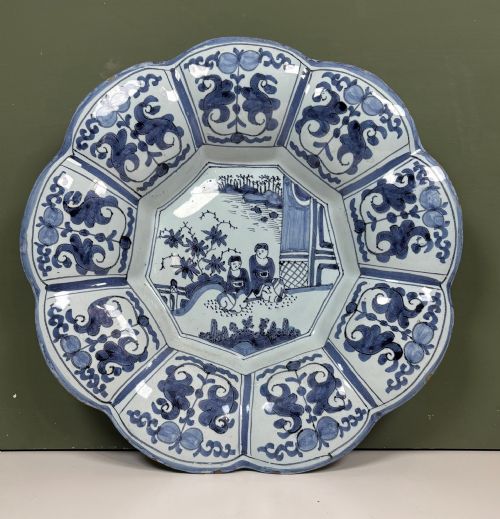
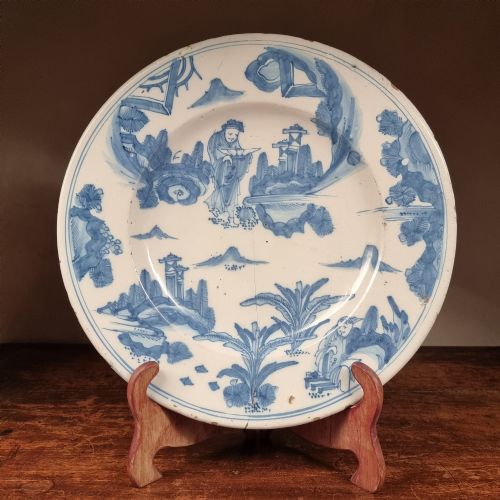
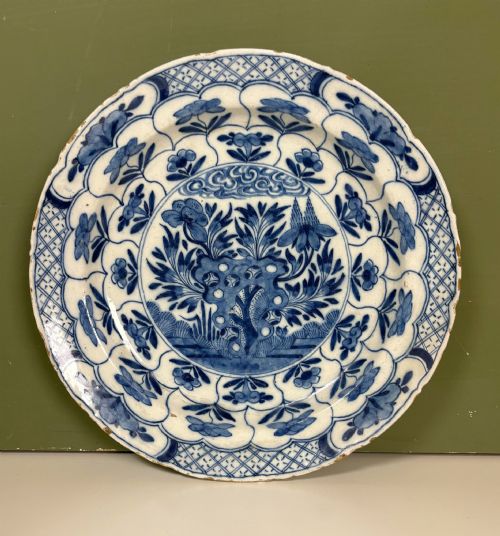
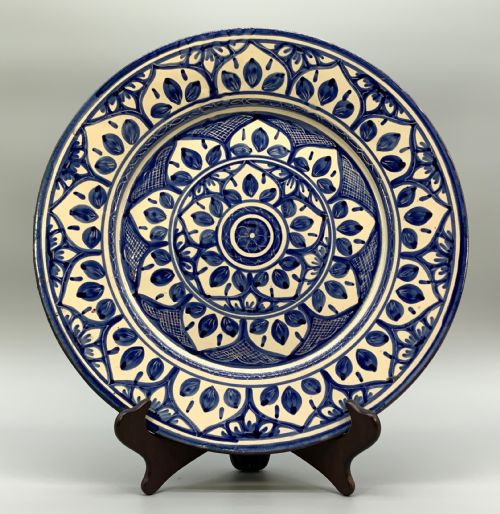
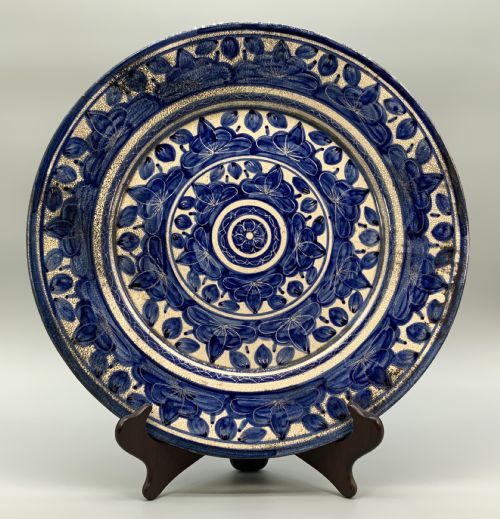
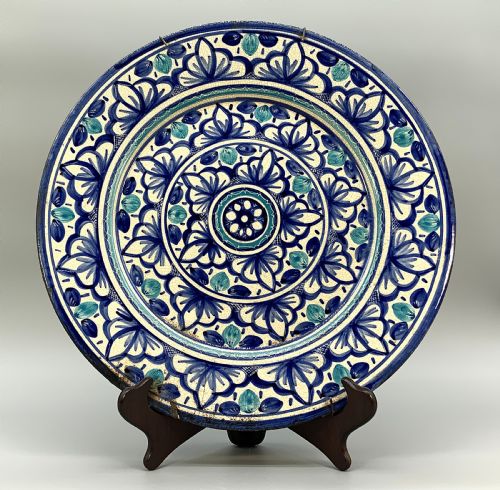
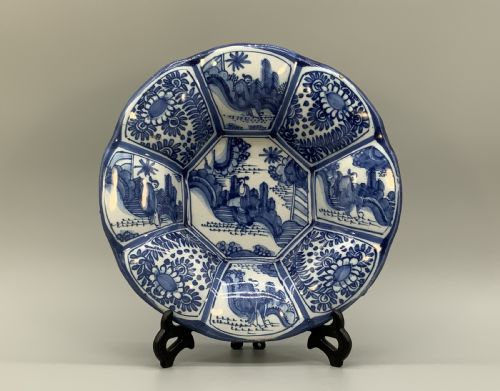
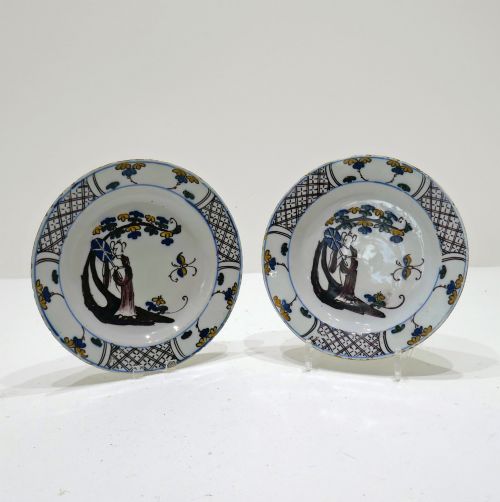
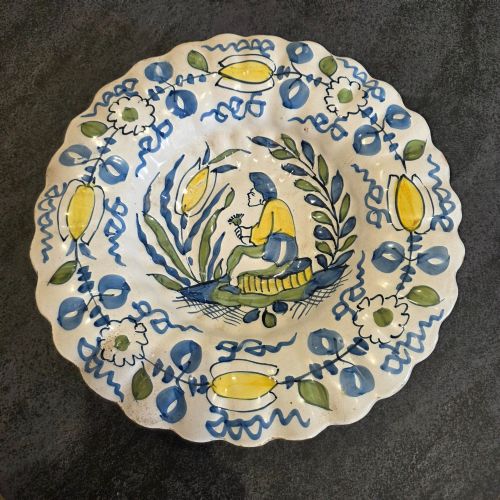
Tin Glazed Earthenware Charger
A tin glazed earthenware charger is a substantial decorative dish carrying centuries of pigment upon a white opaque surface.

Tin glazed earthenware charger forms and origins
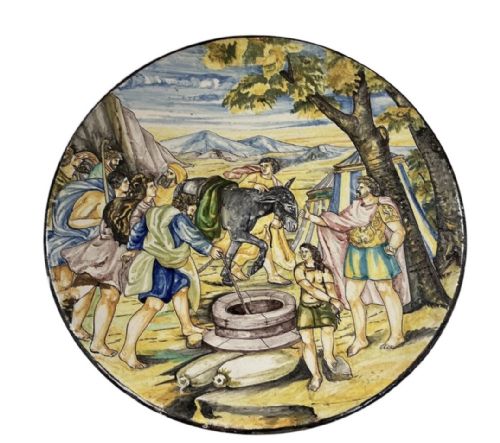
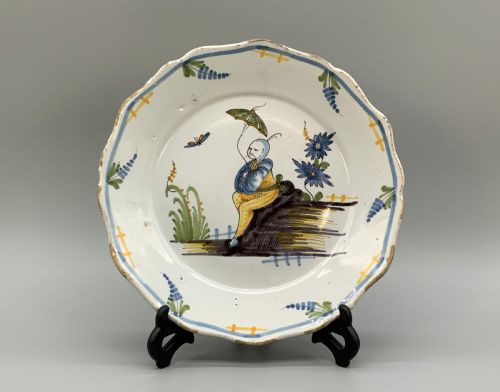
When you search for a tin glazed earthenware charger, you encounter large decorative plates and platters spanning the seventeenth, eighteenth, and nineteenth centuries. These pieces cross several regional traditions, including Dutch delftware, French faience, and Italian maiolica.
The objects take the form of broad wall plates and chargers designed primarily for display rather than table service. You find sixteenth and seventeenth century roots echoed alongside later revival styles from the nineteenth century.
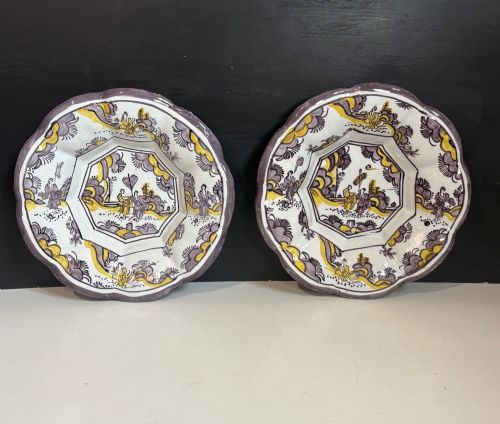
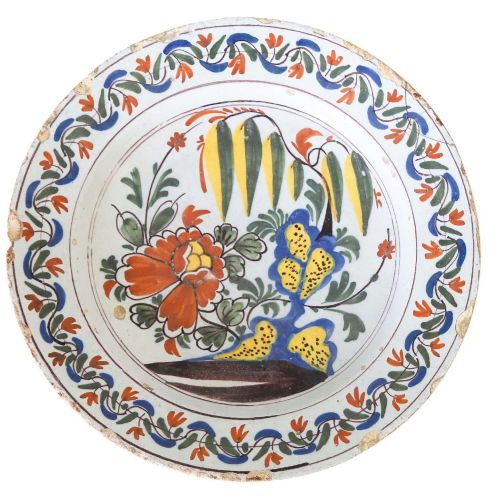
Dutch delft examples dominate the selection, featuring both polychrome palettes and blue and white designs. Alongside these, French and Italian works bring distinct manganese, yellow, and istoriato narrative scenes to the surface.
Materials and construction
The foundation of every piece is a ceramic body finished with a tin glaze that creates the characteristic white opaque background. Artisans then applied pigments directly onto this absorbent unfired or raw glaze layer.
Cobalt pigment provides the deep blue tones found across numerous examples, while other palettes incorporate manganese and yellow. Firing vitrified the mineral colours into the tin enamel, locking the brushwork permanently into the surface.
Retail Price Guide 2026
Typical UK retail prices for tin glazed earthenware charger, calculated from the Sellingantiques database of over a million retail prices indexed since 2003. This retail price guide relies exclusively on Sellingantiques data; no external sources or auction records are used, so the figures do not describe the wider market.
Some chargers feature historical scenes so enthusiastic the horses appear to be floating on water.
Assessing quality and execution
Quality rests in the ambition of the painting and the control of the brush across the tin glaze. Fine examples display confident handling of classical historical scenes, Chinoiserie motifs, or Kraak patterns rather than stiff or hurried execution.
The depth of the glaze and the harmony of the pigment palette separate standard production from ambitious works. Early seventeenth and eighteenth century pieces carry the weight of period kiln technology, whereas later revival items show nineteenth century interpretations.
The Tin Glazed Earthenware Charger Glossary
- Tin Glaze
- An opaque white ceramic glaze containing tin oxide. This surface provides the bright ground required for painted cobalt and polychrome decoration.
- Charger
- A large decorative dish or platter. These wide plates were historically hung on walls or stood on sideboards for display.
- Polychrome
- Decoration employing multiple colours. On these ceramics, it typically involves combinations of blue, yellow, manganese, and green pigments.
- Delftware
- Tin glazed earthenware originating from the Netherlands. The tradition encompasses both blue and white and polychrome domestic and export styles.
- Maiolica
- Italian tin glazed earthenware. The technique reached a peak during the Renaissance and inspired later nineteenth century revivals featuring narrative scenes.
Frequently Asked Questions
What is a tin glazed earthenware charger?
A tin glazed earthenware charger is a wide decorative plate coated in an opaque white enamel and painted with mineral pigments. These dishes were made across Europe from the seventeenth century onwards.
Potters created them primarily for visual display on walls or sideboards rather than heavy daily use at the dining table.
How do I date a delft charger?
Dating relies on examining the painting style, the tone of the tin glaze, and the characteristics of the earthenware body. Seventeenth and eighteenth century pieces display different pigment mixes and potting weights compared to nineteenth century revivals.
Comparing the decorative motifs, such as Kraak patterns or Chinoiserie scenes, against documented regional timelines helps narrow the origin.
How should I display a charger?
Chargers are well suited for wall mounting using appropriate wire display hangers or standing securely on deep plate grooves. Because the tin glaze can be vulnerable to sharp impacts, placement should avoid high traffic areas.
Keeping them away from direct, harsh sunlight protects the stability of the historical pigments over time.