

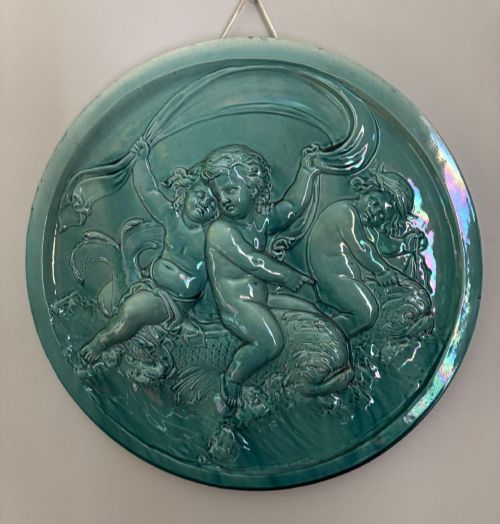
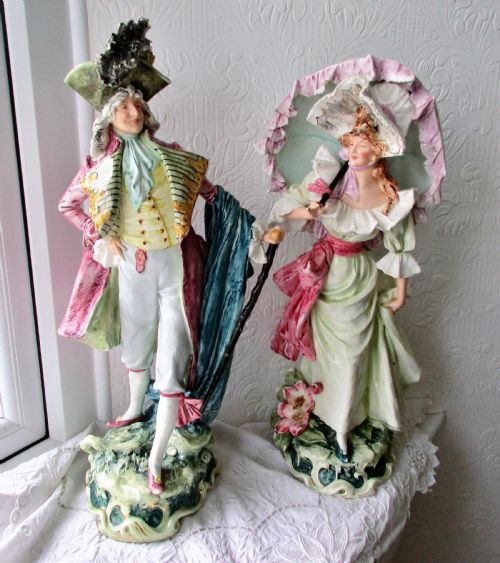


19th Century Faience
When you explore 19th century faience, you encounter tin-glazed earthenware shaped into vases, apothecary jars, and decorative figures that bring hand-painted colour to a room.
19th Century Faience
When searching for 19th century faience, collectors encounter a diverse range of objects spanning utilitarian vessels and purely decorative items. The material encompasses everything from apothecary jars and water pitchers to wall plaques, umbrella stands, and figurative groups.
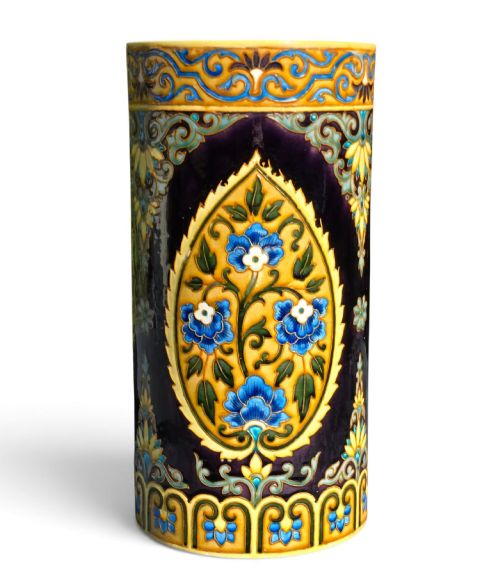
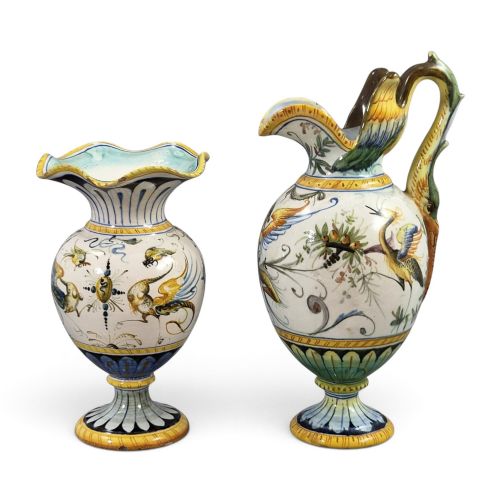
French and Dutch provincial workshops dominate the selection, alongside Italian majolica revivals and English iterations. Pieces frequently adopt historical revivals, drawing on Renaissance, Rococo, and Iznik decorative idioms translated through tin glazing.
Materials and construction
The underlying body is typically an earthenware ceramic, coated in an opaque tin glaze that provides a smooth white ground for subsequent painting. Artisans applied mineral pigments directly onto this unfired or raw glaze, absorbing the colour into the surface during the kiln firing.
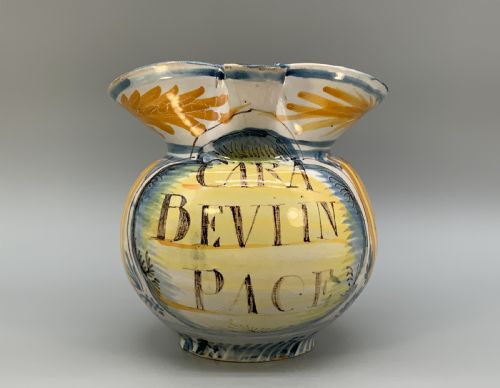
Polychrome palettes rely on traditional metal oxides, yielding characteristic blues, manganese purples, yellows, and greens. Certain pieces incorporate moulded relief details, hand-painted armorials, or bronze mounts to elevate the finished object.
Ceramic pigs from Normandy and blue and white pottery cows sit comfortably alongside grand armorial chargers and mythological water pitchers.
Assessing quality and execution
Quality reveals itself in the crispness of the hand-painted brushwork and the control of the pigment upon the porous tin glaze. Superior examples display confident, detailed brush strokes in floral motifs, mythological scenes, or heraldic designs without muddied edges.
The sophistication of the moulded body and the richness of the glaze finish distinguish standard production items from pieces produced by notable factories or skilled individual decorators. Balanced proportions and even glaze coverage without excessive pooling mark the better specimens.
Théodore Deck·Fourmaintraux-Courquin·Cantagalli·Gien·Doulton Lambeth·Jules Vieillard
The 19th Century Faience Glossary
- Albarello
- A cylindrical earthenware jar used by apothecaries for storing drugs and ointments. These vessels often feature distinctive waisted bodies for easier handling.
- Majolica
- Italian tin-glazed earthenware noted for bright polychrome decoration. The style experienced widespread revivals throughout the nineteenth century.
- Polychrome
- Decoration employing multiple colours rather than a single hue. In these ceramics, it typically describes designs utilising blues, yellows, greens, and manganese.
- Vide-poche
- A small shallow dish designed for emptying pockets of coins and small items. They appear in glazed earthenware forms often shaped with fretted edges.
19th Century Faience: Frequently Asked Questions
What is faience pottery?
Faience is a form of earthenware covered with an opaque tin-lead glaze, providing a white surface for hand-painted ornamentation. Artisans decorated these ceramic bodies with mineral pigments before a final kiln firing.
The technique has ancient roots but saw a major revival during the nineteenth century across France, Italy, and England. Workshops produced everything from utilitarian pharmacy jars to elaborate decorative vases and table lamps.
How do I clean faience?
Cleaning requires gentle dusting with a soft cloth to protect the historic glaze surface. Avoid abrasive materials, harsh chemical cleaners, or soaking in water, which can penetrate old earthenware.
Tin-glazed surfaces can develop fine networks of crazing over time. Keeping pieces away from direct sunlight and damp environments helps preserve the integrity of the ceramic body.
How are Dutch and French styles different?
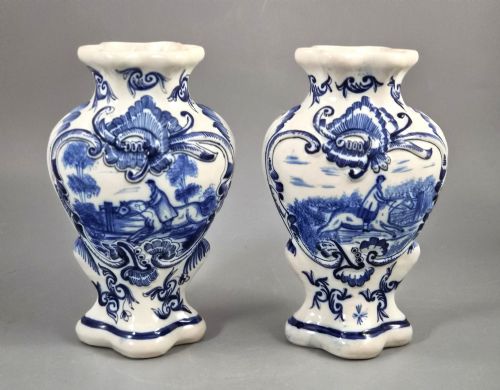
Dutch-inspired pieces frequently utilise a distinctive palette of blue and white, referencing traditional Delftware motifs. These often depict floral arrangements, architectural scenes, or domestic animals.
French production spans a wider range of revived aesthetics, incorporating Rococo scrolls, Renaissance motifs, and polychrome mythological figures. Regional centres like Quimper, Rouen, and Gien developed distinct local traditions.
How do I identify a pharmacy jar?
Pharmacy jars, known as albarelli, typically feature a cylindrical body with an indented waist to facilitate gripping with hands covered in medicinal powders or ointments. They often bear painted Latin labels or botanical scrollwork.
These vessels served practical functions in apothecary shops before becoming decorative cabinet pieces. Their robust earthenware walls and tin glazes protected contents from moisture and air.