


Antique Porcelain Flask
An antique porcelain flask brings handheld refinement to a room, offering tactile glaze and decorative form.
Antique Porcelain Flask
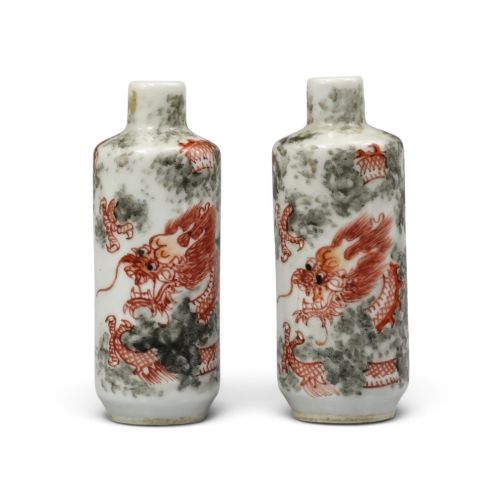
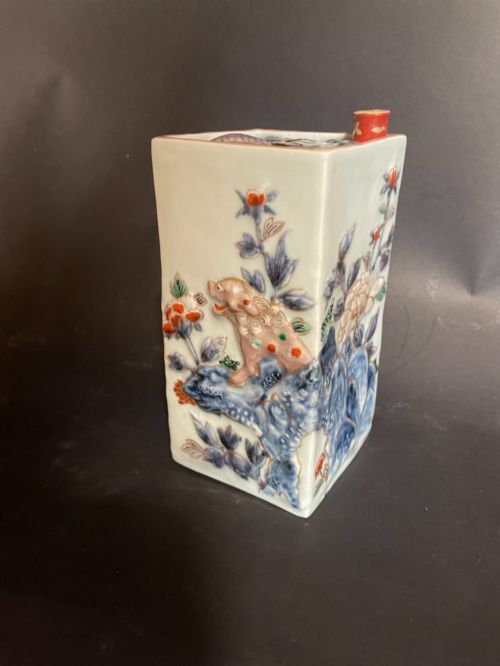
When you search for an antique porcelain flask, you encounter a diverse group of ceramic vessels designed for holding liquids, perfumes, or tobacco, spanning centuries of global craftsmanship. The pieces available here range from small snuff bottles and scent flasks to large moon flasks and Japanese tokuri, reflecting varied domestic and ritual uses across different cultures.
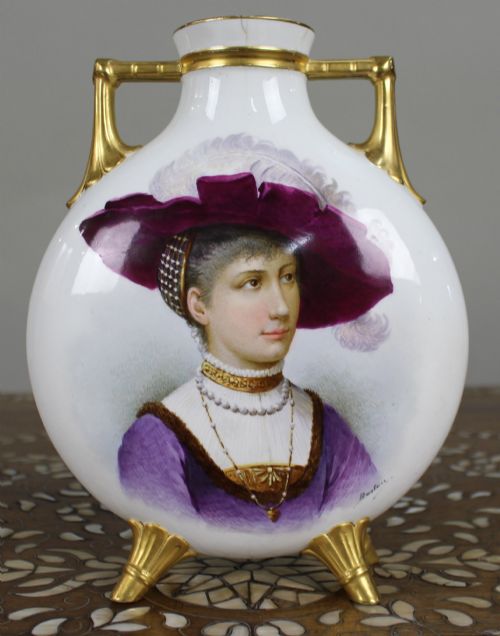
You are most likely to meet 19th-century examples on this page, particularly Chinese famille rose snuff bottles and European moon flasks or vases. These objects cross multiple stylistic traditions, including Qing dynasty designs, Victorian productions, and Regency pieces, uniting practical utility with intricate surface decoration.
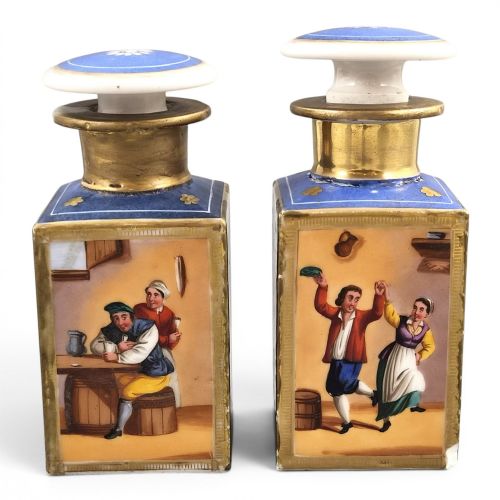
The selection also includes specialised forms such as sake flasks, kendis, and rose water sprinklers, demonstrating the wide international scope of ceramic production. Each item serves as a tangible record of period aesthetics, whether through hand-painted figural scenes, cobalt oxide work, or delicate gilding.
Materials and technique
Makers shaped these flasks using hard-paste porcelain and ceramic bodies, often applying transparent or coloured glazes to seal the surface before firing at high temperatures. Decoration was then added using enamel, iron-red pigments, or cobalt oxide, followed by secondary low-temperature firings to fix the colours.
Many European and Asian pieces incorporate hand-painted details, gilding, and gold leaf applied to accentuate moulded relief work or figural scenes. Techniques like pate-sur-pate build up layers of liquid clay to create cameo-like designs directly on the ceramic body.
Silver mounts, hinged stoppers, and enamel overlays frequently complement the porcelain bodies, particularly in Victorian scent bottles and pocket flasks. These mixed-media constructions rely on the precise union of ceramic potting with metalwork or glass components.
The selection includes various forms such as rose water sprinklers, kendi vessels, moon flasks, and perfume bottles decorated with cobalt oxide and gold leaf.
Distinctions in quality
Quality rests in the crispness of the potting and the precision of the hand-painted decoration, where controlled brushwork distinguishes master works from routine production. The clarity of the glaze and the registration of multi-coloured enamels reveal the technical skill of the kiln workers.
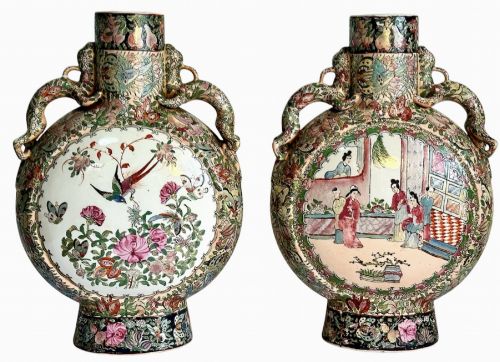
The sophistication of the design execution, such as the detailed rendering of facial expressions in figural snuff bottles or the balanced symmetry of twin-handled moon flasks, elevates certain pieces above standard domestic wares. Signed works and items associated with known porcelain manufacturers carry evidence of deliberate artistic ambition.
Preservation of fragile elements like original stoppers, delicate gilding, and unblemished enamel surfaces dictates the standing of a piece within its type. The harmony between the ceramic form and its applied ornament remains a defining measure of accomplishment.
Jacob Petit·Flight Barr And Barr·Royal Worcester·Minton·Coalport
The Antique Porcelain Flask Glossary
- Moon flask
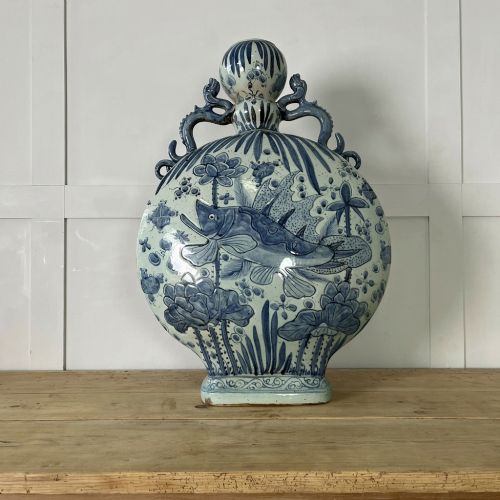
- A flattened circular pilgrim flask with a short neck and two small handles, often decorated with painted scenes on both sides. This form has a long history in Chinese ceramics and was later adopted by European factories.
- Pate-sur-pate
- A method of ceramic decoration where successive layers of liquid white porcelain slip are painted onto a darker coloured body to build up a low relief cameo effect. The technique requires great patience and steady brushwork.
- Snuff bottle
- A small container used to hold powdered tobacco, featuring a tight-fitting stopper with an attached spoon. These portable objects allowed for intricate miniature painting and carving.
- Kendi
- A spouted ritual vessel originating in Southeast Asia and produced in Chinese kilns for export. It lacks a traditional handle, relying instead on a central spout for pouring.
- Famille rose
- A palette of opaque enamel colours dominated by pink or rose, introduced to Chinese porcelain during the Qing dynasty. It allowed for nuanced shading and naturalistic floral or figural depictions.
Antique Porcelain Flask: Frequently Asked Questions
What is a moon flask used for?
Historically, moon flasks served as decorative display objects or ceremonial vessels rather than everyday containers. Their flattened form and stable bases made them suitable for placement on tables or shelves.
Over time, European and Asian potteries adapted the shape primarily for interior display, capitalising on the broad circular surfaces for elaborate painted scenes.
How do I identify a snuff bottle?
A snuff bottle is typically small enough to fit in the palm of a hand, featuring a fitted lid combined with a tiny interior spoon. They were designed for carrying powdered tobacco.
Materials range from porcelain to glass and jade, with Chinese examples frequently displaying detailed figural or narrative painting across their compact surfaces.
What is parian ware?
Parian ware is a type of fine-grained white ceramic developed in the 19th century to imitate carved marble. It has a smooth, unglazed matte finish.
Victorian makers used this material predominantly for decorative figures, vases, and scent bottles, valuing its ability to hold crisp, sculptural detail without surface gloss.
How do I care for antique porcelain?
Antique porcelain requires gentle handling, ideally keeping it away from direct sunlight and areas subject to sudden temperature shifts. Dusting with a soft, dry brush prevents the buildup of particulate matter on delicate enamel or gilt surfaces.
Avoid using water or chemical cleaners on pieces with exposed metal mounts, paper labels, or delicate overglaze enamels to protect the original finish.