


Hand Painted Floral Compote
These hand painted floral compote pieces bring botanical artistry and decorative presence to a table, offering rich colours and intricate motifs.
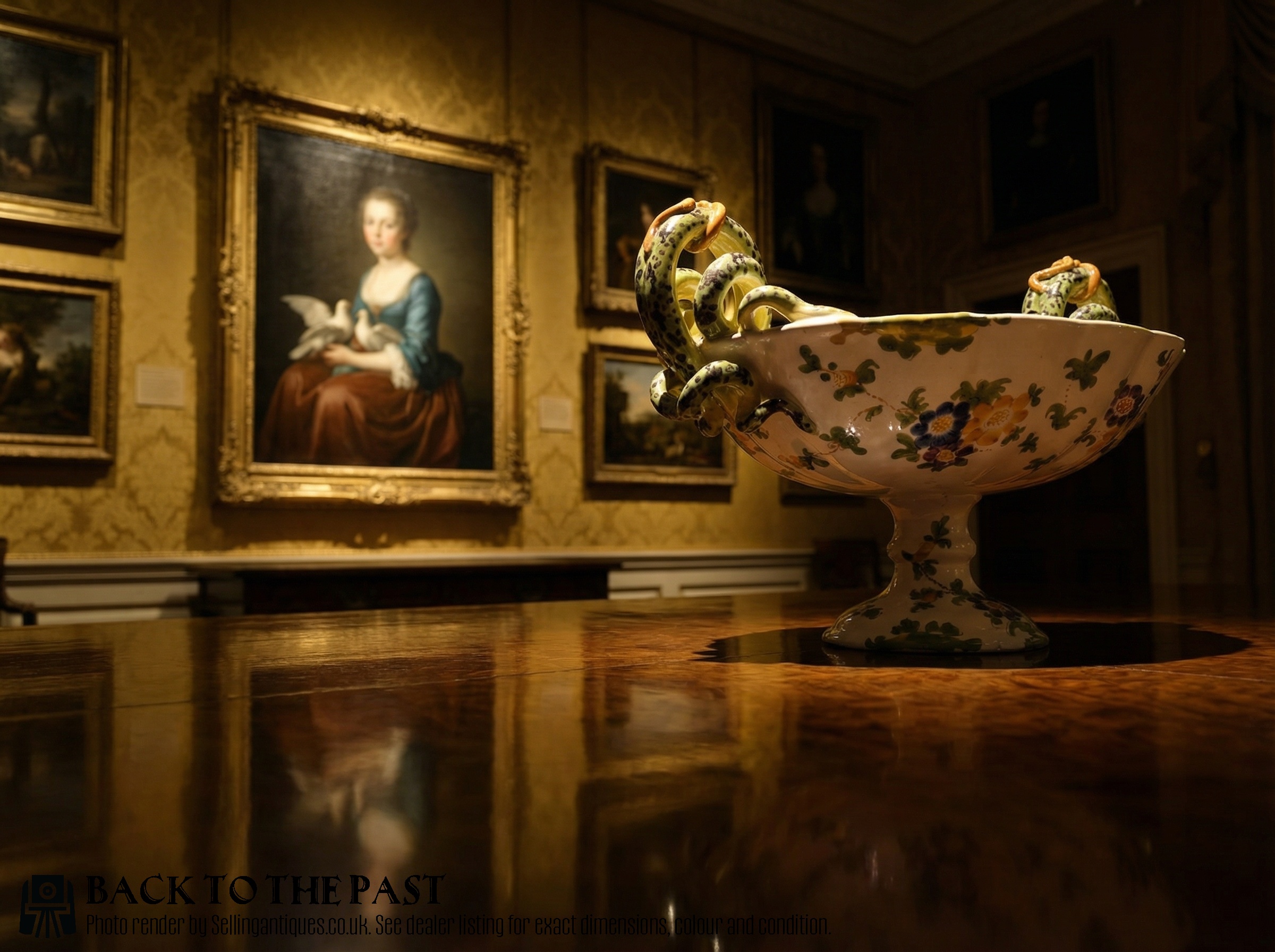
Hand Painted Floral Compote
When you search for a hand painted floral compote, you are looking at footed serving vessels and centrepieces designed to display fruit or anchor a table setting. The examples you meet span the nineteenth century, including Victorian and Edwardian periods, alongside Georgian ironstone wares.
The forms range from lidded dishes on stands and large German porcelain centrepieces with cherubs to majolica vases from Florence and Mason's ironstone china comports. Many of these items arrive as individual display pieces or as surviving parts of larger dessert services.
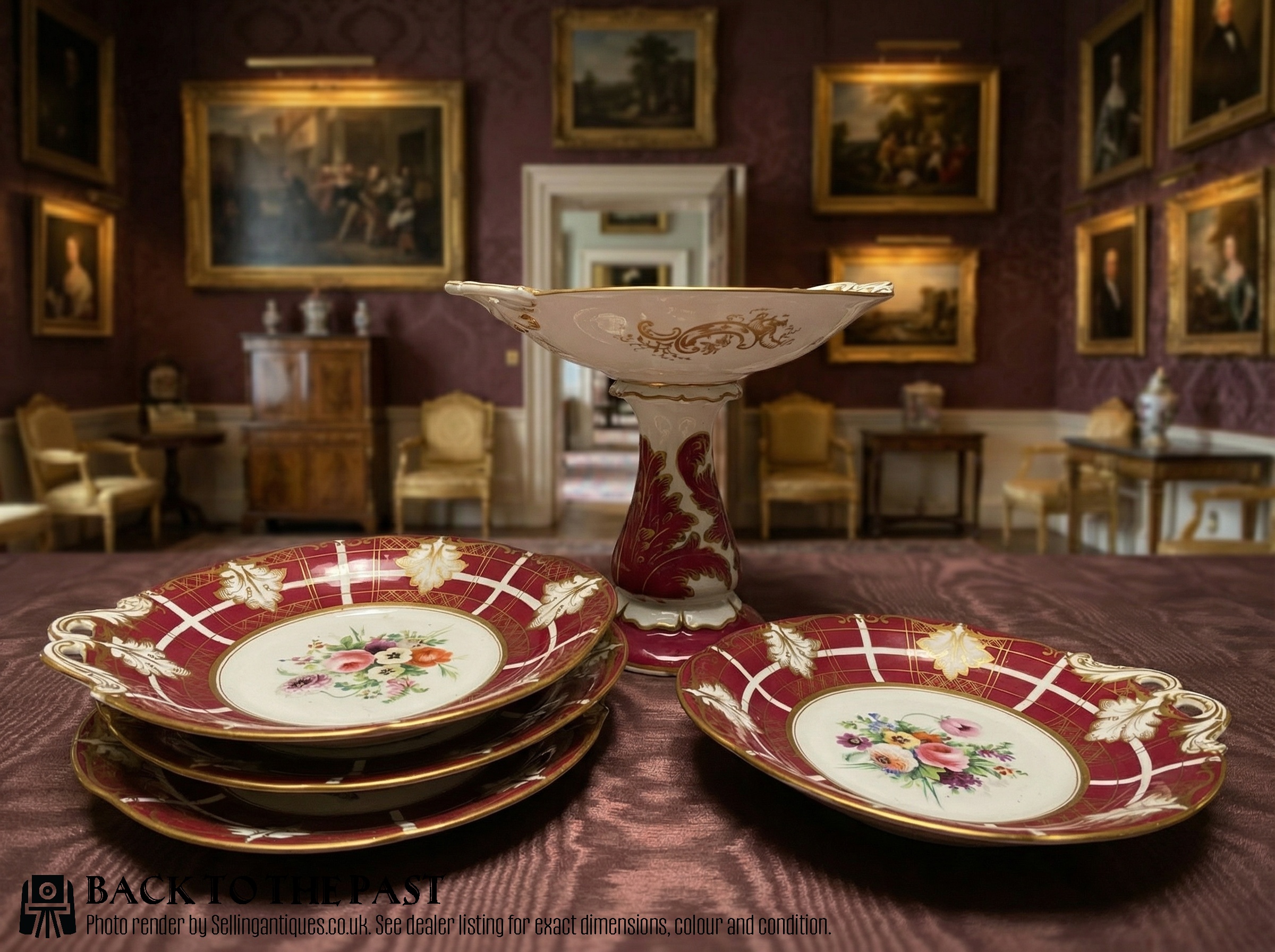
How they were made
Makers shaped these items from porcelain, ceramic, and ironstone, applying detailed hand-painted floral motifs directly onto the glazed surfaces. Artisans frequently integrated ormolu, gilt metal, and gold leaf accents to highlight handles, rims, and bases.
Some elaborate forms combine porcelain elements with gilt bronze mounts or incorporate sculptural cherubs modelled in high relief. Workshops utilised fired enamel colours to ensure the painted floral details remained vibrant across decades of handling.
Listings feature nineteenth-century and early twentieth-century pieces spanning Victorian, Edwardian, and Georgian eras across porcelain, ironstone, and ceramic materials.
What varies in quality
The distinction between standard production wares and exceptional pieces rests on the precision of the hand painting and the crispness of the porcelain modelling. Finer examples display delicately shaded botanical details and well-defined sculptural elements like cherubs or handles.
The integration of secondary materials also dictates the calibre of the piece, where heavy gilt bronze mounts or substantial ormolu bases elevate the overall presence. Pieces that retain their original gilding without excessive rubbing demonstrate superior preservation over time.
John Ridgway·Ulisse Cantagalli·Schierholz·Mason·Samson
The Hand Painted Floral Compote Glossary
- Comport
- A footed dish or bowl raised above the table surface, traditionally used for serving fruit or dessert. These elevated vessels serve as decorative centrepieces.
- Ironstone
- A heavy, durable type of ceramic patented in the nineteenth century to imitate fine porcelain. It offers great strength while supporting rich painted decoration.
- Ormolu
- Gilt bronze ornamentation applied to furniture and decorative objects. It provides a bright golden contrast to porcelain bodies.
- Majolica
- Tin-glazed earthenware decorated with opaque coloured glazes. This technique produces vibrant surfaces associated with Italian workshops.
- Gilt metal
- Base metal treated with a thin layer of gold or gold-coloured wash. It mimics solid gold mounts at a different weight and cost.
Hand Painted Floral Compote: Frequently Asked Questions
What were compotes used for?
These elevated vessels held fresh fruit, sweetmeats, or dessert courses at the end of grand nineteenth-century meals. They stood centrally on the dining table as ornamental focal points.
Over time, their role shifted from functional dining service to purely decorative display on sideboards, mantelpieces, and cabinet tops.
How do I style a compote?
Place a single large compote as the centrepiece on a dining table or console to draw the eye upward with its elevated foot and painted bowl. You can leave it empty to showcase the interior floral artwork or fill it with seasonal fruit.
Pair porcelain comports with complementary ceramics or let them stand alone against dark wood surfaces to emphasise the bright enamel colours and gilding.
How do I tell periods apart?
Nineteenth-century and Victorian pieces frequently exhibit Rococo Revival curves, heavy gilding, and sculptural cherubs modelled in high relief. Edwardian examples from the early twentieth century often lean towards cleaner floral arrangements and lighter porcelain bodies.
Georgian ironstone versions display thicker, sturdier potting with utilitarian weight, whereas later French porcelain pieces emphasise delicate painting and decorative stands.
Are these pieces fragile?
The ceramic and porcelain bodies require careful handling during cleaning and relocation to prevent chipping the rims or delicate painted surfaces. Ormolu and gilt metal mounts should be dusted gently without harsh chemical polishes.
Display these items away from busy table edges and high-traffic areas to protect projecting handles, sculptural cherubs, and elevated stems.