


Earthenware Wall Platter
An earthenware wall platter brings bold scale and painted glaze directly to a vertical display.
Earthenware Wall Platter
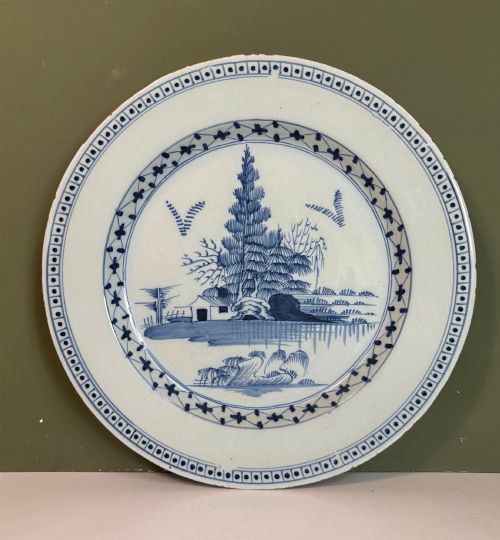
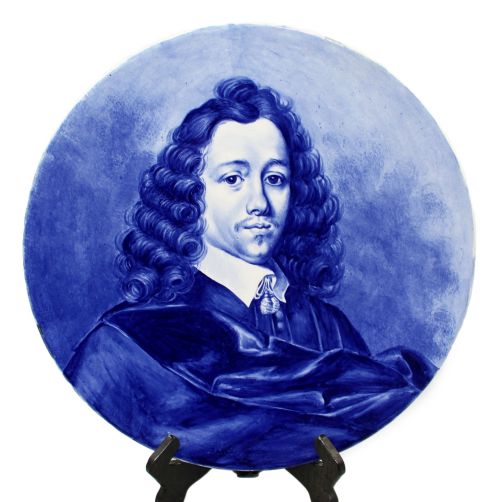
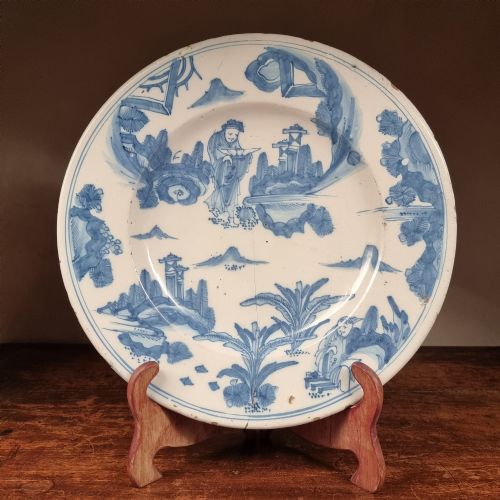
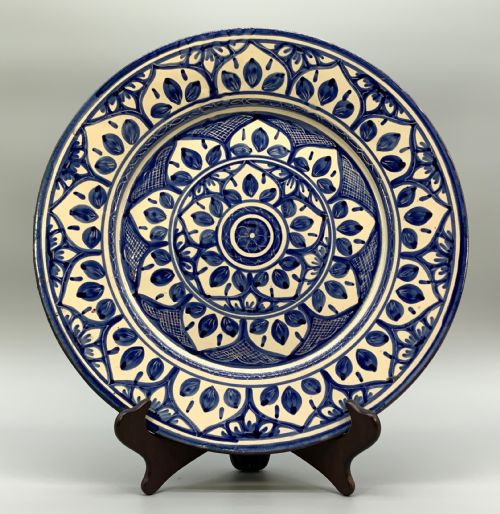
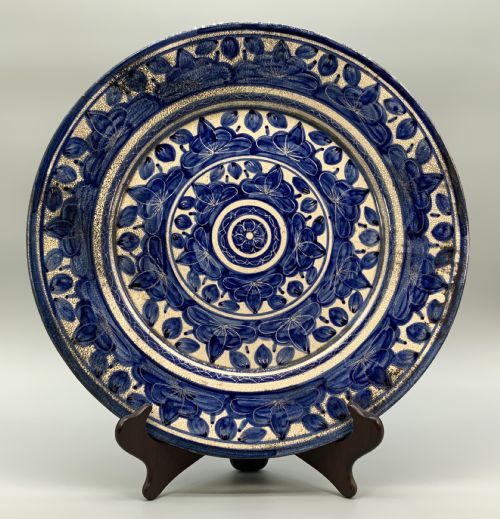
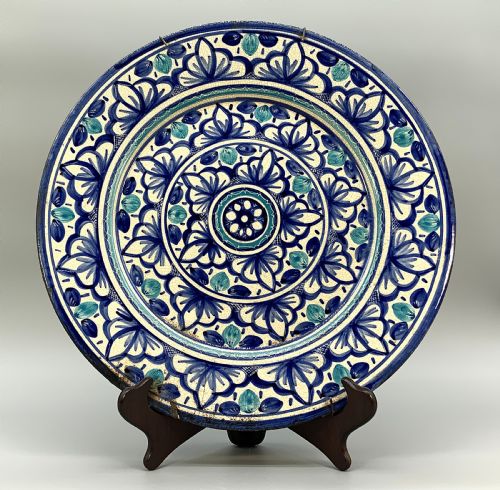
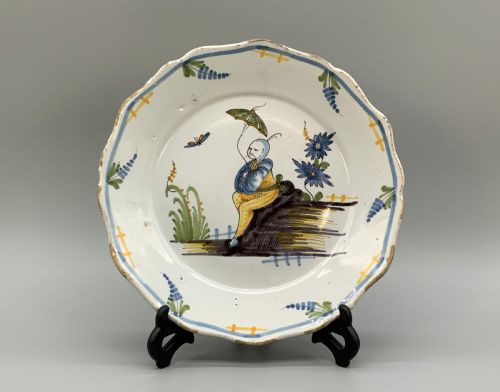
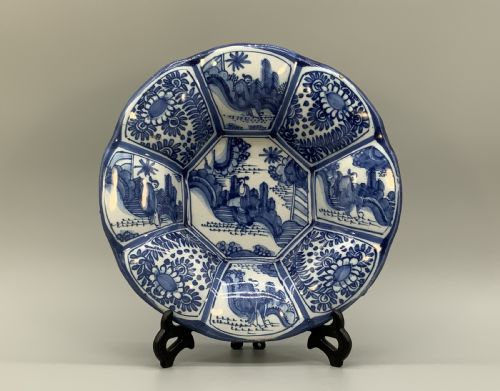
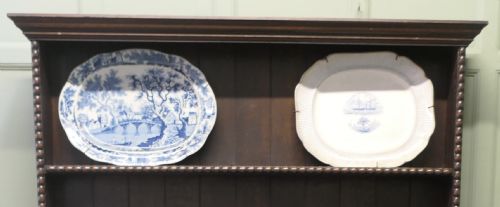
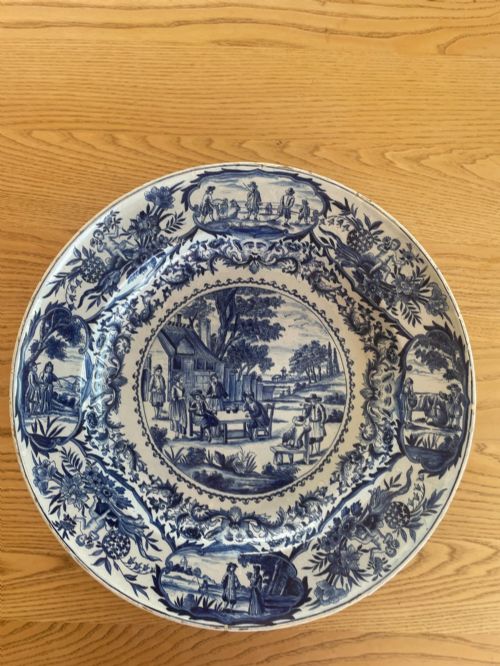
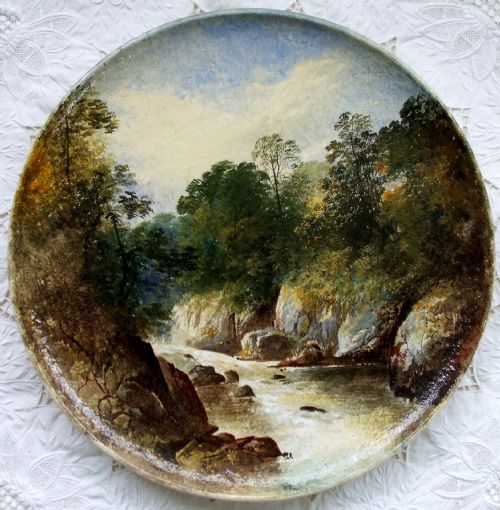
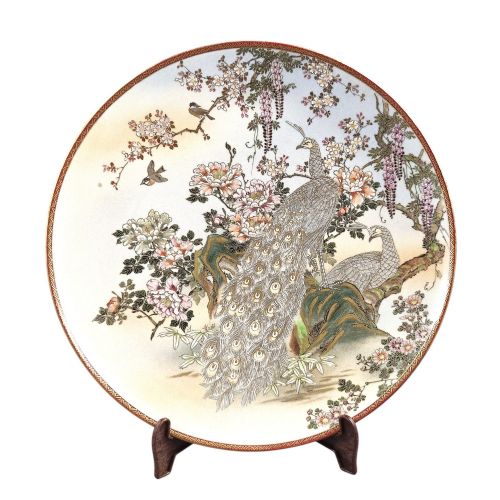
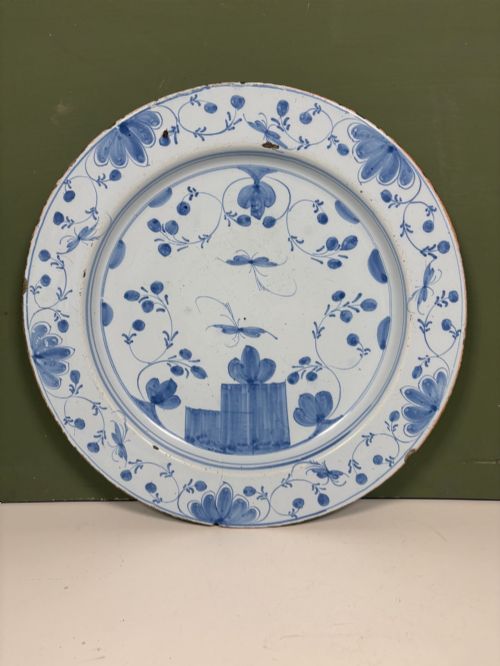
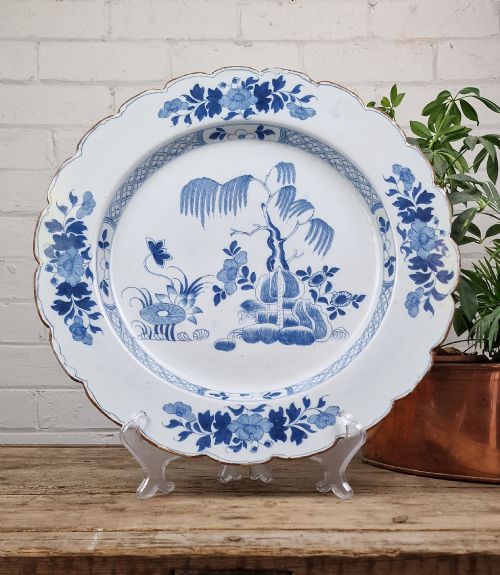
An earthenware wall platter spans large decorative formats designed primarily for display rather than dining. The pieces seen here range from substantial Dutch delft chargers to English transfer-printed pottery and continental faience.
Buyers meet examples rooted in the eighteenth and nineteenth centuries alongside later twentieth-century art pottery iterations. Common forms include broad chargers, deep dishes, and framed ceramic plaques intended for hanging.
Stylistic origins stretch across Dutch Baroque, Georgian Chinoiserie, and Moorish Revival motifs. Blue and white pigments dominate, supplemented by polychrome enamels and manganese painting.
Materials and Techniques
Potters shaped porous earthenware bodies before applying opaque tin glazes to form a smooth white ground for brushwork. Cobalt pigment and enamel colours were then painted directly onto the raw glaze before firing.
Transfer printing replaced hand-painting on later English earthenware, allowing intricate blue and white topographical views to transfer onto the clay. Tubelined designs emerged in later periods, building raised clay outlines to contain rich glazes.
Earthenware Wall Platter Retail Price Guide 2026
Typical asking prices for earthenware wall platter among the pieces listed under this phrase on Sellingantiques today, from the lower quarter to the upper quarter. They describe what is for sale here now, not the wider market.
Listings feature earthenware wall platters spanning from the eighteenth century through the Art Deco period, utilising tin glaze, cobalt pigment, and transfer printing.
Assessing Quality
Quality rests upon the crispness of the painted brushwork and the stability of the glaze against the earthenware body. Early hand-painted delft displays variation in pigment saturation and deliberate control within the tin glaze.
Later transfer-printed plates and art pottery chargers depend on the clarity of the printed line and the depth of the fired finish. Potter signatures and distinct factory stamps further elevate individual pieces.
Royal Bonn·Copeland Pottery·Charlotte Rhead Crown Ducal·Caughley·Stubbs·Minton·Bursley Ware
The Earthenware Wall Platter Glossary
- Charger
- A large decorative plate or platter intended for display on a wall or sideboard rather than daily table service.
- Tin-Glazed Earthenware
- Pottery coated with a lead glaze made opaque by the addition of tin oxide, creating a white surface for painted decoration.
- Grand Feu
- A high-temperature ceramic firing technique that fuses pigments securely into the underlying tin glaze.
- Tubelined
- A decorative pottery technique where raised lines of liquid clay are squeezed onto the surface to partition different coloured glazes.
- Istoriato
- A style of majolica painting depicting complex narrative scenes derived from classical history or mythology across the entire surface.
Earthenware Wall Platter: Frequently Asked Questions
What is the difference between delft and majolica?
Delft refers specifically to tin-glazed earthenware originating in the Netherlands and England, typically featuring blue and white or polychrome painting.
Majolica encompasses broader Italian and continental tin-glazed wares, often utilising heavier moulded reliefs and vibrant multi-coloured glazes.
Can these platters be cleaned safely?
Dust gently with a dry, soft cloth to preserve the historic tin glaze and prevent moisture from entering microscopic crazing in the earthenware surface.
Avoid immersion in water, as old porous clay bodies absorb moisture and risk further fracturing the glaze.
How do I distinguish eighteenth-century delft from later copies?
Eighteenth-century pieces typically exhibit minor glaze fritting around the rim and lighter, porous earthenware bodies visible on the unglazed base.
Later revival pieces often feature heavier, denser ceramic structures and brighter, more chemically consistent modern pigments.