


Antique Majolica Platter
An antique majolica platter brings rich colour and sculptural relief to a room, offering a heavy earthenware surface covered in vibrant lead or tin glazes.
Antique Majolica Platter
When you search for an antique majolica platter, you are looking at glazed earthenware vessels designed primarily for display or service, frequently taking the form of large chargers, serving dishes, and decorative trays. These pieces bridge the gap between utilitarian pottery and sculptural art, utilising bold forms and vibrant colour palettes to catch the eye.
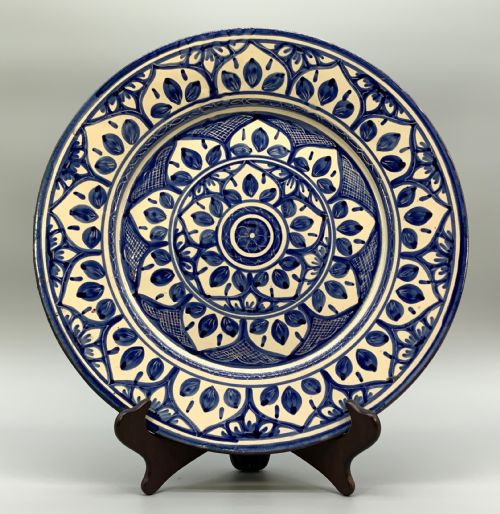
On this page, you are most likely to meet pieces originating from the nineteenth century, including Victorian examples alongside continental Italian and Portuguese works. Styles range from Renaissance Revival and Moorish Revival to folk art interpretations, reflecting a broad geographic spread of production.
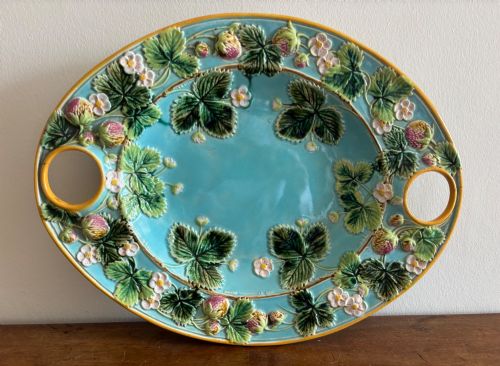
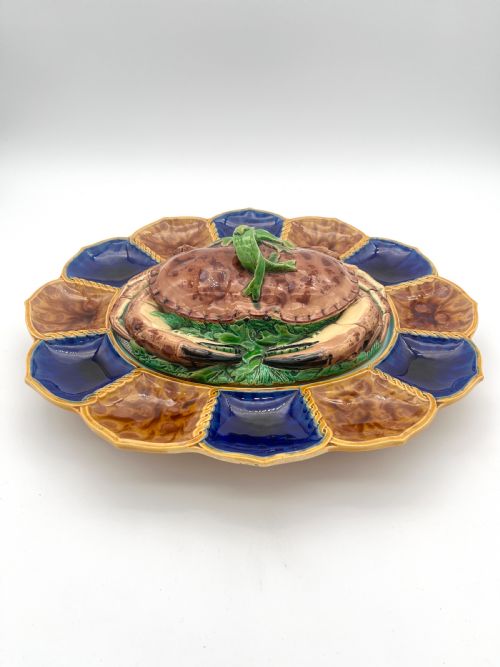
The physical forms vary considerably, encompassing wall chargers, bread plates, strawberry dishes, and crab tureens. Each object showcases the distinct aesthetic priorities of its maker and period, whether through classical historical scenes or naturalistic fruit and animal motifs.
Materials and construction
These pieces are built upon a foundation of earthenware or terracotta, providing a robust ceramic body capable of supporting thick layers of surface decoration. Potters shaped the clay by hand or mould before applying coloured lead glazes or tin glazes to create an opaque, glossy finish.
The characteristic polychrome effect relies on pigments interacting directly with the wet glaze, resulting in deep blues, greens, pinks, and yellows. Firing the clay at specific temperatures fixed these metal-oxide colours onto the ceramic surface, sealing the porous body underneath.
Some nineteenth-century potters could not resist turning ordinary tableware into pink foxes and crabs.
Assessing quality and execution
Quality rests heavily on the crispness of the moulding and the ambition of the hand-painted or modelled details. Superior examples exhibit precise definition in relief elements such as fruit, animals, or historical scenes, whereas simpler pieces show softer contours and more repetitive glazing.
The depth and brilliance of the glaze application further distinguish finer items from standard production. A successful piece maintains even coverage without excessive pooling, allowing the underlying polychrome colours to retain their vibrancy and contrast.
George Jones·Minton·Bassano pottery works·Jose Alvez Cunah
The Antique Majolica Platter Glossary
- Majolica
- A type of pottery decorated with colourful opaque lead or tin glazes over an earthenware body. It is known for its bright palette and heavy, tactile surface finish.
- Charger
- A large decorative plate or platter originally intended for ceremonial use or grand service. These pieces frequently hang on walls or sit centrally on large furniture.
- Polychrome
- Decorated in many colours. This multi-coloured approach defines the vibrant appearance of nineteenth-century glazed earthenware.
- Terracotta
- Fired unglazed clay of a brownish-red colour. It forms the structural base for many sculptural dishes before glazing.
- Tureen
- A deep serving dish with a lid used originally for soups or stews. In majolica, these often take naturalistic animal forms such as crabs.
Antique Majolica Platter: Frequently Asked Questions
How were antique majolica platters used?
These items served various domestic functions, ranging from functional tableware like bread plates and strawberry dishes to grand presentation pieces. Many large chargers were made specifically for display on sideboards or walls.
Over time, the decorative nature of the glaze meant that many chargers and trays transitioned primarily into ornamental objects rather than everyday serving vessels.
How do I clean an antique majolica platter?
Maintenance requires gentle handling, relying on a soft, dry cloth to remove dust from the glazed surface. Water and harsh cleaning agents should generally be avoided to protect the historic ceramic body.
Displaying the platter away from direct sunlight and heavy moisture helps preserve the integrity of the lead or tin glaze over the years.
How do I distinguish Victorian majolica from continental pieces?
Victorian examples often feature naturalistic forms like fruit, leaves, and animals modeled in high relief with bright pinks and greens. British makers frequently utilised dense, heavy earthenware bodies with distinct registry marks or model numbers.
Continental pieces, such as those from Italy or Portugal, frequently lean towards Renaissance Revival styles, historical istoriato scenes, or Moorish patterns with broader colour washes.
What is the difference between majolica and maiolica?
Maiolica traditionally refers to Italian tin-glazed earthenware dating from the Renaissance period onwards. The spelling majolica is commonly applied to the vibrant Victorian lead-glazed wares produced in the nineteenth century.
Both terms describe pottery fired with an opaque glaze over an earthenware base, though the regional techniques and chemical compositions diverge significantly.