




Cobalt Glazed Ceramic Platter
A cobalt glazed ceramic platter brings deep blues and substantial scale to a table or wall, offering centuries of fired earthenware tradition.
Cobalt Glazed Ceramic Platter
A cobalt glazed ceramic platter encompasses large decorative chargers, meat plates, and serving dishes created across the seventeenth, eighteenth, and nineteenth centuries. These pieces display broad circular surfaces designed to carry food or command attention on a wall.
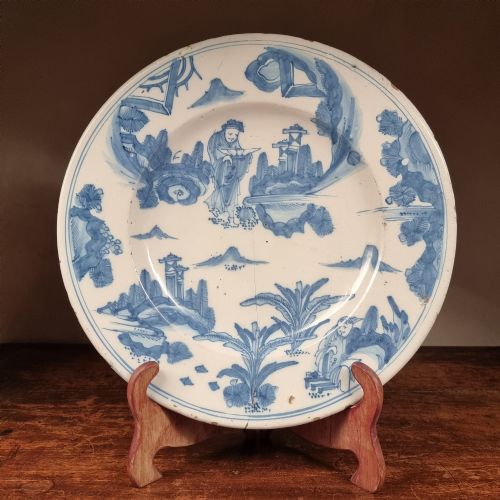
The versions most frequently met on this page belong to the eighteenth century, taking the form of English and Dutch Delft chargers painted in blue pigments. Their substantial diameters and tin-glazed bodies dominate the selection of available wares.
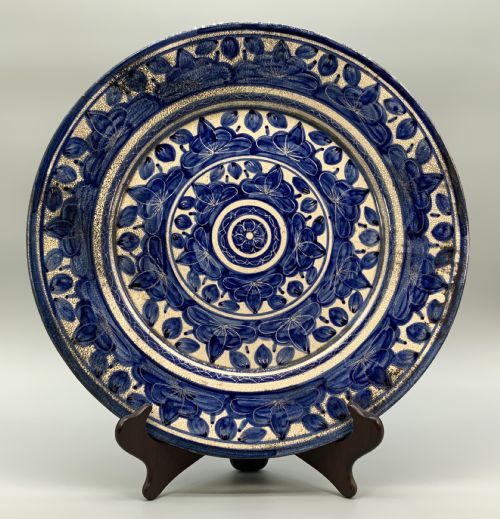
Continental examples, including Moorish style plates and tin-glazed faience, sit alongside English stoneware and earthenware pieces. Together they present a continuous record of blue and white ceramic production spanning multiple eras.
Materials and construction
Potters formed these platters from earthenware and stoneware bodies, shaping thick clay bases capable of supporting heavy glazes and repeated firing in kilns. The resulting pieces range from domestic meat plates to monumental decorative chargers.
Tin glaze and transparent lead glaze provided the smooth white or cream surfaces necessary for painted decoration. Artisans applied cobalt oxide directly onto the unfired or raw glaze, where the mineral absorbed the pigment and fused during high temperature firing to produce an intense blue colour.
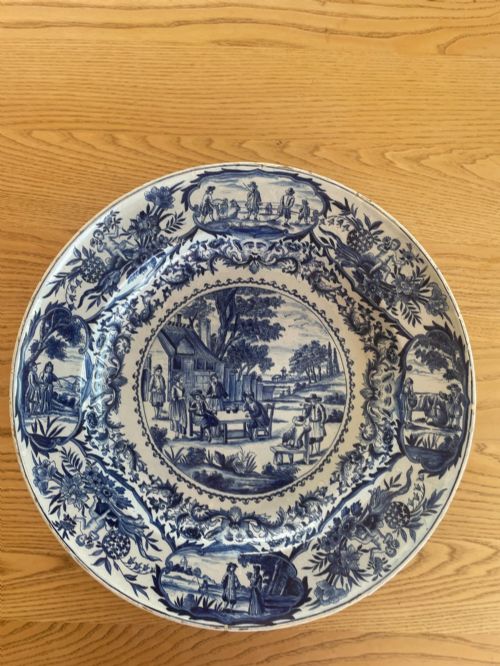
Listings span the seventeenth, eighteenth, and nineteenth centuries, featuring tin-glazed earthenware, stoneware, and transfer-printed ceramics.
Gradations in quality
The clarity and depth of the cobalt pigment dictate the visual strength of a platter, distinguishing fluid, confident brushwork from rigid or muddy application. Superior pieces display harmonious composition across wide diameters without pooling or running in the glaze.
Body thickness and the stability of the fired earthenware shape determine structural integrity, separating well-balanced heavy chargers from warped or poorly supported plates. The finesse of the tin glaze surface further separates standard kitchen utility wares from exceptional decorative commissions.
Minton·John Ridgway·Spode·Moorcroft
The Cobalt Glazed Ceramic Platter Glossary
- Charger
- A large decorative plate or serving dish, typically measuring over thirty centimetres in diameter. These wide vessels were frequently hung on walls or used centrally at formal dining tables.
- Tin Glaze
- An opaque white glaze produced by adding tin oxide to a lead glaze base. It provides a bright white ground for painted cobalt decoration.
- Delftware
- Earthenware coated with a tin glaze and painted with metallic oxides, produced in England and the Netherlands. The style encompasses chargers, plates, and hollowware.
- Faience
- European tin-glazed earthenware produced in regions outside of the Netherlands, often associated with continental factories and Moorish traditions. It shares technical characteristics with Delftware.
- Majolica
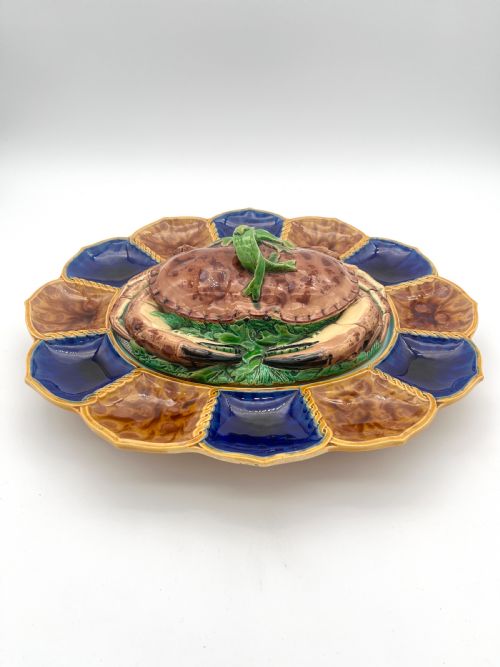
- Pottery covered with an opaque tin-lead glaze and decorated with coloured metal oxides. Victorian interpretations introduce bold relief modelling and rich polychrome or monochrome palettes.
Cobalt Glazed Ceramic Platter: Frequently Asked Questions
How do I hang a heavy antique charger?
Heavy earthenware chargers require dedicated wall mounting hardware that supports the entire base rather than relying solely on tension clips. Spring-loaded wire hangers should be selected according to the exact weight and rim depth of the individual platter to ensure secure display.
Professional framing or custom brass brackets offer additional security for seventeenth and eighteenth century pieces, distributing the load evenly and protecting fragile tin-glazed edges from metal contact.
Can I use these platters for serving food?
While many of these items began life as functional meat plates or serving dishes, historic tin-glazed earthenware and porous ceramic bodies absorb moisture and oils over time. Hairline cracks in the glaze can also harbour bacteria from modern foodstuffs.
Using them for dry presentation on special occasions is generally acceptable, but daily dining or dishwashing is discouraged to preserve the stability of the historic glaze and ceramic body.
How do English and Dutch chargers differ?
English delft chargers, particularly those from Bristol and London potteries, often feature distinct foot rims and characteristic blue hues influenced by local kiln atmospheres. Their subject matter frequently includes floral motifs and oriental landscapes adapted by domestic painters.
Dutch delftware tends to exhibit specific glaze characteristics and tin opacities tied to workshops in Delft and surrounding regions. The manganese and cobalt tones on these continental pieces often reveal different fluxing agents in the underlying paste.
What causes crazing in the glaze?
Crazing appears as a fine network of microscopic cracks across the surface glaze, caused by the different rates of contraction between the ceramic body and the outer glass layer during cooling. Age, temperature fluctuations, and environmental humidity contribute to this natural ageing process.
This phenomenon is common in historic earthenware and does not necessarily indicate structural failure, provided the underlying clay body remains sound and stable.