



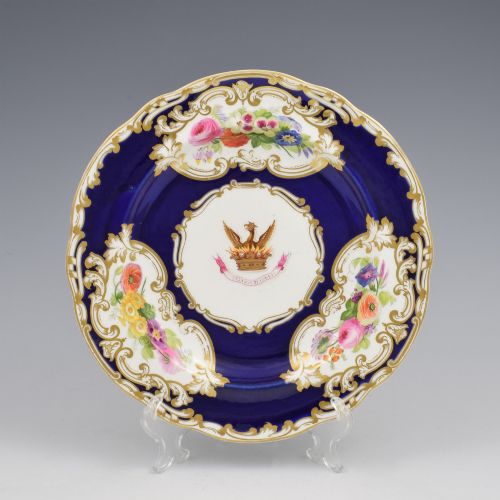


Victorian Ceramic Charger
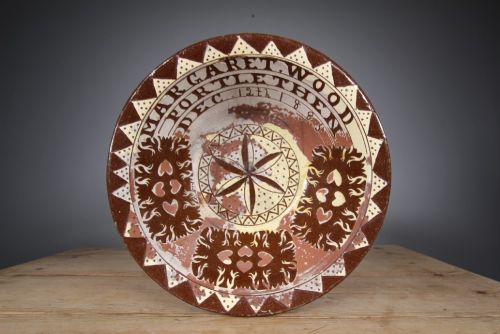
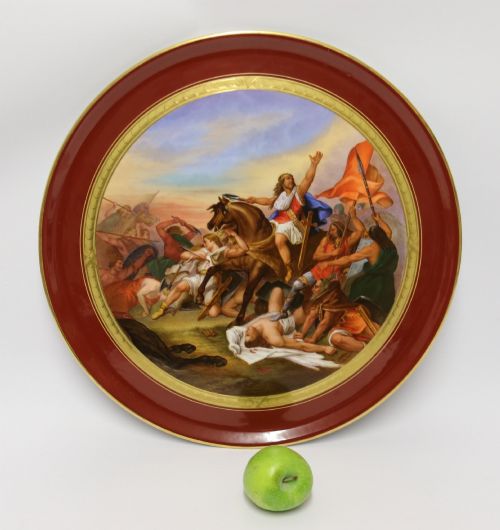
When you search for a victorian ceramic charger, you are looking at substantial glazed earthenware, porcelain, and ironstone wall and display pieces from the nineteenth century.
Victorian Ceramic Charger
A victorian ceramic charger serves primarily as a decorative wall hanging, cabinet display piece, or large serving platter for nineteenth-century interiors. These objects appear in various ceramic forms, including earthenware, porcelain, and heavy ironstone bodies.
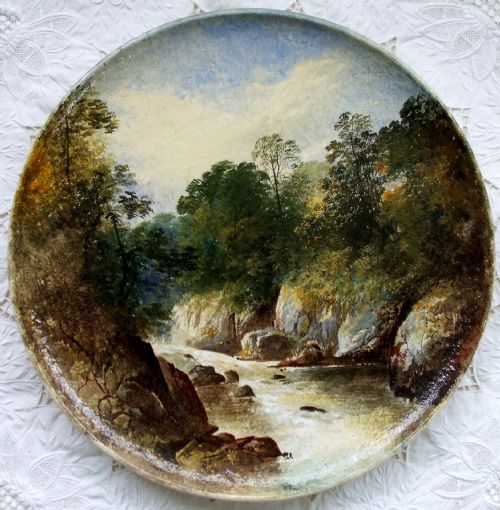
The selections available include large blue and white meat platters, Japanese Imari export pieces, hand-painted topographical plaques, and armorial cabinet plates. Makers ranged from major English potteries like Copeland and Minton to continental European manufacturers.
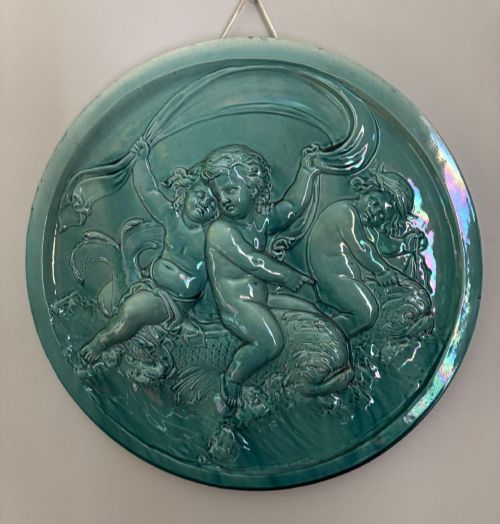
Most pieces date from the Victorian and Edwardian eras, spanning periods from the 1830s through to 1900. Forms vary from deep round chargers and reticulated plates to oblong meat dishes and square terracotta reliefs.
How they were made
Potters shaped these bodies from earthenware, porcelain, and stone china, frequently applying opaque glazes before hand-painting or transfer-printing the ornament. Techniques such as pate-sur-pate and underglaze blue painting demanded skilled handwork in the factory.
Gilt highlights and gold leaf embellishments were often added over the glaze and fired again in a kiln to fix the metallic sheen. Makers utilised specialised mineral pigments to achieve deep blues, Imari iron-reds, and polychrome enamel scenes.
One Austrian terracotta relief plaque humorously depicts a refugee monkey family settling down in America.
What varies in quality
Execution of the painted or printed surface separates standard production ware from superior studio output. Hand-painted pictorial scenes by named artists demonstrate finer brushwork and greater narrative detail than repetitive transfer prints.
The clarity of the glaze and the crispness of the ceramic moulding dictate the overall refinement of the piece. Copeland, Minton, and Meissen examples often reveal superior clay preparation and more complex decorative schemes.
Royal Bonn·Clement Messier·Copeland Pottery·Ernst Wahliss·Meissen·Pucher Deroche·Copeland and Garrett·Mintons·Royal Crown Derby·Mason's Ironstone·Seaton Pottery
The Victorian Ceramic Charger Glossary
- Imari
- A style of Japanese ceramic decoration featuring iron-red, cobalt blue, and gilt motifs that heavily influenced nineteenth-century European potteries. English makers frequently copied these vibrant palettes on large round chargers.
- Ironstone
- A dense, durable type of earthenware patented in the nineteenth century to rival true porcelain. It provided a sturdy ground for heavy blue and white transfer-printed meat platters.
- Pate-sur-pate
- A ceramic technique where wet white slip is built up in successive layers on a coloured body to create a low relief cameo effect. Minton artists utilised this method on specialised cabinet plates.
- Transfer printing
- A method of applying complex decorative patterns to ceramic bodies by pressing paper engraved with metallic oxides onto the glazed surface. This process allowed factories to produce uniform blue and white cathedral and landscape views efficiently.
Victorian Ceramic Charger: Frequently Asked Questions
How were ceramic chargers displayed?
Nineteenth-century households placed large chargers on sideboard ledges, mounted them directly onto walls using wire hangers, or displayed them upright in glazed cabinets. Their substantial diameters made them focal points in dining rooms and drawing rooms.
Smaller plates functioned as part of large service sets for dining, while heavy platters served food at the table before transitioning to purely decorative display roles.
What is Japanese Imari influence?
European potters in the nineteenth century closely imitated traditional Japanese export wares, adopting the distinctive palette of cobalt blue, burnt orange, and gold. Factories across England produced chargers decorated in this saturated style.
These pieces combined Eastern motifs with Western ceramic bodies, creating hybrid objects that appealed to Victorian collectors of exotic art.
How do I identify a Copeland piece?
Copeland pottery and its earlier iterations often carry impressed factory stamps, registration marks, or specific series names on the reverse. Many pieces also feature hand-written titles of Welsh landscapes or family crests.
Skilled artists frequently signed their painted ceramic plaques directly onto the front surface near the lower edge of the scene.
What is stone china?
Stone china is a heavy, robust ceramic material developed in the nineteenth century to bridge the gap between common earthenware and expensive porcelain. It resisted chipping during daily kitchen use and meat service.
Factories utilised this dense body for large platters and chargers that needed to support heavy joints of meat without cracking under heat.