


Minton Cabinet Plate
A minton cabinet plate offers ceramic artistry at its finest, bringing Victorian and Georgian craftsmanship directly into your home.
Minton Cabinet Plate
A minton cabinet plate is primarily a decorative porcelain item created to be displayed rather than used for dining. These pieces showcase elaborate hand-painting, gilding, and specialist techniques intended for drawing rooms and display cabinets.
You will encounter various forms on this page, ranging from Georgian and Regency dessert plates to Victorian aesthetic movement designs and delicate pate-sur-pate works. The selection spans the nineteenth century, including specific decades from the eighteen-twenties through to nineteen-hundred.
The objects often feature specific decorative motifs such as Japanese styles, birds, landscapes, armorials, and botanical studies. Shapes include standard cabinet plates, dessert plates, and Newcastle shape basketweave variations.
How they were made
Makers utilised fine porcelain and earthenware bodies as the foundation for these items, applying glazes and rich enamel colours. Surface decoration frequently involved gold leaf, heavy gilding, and meticulous hand-painted details.
Specialised techniques such as pate-sur-pate build up layers of liquid clay slip on a contrasting coloured ground to create a low relief cameo effect. Piercing and basketweave moulding further demonstrate the advanced technical proficiency of the pottery workshops.
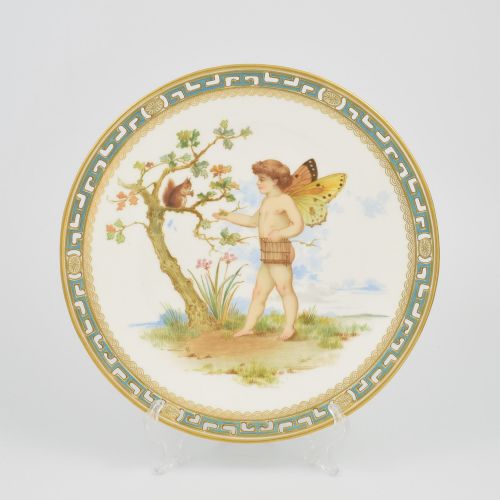
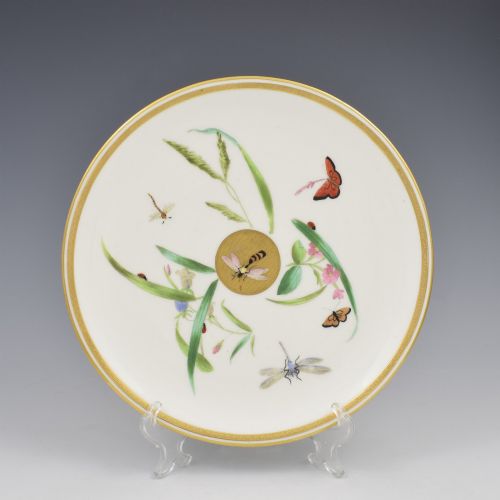
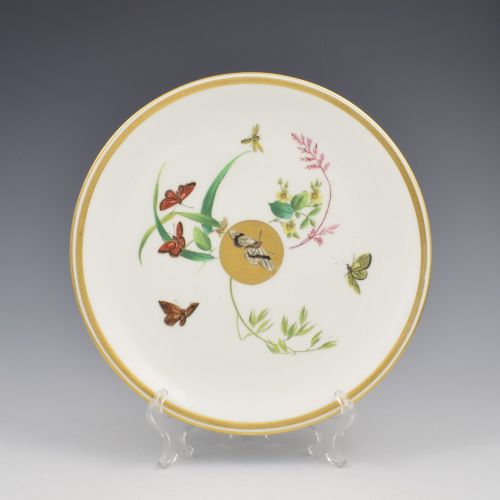
Surviving Victorian cabinet plates occasionally star unexpected creatures, including delicate fairy and squirrel pairings alongside hand-painted robins and Japanese insects.
What varies in quality
The distinction between standard production and top-tier pieces rests on the complexity and execution of the decoration. Hand-painted subjects by named artists or studios command greater appreciation than simpler floral arrangements.
The application of labour-intensive methods like pate-sur-pate, raised gilding, and jewelling defines the upper echelon of these ceramics. Preservation of the original gilding and enamel crispness also dictates the standing of each item.
W.S. Coleman·Joseph Wareham
The Minton Cabinet Plate Glossary
- Pate-sur-pate
- A French term meaning paste on paste, describing a ceramic decoration technique where successive layers of white slip are built up on a dark body to form a translucent relief design. This method requires immense skill and patience from the artisan.
- Cabinet plate
- A decorative ceramic plate intended for display in a cabinet or on a wall rather than for practical table service. These pieces usually feature superior artistry and delicate surface finishes.
- Gilding
- The application of gold leaf or gold powder to the surface of porcelain to highlight rims, motifs, and borders. High quality gilding retains its rich metallic lustre.
- Armorial
- A design incorporating a family crest, coat of arms, or heraldic insignia. Plates featuring these bespoke commissions often have documented historical provenance.
- Aesthetic Movement
- A nineteenth-century design style that emphasised beauty and art for art's sake, heavily influenced by Japanese art and nature motifs. It produced asymmetrical compositions and refined colour palettes.
Minton Cabinet Plate: Frequently Asked Questions
What is a minton cabinet plate?
A minton cabinet plate is a fine porcelain or earthenware decorative dish produced by the Minton pottery during the eighteenth and nineteenth centuries. These pieces were designed primarily for visual display rather than everyday dining use.
They often feature elaborate hand-painted scenes, intricate gilding, and specialised decorative techniques such as pate-sur-pate or piercing.
How were these plates used?
Historically, these items served as ornamental display pieces in drawing rooms, parlours, and dining rooms. Wealthy households placed them in glass-fronted cabinets or mounted them on walls to showcase refined taste and artistic appreciation.
They were occasionally utilised as dessert plates in grand settings, though their delicate nature made display the primary function.
How do I care for a cabinet plate?
Display your plate securely using a stable wall mount or a dedicated cabinet stand designed for heavy ceramics. Keep the piece away from direct sunlight and areas prone to extreme temperature fluctuations to protect the enamel and gilding.
Dust the surface gently with a soft, dry brush and avoid using water, cleaning agents, or harsh abrasives on antique surfaces.
How do I identify the period?
Examine the stylistic cues, such as the symmetrical floral patterns typical of Regency and Georgian eras versus the asymmetric nature motifs of the later Aesthetic Movement. Backstamps and impressed pottery marks on the reverse offer precise chronological clues.
The materials, ground colours, and specific techniques like pearl jewelling also help narrow down the decade of production.