
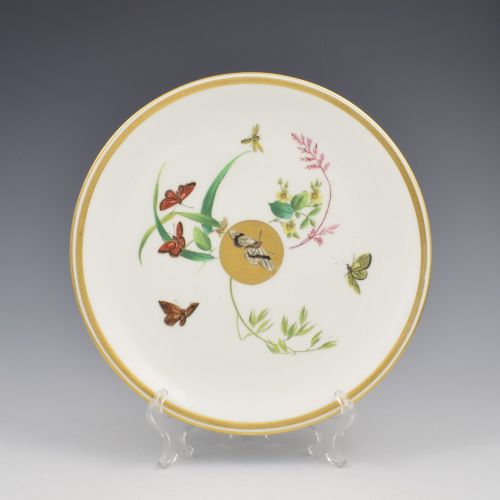


19th Century Minton China
These 19th century minton china pieces combine English ceramic heritage with exquisite hand-painting and intricate gilding, bringing refined historical elegance to any collection.
19th Century Minton China
Surviving pieces span from early Regency designs to late Victorian innovations, including blue and white patterns, basketweave plates, and Japanese style motifs. These items demonstrate the remarkable versatility of the potteries throughout the nineteenth century.
Collectors frequently find specialised forms such as teaware, vases, and serving trays alongside figural porcelain like gundogs and gardeners. Each piece captures the distinct artistic shifts from classical revival styles towards the elaborate ornamentation of the Aesthetic Movement.
Materials and Techniques
Production relies heavily on fine porcelain, bone china, and ceramic bodies, shaped into intricate forms such as the Newcastle shape basketweave plates. Artisans applied rich glazes, hand-painted details, and delicate enamel work to decorate the surfaces.
Surface ornamentation often incorporates gold leaf and elaborate gilding, alongside specialised techniques like pate-sur-pate and jewelled enamel grounds. These methods required exceptional skill to layer ceramic slips and metals before firing.
Evaluating Quality and Craftsmanship
The finest examples display meticulous hand-painted details and precise armorial or landscape artwork rather than transfer printing alone. Superior execution is evident in the crispness of moulded basketweave patterns and the careful application of gold leaf and gilt highlights.
The complexity of the ceramic form also dictates quality, distinguishing standard utilitarian wares from ambitious cabinet plates and sculptural figurines. Preservation of the original glaze, enamel, and jewelled details remains crucial in assessing the finished piece.
The 19th Century Minton China Glossary
- Bone China
- A type of soft-paste porcelain containing bone ash, offering high strength and a milky white translucency. It allowed nineteenth-century potteries to produce thinner and more delicate tableware.
- Pate-sur-pate
- A ceramic decorating method where successive layers of white slip are built up on a coloured clay ground to create a low relief cameo effect. This technique demands immense precision from the artisan.
- Gilding
- The application of gold leaf or powdered gold to ceramic surfaces for decorative emphasis. It highlights rims, handles, and painted motifs with a metallic sheen.
- Cabinet Plate
- A decorative plate intended for display in a cabinet or on a wall rather than for practical dining use. These pieces typically showcase superior hand-painting and intricate gilding.
- Aesthetic Movement
- A late nineteenth-century artistic style emphasising visual beauty over narrative or moral themes. Ceramics from this period often incorporate asymmetrical Japanese-inspired motifs.
19th Century Minton China: Frequently Asked Questions
How do I date these ceramics?
Dating relies on stylistic shifts, from the neoclassical Regency patterns of the early decades to the elaborate Victorian and Aesthetic designs of the later nineteenth century.
Physical characteristics such as paste composition, glaze texture, and pattern numbering provide further chronological context for individual pieces.
Were these pieces used daily?
While utilitarian forms like teaware and serving trays saw practical service, many decorative plates and cabinet pieces were created strictly for display.
Figurines and armorial plates served primarily as ornamental centerpieces in prosperous nineteenth-century homes rather than functional tableware.
How should I clean porcelain?
Gentle dusting with a soft, dry cloth is usually sufficient for maintaining the surface of display ceramics.
Avoid submerging pieces with delicate gilding, enamel, or pate-sur-pate decoration in water, as moisture can damage vulnerable historical surfaces.
What defines Japanese style items?
Japanese style pieces incorporate asymmetric compositions, natural motifs like suns and butterflies, and flattened perspectives inspired by imported East Asian art.
These designs gained immense popularity during the Aesthetic Movement of the late nineteenth century.