
White Porcelain Saucer
A white porcelain saucer holds two centuries of table culture, offering pure ceramic forms that elevate the morning ritual.
White Porcelain Saucer
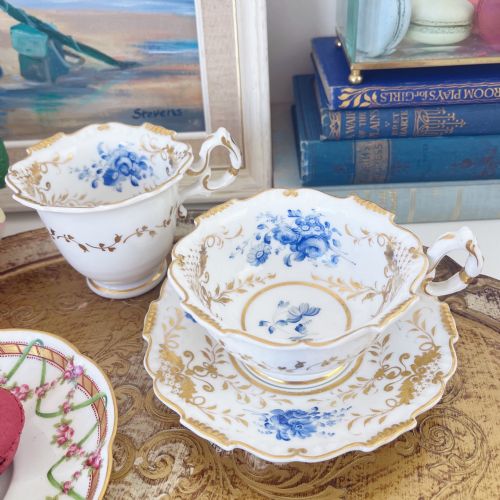
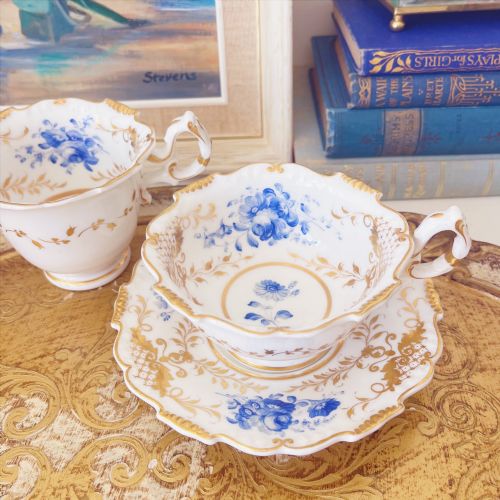
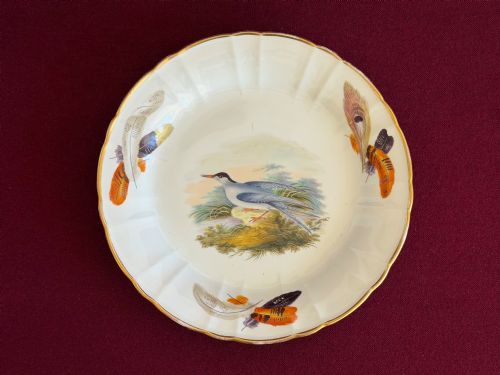
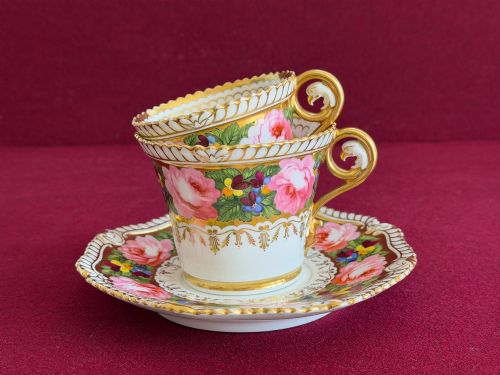
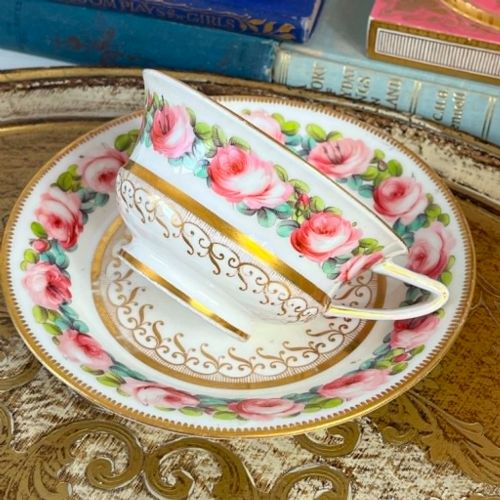
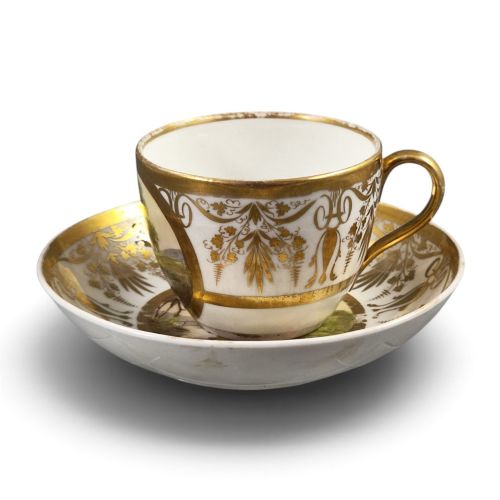
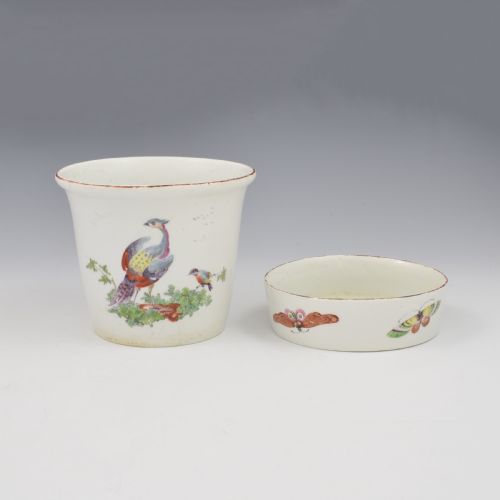
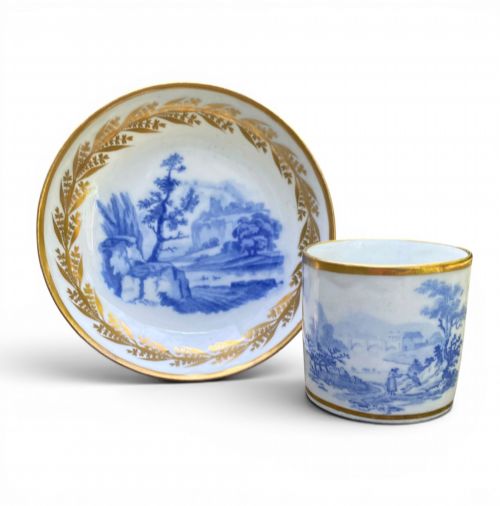
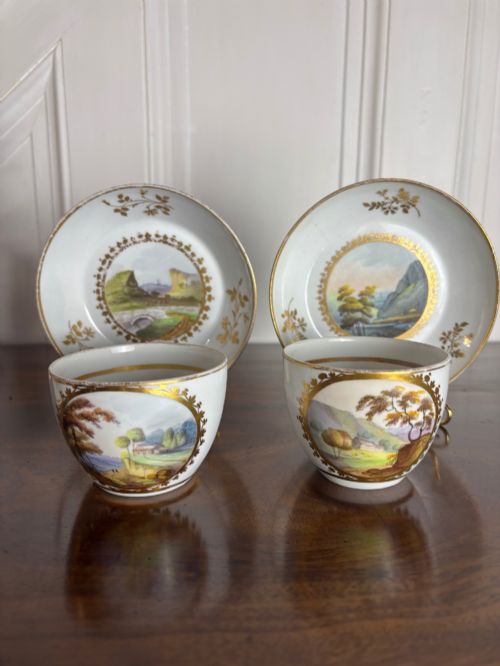
When you search for a white porcelain saucer, you are looking at small, circular ceramic dishes created to accompany matching cups or to stand alone as cabinet pieces. They range from utilitarian Georgian teawares to decorative nineteenth-century cabinet examples decorated with landscapes and floral motifs.
The versions you are most likely to meet on this page span the eighteenth and nineteenth centuries, emerging from prominent English and continental factories like Worcester, Derby, and Meissen. These pieces display the characteristic translucency and bright glazed surfaces typical of fine historic ceramic production.
Many survivors spent generations gathered into trios and larger tea sets, while others survived singly as saucer-dishes or small plates. Their forms reflect changing dining fashions, shifting from deep eighteenth-century tea bowls and saucers to flatter Regency and Victorian display vessels.
How they were made
Potters shaped these objects using hard-paste porcelain, soft-paste porcelain, or bone china, firing the clay bodies at high temperatures to achieve durability and bright white surfaces. Artisans then applied transparent glazes before secondary firings to seal the ceramic bodies.
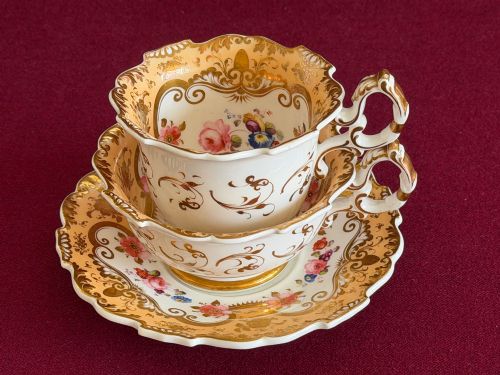
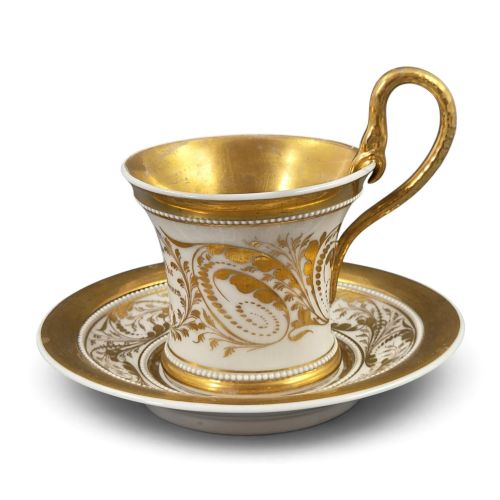
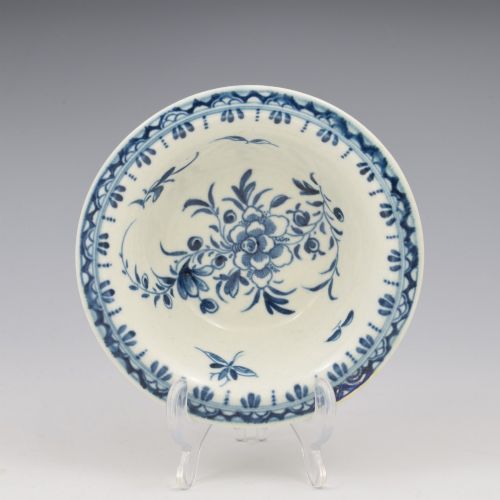
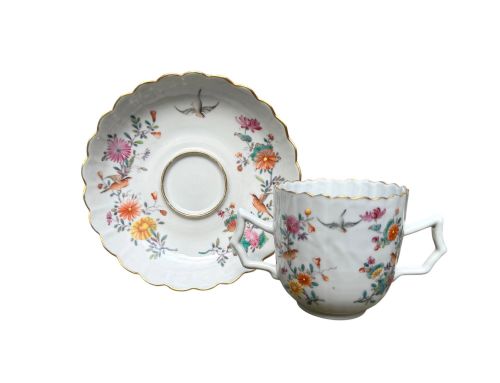
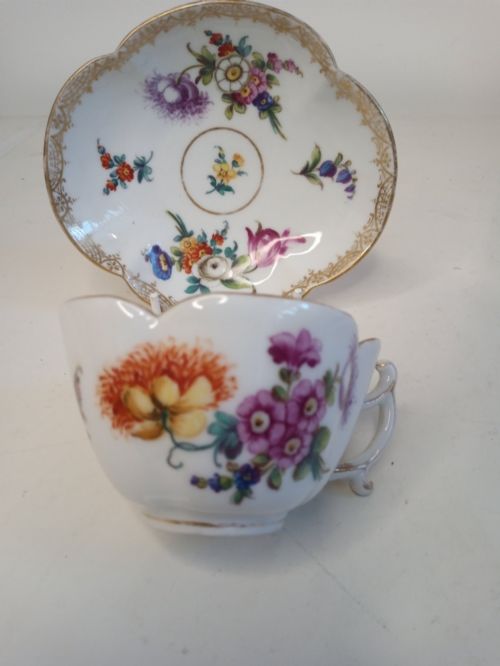
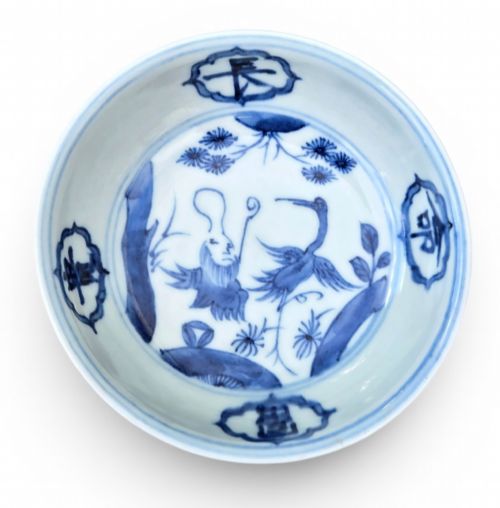
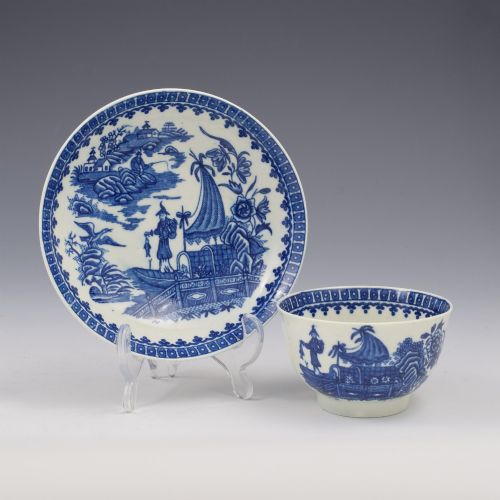
Decoration relied heavily on handpainting, enamel pigments, and applied gold leaf or gilding to accent borders and central motifs. Factories employed skilled painters to execute intricate botanical studies, landscapes, and blue and white underglaze designs directly onto the ceramic surface.
The selection includes teacups and saucers, coffee cans, cabinet plates, and decorative dishes from English, German, French, and Asian makers.
What varies in quality
The distinction between ordinary and exceptional examples rests upon the refinement of the ceramic body and the precision of the handpainted details. Superior pieces exhibit flawless potting, brilliant white glaze without significant pitting, and finely detailed brushwork by named or attributed factory painters.
Preservation of the delicate enamel colours and gilding heavily influences the standing of individual pieces within the market. Items retaining their original burnished gold leaf and vibrant pigments without rubbing represent the pinnacle of period ceramic craftsmanship.
H & R Daniel·Wedgwood·Chamberlain Worcester·KPM Berlin·Derby Porcelain·Dr Wall Worcester·New Hall·Minton·Barr Flight and Barr·Meissen·Manufacture de la Reine·Coalport·Flight Barr and Barr·Yates·Royal Albert Crown China
The White Porcelain Saucer Glossary
- Soft-Paste Porcelain
- An artificial ceramic composition fired at lower temperatures than hard-paste porcelain, resulting in a warmer, softer glaze appearance. It was widely used by eighteenth-century English factories.
- Bone China
- A type of porcelain incorporating bone ash into the ceramic paste, producing a strong, highly translucent white body. It became a staple of nineteenth-century manufacturing.
- Gilding
- The application of gold leaf or powdered gold to ceramic surfaces for decorative enhancement. This technique was frequently utilised on Regency and Victorian teawares.
- Enamel
- A glass-based coloured pigment fused to the ceramic surface during a low-temperature kiln firing. It provides the vibrant hues seen on handpainted floral and landscape designs.
- Demitasse
- A small cup designed for serving strong black coffee, typically accompanied by a matching saucer. These miniature vessels often feature elaborate cabinet decoration.
White Porcelain Saucer: Frequently Asked Questions
How were these saucers originally used?
These saucers served primarily during formal tea and coffee services, functioning both as companions to matching cups and as vessels from which tea was sometimes sipped in earlier eighteenth-century practice.
Over subsequent decades, their role shifted toward table presentation and decorative display within dining rooms and drawing rooms as tea-drinking rituals evolved.
How can I date an unmarked white porcelain saucer?
Dating relies heavily on observing the characteristics of the ceramic body, glaze texture, and stylistic clues within any painted motifs or border patterns. Eighteenth-century pieces often display the distinct soft-paste body texture and underglaze blue painting typical of early English and continental production.
Later nineteenth-century examples frequently incorporate bone china bodies alongside more pronounced gilding styles and transfer-printing techniques. Comparing decorative motifs with dated factory patterns provides further chronological context.
Can I use antique saucers for daily dining?
Historic ceramics require careful handling due to their age, delicate glazes, and potential vulnerability to thermal shock from hot liquids. Gentle hand washing without harsh detergents helps preserve fragile handpainted enamels and historic gilding.
Many collectors prefer to exhibit these pieces in cabinets or utilise them sparingly for light display rather than subjecting them to regular modern dining use.
What is the difference between soft-paste and hard-paste porcelain?
Soft-paste porcelain utilises an artificial mixture of clay, glass, and frits fired at lower temperatures, producing a slightly creamy white body with a receptive glaze. This material is characteristic of early English factories.
Hard-paste porcelain contains natural kaolin and petuntse fired at much higher temperatures, creating a vitrified, exceptionally durable white ceramic body that resists scratching.