


German Porcelain Teacup
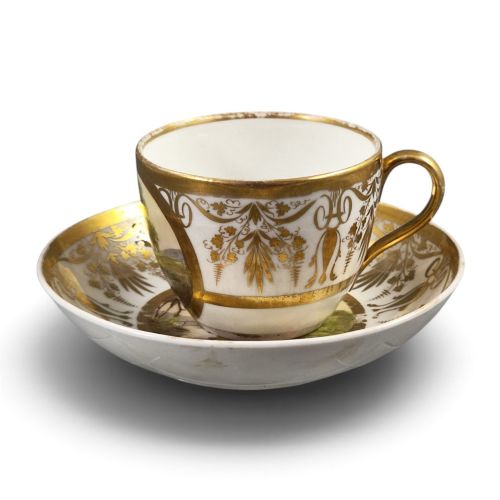
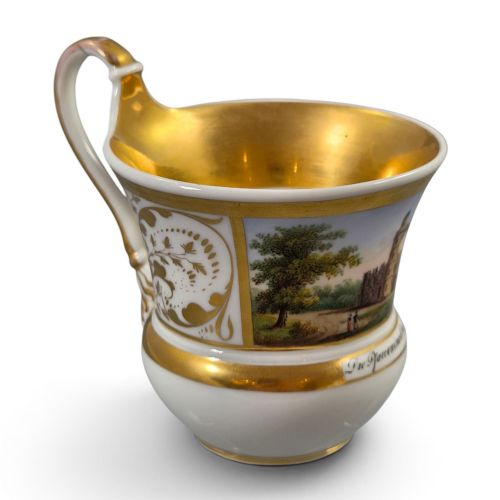
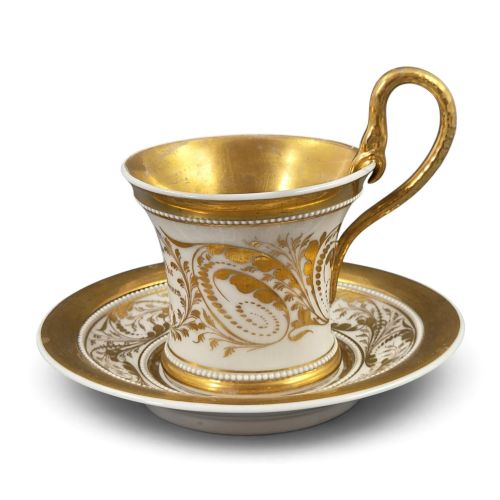
A german porcelain teacup brings cabinet refinement to the table, offering painted panels and gilded edges.
What They Are
When you search for german porcelain teacup, you examine delicate drinking vessels produced by European manufactories during the nineteenth century. These items include cups and saucers created in forms such as pedestal and presentation shapes.
The pieces appearing on this page span the nineteenth century and the year nineteen hundred. Stylistic influences include the restrained lines of Biedermeier design alongside ornate Rococo Revival decoration.
How They Were Made
Manufactories utilised hard paste porcelain fired at high temperatures to produce a durable and bright white ceramic body. Artisans then applied detailed surface painting before embellishing the edges and handles with gold leaf and gilding.
Moulding and turning techniques shaped the clay into pedestals and handled cups, which were paired with matching saucers. Firing secured both the body and the subsequent layers of applied gold decoration.
Some cups stand upon pedestals, elevating your morning brew well above the mundane level of the kitchen table.
What Varies in Quality
The distinction between standard production and superior work rests upon the precision of the hand painting and the depth of the gilding. Finely rendered motifs and substantial gold leaf application elevate certain examples above simpler wares.
Form and architectural complexity also dictate standing, with pedestal and presentation designs requiring greater technical skill from the potter and painter than basic domestic cups.
KPM Berlin·Hirsch Dresden
The German Porcelain Teacup Glossary
- Hard paste porcelain
- A dense and vitreous ceramic composition fired at high temperatures. It provides a durable base for delicate enamel painting and gilding.
- Gilding
- The application of gold leaf or gold paint to ceramic surfaces. It highlights rims, handles, and painted borders.
- Biedermeier
- A Central European design style from the nineteenth century. It favours clean lines and functional elegance over excessive ornament.
- Rococo Revival
- A decorative style mimicking eighteenth-century excess during the nineteenth century. It incorporates scrolls, asymmetry, and rich floral motifs.
Frequently Asked Questions
What periods do these teacups come from?
The available pieces date from the nineteenth century and the year nineteen hundred.
They reflect the prevalent manufacturing techniques and design styles of those specific eras.
What materials were used to make them?
Makers relied upon hard paste porcelain for the body of the cups and saucers.
Decoration frequently involved the use of gold leaf and detailed gilding applied over the glaze.
Which design styles appear on these pieces?
Examples showcase both Biedermeier restraint and Rococo Revival ornamentation.
These aesthetics dictated the shape of the pedestal forms and the character of the painted surfaces.
How are the cups and saucers configured?
The items are presented as paired cups and saucers, including specific presentation and pedestal designs.
Such configurations served both decorative cabinet display and formal tea service.