

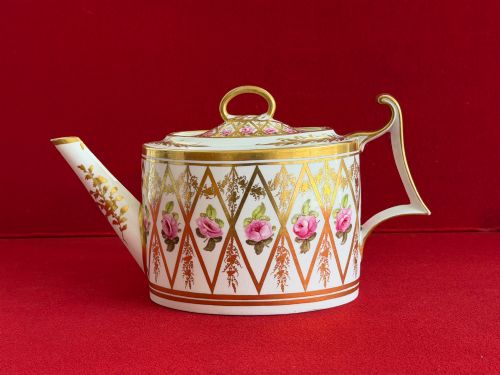
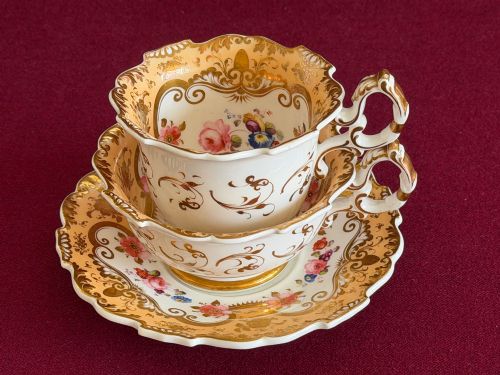
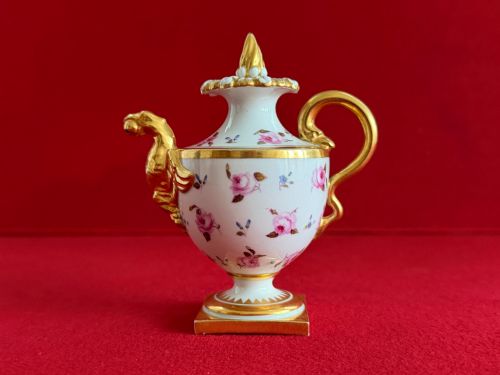
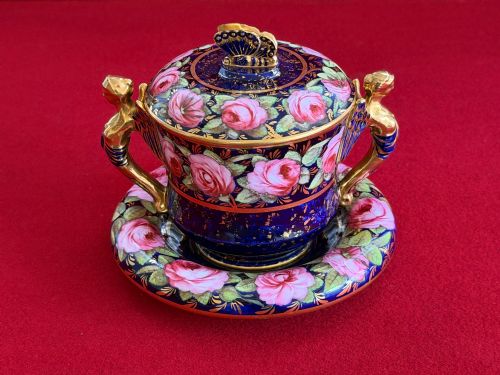
Hand Painted Gilt Porcelain
Hand painted gilt porcelain brings together delicate brushwork and metal enrichment across centuries of tableware and decorative objects.
Hand Painted Gilt Porcelain
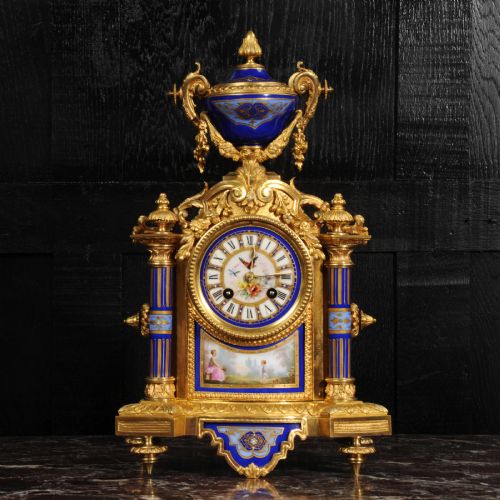
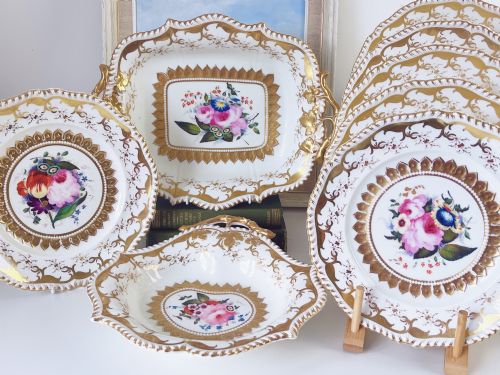
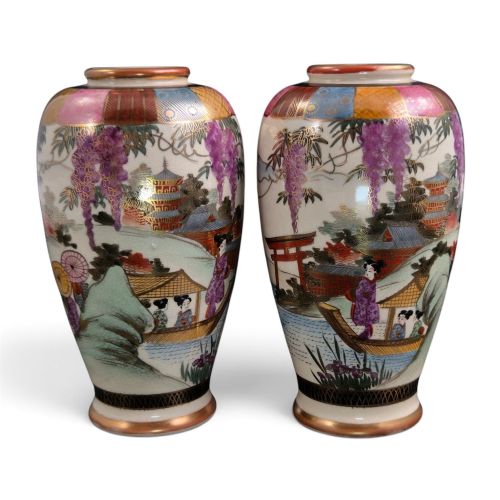
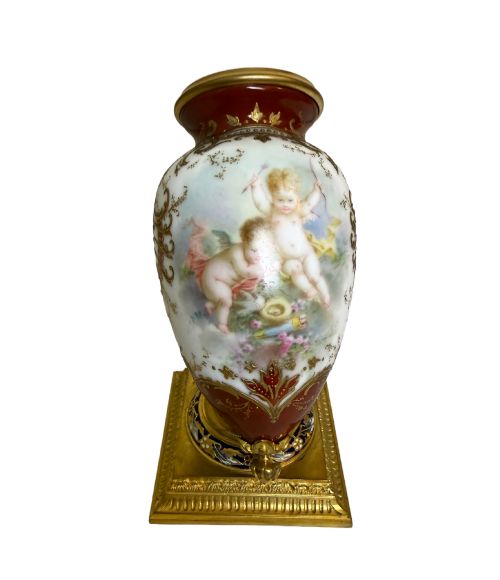
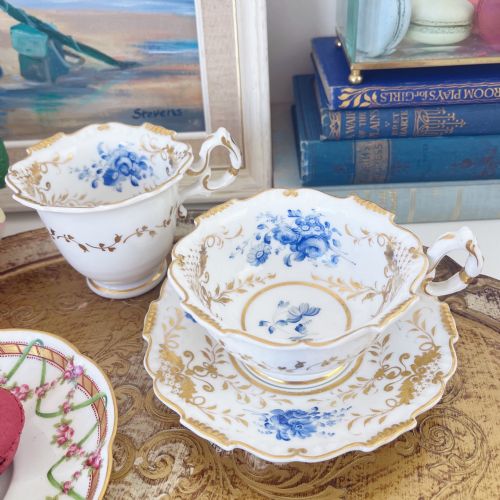
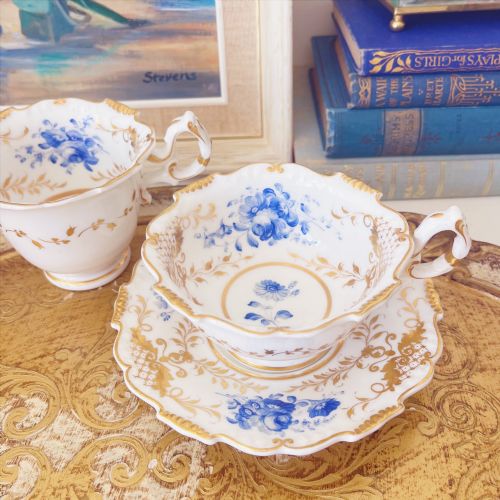
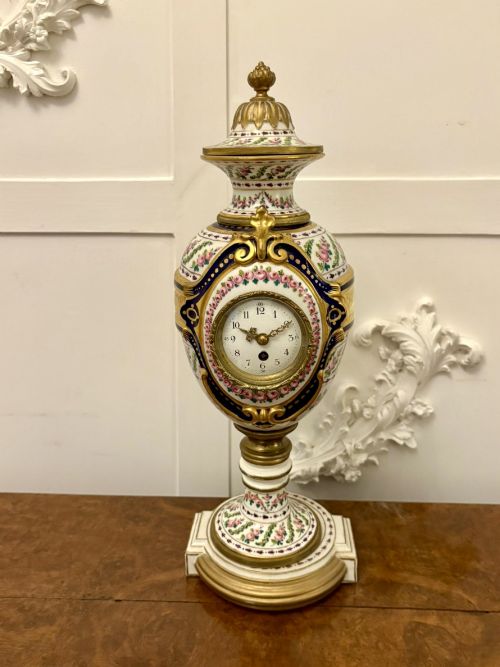
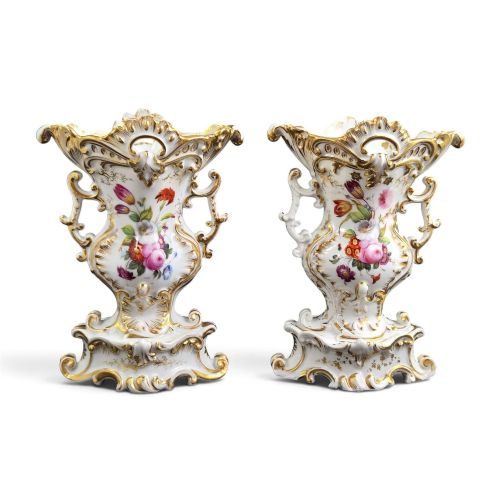
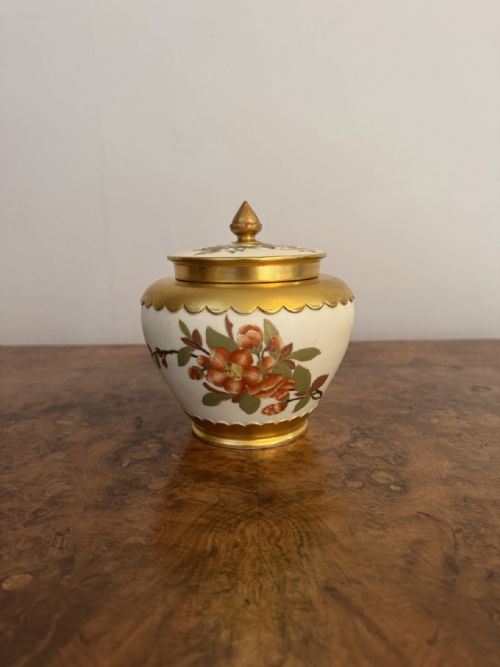
Hand painted gilt porcelain encompasses cabinet plates, teacups, vases, and mantel clocks originating from English, French, German, and Japanese workshops.
The objects appearing most frequently on this page date from the eighteenth century through to the early twentieth century, spanning Georgian, Regency, and Victorian periods.
Forms range from utilitarian teapots and sugar boxes to purely decorative urns, plaques, and baskets destined for display.
Materials and Techniques
Makers utilise hard-paste porcelain, bone china, and enamel as the primary ceramic bodies for painting and mounting.
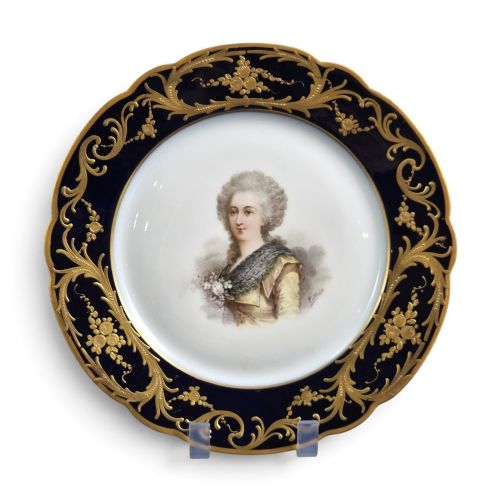
Applied gold leaf, gilding, and gilt bronze provide metallic contrast to polychrome painted floral scenes, topographical views, and portraits.
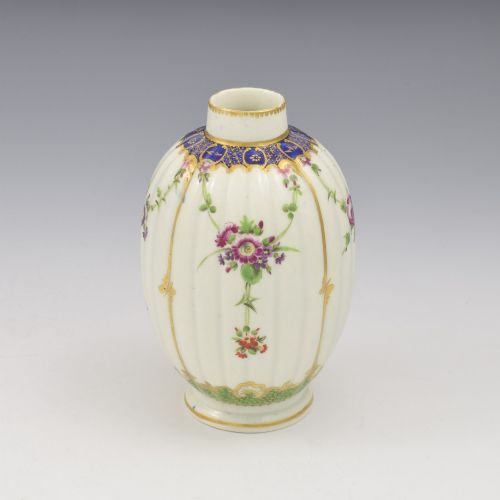
An eighteenth-century tea canister survives alongside a walking sword stick containing a hidden Sèvres porcelain section.
Gradations of Excellence
The refinement of the painted details, from tightly controlled botanical studies to broader wash techniques, separates standard production from exceptional pieces.
The density, burnishing, and retention of the gold leaf or gilt bronze mounts indicate the care invested during production.
Grainger Lee And Co·H And R Daniel·Flight Barr And Barr·Royal Worcester·Jacob Petit·KPM Berlin·Meissen·Spode·Royal Crown Derby·Dresden
The Hand Painted Gilt Porcelain Glossary
- Cabinet plate
- A decorative ceramic plate intended for display in a cabinet rather than service at a table. These often feature elaborate hand-painted landscapes or portraits.
- Gilding
- The application of gold leaf or powdered gold to the ceramic surface or bronze mounts. This technique highlights rims, handles, and framing borders.
- Trio
- A matching set comprising a teacup, a coffee cup, and a saucer. These tea and coffee cup trios date predominantly to the Regency and Georgian eras.
- Hard-paste porcelain
- A durable ceramic paste fired at high temperatures, composed of kaolin and petuntse. European factories such as Meissen and Berlin utilised this material extensively.
- Bleu céleste
- A bright turquoise blue ground colour used prominently on Sèvres porcelain. This distinctive shade provides a contrasting backdrop for gilt decoration.
Hand Painted Gilt Porcelain: Frequently Asked Questions
How are these porcelain pieces cleaned safely?
Clean surfaces gently using a soft, dry cloth to remove dust without disturbing delicate enamel or raised gilding.
Avoid immersion in water or chemical cleaning agents, as moisture degrades aged gold leaf and historic ceramic bodies.
Were these items meant for daily use?
Many objects, such as tea sets, cabinet cups, and serving dishes, served practical dining functions in wealthy households.
Other forms like urns, plaques, and decorative plates were strictly ornamental items intended for interior display.
How can I identify the manufacturing period?
Examine the painted motifs, ceramic bodies, and stylistic influences such as Rococo Revival, Biedermeier, or Regency.
Underglaze factory marks, blue symbols, and pattern numbers painted on the base also offer chronological indicators.
Why do some items feature bronze mounts?
Gilt bronze mounts provided structural framing and ornamental handles for imported or high-status porcelain bodies.
French workshops frequently paired cast bronze elements with Sèvres-style vases, clocks, and scent bottles.