


Brown Glaze Earthenware Dish
These brown glaze earthenware dish selections offer tactile domestic history through utilitarian and decorative vessels made to serve food or grace a wall.
Brown Glaze Earthenware Dish
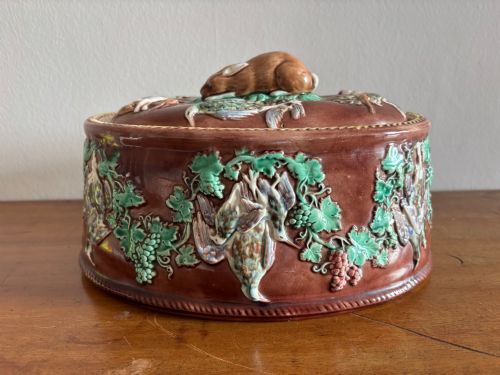
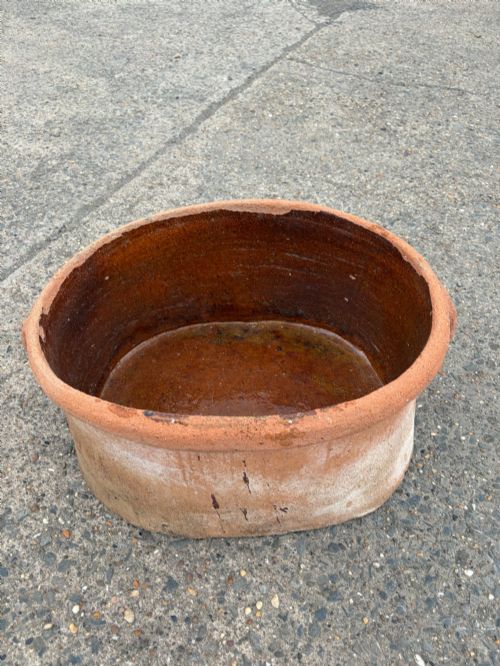
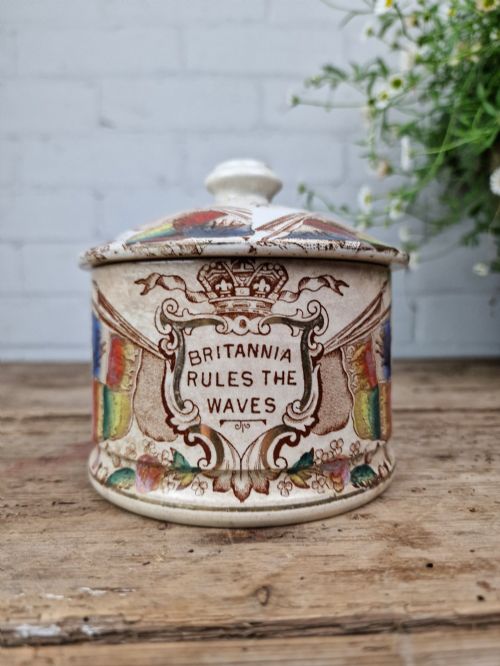
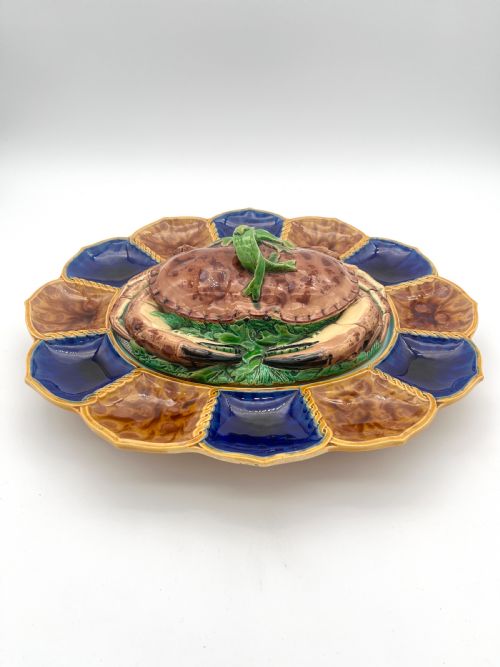
A brown glaze earthenware dish covers a broad domestic territory spanning utilitarian kitchenware, serving vessels, and decorative wall plaques. The selection here ranges from nineteenth-century British kitchenalia and majolica tureens to medieval Persian bowls and French faience.
Buyers encounter items intended for active food preparation alongside ornamental pieces shaped as animals or detailed with narrative scenes. The forms include butter dishes, game tureens, cooking dishes, and terracotta salters produced across multiple centuries.
Origins stretch from English potteries like Wedgwood and Minton to North Devon workshops, continental Europe, and early Persian kilns. This diversity means a buyer might find a rustic regional terracotta piece or a highly finished Victorian majolica creation.
How they were made
Potters shaped these vessels from earthenware, terracotta, stoneware, and ceramic bodies, often applying lead, metallic, or specialised lustre glazes to seal the porous clay. These glazes create the characteristic rich brown surfaces that define the group, while decorative variants utilise coloured majolica or fritware techniques.
Moulding and hand-throwing formed the structural bodies of tureens, bowls, and plaques, followed by kiln firing. Some pieces incorporated intricate relief work, such as the naturalistic forms of animal tureens or the painted narratives found on Persian and French examples.
A silkie hen sits permanently poised on an 1880 Staffordshire chicken basket, guarding eggs within its ceramic shell.
What varies in quality
Quality separates through the crispness of moulding, the depth and evenness of the glaze, and the sophistication of the painterly or sculptural details. Superior examples exhibit precise relief definition in animal tureens or finely controlled lustre effects on early bowls.
The distinction also rests on the preservation of the original surface and the fidelity of the maker's artistic execution. Robust kitchenware prioritises durable utilitarian construction, whereas high-style Victorian majolica and Persian pieces depend on refined decorative execution.
The Brown Glaze Earthenware Dish Glossary
- Earthenware
- Porous pottery fired at relatively low temperatures which requires a glaze to hold liquids. It forms the primary body for traditional kitchenware and majolica.
- Majolica
- A type of pottery glazed with an opaque tin-lead glaze and painted with metallic oxide colours. It achieved great popularity during the Victorian period for ornate tureens and decorative dishes.
- Terracotta
- Unglazed or clear-glazed fired clay of a brownish-red colour. It was frequently utilised for utilitarian vessels such as regional salt jars and kitchen containers.
- Fritware
- A ceramic body containing powdered glass or frit, developed in the Near East to achieve a whiter, finer base for complex painted decoration. Persian bowls in the record utilise this sophisticated tradition.
- Tureen
- A deep covered vessel served at table for soups, stews, or specialised game dishes. Victorian iterations often took whimsical animal or vegetable shapes.
Brown Glaze Earthenware Dish: Frequently Asked Questions
What were brown glaze earthenware dishes used for?
These vessels served various domestic and culinary functions, ranging from everyday food preparation and cooking to the presentation of butter or game at the dining table. Utilitarian items held salt or provisions, while decorative pieces graced walls or table settings.
More elaborate iterations, such as majolica tureens, functioned as ornamental centrepieces during formal Victorian meals. Their construction balanced practical utility with visual display.
How do I care for antique earthenware?
Display these pieces away from direct sunlight and areas prone to heavy moisture fluctuation to protect the glaze and clay body. Gentle dusting with a dry cloth keeps the surface clean without risking the historic finish.
Avoid using antique ceramic and earthenware vessels for serving food unless their structural integrity and glaze safety are fully confirmed. Hand washing with mild soap is necessary if cleaning is required, though most are best kept for display.
What is the difference between earthenware and stoneware?
Earthenware is fired at lower temperatures, leaving the clay body porous and requiring a glaze to become impermeable to liquids. It accounts for much of the traditional kitchenware and majolica in this category.
Stoneware is fired at higher temperatures until the clay vitrifies, making it dense, non-porous, and naturally waterproof even without glaze. This high-firing process produces robust cooking vessels designed for heavier kitchen duties.