
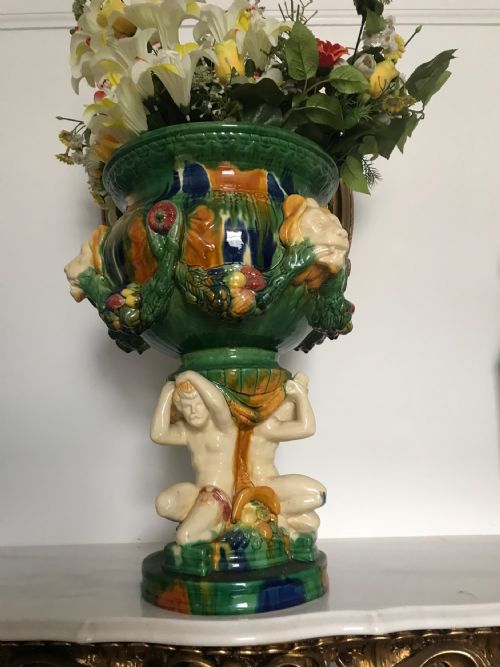


Italian Renaissance Ceramics
These italian renaissance ceramics are revival works of earthenware and tin glaze, offering the splendour of classical forms for the modern home.
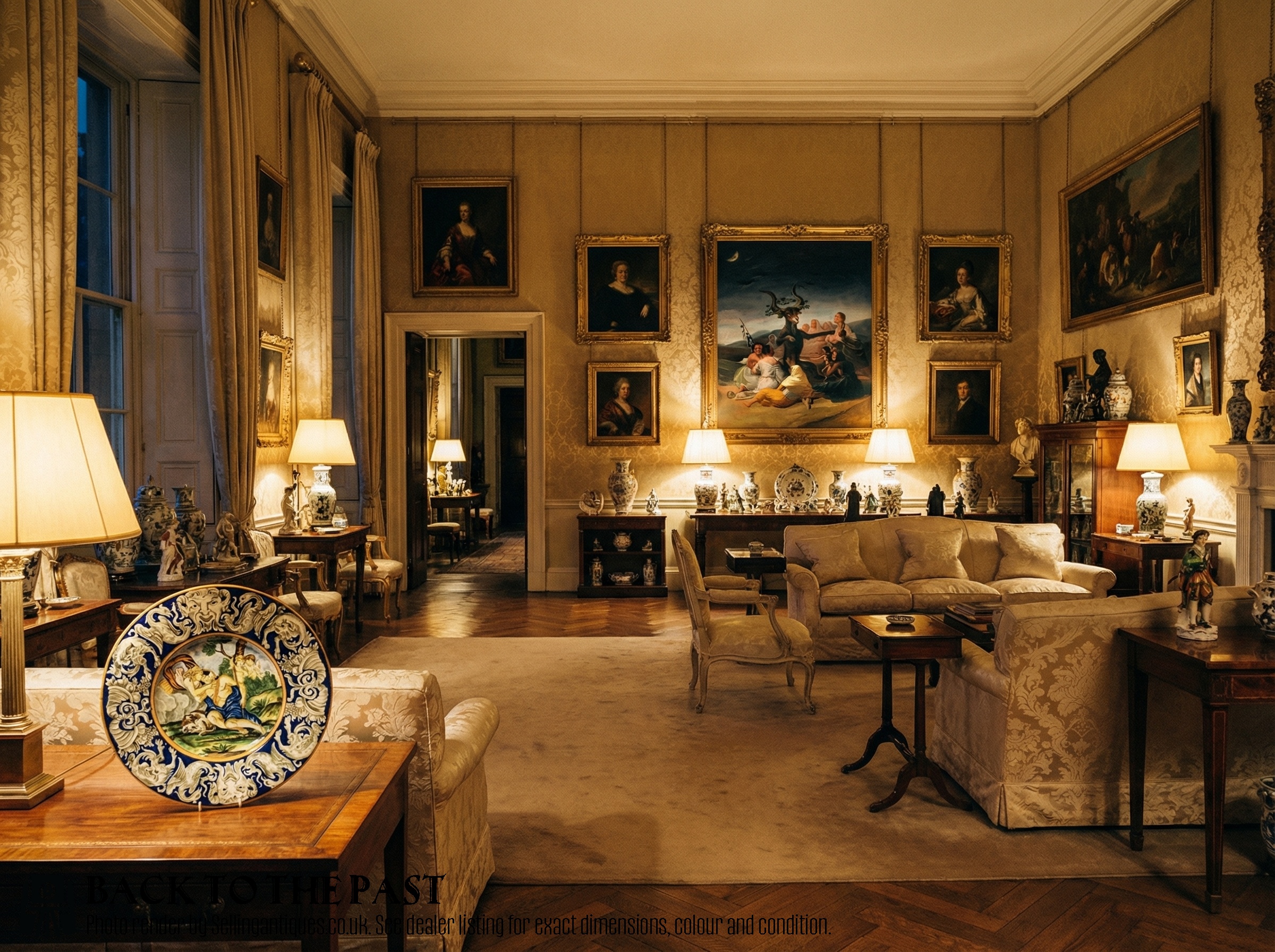
Italian Renaissance Ceramics
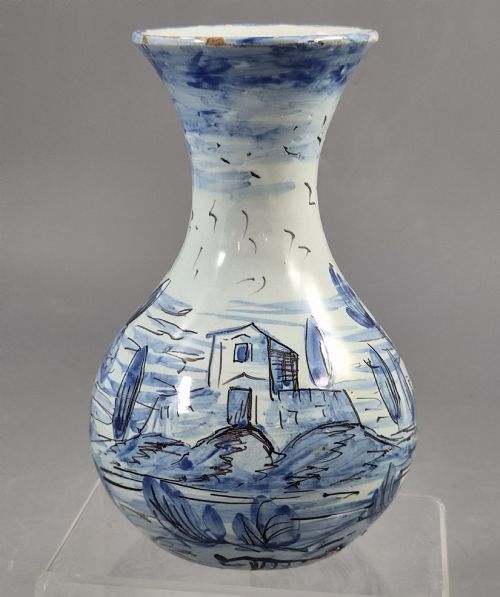
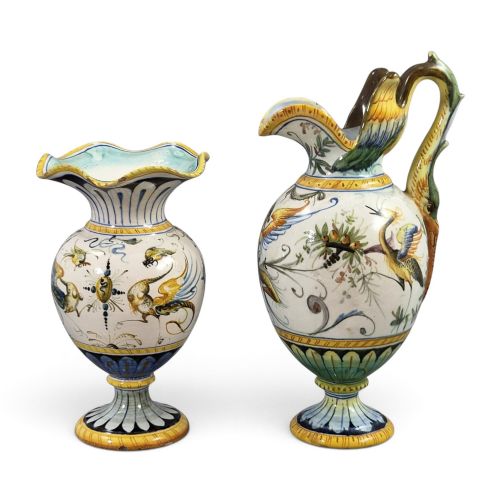
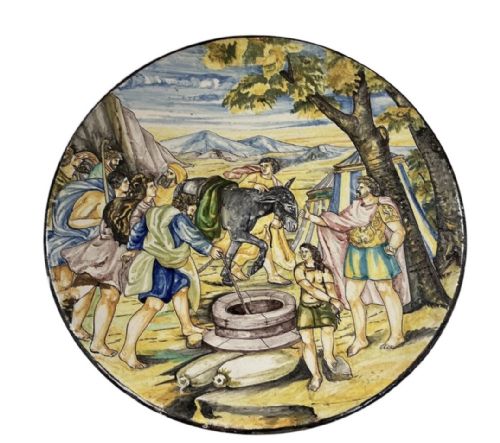
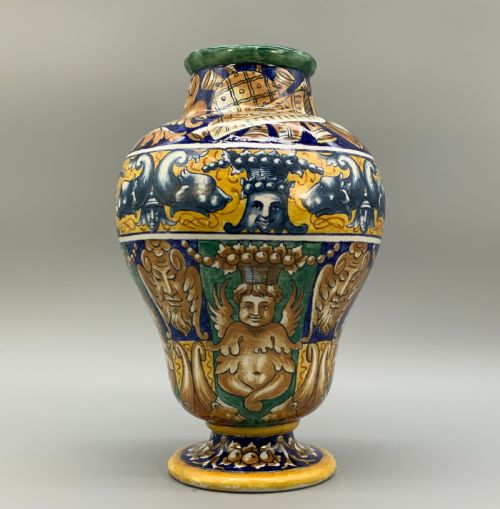
Italian renaissance ceramics on this page comprise 19th-century and early 20th-century revival pieces, including majolica chargers, cabinet vases, ewers, and planters decorated in historic styles. Collectors encounter tin-glazed earthenware and faience forms referencing Urbino, Savona, and Pesaro traditions alongside revival works from Florence.
The objects span large decorative platters with classical historical scenes and figural jardinières, alongside converted table lamps and pedestals. Most items reflect the Victorian and Edwardian enthusiasm for Renaissance Revival aesthetics, produced by notable workshops such as Cantagalli.
Buyers select these items to bring rich polychrome or blue and white pigments into interior spaces, utilising chargers and urns as focal display pieces. The selection offers substantial ceramic forms created during the 19th and early 20th centuries.
How they were made
Potters shaped earthenware bodies before applying tin glaze to create a white or opaque surface suitable for painting. Artisans then worked pigments directly onto the unfired glaze to achieve intricate polychrome historical scenes and traditional blue and white motifs.
Workshops such as Cantagalli utilised traditional majolica and faience techniques associated with earlier Italian production, adapting them during the 19th century. Firing fixed the pigments into the glaze, producing the durable glossy surfaces seen on chargers, vases, and planters.
The listings here feature earthenware and tin-glazed ceramics spanning the 19th century through to 1930, dominated by Renaissance Revival styles.
What varies in quality
Quality rests in the execution of the hand-painted decoration, where finely rendered historical scenes and precise pigment control distinguish superior cabinet pieces from simpler production. The ambition of the form, from standard vases to large chargers on figural bases with lions head decoration, dictates the standing of the piece.
The distinction of the maker's mark, such as the Cantagalli rooster emblem, often elevates the ceramic alongside the crispness of the tin glaze application. Pieces that maintain a harmonious balance between the revival form and the painted surface demonstrate the height of late 19th-century ceramic artistry.
Ulisse Cantagalli·Cantagalli Florence·C. Ravier
The Italian Renaissance Ceramics Glossary
- Maiolica
- Tin-glazed earthenware produced in Italy, known for colourful painted decoration. This term covers much of the polychrome ware found in 19th-century revival collections.
- Charger
- A large decorative plate designed for display on a wall or sideboard rather than for dining use. These often feature istoriato scenes depicting classical or historical subjects.
- Faience
- Tin-glazed pottery originating in Europe, sharing technical characteristics with majolica. The term appears frequently in descriptions of 19th-century continental earthenware.
- Istoriato
- A style of ceramic decoration featuring narrative paintings that cover the entire surface of the vessel. Such scenes typically draw upon classical mythology or historical events.
- Ewer
- A large jug with a wide spout and handled body, traditionally used for pouring water. Revival examples serve primarily decorative functions in interiors.
- Jardiniere
- An ornamental pot or stand designed to hold plants or flowers. These vessels often incorporate figural bases or sculptural elements like lions head decoration.
Italian Renaissance Ceramics: Frequently Asked Questions
How do I display a large majolica charger?
Large chargers are typically mounted on sturdy wall brackets or supported on heavy plate stands for sideboard display. Their detailed painted surfaces require positioning away from direct foot traffic to prevent accidental impact.
Pairs of chargers create a balanced focal point above a fireplace or console table. Adequate lighting helps reveal the fine brushwork and polychrome pigments of the istoriato scenes.
What is the difference between majolica and faience?
Majolica specifically denotes Italian tin-glazed earthenware, whilst faience is a broader European term for similar tin-glazed pottery. Both techniques involve applying an opaque white glaze that accepts hand-painted pigments before firing.
In the context of 19th-century revival pieces, makers and retailers often used these terms interchangeably. The underlying material remains earthenware covered in a tin-based glaze.
Can I use these ceramic vases for fresh flowers?
Most antique earthenware and majolica pieces are porous and susceptible to moisture damage if filled directly with water. Placing a separate waterproof container inside the vessel protects the historic body from dampness.
Cabinet vases and decorative ewers are generally intended for dry display or architectural ornament. Preserving the interior glaze and pigment prevents long-term deterioration.
How do I identify a Cantagalli piece?
Cantagalli ceramics from Florence usually feature a painted cockerel or rooster mark on the base. This symbol relates to the family name, where cantallo refers to the crowing of a rooster.
These pieces also display the characteristic tin glaze and vibrant Renaissance Revival palette associated with the Florentine workshop. Examining the underside often reveals the painted factory mark alongside other workshop ciphers.