
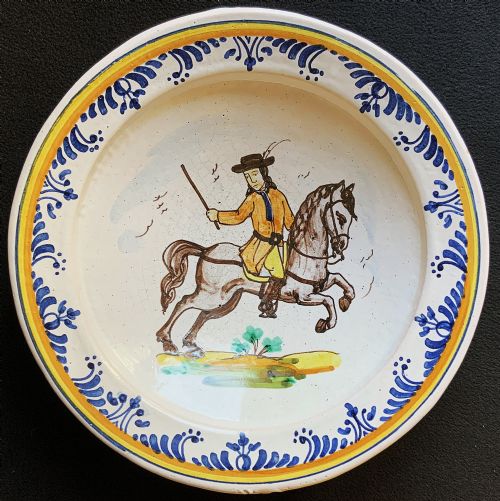


Tin Glazed Majolica Plate
These tin glazed majolica plate pieces bring rich earthenware surfaces and bold painted pigments into any room.
Tin Glazed Majolica Plate
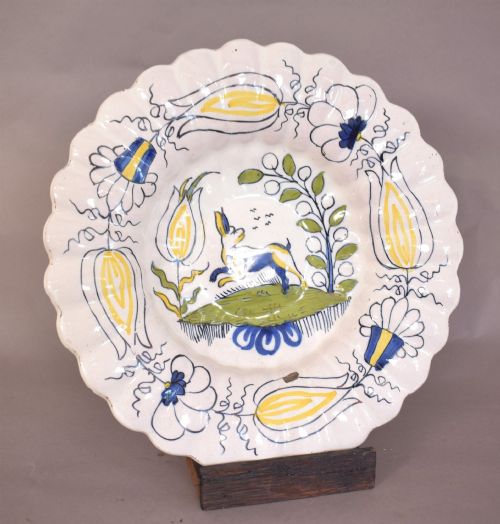
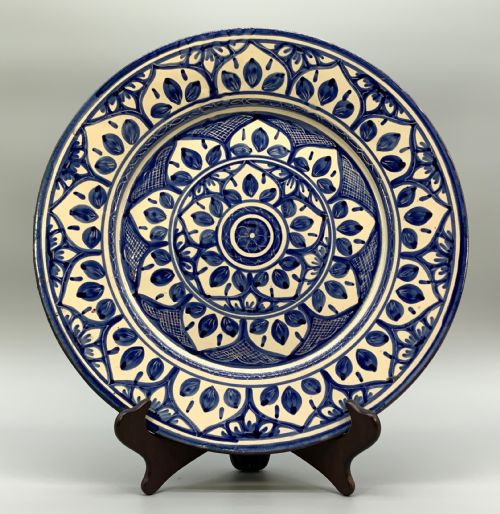
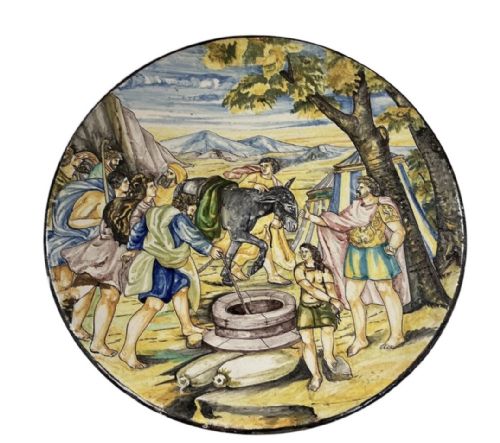
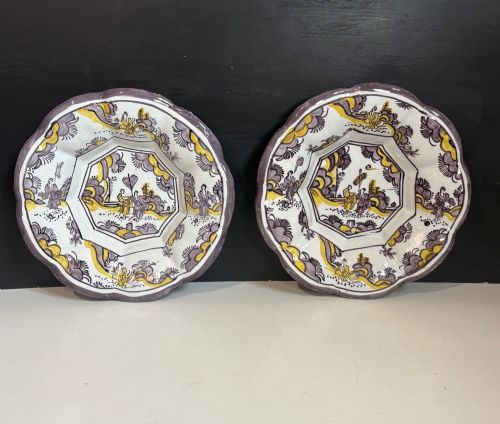
A tin glazed majolica plate sits among chargers, decorative platters, and dishes spanning the seventeenth, eighteenth, and nineteenth centuries. Buyers searching for a tin glazed majolica plate encounter various forms, from large Spanish and Italian chargers to smaller Dutch and French plates.
Materials and construction
Potters shaped these objects from earthenware and terracotta before applying a white tin glaze to form an opaque white surface. Pigments were painted directly onto this porous glaze prior to firing, bonding the colours to the clay body.
Makers utilised traditional kiln firing methods suited to earthenware, yielding the characteristic gloss and surface texture seen across Dutch, Spanish, Italian, and French examples.
Some historic plates bear old collection labels stuck firmly to the back by previous owners who clearly valued a neat inventory.
Judging quality in tin glazed earthenware
Quality rests in the precision of the painted pigments and the complexity of the design, whether depicting a classical historical scene or an intricate orchard pattern. Finer pieces demonstrate confident brushwork and balanced compositions across the tin glaze.
The weight and presence of the charger plate or decorative dish also distinguish the work, with larger chargers requiring greater skill in shaping the earthenware without warping during the kiln firing.
The Tin Glazed Majolica Plate Glossary
- Charger plate
- A large decorative plate traditionally used for ceremonial display or placed beneath smaller course dishes. These substantial pieces dominate table settings and wall mounts.
- Tin glaze
- An opaque white ceramic glaze containing tin oxide, providing a smooth canvas for painted pigments. This technique defines the surface of faience and delftware.
- Maiolica
- Italian tin-glazed earthenware decorated with colourful pigments. The style encompasses classical historical scenes and Renaissance Revival designs.
- Istoriato
- A style of pottery decoration featuring detailed narrative scenes from history, mythology, or literature. Painters covered the entire surface of the charger with complex figurative compositions.
- Faience
- European tin-glazed earthenware produced in France, Spain, and other regions. The term covers domestic dishes and decorative platters made in various provincial styles.
Tin Glazed Majolica Plate: Frequently Asked Questions
How were these plates used?
Many large charger plates and decorative platters served ceremonial or display purposes on walls and sideboards rather than everyday dining.
Smaller dishes saw use at table for serving food, though the delicate tin glaze meant owners handled them with care to prevent chipping the earthenware body.
How do I clean a tin glazed plate?
Dust gently with a dry, soft cloth to remove everyday particles without moisture.
Avoid soaking or scrubbing the earthenware, as water can seep through micro-cracks in the glaze and damage the historic clay beneath.
How do I tell seventeenth century pieces apart?
Seventeenth century pieces often display specific Dutch Baroque or early delft characteristics in the palette and glaze thickness.
Examining the footring, clay body density, and pigment saturation helps separate these earlier works from nineteenth century revivals.
What is the difference between majolica and delft?
Majolica generally refers to Italian tin-glazed earthenware featuring polychrome pigments and Renaissance or classical historical scenes.
Delft typically denotes Dutch or English tin-glazed ceramics, often associated with blue and white palettes or specific earthenware charger forms.