


Decorative Majolica Urns
Decorative majolica urns bring bold colour and historic revival style to a room.
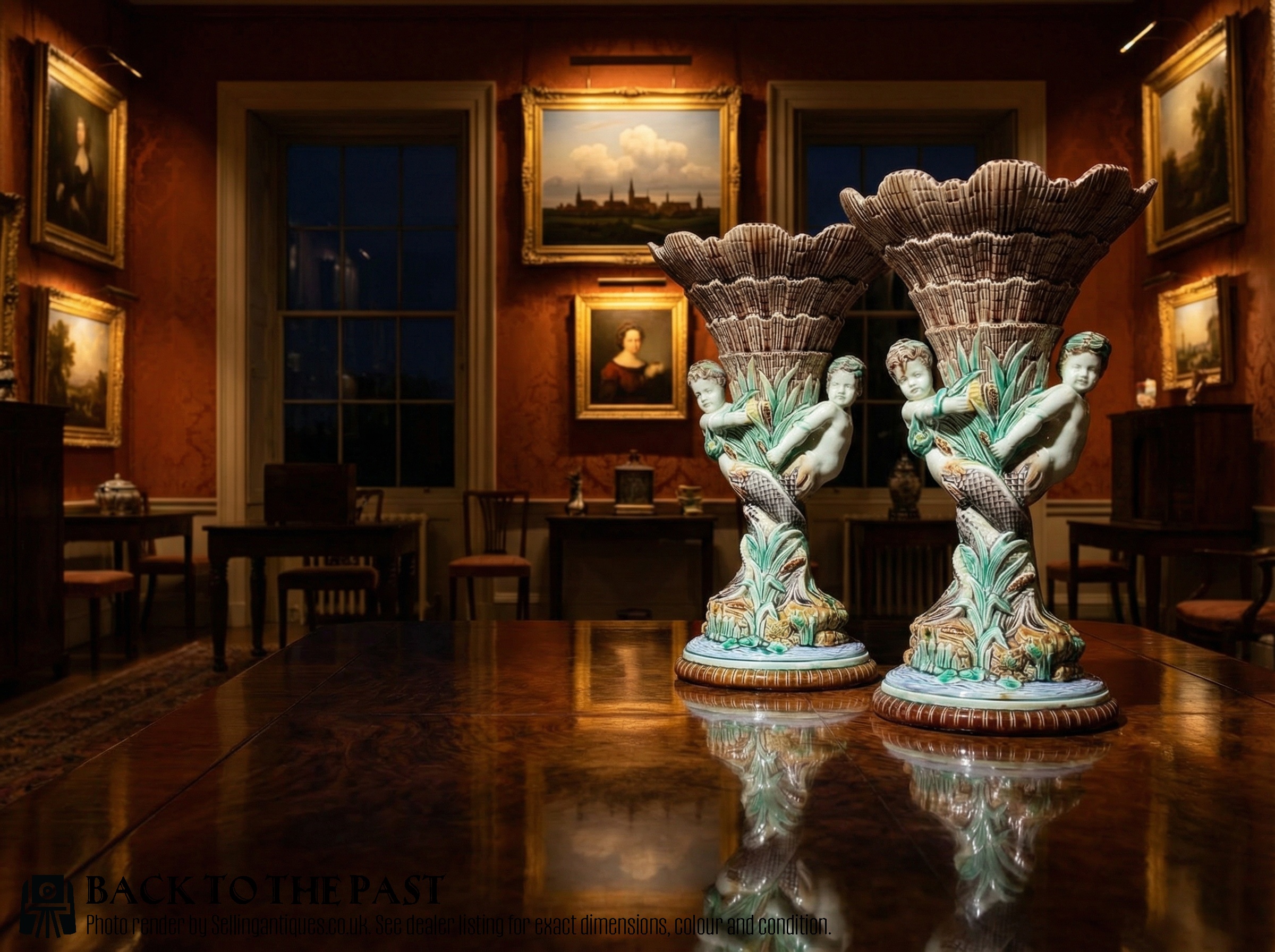
Decorative Majolica Urns
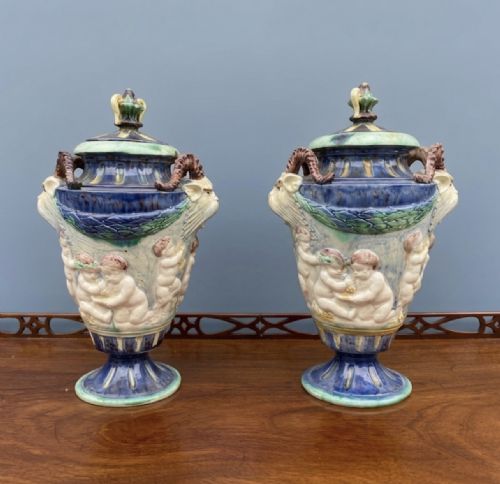
Decorative majolica urns comprise tin-glazed and lead-glazed earthenware vessels drawing on Italian Renaissance, Victorian, and Chinoiserie traditions. These pieces often arrive as pairs with covers, serving as striking focal points for a room.
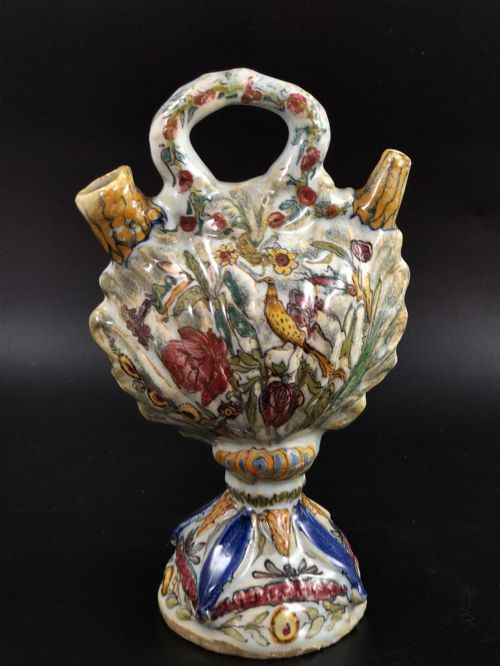
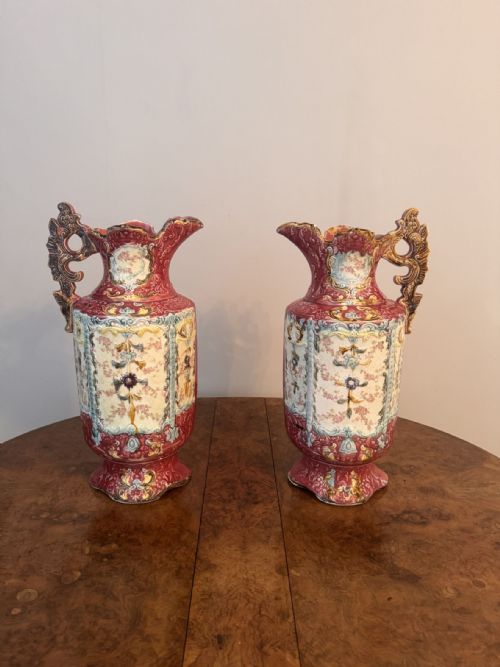
The selection ranges from eighteenth-century Italian pilgrim flasks and polychrome vases to nineteenth-century Victorian ewers and monumental Minton productions. Buyers frequently encounter nineteenth-century examples alongside earlier continental forms.
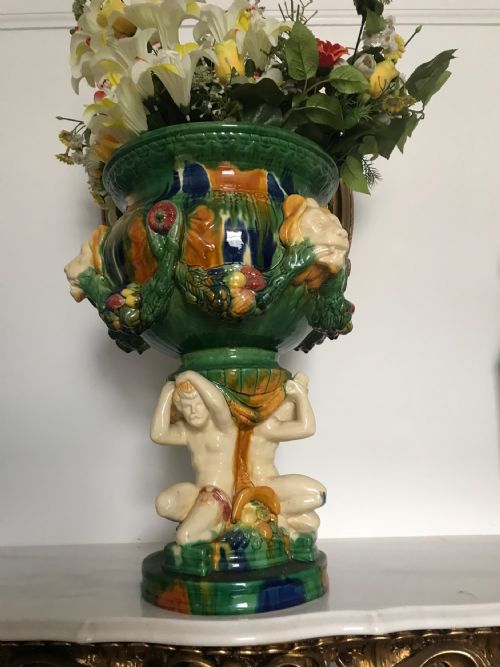
Forms extend beyond traditional urns to include large planters on figural base stands, jardinieres, and monumental vases. Each vessel displays the rich glaze work and sculptural modelling characteristic of the majolica tradition.
Materials and construction
Potters built these pieces using earthenware and terracotta, shaping the clay into elaborate forms such as ewers, urns with covers, and figural base stands. The underlying ceramic body provides a robust foundation for the subsequent glazing process.
Decoration relies on tin glaze and lead glaze combined with polychrome enamel colours. This technique allows the vibrant pigments to fuse with the opaque white or coloured background during firing, creating the characteristic glossy finish.
Bacchus makes a notable appearance on a monumental vase, bringing classical revelry straight to the Victorian drawing room.
Factors that distinguish quality
Quality rests in the crispness of the sculptural modelling and the depth of the polychrome enamel palette. Superior pieces exhibit fine detail in figural elements like lions head decoration and human figures.
The ambition of the form dictates distinction, separating standard vessels from monumental works with figural base stands or complex Alhambra-style and Italian Renaissance revival ornamentation.
Minton·Albert Carrier·Bretby
The Decorative Majolica Urns Glossary
- Majolica
- A type of earthenware decorated with an opaque tin glaze and painted with coloured enamels. This technique creates a glossy, vibrant surface seen across many nineteenth-century revival pieces.
- Ewers
- A large jug with a wide spout and handle, historically used for pouring water but valued here for ornamental display. These vessels often match urns in decorative pairs.
- Jardiniere
- An ornamental pot or stand designed to hold plants or flowers. In this category, they frequently feature naturalistic or figural base supports.
- Tin Glaze
- A lead glaze made opaque by the addition of tin oxide. It provides the smooth white background traditionally used for painting polychrome designs.
- Pilgrim Flask
- A flattened, round vessel with lug handles derived from containers carried by travellers. Eighteenth-century examples display intricate painted scenes.
Decorative Majolica Urns: Frequently Asked Questions
How were decorative majolica urns used?
These vessels served primarily as ornamental display pieces in grand nineteenth-century interiors rather than functional containers. Their bold glazes and sculptural forms were designed to catch the eye in reception rooms and halls.
Larger forms such as jardinieres and planters on figural stands also accommodated plants, combining decorative ambition with practical interior gardening.
Are majolica urns waterproof?
While the ceramic body and glaze create a resistant barrier, many antique pieces are porous over time due to hairline crazing in the glaze. Using a protective liner inside urns and planters protects the historic earthenware from moisture damage.
Exposing the interior to standing water can stain the historic clay body through existing fissures in the glaze.
How do I identify nineteenth-century majolica?
Nineteenth-century pieces often display eclectic revival styles, drawing on Italian Renaissance, Gothic, Chinoiserie, or Aesthetic Movement motifs. The use of heavy earthenware bodies combined with brilliant polychrome lead and tin glazes is typical of this period.
Maker marks, registration numbers, or sculptural signatures on the base help confirm the nineteenth-century production date.
How should I clean decorative majolica?
Dusting gently with a soft, dry cloth is the safest method for routine maintenance. Avoid harsh chemical cleaners or abrasive scouring pads that can scratch the glossy enamel surface.
If moisture is necessary to remove grime, use a damp cloth followed immediately by thorough drying with a lint-free towel.