


Victorian Majolica Urns
Victorian majolica urns bring bold colour and rich relief modelling to any room, combining nineteenth-century earthenware with vibrant lead and tin glazes.
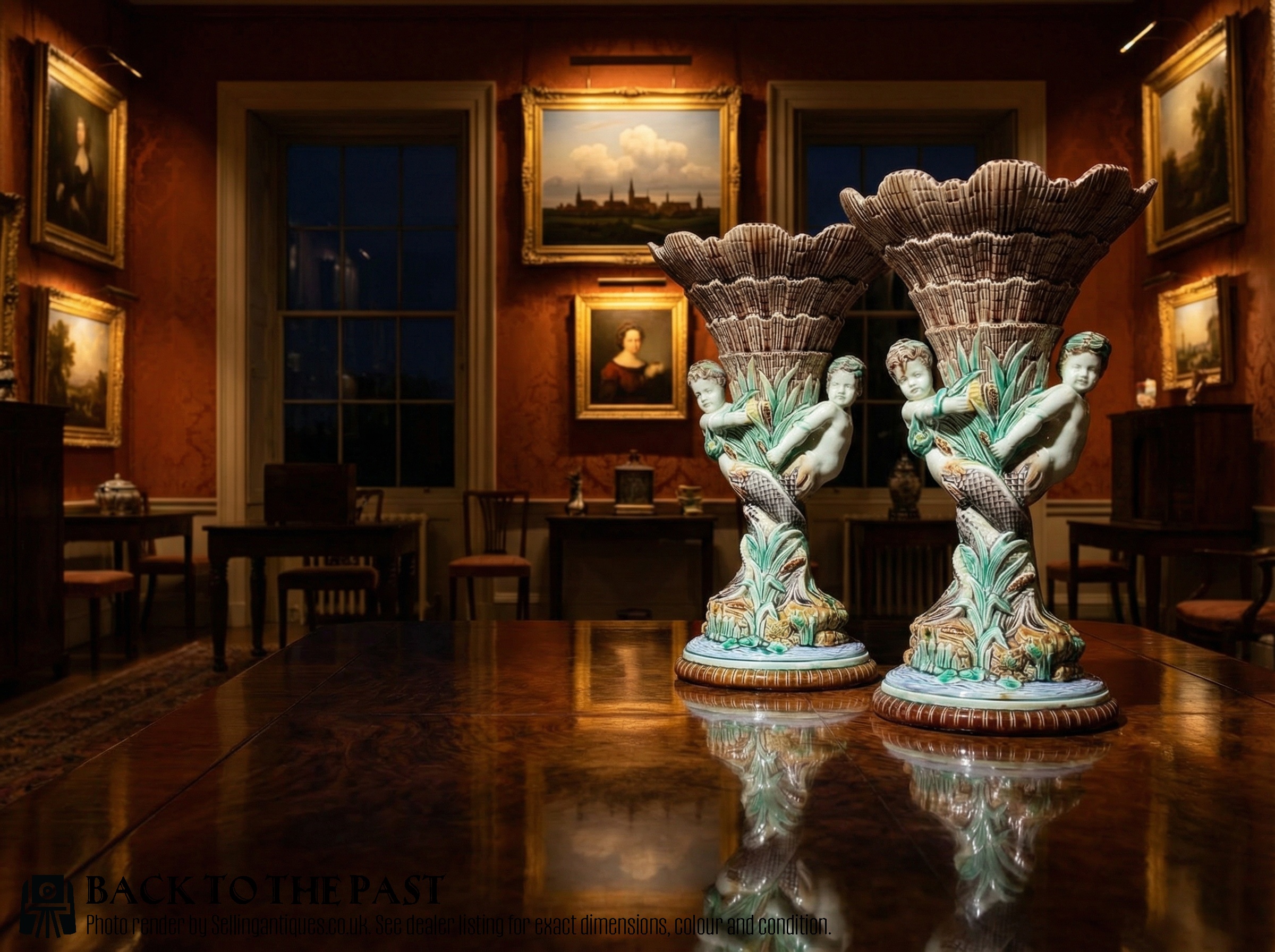
Victorian Majolica Urns
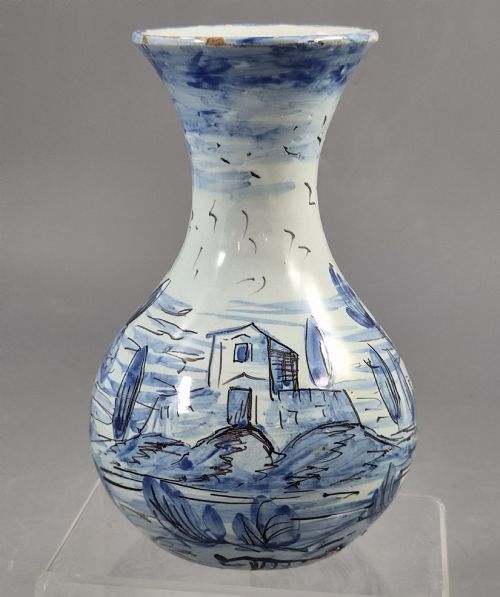
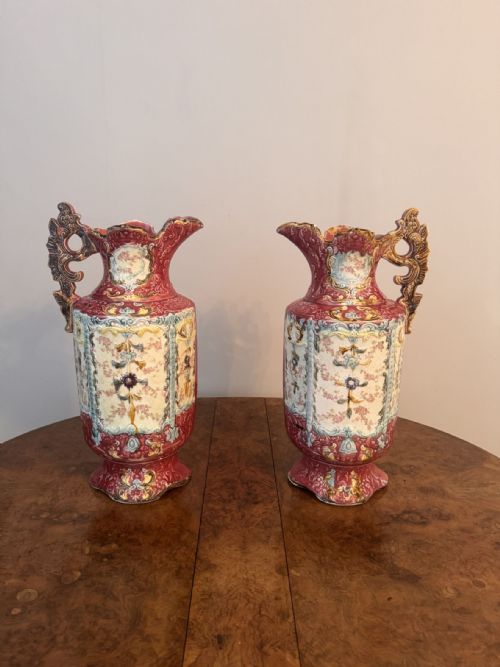
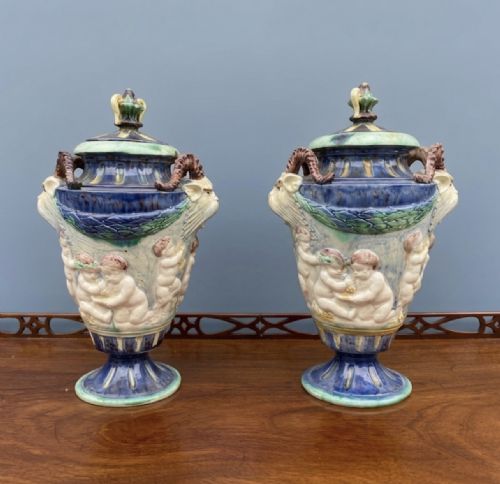
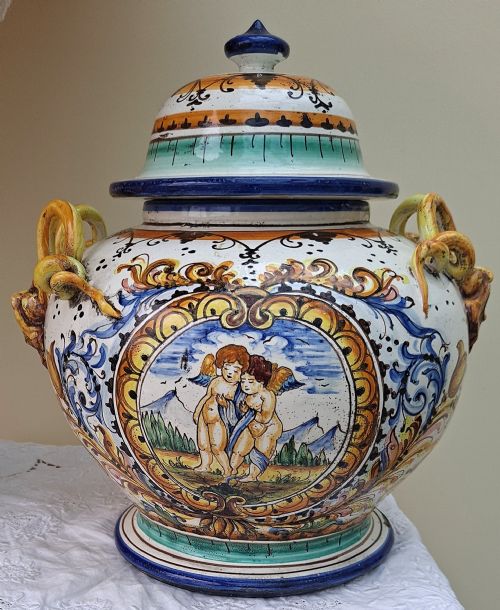
Victorian majolica urns are decorative ceramic vessels produced during the nineteenth century, encompassing styles from Renaissance Revival and Art Nouveau to Victorian Naturalism and Chinoiserie. When searching for victorian majolica urns, a buyer encounters covered vases, handled ewers, and substantial garden or tabletop jardinieres shaped from earthenware and terracotta.
The objects stem from English factories, Italian workshops, and wider continental potteries, reflecting a period of immense stylistic variety. Pieces range from monumental exhibition items down to cabinet-sized display vessels, utilising robust ceramic bodies designed to carry heavy, colourful glaze applications.
Materials and production
Potters formed these vessels using earthenware or terracotta bodies, which provided a porous foundation suitable for thick applications of coloured glaze. Artisans then applied lead glazes and tin glazes over moulded reliefs to achieve the characteristic glossy finish and intense palette.
Many workshops incorporated specialised techniques such as lustre glazing to create iridescent surface effects, while others relied on complex multi-part moulds to shape figural supports, griffins, and naturalistic plant motifs.
Some Victorian gardeners placed heavy pottery griffins beneath their ferns just to watch guests jump.
Assessing quality and execution
Quality in these ceramics rests on the crispness of the moulded detail and the control of the glaze during firing. Superior examples display sharp relief modelling without pooling or dull patches in the coloured glazes.
The reputation of the maker and the ambition of the form also elevate a piece. Monumental scale, complex figural elements, and well-executed stylistic revivals separate standard decorative production from exceptional studio output.
Clement Massier·Julius Dressler·Albert Carrier
The Victorian Majolica Urns Glossary
- Majolica
- A type of pottery decorated with opaque coloured glazes on an earthenware body. It gained immense popularity in Britain and Europe during the Victorian era for its vibrant palette.
- Earthenware
- Porous pottery fired at relatively low temperatures. It serves as the standard ceramic base for the vast majority of nineteenth-century majolica vessels.
- Lustre glaze
- A metallic film applied to ceramics and fired in a reducing atmosphere to create an iridescent sheen. Clement Massier utilised this technique on late nineteenth-century pieces.
- Jardiniere
- A large ornamental pot or planter designed to hold growing plants. These objects often matched pedestals or stands in grand nineteenth-century interiors.
- Ewer
- A large jug with a wide spout and a carried handle, frequently produced purely for display alongside companion urns and vases.
Victorian Majolica Urns: Frequently Asked Questions
How do I clean majolica?
Dust the surface gently with a soft, dry cloth to remove everyday particles. Avoid harsh chemical cleaners or submersion in water, as the porous earthenware body beneath the glaze can absorb moisture through microscopic fissures.
Keep these vessels away from direct, strong sunlight and areas of high humidity to protect the stability of the glaze and prevent any crazing from deepening over time.
Were these urns used outdoors?
Most nineteenth-century majolica urns and jardinieres were intended for interior display in conservatories, entrance halls, and drawing rooms. The earthenware bodies and intricate surface glazes are generally vulnerable to severe frost and outdoor weathering.
Using them inside ensures the vibrant tin and lead glazes remain protected from thermal shock and moisture damage that can compromise the ceramic structure.
How do I identify a reproduction?
Examine the weight, the handling marks on the interior, and the consistency of the glaze application. Period nineteenth-century pieces display specific crazing patterns and hand-finished details within the moulded relief that modern slip-cast copies struggle to replicate accurately.
Look closely at the underside for factory culls, impressed registration marks, or maker ciphers appropriate to the Victorian period rather than modern stamped paper labels.
What styles influenced these designs?
Potters drew heavily from the Italian Renaissance, Islamic architecture, and Asian decorative arts during the nineteenth-century revival movements. This cross-cultural borrowing resulted in eclectic forms incorporating Renaissance strapwork, Alhambra patterns, and Chinese motifs.
Naturalism also played a massive role, leading to plant and animal forms where handles mimic twisted branches or decorative figures support the main vessel body.