

A 2026 Guide by Sellingantiques
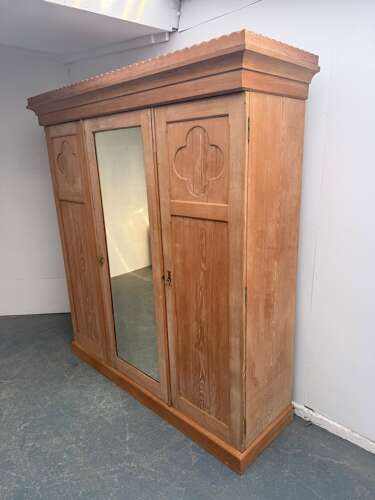
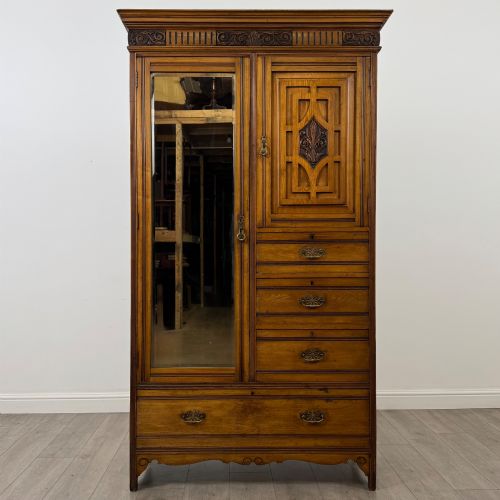
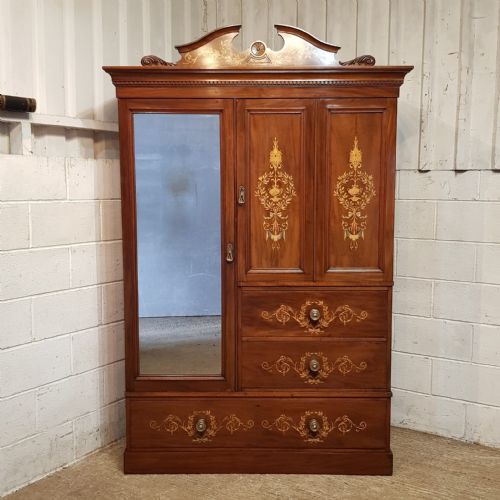
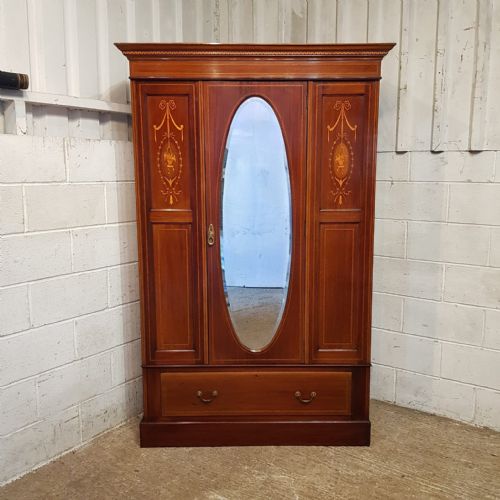
Early Heals Edwardian Antique Oak Wardrobe – Labelled, Edwardian
Priced at £1,295 from Miles Griffiths Antiques Ltd
These large case pieces began replacing built-in presses in grand houses during the late eighteenth century.
Earlier antique mirrored wardrobes often concealed their reflective glass behind solid outer doors rather than displaying them openly.
Look at nineteenth-century examples. The glass gradually moved to the exterior to act as a prominent decorative feature for wealthy bedrooms.
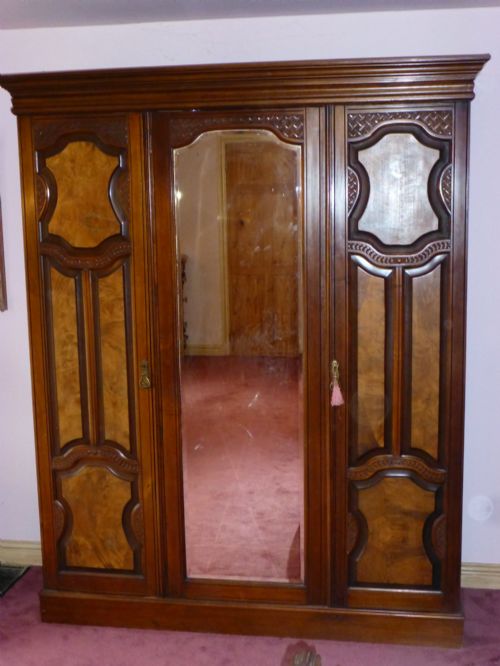
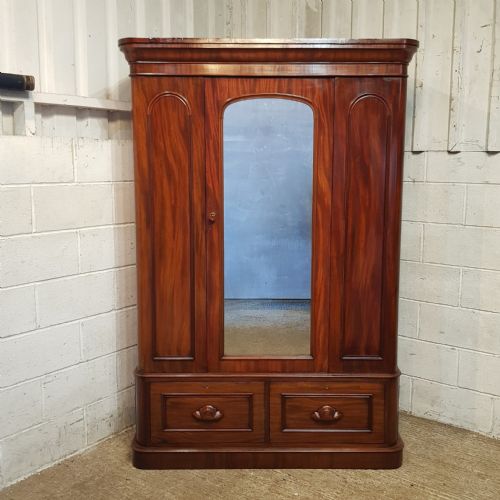
Break-front designs dominated the upper end of the market for decades. Central sections step forward from the side wings to provide a massive central mirror flanked by figured timber panels.
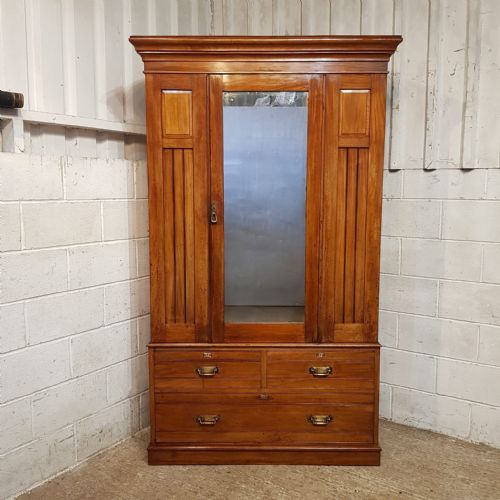
By the Edwardian era, compact sizes appeared in trade catalogues. They served urban terraced houses rather than just country estates.
Gillows of Lancaster produced substantial mahogany examples throughout the nineteenth century, often stamping their name on the top edge of a drawer.
Holland and Sons supplied grand bedroom suites to the wealthy. Their antique mirrored wardrobes feature restrained classical detailing and solid cabinet work.
Regional firms handled most standard production. Countless unbranded pieces emerged from London and provincial workshops for the expanding middle classes.
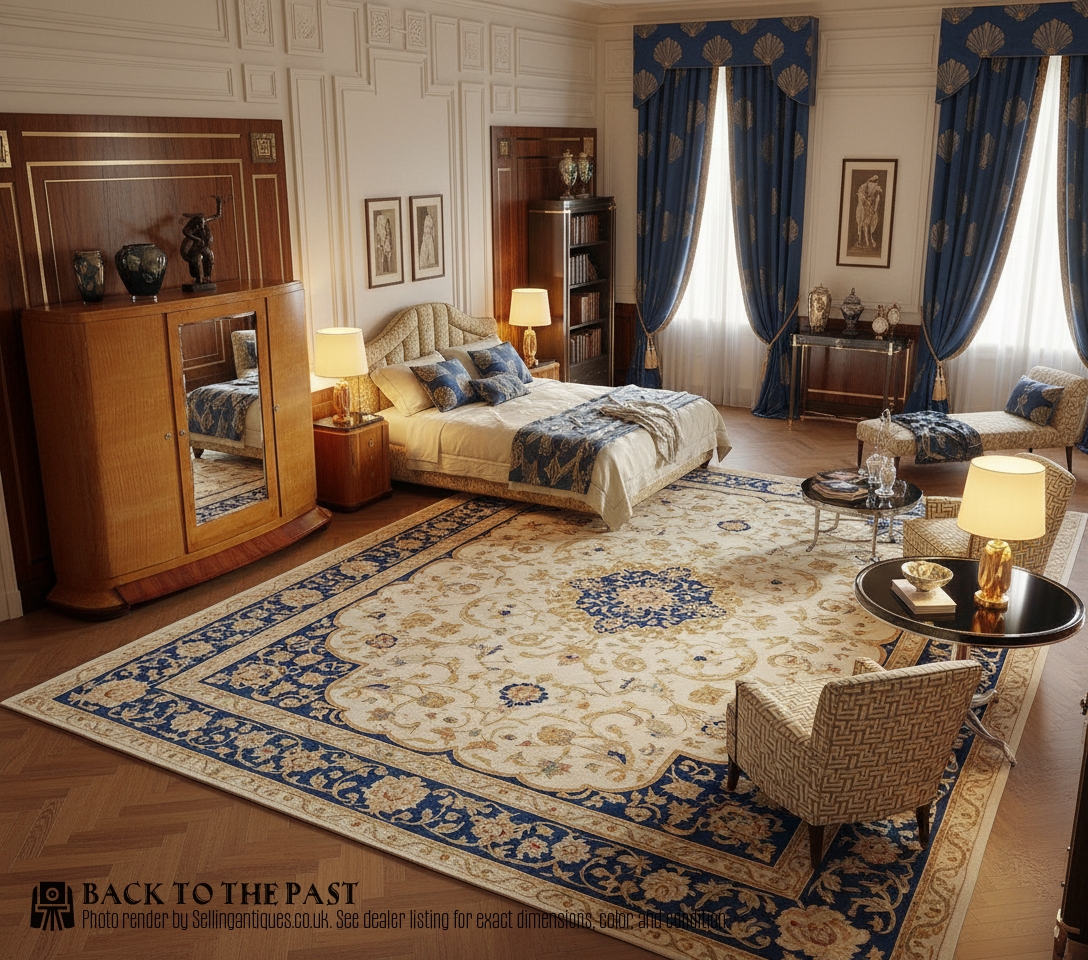
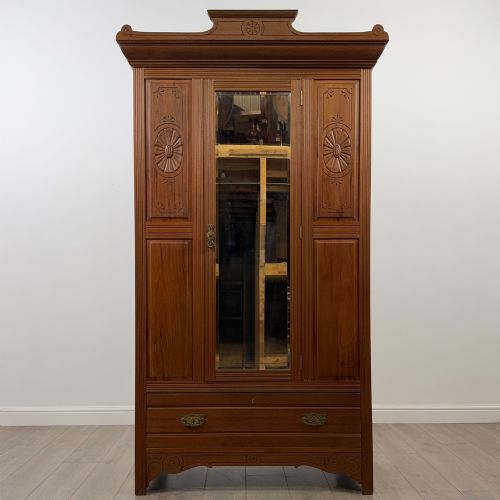
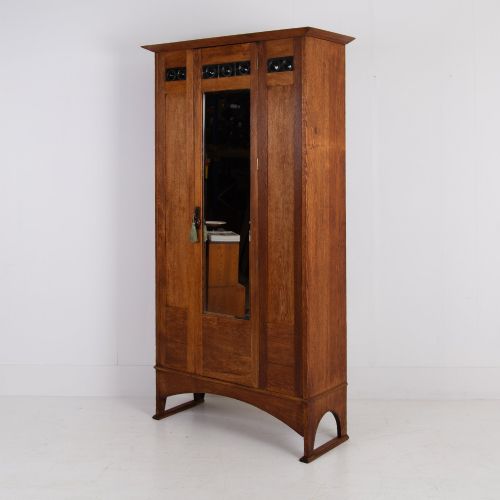
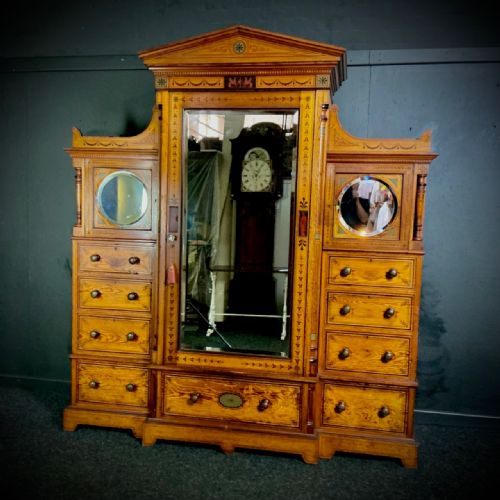
Jean Faure Signed High Art Deco Wardrobe C1920, 1920
Priced at £3,495 from Mews Antiques
The 2026 retail price guide for Antique Mirrored Wardrobes is drawn from a proprietary archive of over 1.1 million retail prices indexed by Sellingantiques since 2003. This guide relies exclusively on their own internal data; no external sources or auction records are used.
Analysing nearly 25 years of UK antique market history alongside current retail values, the data indicates that typical UK retail prices for Antique Mirrored Wardrobes range between £400 and £1,800. Entry-level prices generally fall under £400 and premium examples upwards of £1,800.
Deep bottom drawers often sit below the main hanging space.
Plinths elevate the entire structure off the floor. Some sit on turned bun feet, while others rest on solid bracket supports.
A prominent moulded cornice caps the top. These sections often lift off to help get the heavy case up narrow domestic staircases.
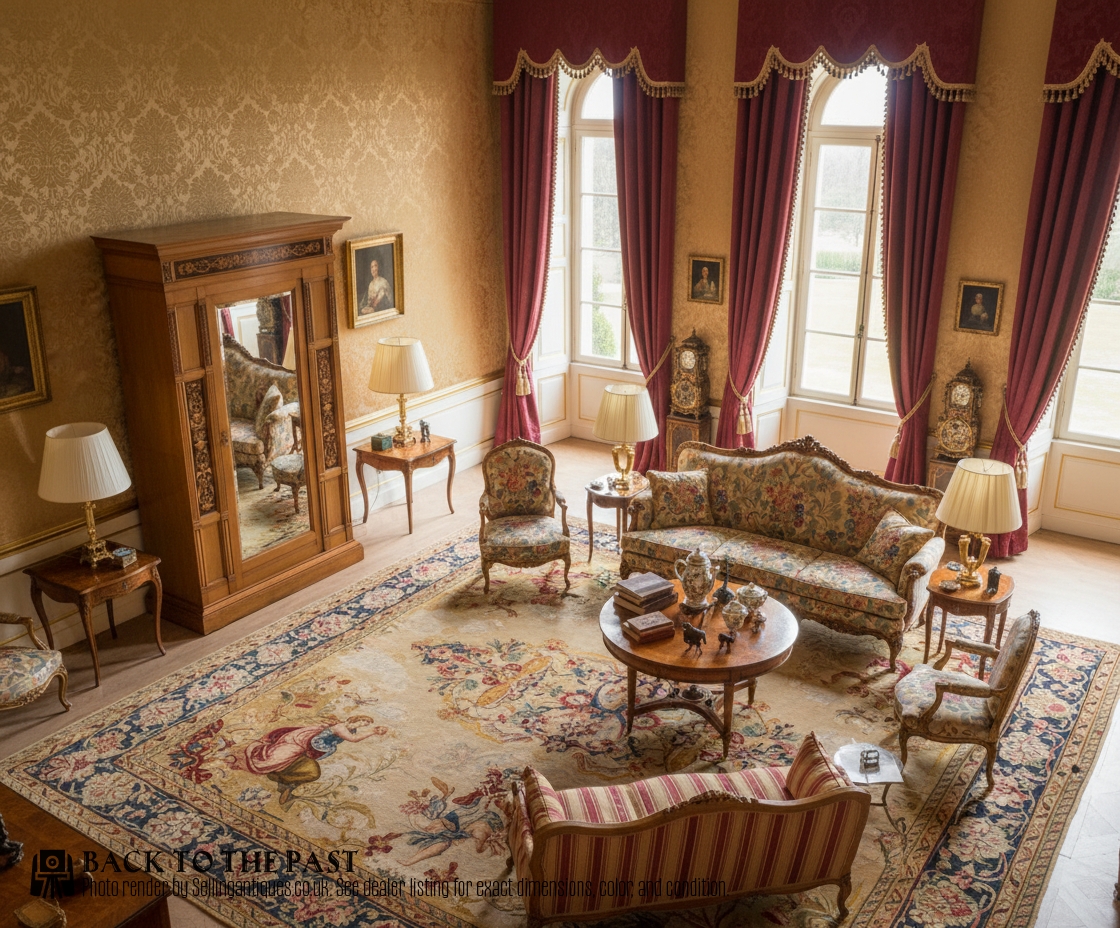
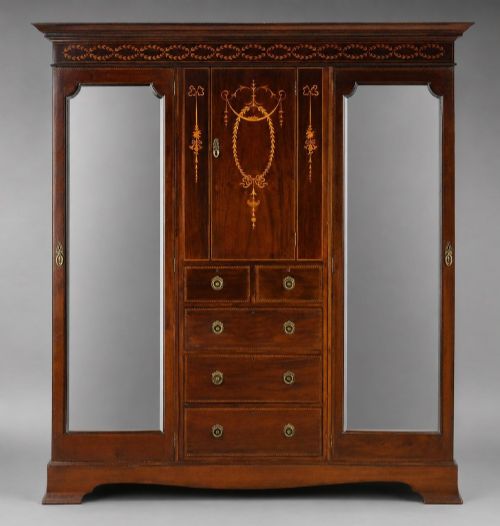
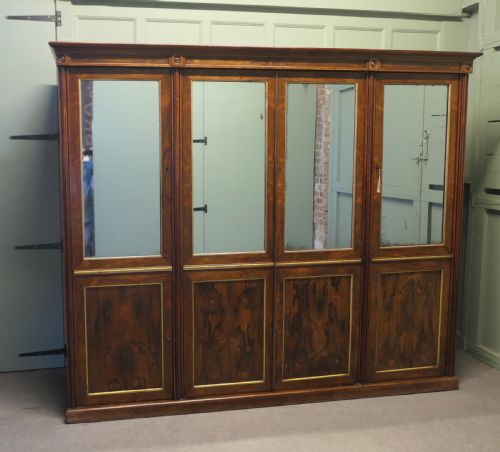
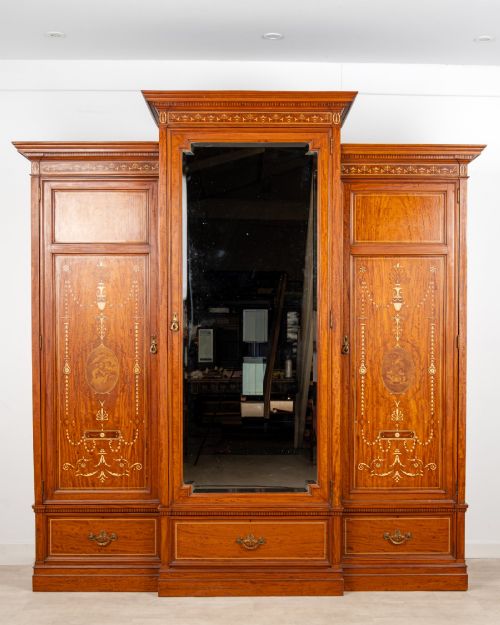
Gillows of Lancaster Marquetry Inlaid Oak Wardrobe, 19th Century
Priced at £3,850 from Shackladys Antiques
Hand-cut dovetails secure the drawer fronts to the sides in earlier pieces.
Frame and panel construction allows the solid timber to move with seasonal humidity changes without splitting the large doors.
Later antique mirrored wardrobes feature machine-cut mouldings. The shift from hand planes sped up workshop production during the late Victorian period.
"Some Victorian models conceal shallow hidden drawers within the cornice, accessed only by reaching up over the top moulding."
"The heavy silvered glass plates originally helped brighten dim rooms before electric lighting became standard in domestic houses."
"Many modular designs break down into flat panels. The original makers used simple slotted bolts to make moving them manageable."
Based on almost 25 years of Sellingantiques UK antique market data, Antique Mirrored Wardrobes appeared 1066 times (out of 1,100,000 antiques) which gives it a rarity score of 81/100.
This score measures scarcity within the Sellingantiques archive only and is not a survey of the entire antiques market, so these statistics may not be indicative of the general availability of Antique Mirrored Wardrobes elsewhere.
You can't scrub the cloudiness away. That grey fog is degraded silvering on the back of the glass plate, not dirt on the front.
Moisture in the air reacts with the metallic backing over time. A specialist can resilver the plate, but many buyers prefer leaving the original aged finish as it is.
Yes, they usually come off quite easily. Open the door and support the bottom edge to take the weight off the brass hinges.
Most original hinges use standard slot-head screws. Undo the screws on the door side rather than the carcase side. This leaves the hinge leaves safely attached to the main frame.
Wrap the removed doors in thick blankets. The old glass plates are heavy and crack easily if laid flat on an uneven floor.
Most Victorian case furniture breaks down into manageable sections specifically for this reason. The makers knew their pieces had to navigate narrow domestic stairs.
Look for a separate cornice on top and a separate plinth base at the bottom. The main body often splits down the middle into two vertical halves, or the sides detach from the back panel.
You should measure your tightest staircase corner and ask the dealer for the dimensions of the largest individual component when dismantled.
It depends on how the maker built the interior. Sometimes the shelves simply rest on wooden bearers and slide straight out without any tools.
Other times, the shelves form a structural part of the carcase. If they sit fixed into routed grooves cut into the side panels, removing them might weaken the whole cabinet.
Look closely at the joins. If you see nails or glued blocks securing the shelf ends, leave them alone. You might need to find a piece originally built for hanging clothes instead.
Please note: This Antique Mirrored Wardrobes guide and its associated pricing data are provided for general informational purposes only. It does not constitute formal financial, investment, or appraisal advice and should not be relied upon as the sole basis for any commercial activity, purchasing, or sales decisions. Sellingantiques.co.uk accepts no liability for any actions taken in reliance on this information. Always consult with a qualified professional or independent appraiser.
