
Antique Pine Wardrobes
A large softwood clothes cupboard, mostly Victorian to early 20th century, built for everyday bedroom use and very often made to come apart for the journey up a staircase.
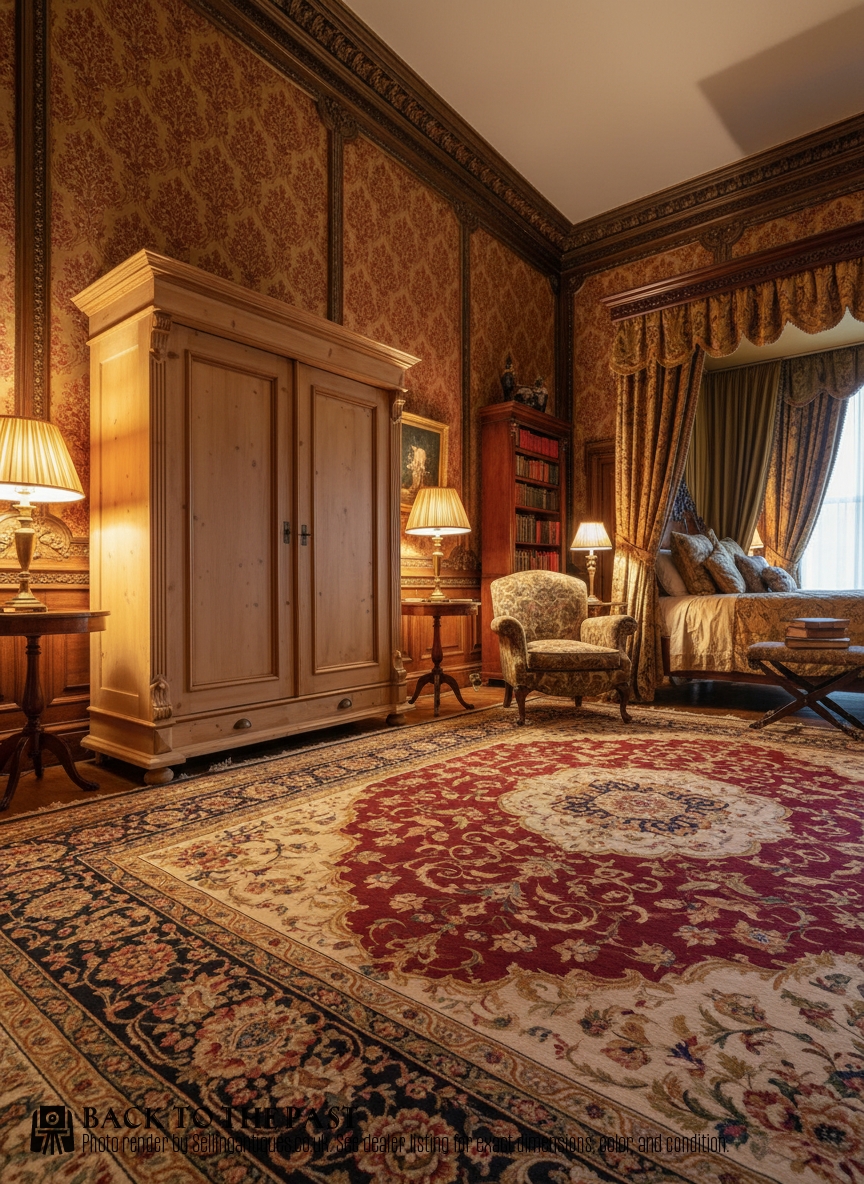
Antique Pine Wardrobes
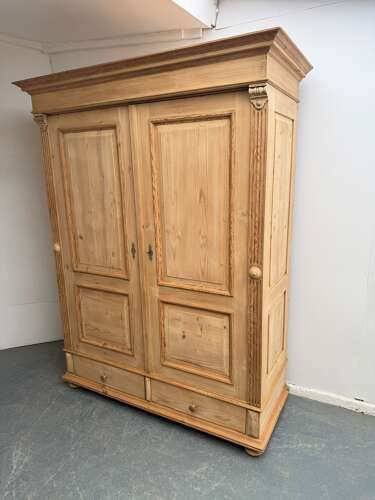
Free-standing hanging cupboards became standard bedroom furniture in the 19th century, and pine was the everyday version: cheap softwood carcasses, usually meant to be painted or grained rather than shown as bare timber. Because they were bulky, many were built to be taken apart at cornice, sides and back.
That construction is what dominates the listings. Almost a third of titles on Sellingantiques say the piece dismantles, with another block calling it knockdown and a handful reaching for flat pack, or spelling out how many sections the carcass breaks into. Delivery is the selling point the trade leads with.
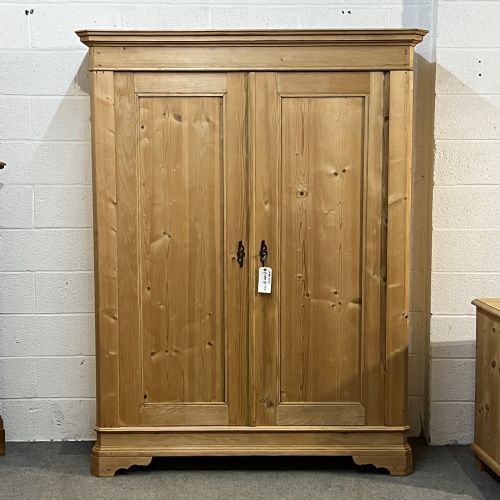
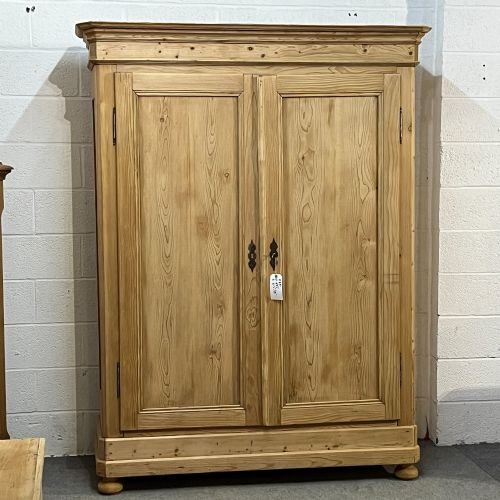
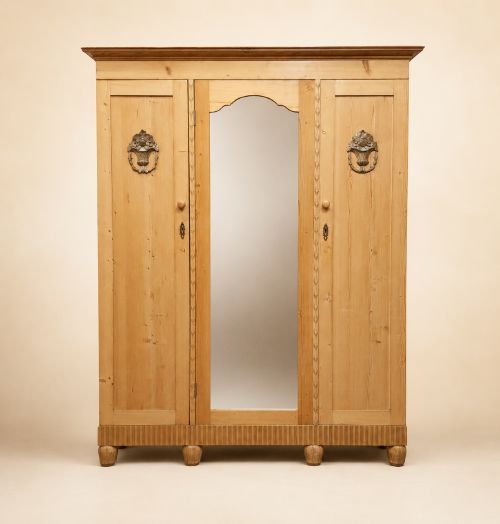
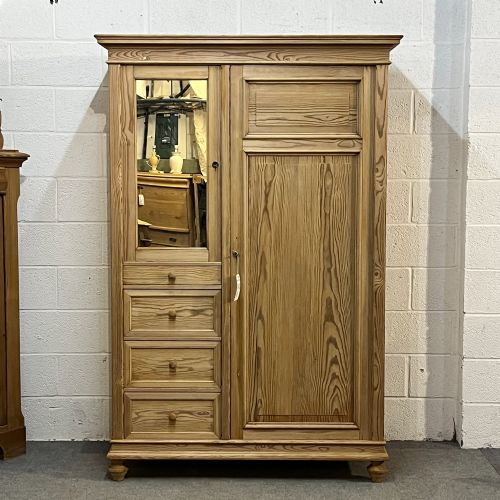
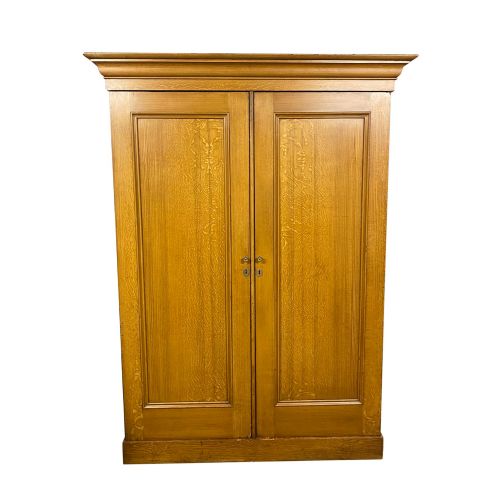
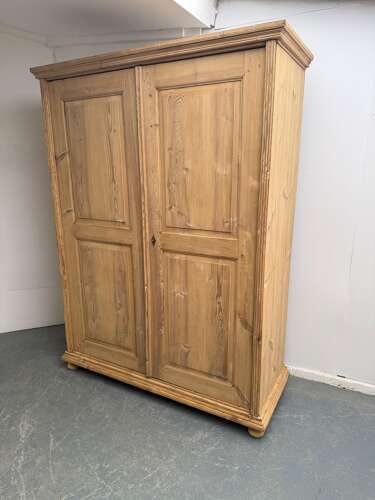
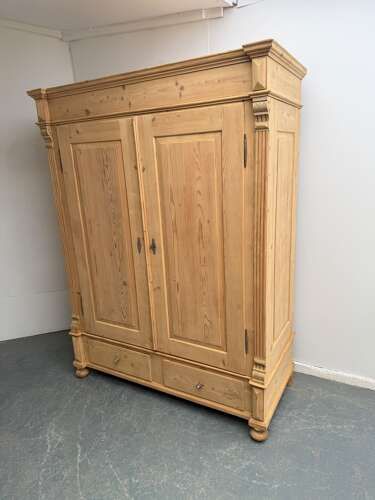
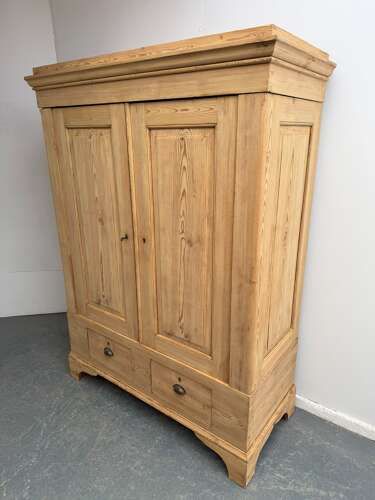
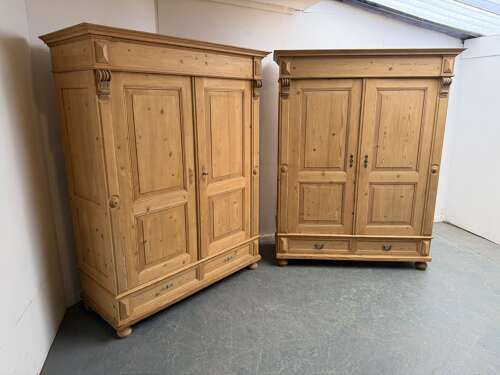
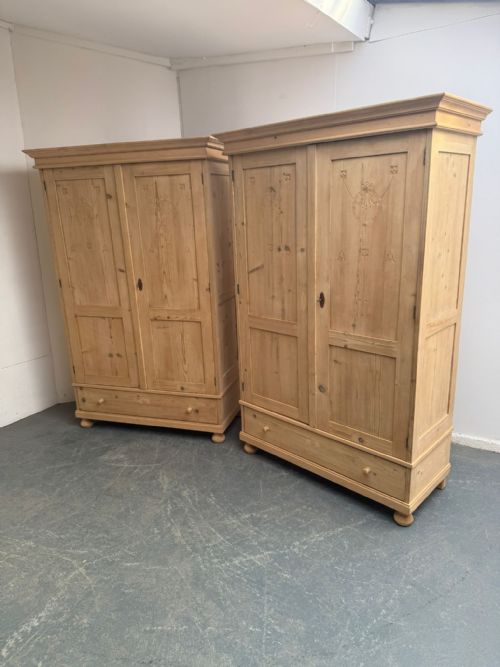
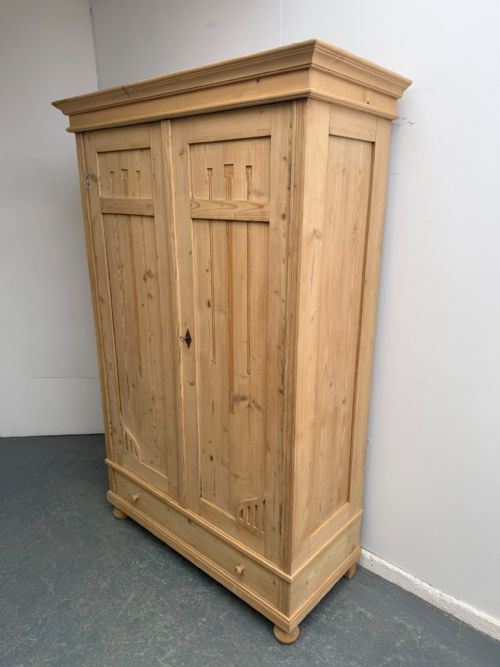
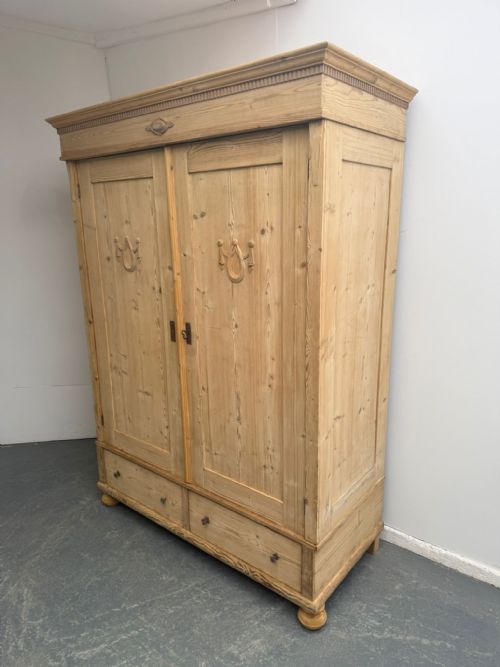
The form you'll meet most often is a two-door double, with a drawer or pair of drawers in the base. Singles and triples flank it on either side. Dating runs from 1800 to 1930, though half the archive carries only a period label rather than a year; among the dated pieces the 1910s leads, ahead of the 1920s and 1900s.
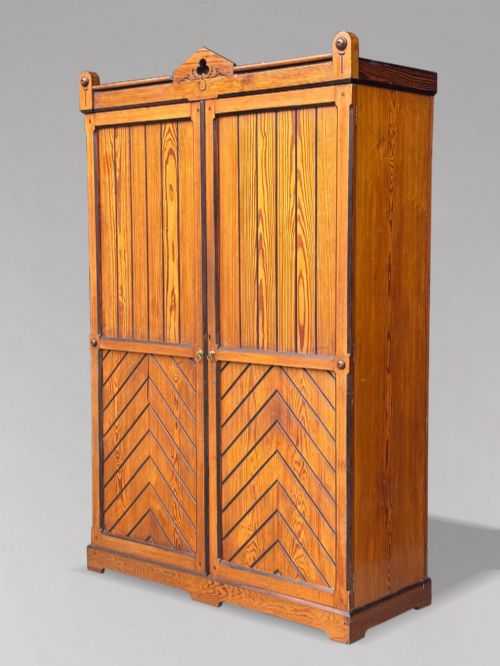
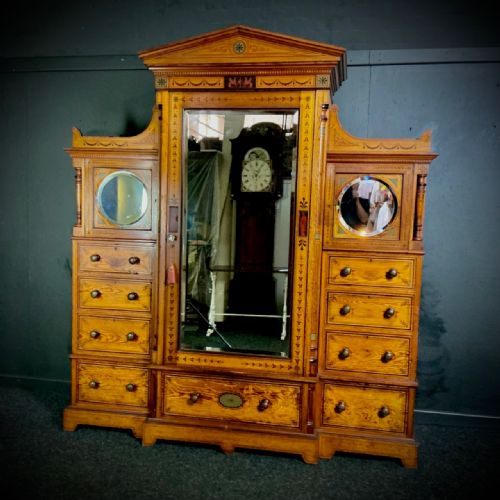
Beyond that main run sit several smaller strands: pitch pine and shallower one-piece hall wardrobes, Continental imports from France, Germany, Denmark, Flanders and Hungary among others, and fitted compactums with internal shelves or trays. Surfaces go from stripped and waxed, through raw carcass offered plainly to wax or paint, to original scumbled and painted decoration.
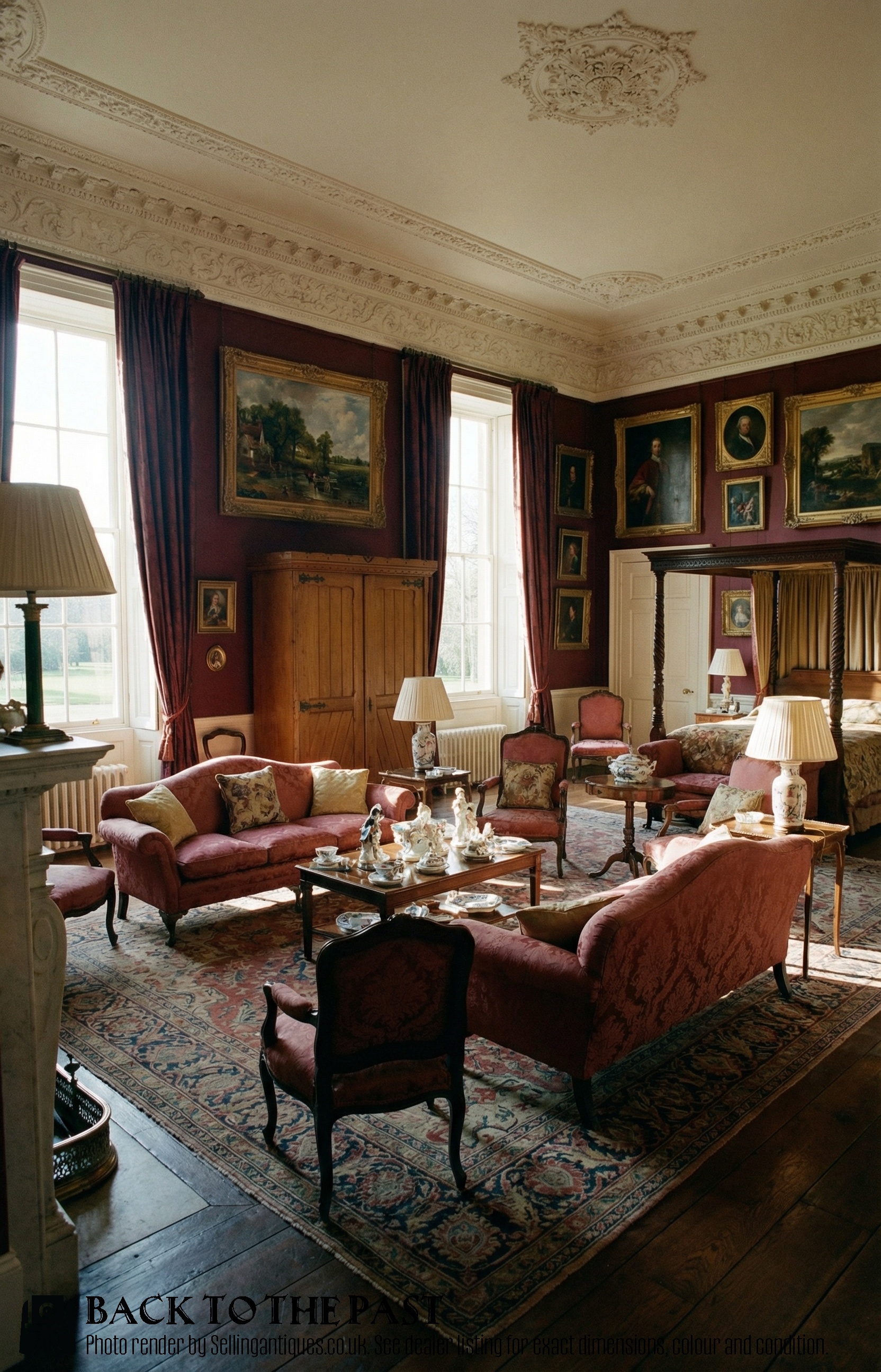
Where The Range Widens
Surface does more work than anything else. Original painted and decorated country-house pieces, and scumbled faux-oak paintwork left as it was applied, sit at the top of the range. Plain stripped carcasses sold to wax or paint anchor the bottom, and a large block of stock is offered exactly that way.
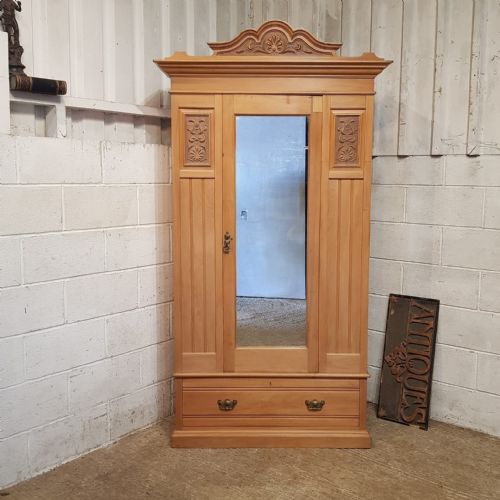
Then interior and timber. A compactum, fitted with shelves or trays rather than plain hanging space, reads higher than a straightforward hanging cupboard. Pitch pine, with its density and figure, sits above ordinary deal, and the faux-bamboo pitch pine triples run well above it again. Carved or inlaid Arts and Crafts work does the same.
Scale is the third axis. Large and triple-door pieces, the ones dealers reach for words like massive to describe, run above small examples, and children's wardrobes sit at the lower end. Pairs of matching knockdown wardrobes and complete bedroom units come in near the top.
Antique Pine Wardrobes Retail Price Guide 2026
Typical UK retail prices for pine wardrobes, calculated from the Sellingantiques database of over a million retail prices indexed since 2003. This retail price guide relies exclusively on Sellingantiques data; no external sources or auction records are used, so the figures do not describe the wider market.
Victorian is the period label used most on Sellingantiques for pine wardrobes, with 19th Century next and the 1910s third.
The Antique Pine Wardrobes Glossary
- Dismantles, knockdown, flat pack
- Built to come apart into panels for delivery and stairs. The single most common qualifier in these titles, and often paired with a count of sections: one piece, 3 piece, 4 piece.
- Double
- A two-door wardrobe, the standard size in this category. Single and triple are the narrower and wider variants either side of it.
- Bottom drawer
- One or two drawers built into the base, below the hanging space. Titles state them because they change the proportions of the piece.
- Compactum
- A wardrobe fitted internally with shelves, trays or drawers instead of plain hanging space. Combination and compendium are other dealer words in this archive for the same idea.
- Scumble
- A painted graining finish imitating oak. Turns up as scumbled or faux oak paintwork on pieces still carrying their original surface.
- Pitch pine
- A dense, resinous, strongly figured pine, named outright in the title when a piece has it. Hall wardrobe, another recurring label, means a shallower one-piece cupboard for a hall rather than a bedroom.
Antique Pine Wardrobes: Frequently Asked Questions
Why do so many listings say the wardrobe dismantles?
Because these are bulky pieces and a good many were built that way from the start, coming apart at the cornice, sides and back so they could be carried up a staircase.
Almost a third of titles on Sellingantiques say dismantles, with a further group using knockdown or flat pack. Some go further and state how many sections the carcass breaks into.
What size is a typical pine wardrobe?
The two-door double dominates, and it commonly has a drawer or pair of drawers in the base.
Singles and triples appear in smaller numbers on either side. Listings describe size in relative words, large, small, tall, deep, rather than in a standard set of measurements.
Are painted examples worth more than stripped ones?
Original painted and decorated pieces sit at the top of the range, including scumbled faux-oak paintwork that has survived on the carcass.
At the other end, a large block of stock is offered as bare stripped carcass, described as to wax or paint, with the finish left to the buyer.
What is a compactum wardrobe?
A wardrobe fitted internally with shelves, trays or drawers rather than open hanging space. Dealers also call the same idea a combination or compendium wardrobe.
They form a small specialist group in this category and cluster toward the upper end of the range.
Do Continental pine wardrobes turn up?
Regularly. French and German examples are the steady presence, with armoire used for the French form.
The spread is wider than that, though. Danish, Flemish, Hungarian, Alsace, East European and East German pieces all appear, along with a Swedish armoire.
How old are most of these wardrobes?
The dated listings run from 1800 to 1930. Where a decade is given, the 1910s leads, followed by the 1920s and 1900s.
Half the archive carries a period label instead of a year, with Victorian and 19th Century together outnumbering any single decade.