
Antique Edwardian Wardrobes
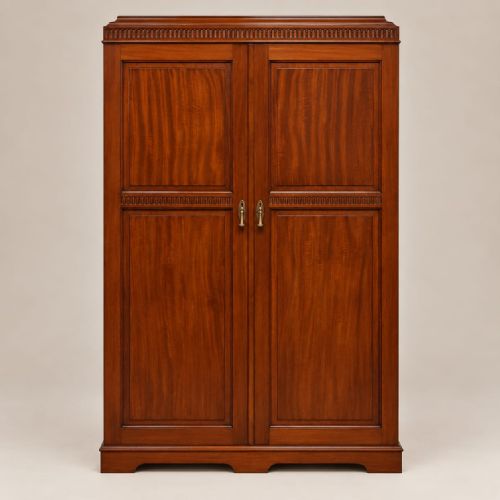
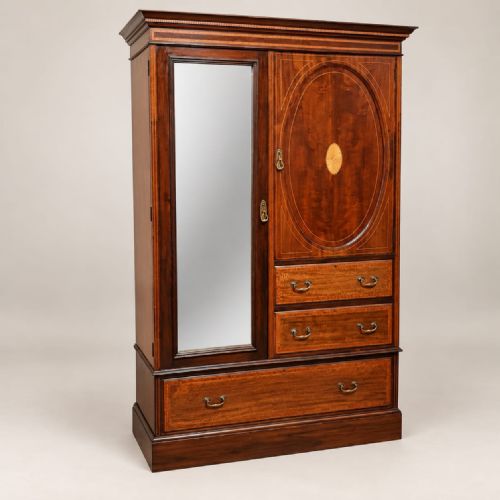
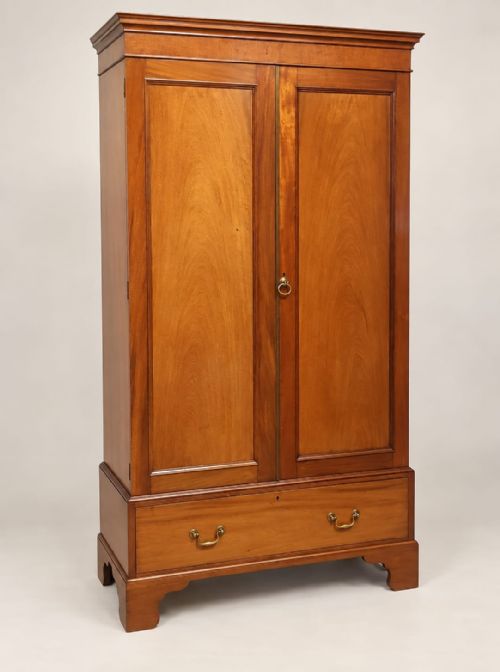
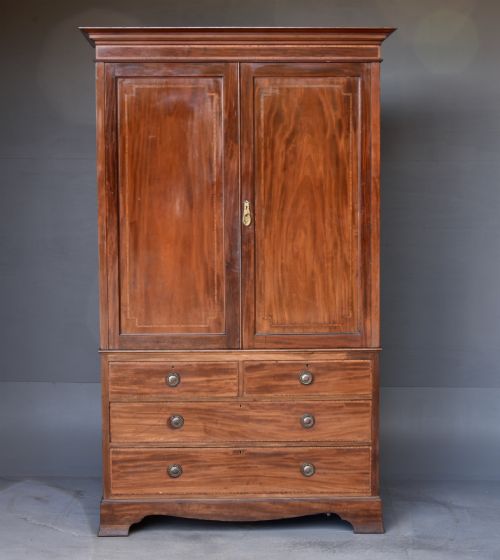
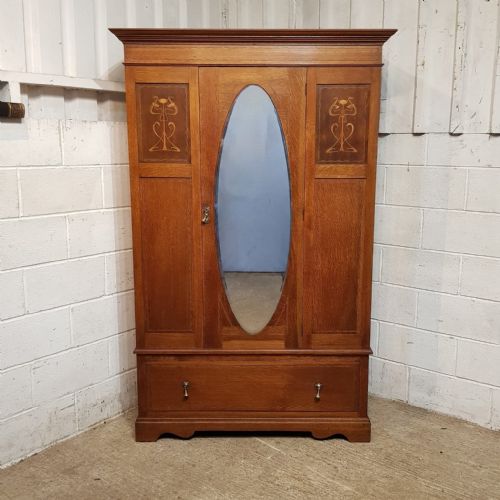
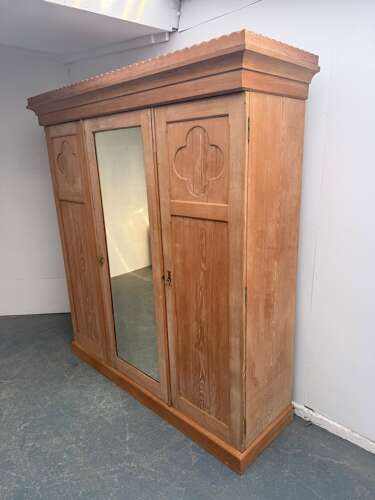
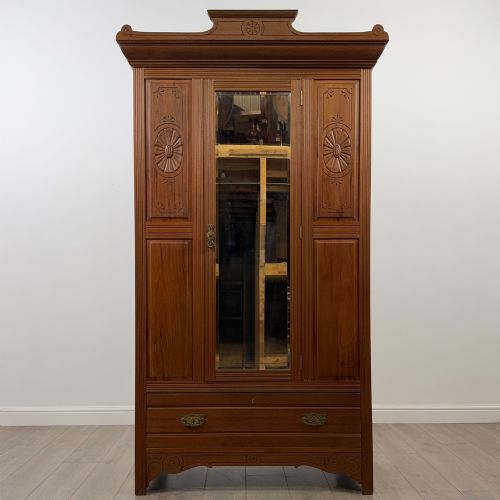
A large freestanding bedroom cupboard of about 1895-1915, usually mahogany, built with one, two or three doors and a mirror in at least one of them, for hanging and storing clothes.

Antique Edwardian Wardrobes
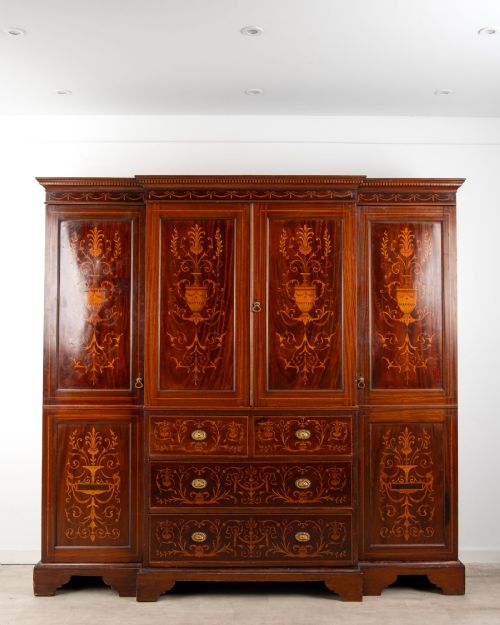
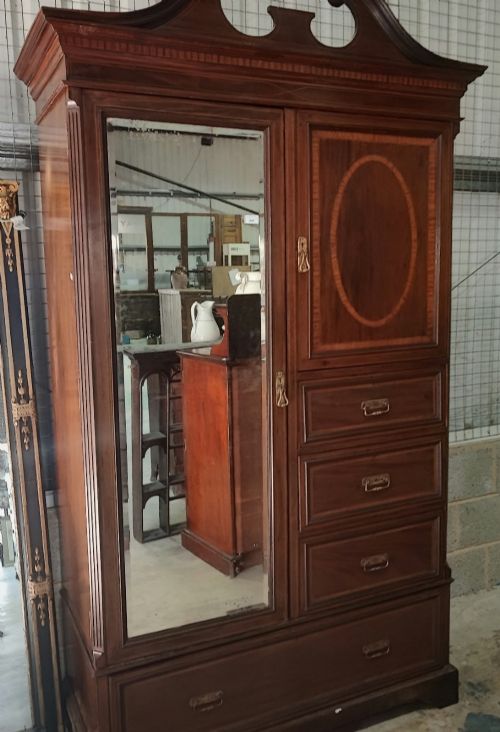
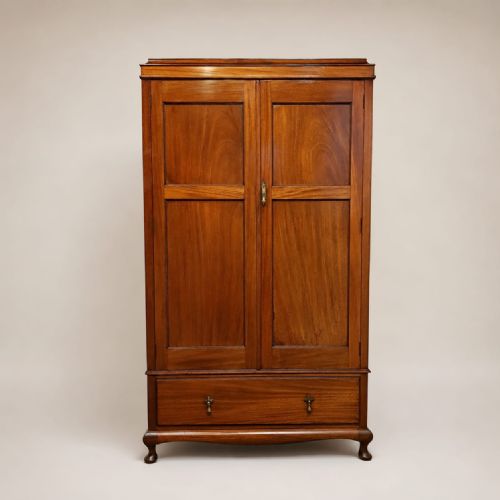
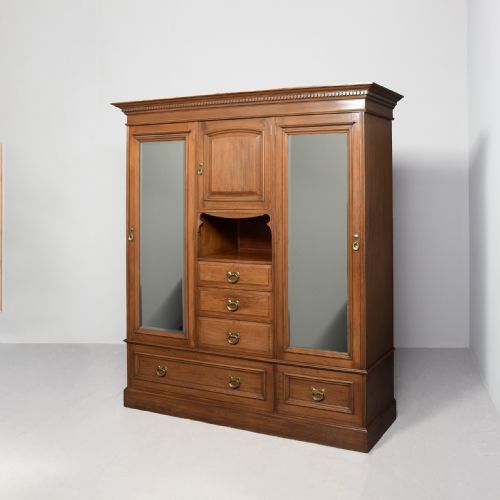
Mahogany dominates. It runs through 344 of 522 titles on Sellingantiques, and the three-door "triple" is the standard size, at 152 titles against 67 doubles and 31 singles. Put those together and the piece you are most likely to meet is a mahogany triple of about 1900, often with line inlay, a mirrored centre door and a cupboard each side.
The freestanding wardrobe took over from the hanging press and the clothes cupboard during the 19th century, and by 1900 it was made in graded sizes for houses of every scale. That grading is still visible in the listings: narrow "sentry box" and hall robes at one end, the standard double in the middle, the three-door breakfront that dismantles into sections at the other.
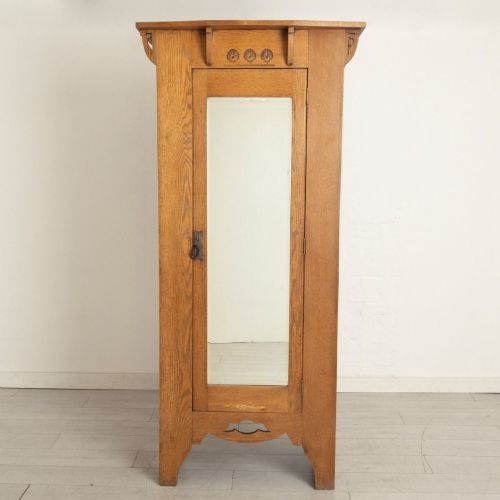
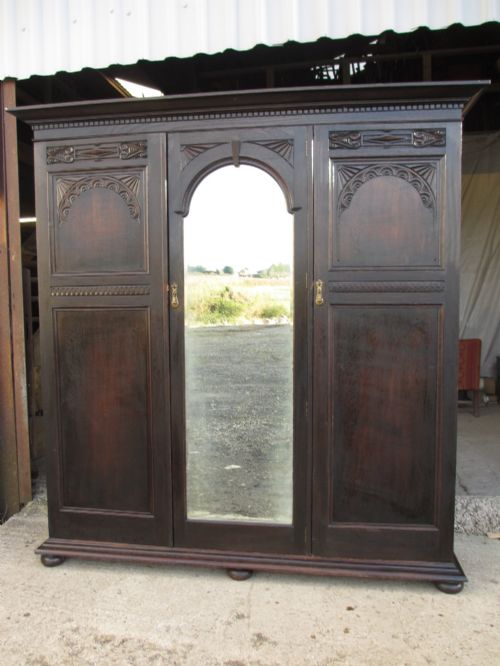
About one in six is a compactum or combination wardrobe, the fitted gentleman's form with sliding trays, drawers and a hanging side in one carcase. Beyond mahogany, oak accounts for 61 titles, including Arts and Crafts pieces and carved hall robes, with walnut, burr walnut, ash, satinwood and painted examples making up smaller groups.
The word "Edwardian" is doing most of the dating work. Only 106 listings carry a clean year, while 376 simply say Edwardian, and the years that are given cluster on 1900 and the 1910s. Read the heading as shorthand for roughly 1895-1915 rather than the strict reign.
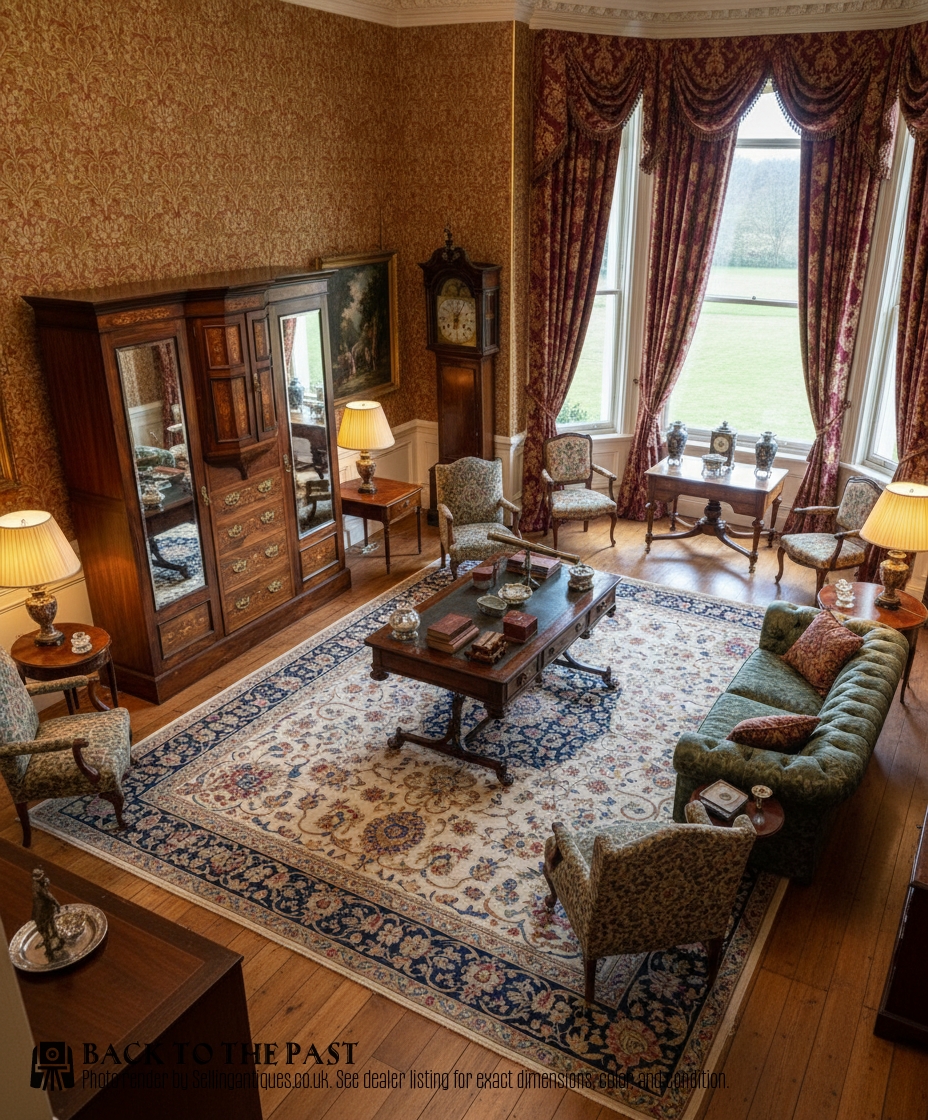
What Separates Them
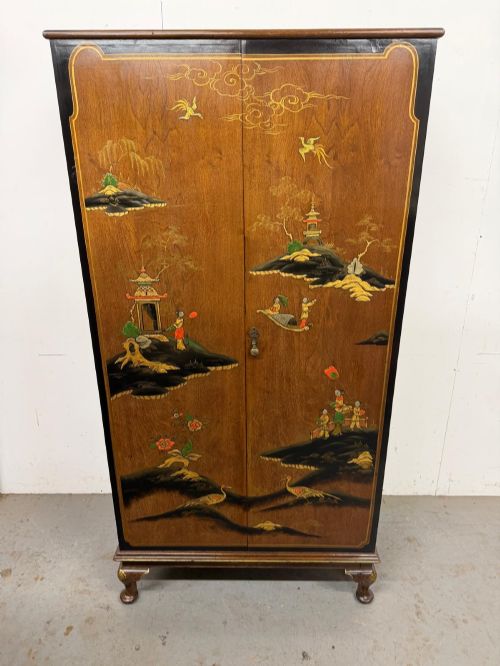
Timber sets the floor and the ceiling. Satinwood, burr walnut and figured or flame mahogany sit in the upper half of the sampled range; plain oak, pine and ash sit at the bottom. Satinwood turns up in only 25 titles, and almost all of them are well up the range, including the chinoiserie and painted-and-gilded examples.
Decoration then sorts the mahogany. Line inlay, in 151 titles, lifts a wardrobe above a plain carcase, and marquetry or hand-painted panels lift it further again. Both of those last two are counted in single figures across the whole category, and both cluster at the top.
Shape and fitting do the rest. Breakfront and serpentine fronts sit noticeably higher than bow fronts, and bow fronts above flat. A fitted compactum or combination interior, with trays and drawers instead of open hanging space, carries more weight than a plain one, and a labelled London or Lancaster retailer pushes upward again.
Antique Edwardian Wardrobes Retail Price Guide 2026
Typical UK retail prices for edwardian wardrobes, calculated from the Sellingantiques database of over a million retail prices indexed since 2003. This retail price guide relies exclusively on Sellingantiques data; no external sources or auction records are used, so the figures do not describe the wider market.
Maple & Co is the name that turns up from the most dealers on Sellingantiques in this category, listed by eight of them.
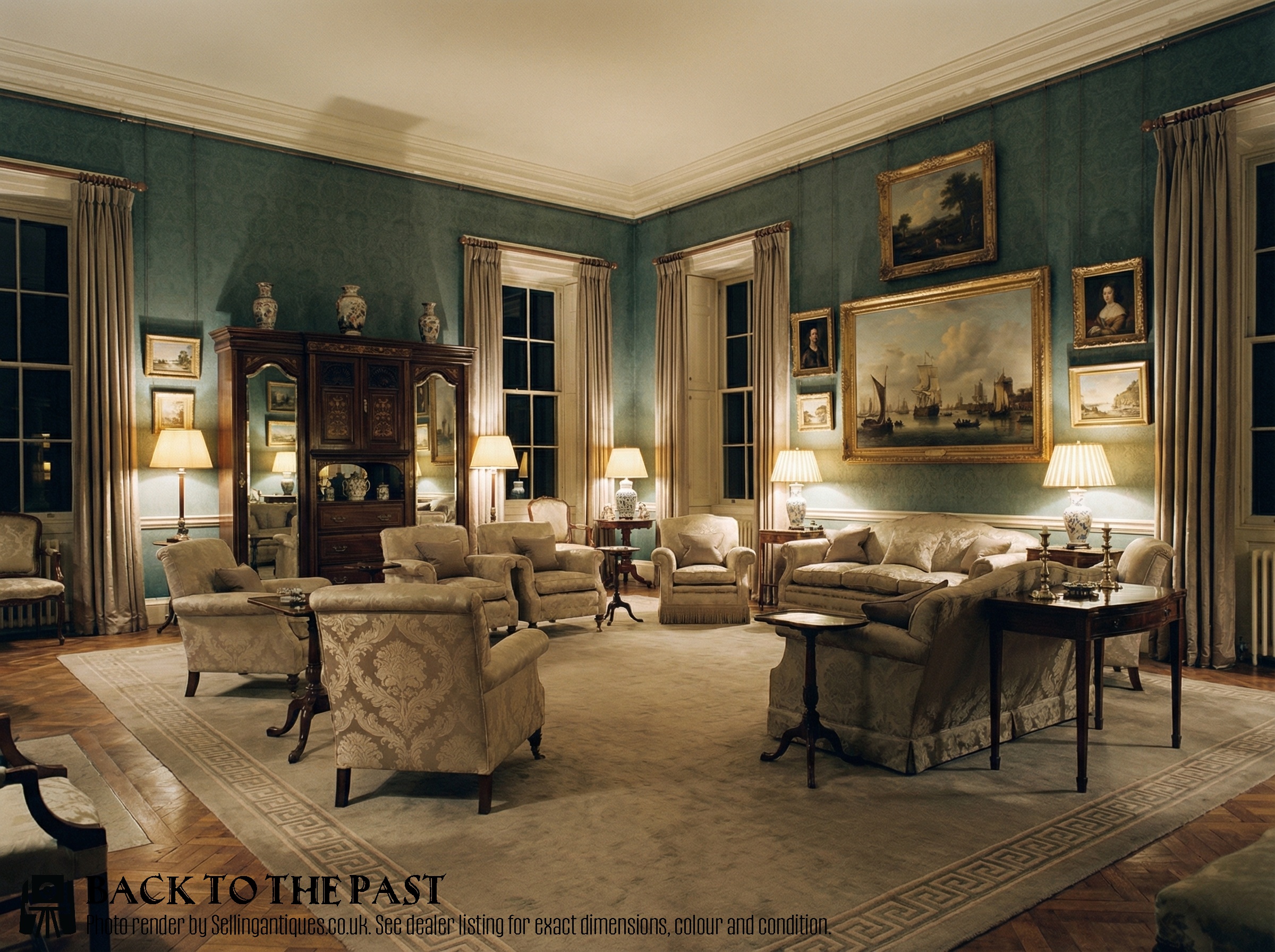
Maple & Co
The Antique Edwardian Wardrobes Glossary
- Triple
- Three-door wardrobe, usually a mirrored centre with a cupboard each side. The commonest size in this category.
- Compactum
- A wardrobe fitted inside with sliding trays, drawers and a hanging section rather than plain hanging space.
- Combination wardrobe
- One with a chest of drawers or a press built into part of the carcase.
- Bow front
- A curved-forward front. It appears as bow, bowed or bow-fronted in 36 titles.
- Breakfront
- Centre section standing proud of the sections flanking it. Serpentine, by contrast, is a shallow S-curve across the front.
- Knockdown
- Made to come apart into sections for moving. One breakfront is advertised as breaking down into six.
Antique Edwardian Wardrobes: Frequently Asked Questions
What wood are they usually made from?
Mahogany, and by a wide margin. It appears in 344 of 522 titles, which makes this one of the most single-minded timbers in any furniture category on Sellingantiques.
Oak comes next at 61 titles, taking in Arts and Crafts pieces and carved hall robes. Walnut, burr walnut, ash, satinwood and painted examples fill out the rest in smaller numbers.
How many doors do they normally have?
Three is the standard. The word "triple" appears in 152 titles, outnumbering doubles more than two to one, and a mahogany triple is the single commonest thing in the category.
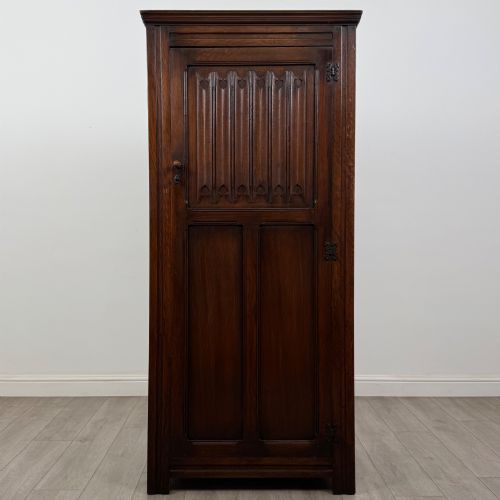
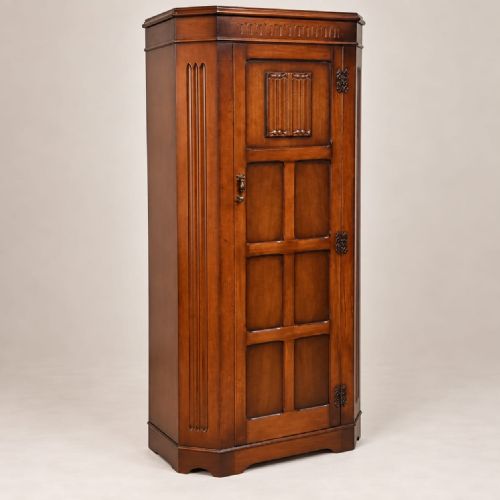
Doubles account for 67 titles and singles 31. The singles include tall narrow hall robes and the form some dealers call a sentry box.
What does compactum mean on a wardrobe?
It's a wardrobe fitted internally with sliding trays, drawers and a hanging compartment, developed to hold a whole gentleman's outfit in one carcase.
The word turns up in 57 titles, with a further 29 described as combination wardrobes, where a chest of drawers or a press is built into part of the carcase. Together they're about one in six of everything here.
Are these actually from the Edwardian reign?
Not strictly. The dated field is dominated by the bare word "Edwardian", used in 376 listings, with only 106 carrying an actual year.
Where years appear they gather on 1900 and the 1910s, thinning out into the 1890s, 1880s and 1920s. Treat the heading as roughly 1895-1915.
Can a large wardrobe be moved through a house?
Many were built with that in mind. Several pine and Arts and Crafts examples are described as knockdown, and one breakfront is advertised as breaking down into six sections.
The three-door breakfront in particular was made to come apart into sections rather than travel whole.
Which ones sit at the top of the range?
Satinwood does, almost without exception. Only 25 titles mention it, and nearly all of them are in the upper reaches, including painted and chinoiserie pieces.
Marquetry and hand-painted decoration behave the same way, each appearing in fewer than a dozen titles and clustering high. Breakfront and serpentine shaping, fitted interiors and a labelled retailer all push in the same direction.