


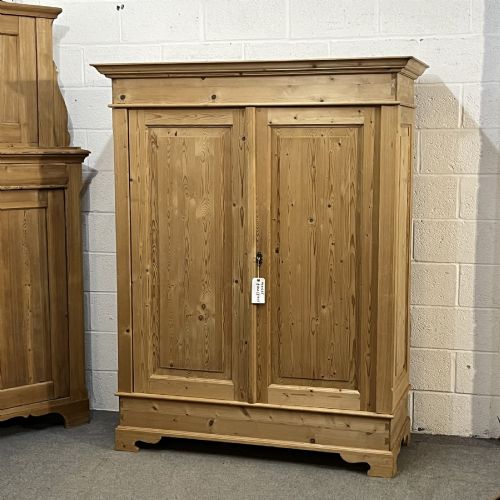
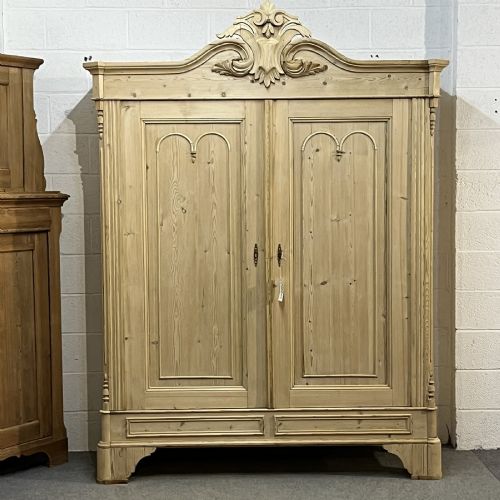
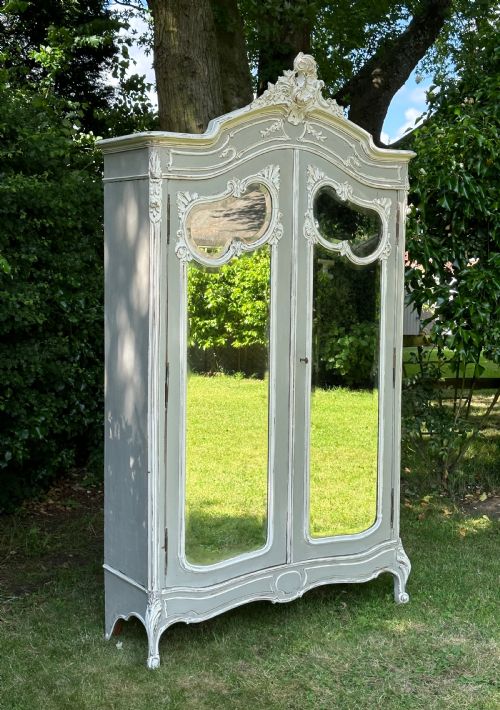
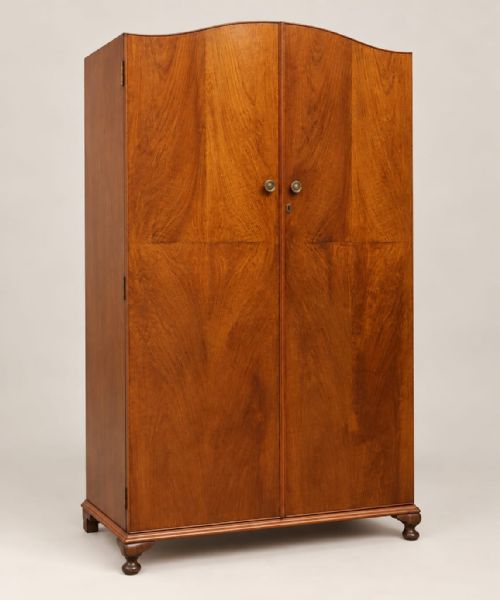
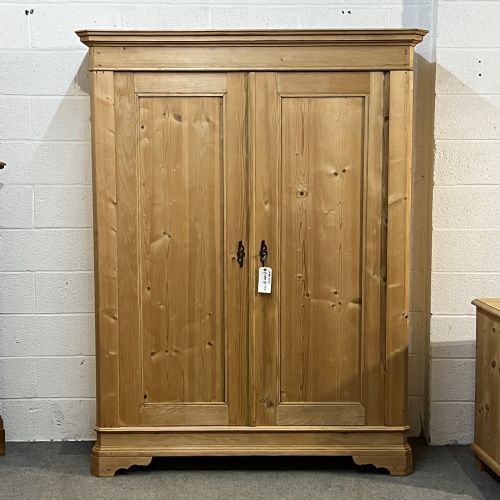
Antique Double Wardrobes
A two-door hanging wardrobe, roughly five to seven feet wide, made in Britain and on the Continent from the Georgian period to the 1930s as the standard place to keep clothes in a bedroom.
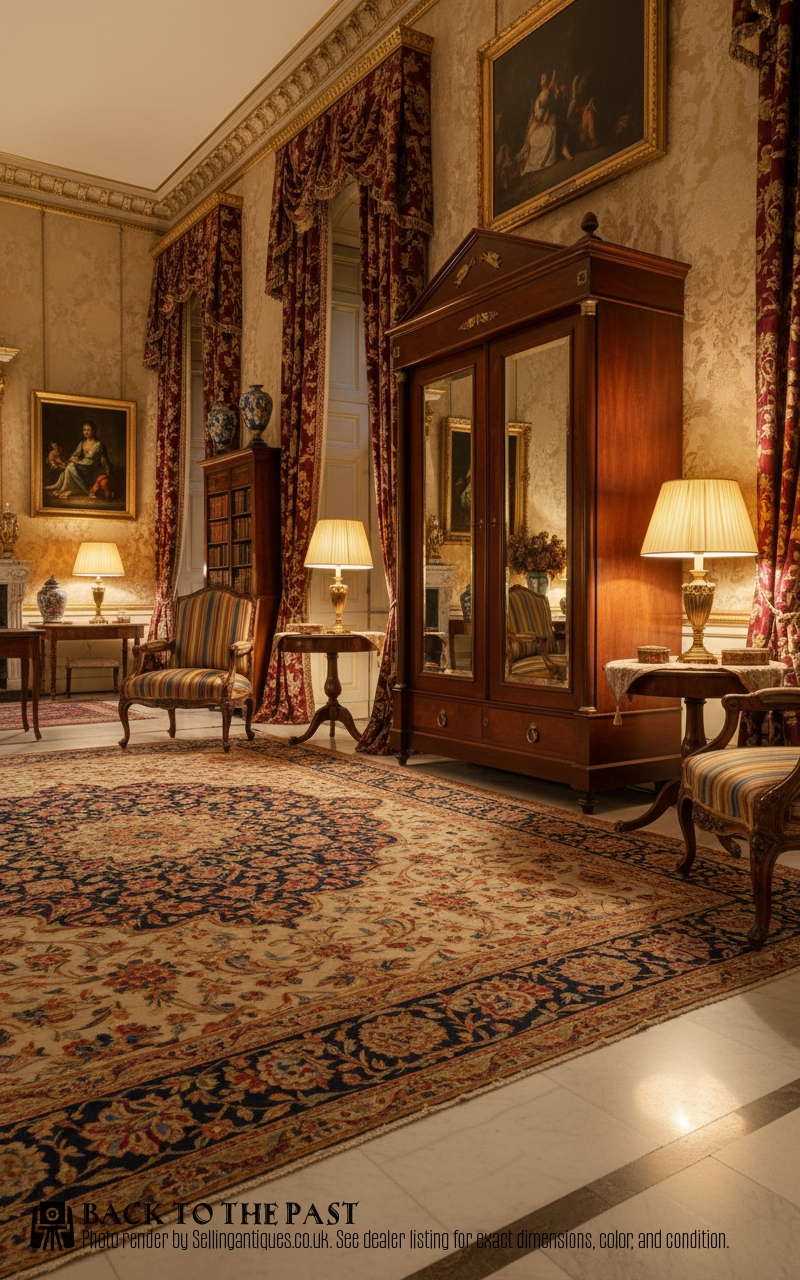
Antique Double Wardrobes
The free-standing wardrobe took over from the chest and coffer from the eighteenth century onward, and the two-door version became the ordinary bedroom fitting of British houses through the nineteenth. Bedroom suites and the spread of rented and suburban housing kept it in production into the 1930s.
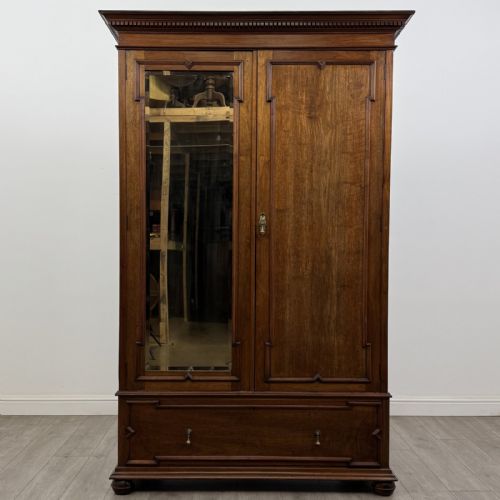
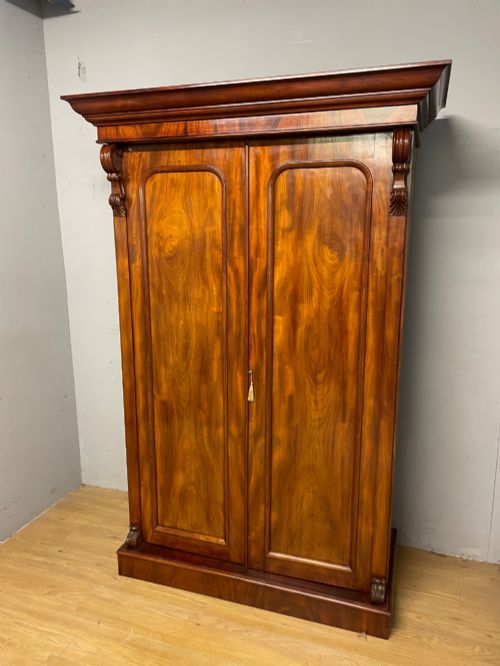
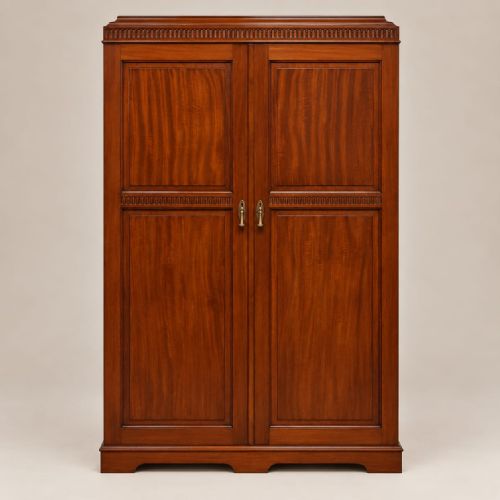
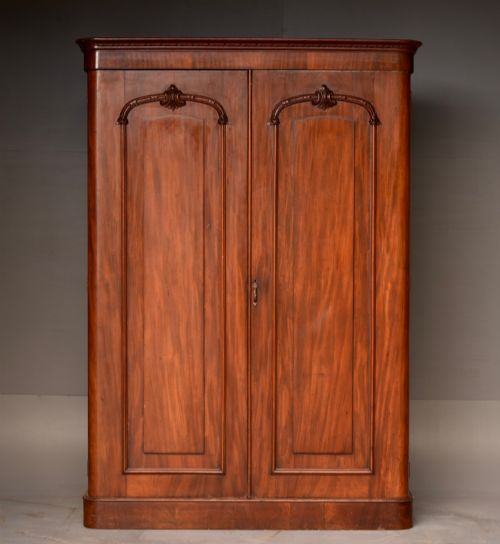
Four timbers carry the archive. Mahogany leads at a third of titles, pine follows at about a quarter, then walnut and oak. The wardrobe you are most likely to meet on Sellingantiques is a plain two-door mahogany one of Victorian or Edwardian date, described with nothing more than period, timber and a circa year.
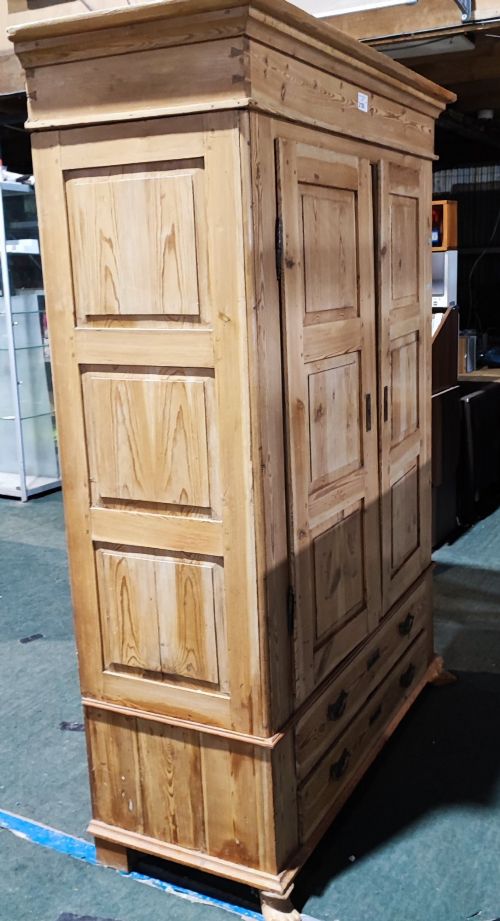
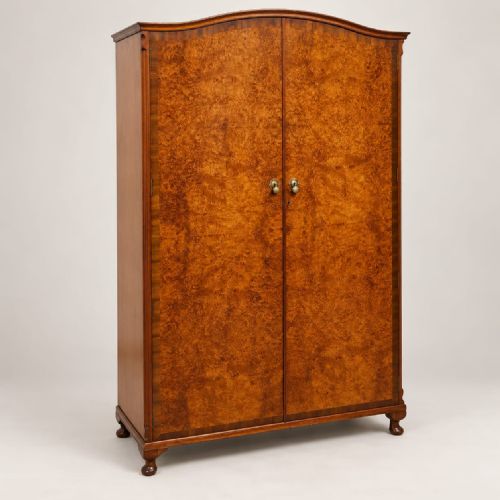
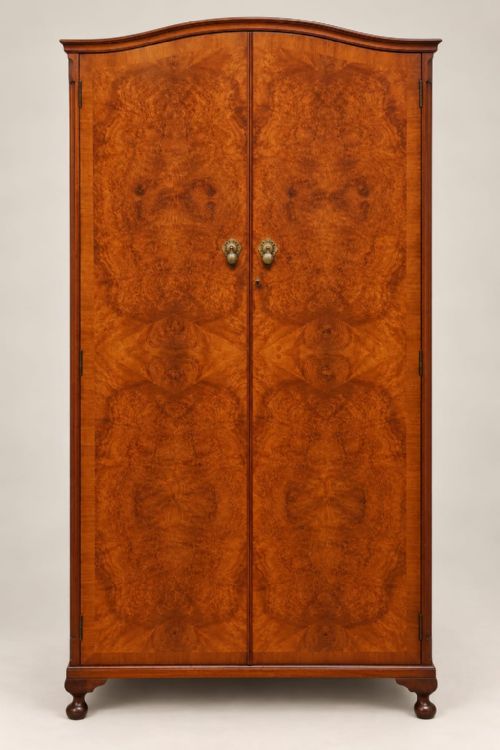
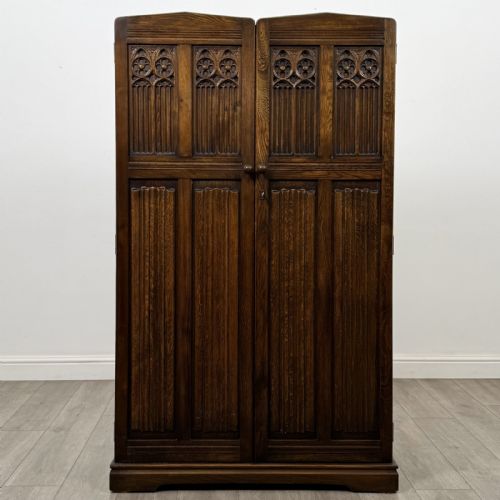
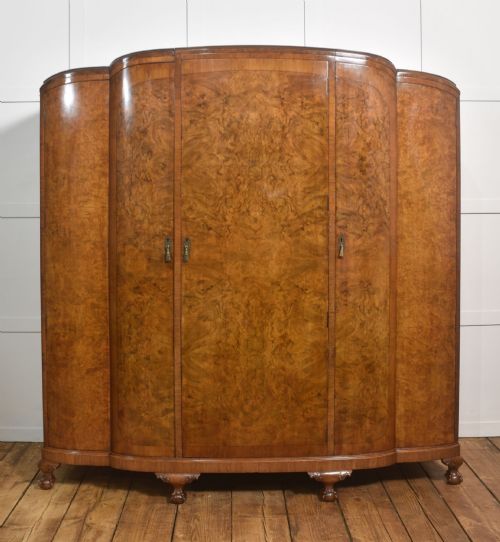
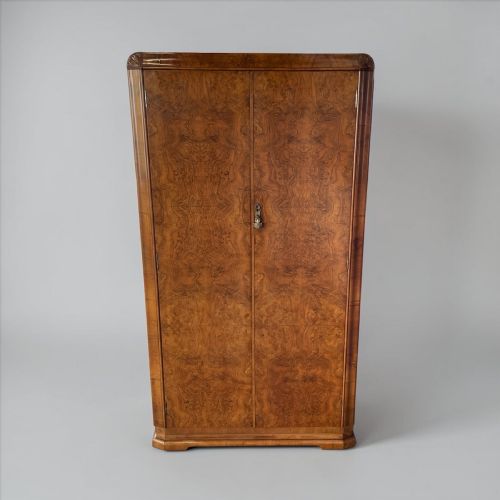
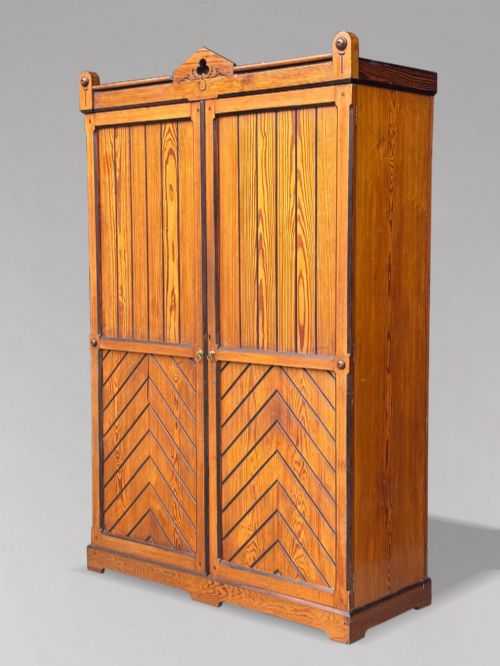
Around that centre sit four other groups. Stripped, waxed or painted pine, often built to come apart. Burr and figured walnut of the 1920s and 30s, with dome tops, cloud fronts and bow fronts. Oak, some of it carved with linenfold or in the Arts and Crafts manner. French and Continental armoires, the smallest group, with Alsace, Burgundy, Flanders, Denmark and the Channel Islands each turning up once.
Dating needs a light touch. The dated field runs 1840 to 1930, and while about half the listings carry a clean year, the rest sit in buckets. Victorian, 19th Century, Georgian and Edwardian are dealer shorthand covering decades, and a title's circa year does not always agree with the field. The 1920s is the single busiest decade, so the archive leans later than the word antique suggests.
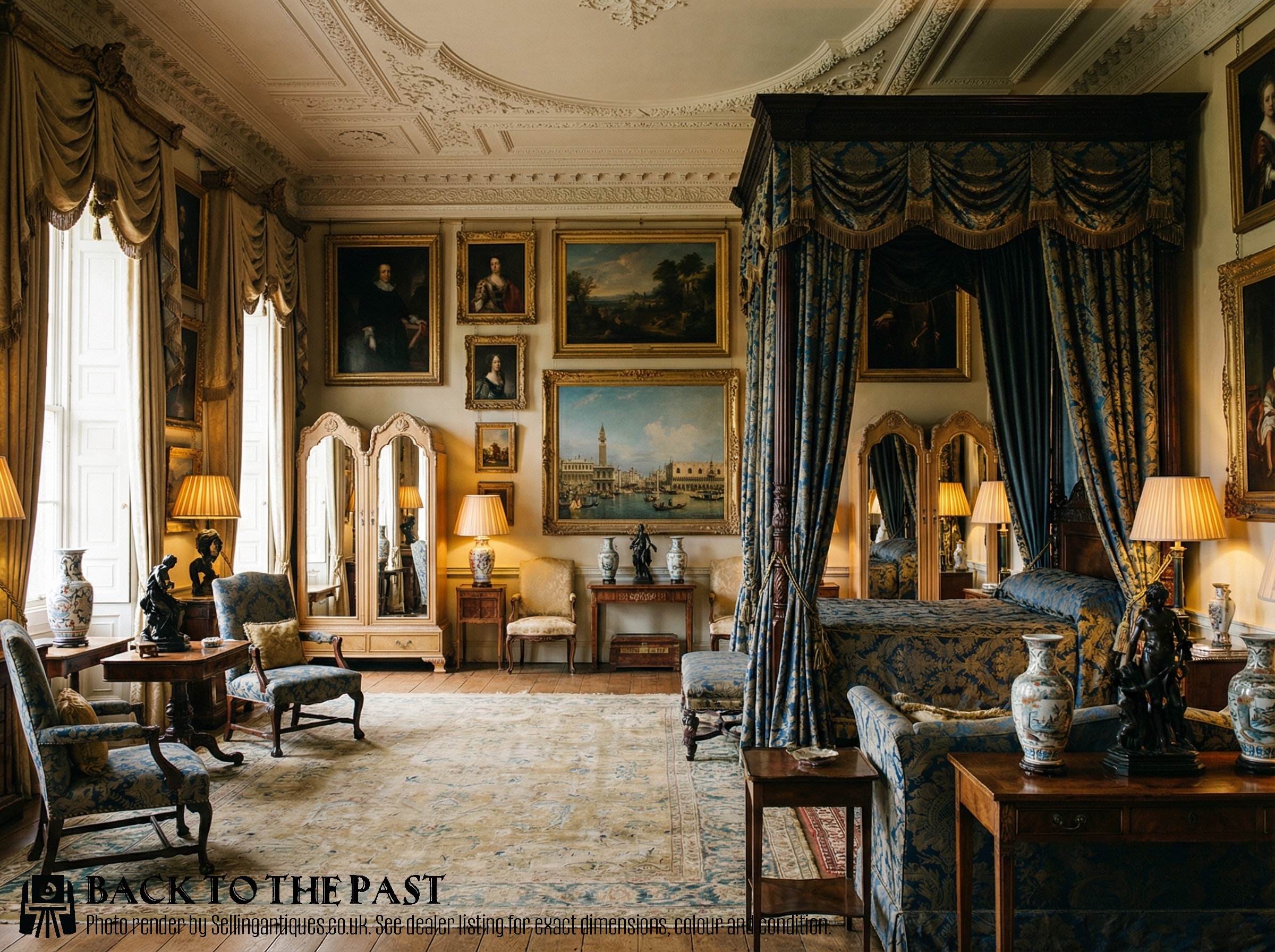
Where The Range Splits
Figure in the veneer is the clearest divider. The titles at the top of the range are the ones that bother to name it: heavily figured walnut, highly figured walnut, rich figured mahogany, blonde tiger grain birch. Burr walnut runs through sixty-odd titles and sits well above the plainest listings, which give you period and timber and nothing else.
Then what happens inside. A plain hanging space is the baseline; shelves, trays, slides and drawers lift a wardrobe into the dearer half. Compactum and fitted turn up in the upper part of the sample, as do gents' compactums and combination wardrobes, and drawers set into the plinth below the hanging space.
Shape, carving and a named origin do the rest. Bow and serpentine fronts, carved oak and linenfold panels cluster above the flat-fronted majority. Scale cuts both ways: large and small are near-equally common as descriptions, but the grand-proportioned carved oak and rosewood armoires sit at the very top, and small pine and small oak at the bottom. Titles naming a region, a house or a firm are concentrated in the highest-priced part of the archive.
Antique Double Wardrobes Retail Price Guide 2026
Typical UK retail prices for double wardrobes, calculated from the Sellingantiques database of over a million retail prices indexed since 2003. This retail price guide relies exclusively on Sellingantiques data; no external sources or auction records are used, so the figures do not describe the wider market.
Pine and mahogany cover well over half the titles on Sellingantiques. Satin birch, pollard oak, birds eye maple and satinwood turn up once or twice.
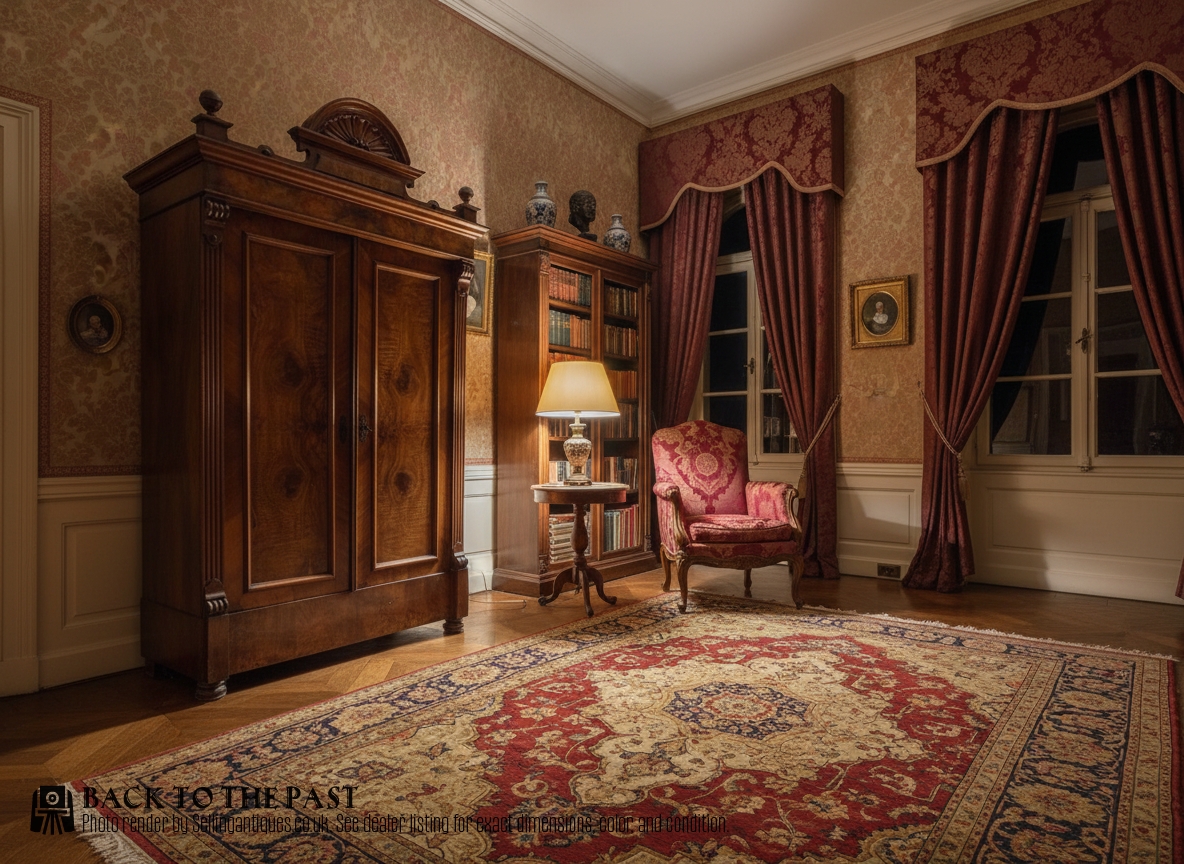
The Antique Double Wardrobes Glossary
- Double
- Two hanging doors, the width that defines this category, as against a single or a triple wardrobe.
- Dismantles, knockdown, flat pack
- Built to come apart into cornice, sides, back and base for carriage upstairs. Fifty-nine titles say dismantles and thirteen more say knockdown or flat pack.
- Compactum
- A wardrobe with a fitted interior of shelves, drawers and slides alongside the hanging space. Nine titles use the word.
- Bottom drawer
- One or two drawers in the plinth under the hanging space, mentioned in eleven titles.
- Bow front
- Doors and cornice curved outward in plan. A serpentine front is shaped in an S-curve instead, and recurs on mahogany of around 1900 to 1920.
- Burr walnut
- Veneer cut from the knotty burr of the tree, giving a swirled figure. Sixty-one titles, most of them in the Art Deco group, often with a dome top.
- Linenfold
- A carved panel imitating folded cloth, found on the carved-oak wardrobes.
Antique Double Wardrobes: Frequently Asked Questions
How many come up for sale each year?
Around fifty reach the market on Sellingantiques in a year, listed by sixty-six different dealers over the life of the archive.
No single stockholder defines the category, so the mix of timbers and periods on offer shifts with whoever is listing.
Why do so many say they dismantle?
These are large bedroom pieces, and a great many were built to come apart into cornice, sides, back and base so they could be carried up a staircase. Fifty-nine titles advertise that the wardrobe dismantles.
Another thirteen use the words knockdown or flat pack for the same thing. It is a selling point almost unique to big bedroom furniture.
Which timber is most common?
Mahogany, at a third of all titles. Pine comes next at roughly a quarter, then walnut and then oak.
Between them those four cover the great bulk of the archive. The unusual timbers appear once or twice each: satin birch, pollard oak, birds eye maple, satinwood, rosewood, sycamore, fruitwood.
Are French armoires often listed?
They are the smallest group. Fewer than one title in twenty says French, and armoire appears in twenty-three.
Single listings name Alsace, Burgundy, Flanders, Denmark and the Channel Islands. The largest of them, in carved oak and rosewood, are described as being of grand proportions and sit at the top of the range.
Do these ever sell as matching pairs?
Once in a blue moon. A handful of titles offer two wardrobes together, in burr walnut, in carved oak and in knockdown pine.
One burr walnut wardrobe came with its matching dressing table and carried the name of the country house it came from.
What does compactum mean on a listing?
It describes a fitted interior: shelves, drawers and slides as well as hanging space, rather than an open void with a rail.
Nine titles use it, and fitted appears in thirteen more. Both cluster in the dearer half of the archive, along with gents' compactums and combination wardrobes.