



Antique Georgian Wardrobes
A large freestanding clothes cupboard of Georgian type or Georgian style, made to hold hanging clothes or folded linen once bedroom storage moved out of chests and coffers.

Antique Georgian Wardrobes
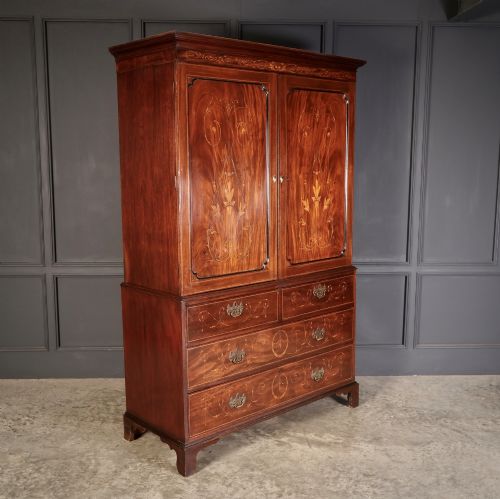
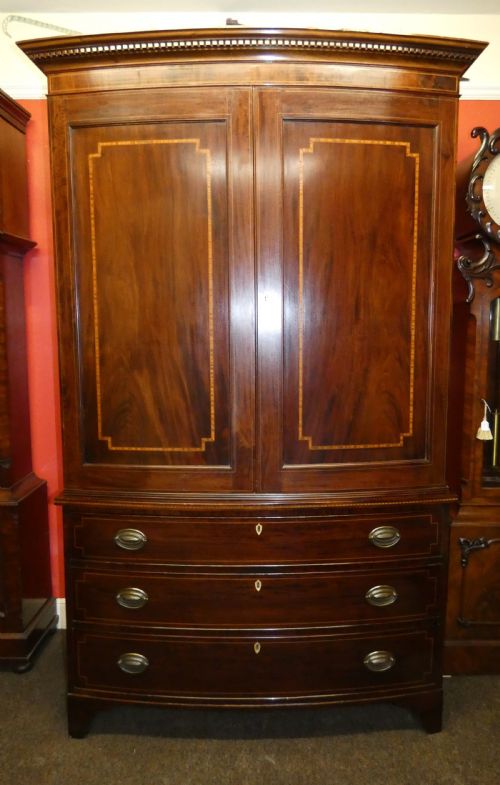
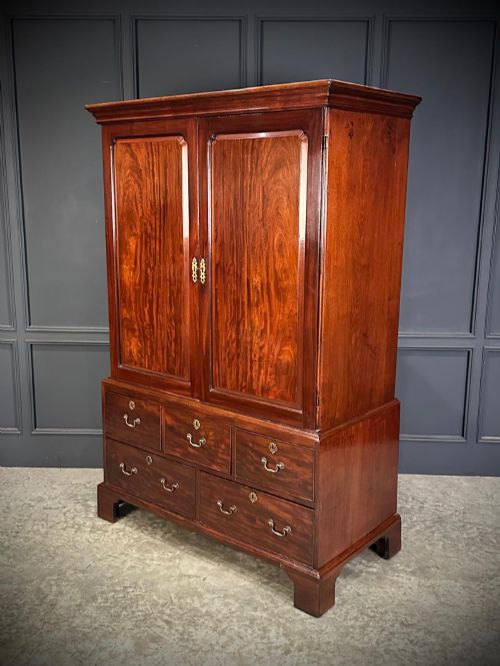
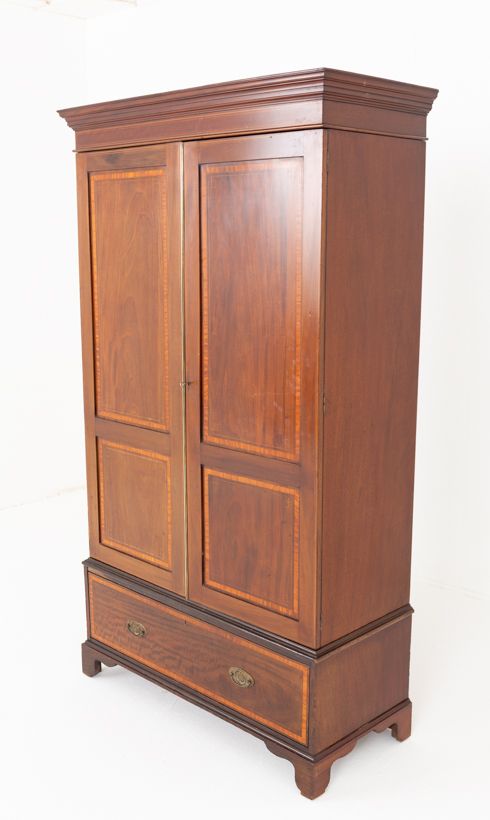
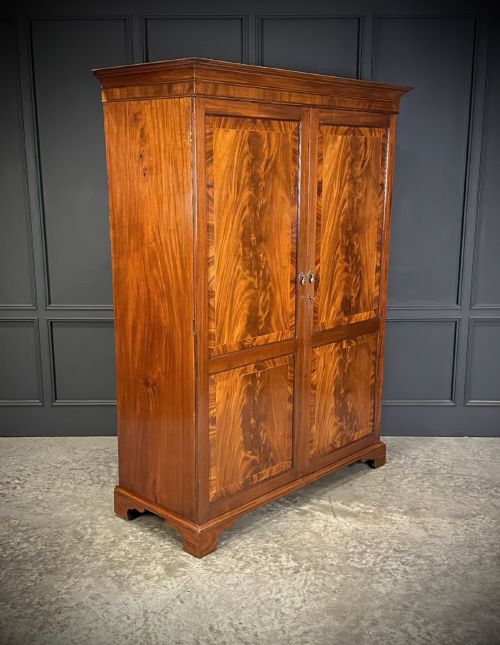
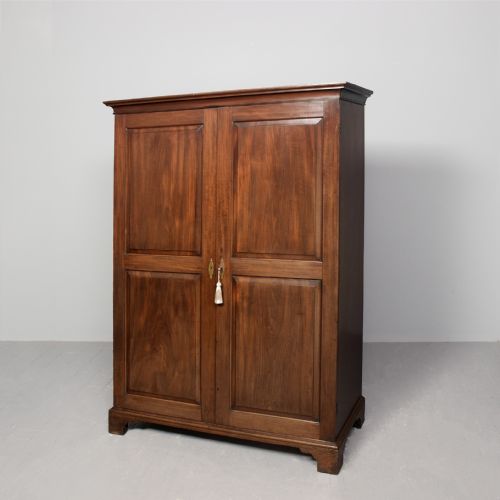
Mahogany is close to definitional. It appears in 84 of 120 titles, with pine a distant second, a handful of oak and a single rosewood case. The form you are most likely to meet is a two-door panelled mahogany case, sometimes called a double wardrobe, and it makes up the largest single group.
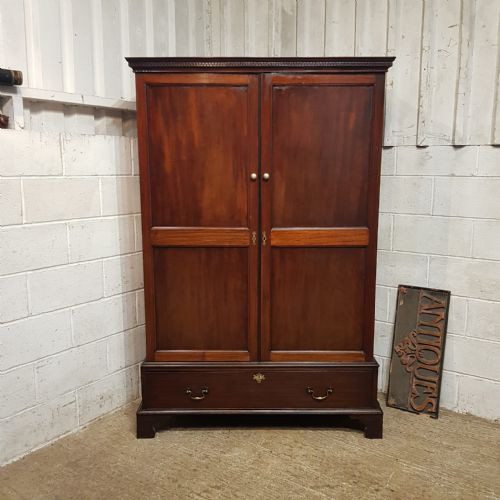
A large slice of what sells under the heading is the linen press or clothes press: two panelled doors over a base of drawers, the upper stage fitted with sliding trays for folded linen rather than a hanging rail. Press appears in 32 titles, linen press in 27, and many are written as "Linen Press / Wardrobe", so the same object arrives under two words.
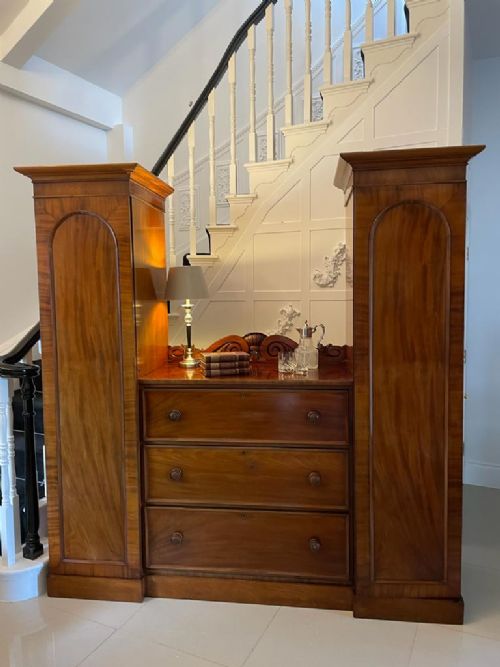
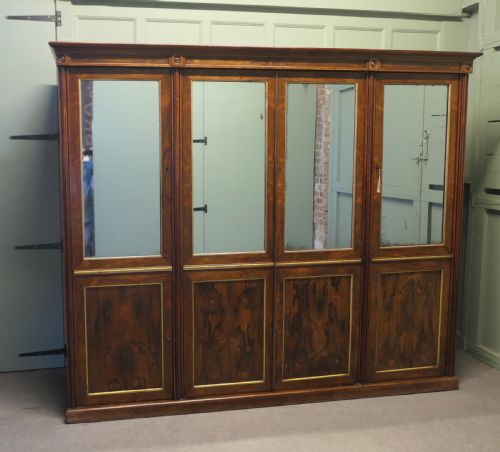
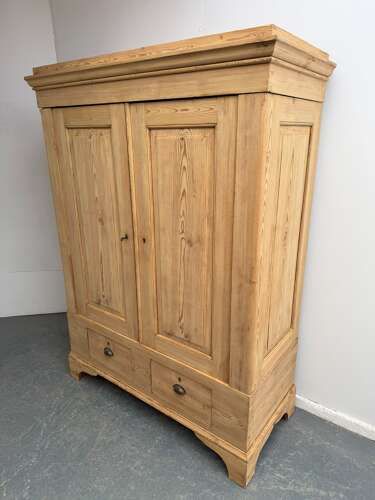
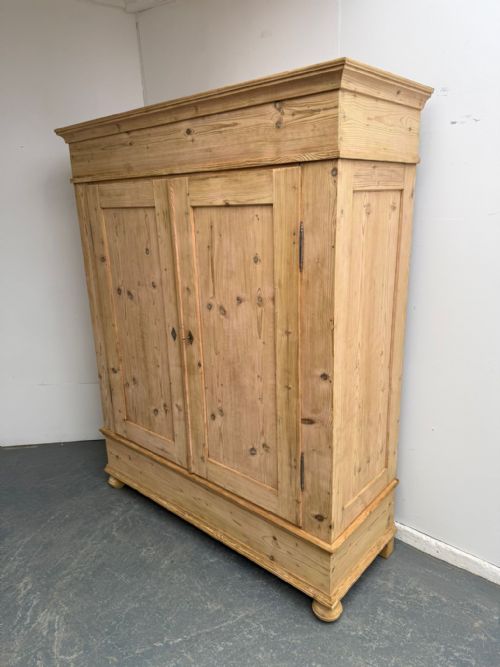
Above the plain cases sit the wide arrangements. Breakfront fronts turn up in 14 titles, often paired with compactum in the same line, and four-door examples run alongside them. At the other end is a distinct group of stripped pine knockdown wardrobes sold to wax or paint, which take apart into cornice, sides and doors for moving.
The date field is more style label than date. Sixty-nine listings simply say Georgian, only 12 across the archive carry a clean year, and those years run from 1800 to 1920. Titles reading Georgian Style, Georgian Revival or Edwardian sit inside that same label, so the word often describes the manner rather than the making.
Where The Range Splits
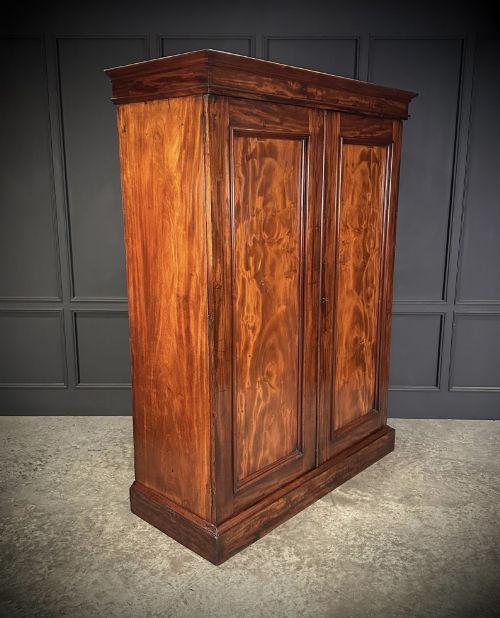
Timber and figure do most of the work. Flame mahogany, curl and figured mahogany, and satinwood or rosewood crossbanding cluster in the upper half of the sampled range, and the one rosewood wardrobe sits at the very top. Plain flat-panelled mahogany fills the lower half.
Geometry and scale come next. Breakfront, serpentine and bow-fronted cases appear repeatedly above the middle, as do four-door and three-door examples and anything described as large. Two-door and "neat sized" cases sit low. Interior fitting pushes the same way: compactum divisions and secretaire drawers show up only towards the top, the fitted secretaire linen press among the highest-priced.
Finish state and date pull downward. Stripped pine cases advertised to wax or paint form their own band well below the figured mahogany, and titles reading Georgian Style, Georgian Revival or revival of any kind fall mainly in the lower and middle range, while George III and Regency pieces reach the top.
Antique Georgian Wardrobes Retail Price Guide 2026
Typical UK retail prices for georgian wardrobes, calculated from the Sellingantiques database of over a million retail prices indexed since 2003. This retail price guide relies exclusively on Sellingantiques data; no external sources or auction records are used, so the figures do not describe the wider market.
The top sale of the last year on Sellingantiques was a large Georgian mahogany breakfront wardrobe, in March 2026.

The Antique Georgian Wardrobes Glossary
- Linen press
- Two panelled doors over a base of drawers, the upper stage fitted for folded linen rather than hanging. Also written clothes press, and often sold as a wardrobe.
- Breakfront
- A centre section projecting forward of the flanking sections, so the front is stepped rather than flat.
- Compactum
- A wardrobe divided inside into hanging, shelved and drawered compartments.
- Knockdown
- A case built to come apart into flat sections for moving, with cornice, sides and doors separating. Common on the pine group.
- Flame mahogany
- Mahogany cut to show a plume or flame figure, usually on the door panels. It recurs on the Channel Islands wardrobe, a regional form named five times in the samples.
- Swan-neck pediment
- A broken curved cresting over the cornice, the two scrolls facing inward. One satinwood-banded press in the archive carries one.
Antique Georgian Wardrobes: Frequently Asked Questions
Is a linen press the same as a wardrobe?
Not quite, though the heading treats them together. The press has two doors over a base of drawers, with the upper stage fitted for folded linen on trays rather than a hanging rail.
The names blur in practice. Twenty-seven titles use "linen press", and many write it as "Linen Press / Wardrobe", so one object is being sold under two words.
What wood are these usually made from?
Mahogany, and by a wide margin: it appears in 84 of 120 titles. Flame, curl and figured cuts show on the door panels of the better cases, sometimes with satinwood or rosewood crossbanding.
Pine is the second timber, at a distance, mostly the stripped knockdown wardrobes. Beyond that there are a few oak cases and one in rosewood.
Does Georgian in the title mean the piece is Georgian?
Often it means the style. Sixty-nine listings put Georgian in the date field, but some of those same pieces describe themselves in their titles as Georgian Style, Georgian Revival, Edwardian or 1920.
Only 12 listings across the archive give a clean year, and those run from 1800 to 1920. Circa dates such as c1760 or c1810 appear in titles without the date field repeating them.
Why are pine wardrobes sold to wax or paint?
It is dealer shorthand for a stripped or bare case, left for the buyer to finish. Wax and paint each appear in around a tenth of titles.
These are commonly knockdown cases, built to separate into cornice, sides and doors. They sit in a band well below the figured mahogany pieces, and they are rising as a share of live stock.
How often do these come up for sale?
Around nine a year reach the market on Sellingantiques. Yet 45 different dealers have listed one, so almost nobody carries them as a regular line.
That spread is why the vocabulary varies so much from listing to listing.
What sits at the top of the category?
Rosewood, breakfront and English oak press cupboard examples hold the highest end. Fitted interiors count too: compactum divisions and secretaire drawers appear only in the upper part of the range.
One-off entries include a Chinoiserie compactum, a satinwood-banded press with a swan-neck pediment, and a matched pair of bow-fronted wardrobes. The bottom is plain two-door mahogany and converted cases.