

Antique Triple Wardrobes
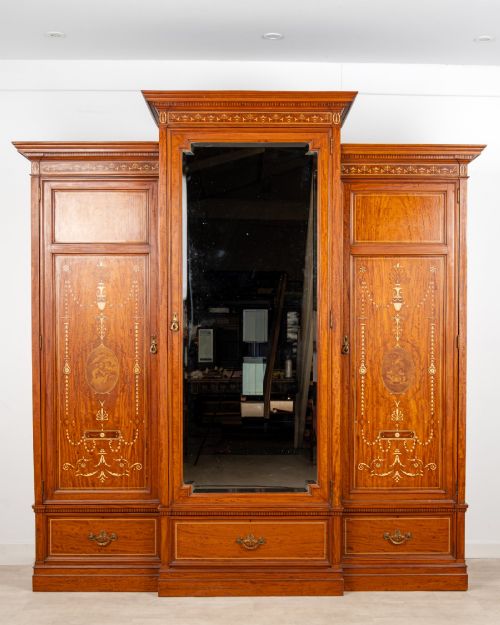
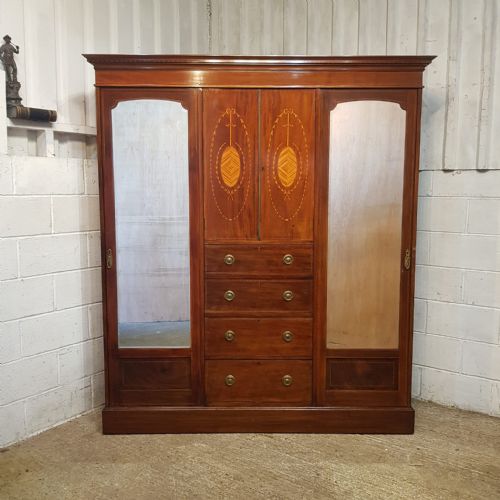
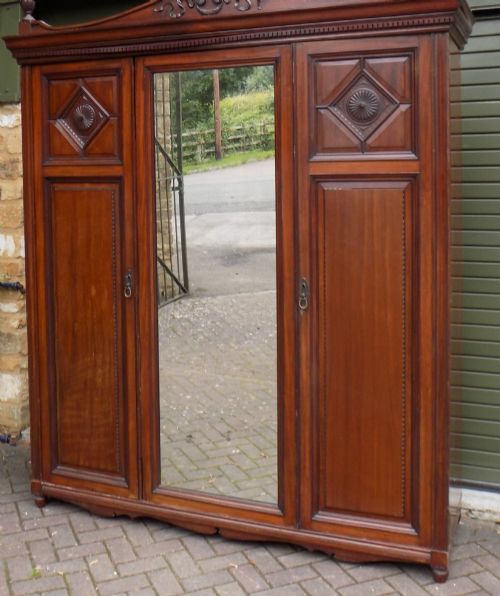
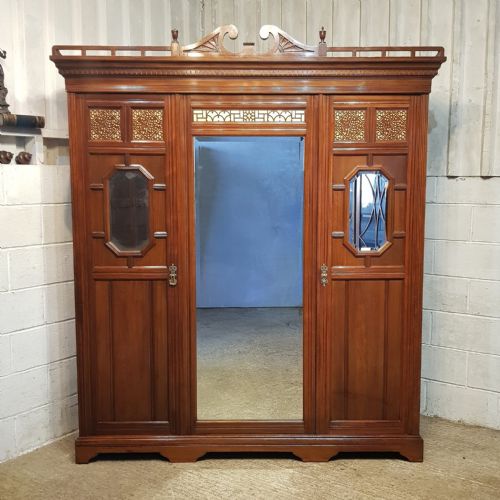
A three-door bedroom cupboard, usually with a mirrored centre door, built to give full-length hanging on one side and drawers, trays or shelves on the other.
Antique Triple Wardrobes
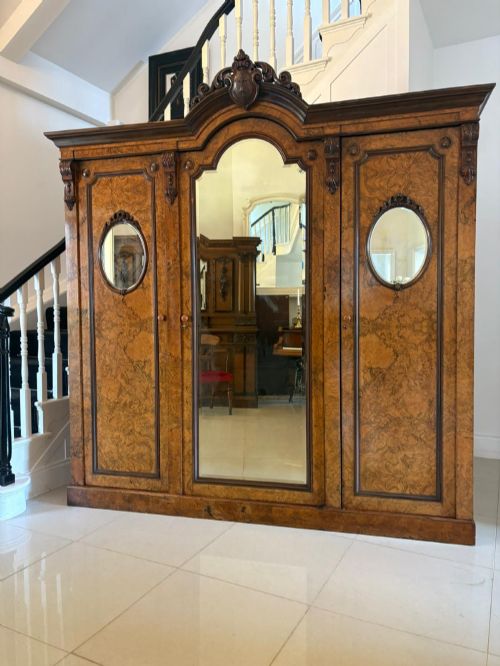
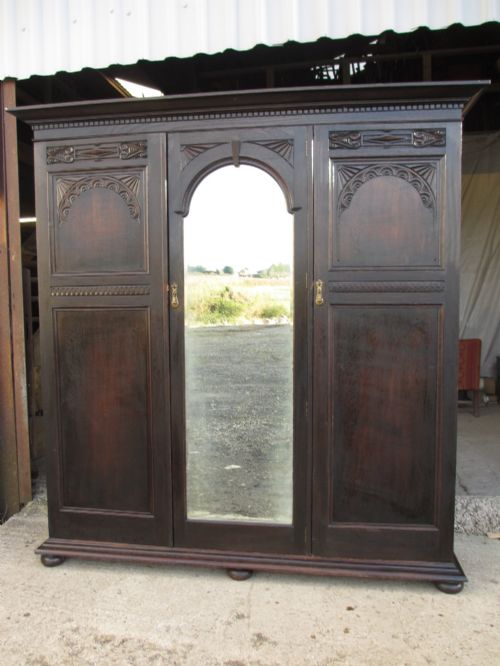
The form arrived in the nineteenth century as bedroom furniture for larger houses, taking over from the clothes press. Three doors across a wide case, the centre one commonly mirrored, with hanging space one side and a fitted section the other. It became a fixture of the Victorian and Edwardian bedroom suite and carried on into the interwar years.
Mahogany dominates. It is named in 266 of 590 titles on Sellingantiques, against 129 for walnut, 59 for oak and 34 for pine. The piece you are most likely to meet is a mahogany wardrobe of roughly 1880 to 1910, plainly titled, sometimes with inlay, and dated c1900 in 118 titles alone. Victorian appears as a period label 199 times and Edwardian 142.
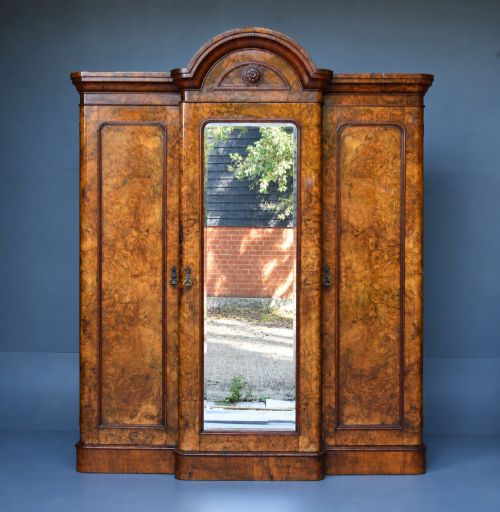
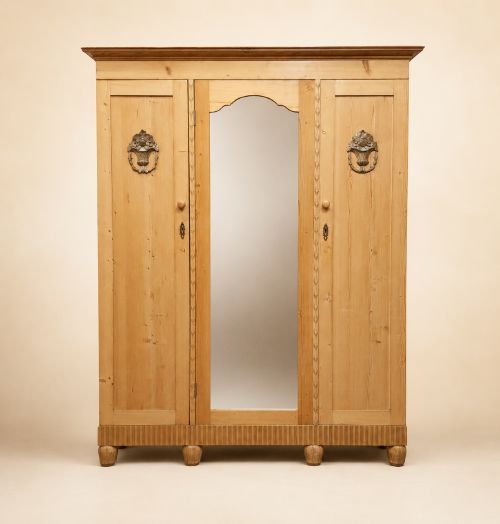
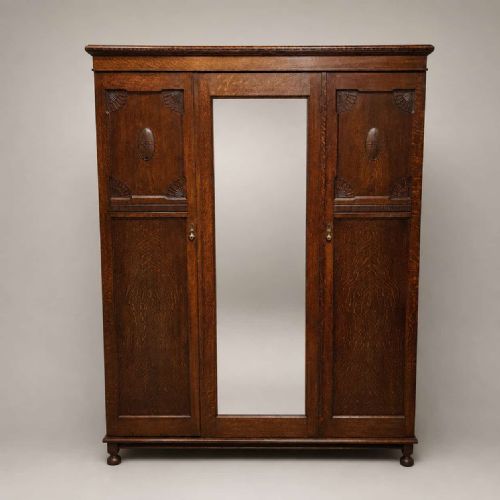
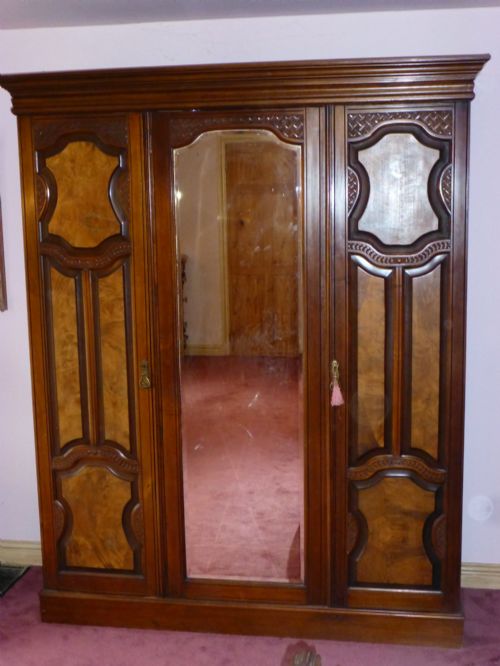
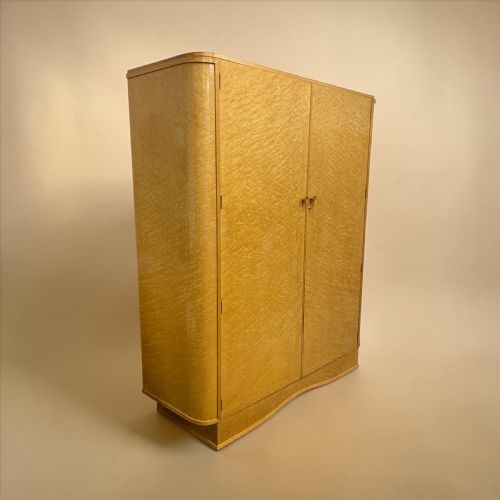
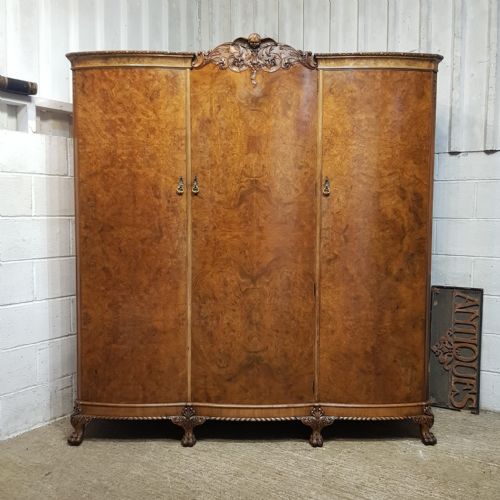
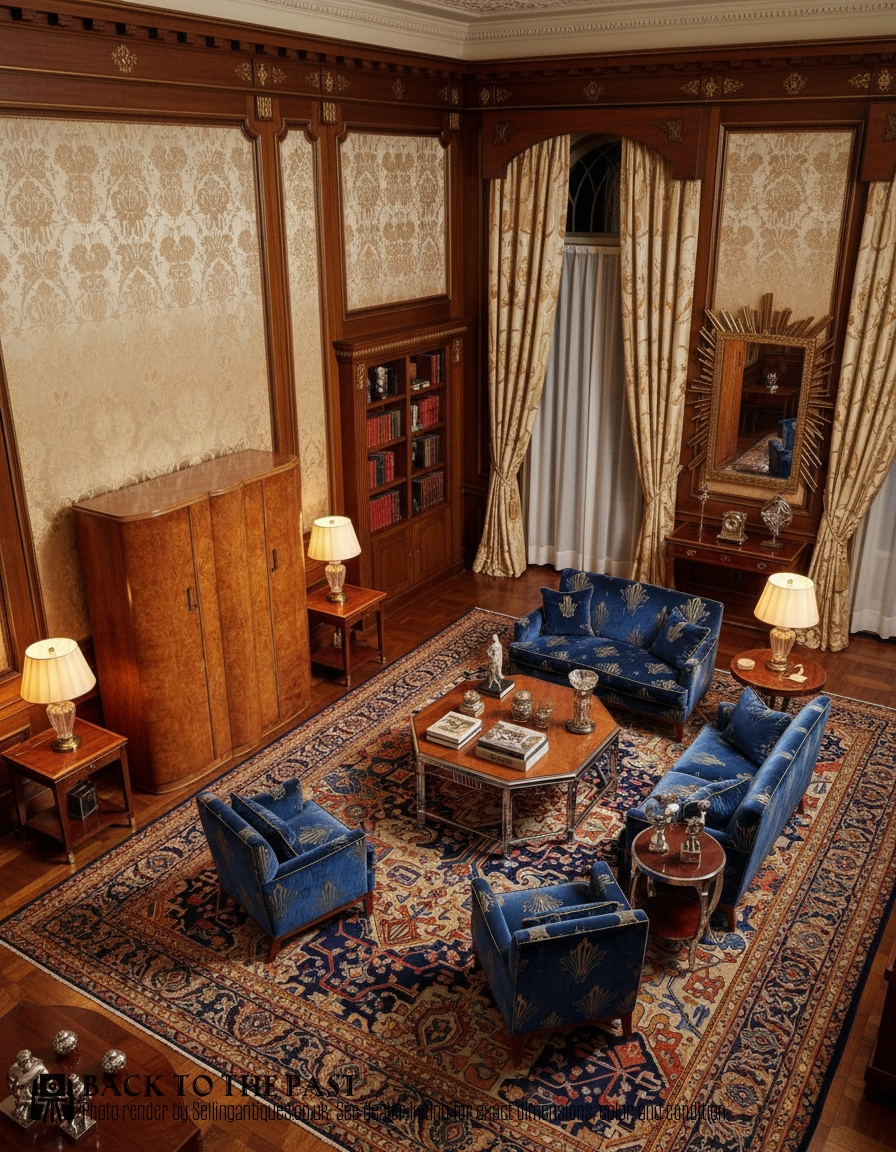
Beyond that core sit the smaller streams. Burr walnut, often with a dome top, serpentine or bow front, runs through the 1920s. Oak brings Arts and Crafts, linen fold and Jacobean revival work, including golden, pollard and limed oak. French armoires account for 35 titles, in Louis XV and Louis XVI style, painted, bleached oak or marquetry. Pine, English and German, makes up a smaller seam.
Only 192 listings carry a clean year, and that subset runs 1850 to 1930, so the archive is an eighty-year window. Period labels are broad and occasionally loose, with a few outliers filed centuries adrift. Titles are often the more precise guide, since c1890 appears in 56 and c1880 in 48.

What Separates Them
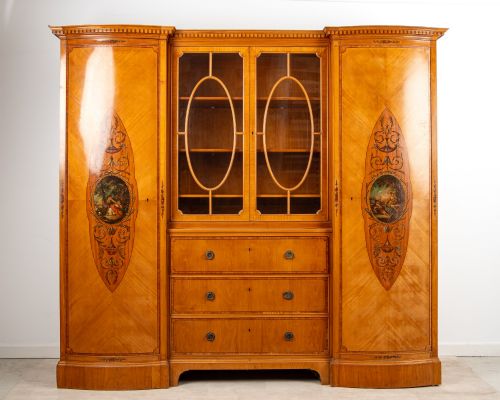
Timber and figure set the first divide. At the plain end a listing names only mahogany or pine and stops. Higher up come burr walnut, named in 76 titles, flame mahogany, satinwood, birds eye maple and pollard oak, along with one-off timbers like amboyna, rosewood, satin birch, Hungarian ash and ebony.
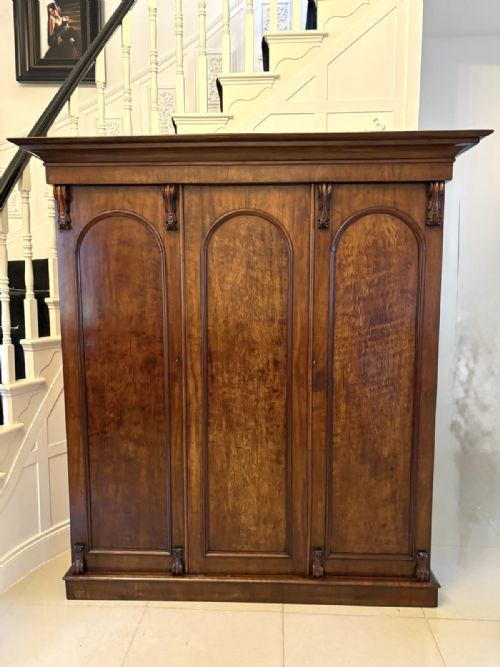
Then the front. A flat-fronted three-door case is the baseline; breakfront centres appear in 72 titles, with bow and serpentine fronts clustering on the walnut pieces. Decoration works the same way, inlay in 80 titles, carving in 17, painted work in 14, with marquetry and chinoiserie surfacing once or twice.
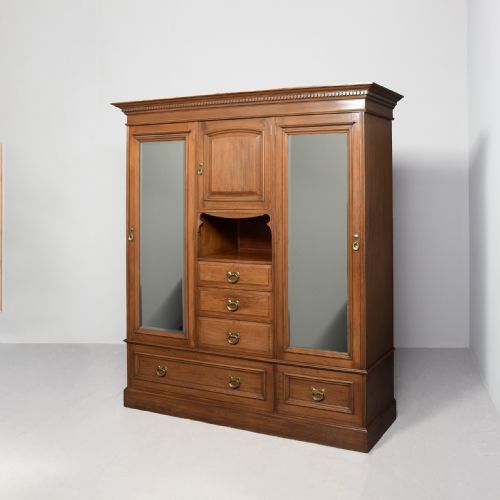
Interiors matter too. Compactum, named in 77 titles, means the fitted arrangement of trays or drawers alongside hanging, and it often turns up in the same titles as breakfront and a maker's name. Scale pulls in the same direction: large appears in 40 titles against small in 26, and huge, oversized and impressive gather at the top of the range.
Antique Triple Wardrobes Retail Price Guide 2026
Typical UK retail prices for triple wardrobes, calculated from the Sellingantiques database of over a million retail prices indexed since 2003. This retail price guide relies exclusively on Sellingantiques data; no external sources or auction records are used, so the figures do not describe the wider market.
Maple & Co is the name that turns up from the most dealers on Sellingantiques in this category.
Maple & Co
The Antique Triple Wardrobes Glossary
- Compactum
- A fitted interior combining hanging space with sliding trays, drawers or shelves. It appears in 77 titles, the feature dealers name most often after the timber.
- Breakfront
- A centre section standing forward of the two flanking doors. Named in 72 titles, and frequently paired with compactum in the same description.
- Dismantles
- The carcass unbolts for moving. Seventeen titles say so, with knockdown and flat pack used the same way, almost all of them pine or Continental.
- Armoire
- The French form of the same cupboard, in 35 titles, often painted or in carved oak, and described as Louis XV or Louis XVI style.
- Burr
- Figured veneer cut from a burr growth on the tree. Of 79 burr titles, 76 are burr walnut, many of them with dome tops or serpentine fronts.
- Sentry box
- A tall narrow hanging section within a combination wardrobe, a case that mixes wardrobe, drawers and sometimes a glazed or mirrored part.
Antique Triple Wardrobes: Frequently Asked Questions
What wood are triple wardrobes usually made from?
Mahogany leads by a distance, named in 266 of 590 titles, with walnut second at 129. Oak reaches 59 and pine 34.
Smaller numbers name satinwood, amboyna, rosewood, satin birch, birds eye maple, pollard oak, limed oak, Hungarian ash and ebony. Those single-figure timbers give the category most of its variety.
Does compactum mean something specific?
Yes. It describes a fitted interior that combines hanging space with sliding trays, drawers or shelves, rather than a plain hanging cupboard throughout.
The word appears in 77 titles, often alongside breakfront and a maker's name.
How old are most triple wardrobes on the market?
Victorian and Edwardian labels cover the bulk of the archive, 199 and 142 respectively, with 78 filed as 1920s and 35 as 1930s.
Of the 192 listings carrying a clean year, the range runs 1850 to 1930. In titles, c1900 appears 118 times, c1890 56 times and c1880 48 times.
Titles tend to be more precise than the period field, and a few period labels are plainly adrift.
Are French armoires included in this category?
They are. Thirty-five titles use the word armoire, in Louis XV and Louis XVI style, and some are painted, bleached oak or decorated with marquetry.
A Continental seam runs alongside them in pine, variously described as German, East German or Flemish.
Can a triple wardrobe come apart for moving?
Seventeen titles say the wardrobe dismantles, and others use knockdown or flat pack for the same thing.
Those listings sit almost entirely in the pine and Continental group rather than across the category as a whole.
Which unusual examples turn up in this category?
A metamorphic gentleman's compactum, a faux bamboo pitch pine wardrobe and a chinoiserie-decorated piece have each surfaced once or twice.
So have a Gothic country house wardrobe and one with a secret drawer. The tallest anyone has measured in a title stands 7 feet 3 inches.
Sixty-eight dealers have listed triple wardrobes on Sellingantiques, with around fifty-five coming to market in a year.